W. Joseph Campbell

Archive for the ‘Media myths’ Category

Carl Bernstein, naive and over the top

In Debunking, Media myths, Washington Post, Watergate myth on February 17, 2012 at 2:20 pm

Rupert Murdoch, the global media mogul beset by scandal at his British tabloids, may be the greatest menace to press freedom in world.

So says Carl Bernstein, the former Watergate reporter for the Washington Post, in an over-the-top characterization of Murdoch and what he calls Murdoch’s “gutter instincts.”

Bernstein: Murdoch a press freedom threat

Bernstein was referring to the police and parliamentary investigations into practices at Murdoch’s London tabloids, inquiries that have led to the arrests of numerous employes and the closure last summer of the Sunday News of the World.

The suspected misconduct in Britain also may have consequences for Murdoch’s News Corp. under U.S. anti-corruption laws.

Bernstein, a frequent and frankly sanctimonious critic of Murdoch since the scandals broke in London last year, declared in a recent interview on CNN:

“It’s really ironic that the greatest threat to freedom of the press in Great Britain today, and around the world today perhaps, has come from Rupert Murdoch because of his own excesses.”

What a foolish, misleading, and naive statement: The “greatest threat to freedom of the press …  around the world today perhaps” is Rupert Murdoch.

Sure, Murdoch’s hard-ball tactics and raunchy media outlets are offensive to polite company.

But the 80-year-old mogul is scarcely the world’s leading menace to press freedom. To suggest that he is is to insult the nearly 180 journalists who are in jail because of their work in Africa, Asia, and the Middle East.

The true contenders for the epithet of the world’s leading press-freedom menace are many, and include the ayatollahs in Iran.

According to the New York-based Committee to Protect Journalists, Iran is the world’s leading jailer of journalists: Forty-two of the 179 journalists behind bars in late 2011 were imprisoned in Iran.

Journalists are in jail typically because their reporting in traditional or online media offended power-wielding authorities or violated censorship laws.

In Iran, CPJ points out, the “authorities seem intent on silencing any independent or critical voices.”

Bernstein’s naive remark also ignores Eritrea and China, where, respectively, 28 and 27 journalists were in jail in late 2011, according to CPJ.

The organization notes that other journalists “may languish” in Chinese jails “without coming to the notice of news organizations or advocacy groups.”

Bernstein’s comment about Murdoch likewise ignores the Castro regime in Cuba, which long has been a jailer of journalists. As many as 29 dissident journalists were arrested in 2003 in a sweeping crackdown on dissent. The last of them was released in April last year.

While CPJ counted no Cuban journalists in jail in late 2011, the organization says authorities there “continue to detain reporters and editors on a short-term basis as a form of harassment.”

Bernstein’s comment also ignored the Stalinist regime in North Korea, which ranks dead last in the annual Freedom House ranking of press freedom in the world.

Freedom House, a New York-based organization that promotes democratic governance, assesses levels of press freedom in more than 190 countries and territories on a scale of zero to 100 points. The more points, the worse the ranking.

Finland ranked first, with 10 points. The United States and Britain were rated “free,” with 17 points and 19 points, respectively.

North Korea ranked last, with 97 points.

The regime in Pyongyang “owns all media, attempts to regulate all communication, and rigorously limits the ability of North Koreans to access information,” Freedom House noted, adding that all journalists “are members of the ruling party, and all media outlets are mouthpieces for the regime.”

His recent remarks about Murdoch’s threat to press freedom were the latest of Bernstein’s over-the-top characterizations of the mogul whose media and entertainment company has holdings around the globe.

As the tabloid scandal in Britain exploded last summer, prompting the closure of the News of the World, Bernstein likened the misconduct to Watergate, the  unprecedented U.S. constitutional crisis that led to Nixon’s departure from office in disgrace in 1974.

But Watergate was sui generis. The scandal not only toppled Nixon but sent to jail 19 men associated with his presidency or his 1972 reelection campaign.

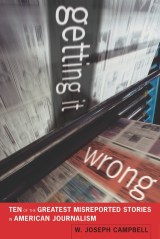
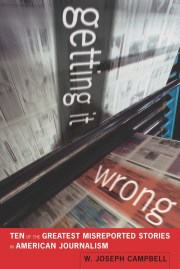
What’s more, as I discuss in my latest book, Getting It Wrong, the Watergate reporting by Bernstein and Washington Post colleague Bob Woodward was neither central to, nor decisive in, bringing down Nixon’s corrupt presidency.

WJC

Recent and related:

‘Accurately, it turned out’? Hardly, in the Jefferson-Hemings allegations

In Debunking, Media myths, Scandal on February 13, 2012 at 9:30 am

Media critic Jonathan Alter treated as settled history the other day the disputed and probably dubious claim that President Thomas Jefferson took as a mistress a slave named Sally Hemings.

In a  column for Bloomberg News, Alter wrote:

“Politics has been a contact sport since at least the election of 1804, when President Thomas Jefferson was accused (accurately, it turned out) of having an affair with ‘Dusky Sally’ Hemings, a slave.”

Accurately, it turned out?

That may hew to the dominant narrative about the purported Jefferson-Hemings liaison. But it’s far from proven, far from “accurate.”

Indeed, it’s quite unlikely.

Key evidence in the controversy centers around DNA testing conducted in 1998. The evidence indicated that the former president was among more than two dozen Jefferson men who were in Virginia at the time Hemings’ youngest child, Eston, was conceived in 1807.

Thomas Jefferson then was 64-years-old, making him an unlikely paternity candidate.

The DNA results were widely misreported when released, giving rise to the mistaken notion that the tests had confirmed Jefferson’s paternity.

However, as a detailed scholarly study published last year points out:

“The problem [in misinterpreting the DNA evidence] lies not only with a news media prone to over simplifying and sensationalizing complex stories.  Numerous prominent scholars have contributed to the misunderstanding by characterizing the DNA study as ‘confirming’ or ‘clinching’ the case for Thomas Jefferson’s paternity.”

The scholarly study, an impressive work titled The Jefferson-Hemings Controversy: Report of the Scholars Commission, further notes that the DNA tests “were never designed to prove, and in fact could not have proven, that Thomas Jefferson was the father of any of Sally Hemings’ children.”

The book — which has received scant attention from mainstream American media — presents a circumstantial case pointing to Jefferson’s younger brother, Randolph (or his sons), in the question of Eston Hemings’ paternity.

Randolph Jefferson, the book says, was known to have socialized with the slaves at Monticello, Thomas Jefferson’s home in Virginia.

Randolph Jefferson was a dozen years younger than the president, and the available record offers no evidence that Thomas Jefferson “enjoyed socializing at night with Monticello slaves,” the book says.

The scholars commission that compiled the volume describes the case as closed by no means.

Indeed, the scholars commission writes in The Jefferson-Hemings Controversy that a “more rational conclusion, from the totality of the evidence before us, is that Sally Hemings was not Thomas Jefferson’s lover, and her children were not his children.”

To assert otherwise — to insist on the accuracy of claims about Jefferson’s purported sexual relationship with a slave — is to indulge in a sort of sloppy, take-it-for-granted kind of reporting.

Sloppy, take-it-for-granted reporting can be a factor in the emergence and durability of media-driven myths, the subject of my latest book, Getting It Wrong.

I note in Getting It Wrong, for example, that hurried and sloppy reporting propelled the media myth of “crack babies,” in which journalists in the 1980s and 1990s “pushed too hard and eagerly on preliminary and inconclusive research. And the horrors they predicted, that ‘crack babies‘ would grow up to be a vast, permanently dependent class — a ‘bio-underclass’ of staggering dimension — proved quite wrong.”

Decidedly wrong.

WJC

Recent and related:

Just what we need: Barbra Streisand, media critic

In Cronkite Moment, Debunking, Media myths, Murrow-McCarthy myth on February 5, 2012 at 9:25 am

Celebrities and movie stars rarely make thoughtful, searching media critics, as Barbra Streisand demonstrated in a tedious and predictable essay the other day at Huffington Post.

The actress indulged a bit in the golden age fallacy, recalling broadcast journalists Edward R. Murrow and Walter Cronkite as exemplary newsmen whose talents these days are sorely missed.

“Americans,” Streisand wrote, “are busy, working hard to support and provide for their families. They don’t have time to parcel out fact from fiction. They depend on the Fourth Estate to guide them and to hold individuals running for office, especially the highest office in our country, accountable.”

The claim that Americans “depend on the Fourth Estate to guide them” is surely overstated, given evidence that many Americans go newsless and ignore media content altogether.

Streisand went on, extolling media icons of the past:

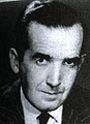
Murrow

“Journalists like Walter Cronkite and Edward R. Murrow knew it was their duty to know the facts and disseminate them to the public. That responsibility in today’s media world seems to be diminishing.”

Murrow, who came to fame on CBS radio in the 1940s and on CBS television in 1950s, was no white knight, though. He hardly was above the political fray.

As I note in my media mythbusting book, Getting It Wrong, Murrow privately donated time and expertise in acquainting Adlai Stevenson, the 1956 Democratic presidential candidate, with television.

I cite A.M. Sperber, one of Murrow’s leading biographers, who wrote that Murrow agreed “to help the Democrats” in offering Stevenson tips on “the finer points of speaking to the camera.”

Sperber, who characterized Murrow’s move “a radical departure from his usual practice,” said Stevenson “barely endured” the tutoring.

What’s more, Murrow is the subject of one of American journalism’s more savory and tenacious myths — that he stood up to the red-baiting senator, Joseph R. McCarthy, when no other journalist would, or dared.

Which is nonsense.

As I discuss in Getting It Wrong, Murrow was quite late in confronting McCarthy, doing so long after a number of journalists – including the muckraking columnist Drew Pearson– had become persistent and searching critics of the senator, his record, and his tactics.

Cronkite, the famous CBS News anchorman from 1963 to 1981, likewise is the subject of a durable media-driven myth — that his editorializing about the war in Vietnam in February 1968 forced President Lyndon B. Johnson to realize the folly of his policy.

Legend has it that Johnson was watching at the White House when Cronkite pronounced the U.S. military “mired in stalemate” in Vietnam. Cronkite also suggested the negotiations might offer a way out of the morass.

Upon hearing Cronkite’s downbeat assessment, Johnson supposedly leaned over and snapped off the television set, telling an aide or aides, “If I’ve lost Cronkite, I’ve lost Middle America.”

Or something to that effect. Versions vary, markedly.

But as I discuss in Getting It Wrong, Johnson did not see the program in which Cronkite made his editorial comment.

Johnson in Austin: Didn't see Cronkite show

Johnson at the time was in Austin, Texas, attending the 51st birthday party of Governor John Connally, a longtime political ally. About the time Cronkite was intoning “mired in stalemate,” Johnson was joking about Connally’s age, saying:

“Today you are 51, John. That is the magic number that every man of politics prays for—a simple majority.”

It’s illogical to argue that Johnson could have been much moved by a television report he hadn’t seen.

Granted, Cronkite’s editorial comment about Vietnam — tepid though it was — represented something of a departure for the avuncular anchorman. He usually tried to play it straight, because he had to.

As media critic Jack Shafer pointed out shortly after Cronkite’s death in 2009, the anchorman’s impartiality was partly a function of the federal “Fairness Doctrine,” which sought to encourage balanced reporting on the air.

Shafer wrote that “between 1949 and 1987 — which come pretty close to bookending Cronkite’s TV career — news broadcasters were governed by the federal ‘Fairness Doctrine.’ The doctrine required broadcast station licensees to address controversial issues of public importance but also to allow contrasting points of view to be included in the discussion.

“One way around the Fairness Doctrine was to tamp down controversy,” which he notes, the three U.S. television networks of the time “often did.”

So, no: Murrow and Cronkite weren’t exactly paragons of play-it-straight journalism. Pining for them while deploring today’s freewheeling media landscape is neither very sophisticated nor very useful.

Nor even fair to the historical record.

WJC

Recent and related:

Bill Clinton: Overstating social media influence in regime change

In Debunking, Media myths on January 28, 2012 at 12:30 pm

Bill Clinton went to the American University campus last night to accept an award for wonkiness. In remarks accepting the award, Clinton made the outsize assertion that “whole governments have now been brought down by social media sites.”

It’s a tempting claim of new media triumphalism that begs a one-word question: Where?

Where have social media taken down repressive governments?

Certainly not in Iran, where anti-regime protests sparked by a rigged presidential election in June 2009 gave rise to the misnomer, “Twitter Revolution.”

Twitter surely helped in organizing the demonstrations in Tehran. But social media proved no match for the Islamic government’s brutal crackdown that snuffed out the protests and shut down the threat to the regime.

Besides, Twitter became a channel for erroneous information — and disinformation — during the Iranian protests. Media critic Jack Shafer wrote at the time that Twitter was “more noise than signal in understanding the Iranian upheaval.”

So where else?

Egypt? A somewhat stronger case can be made there, that new media platforms contributed to the downfall nearly a year ago of Hosni Mubarak’s corrupt, 29-year authoritarian regime.

But even there, social media cannot be seen as decisive. They acted more as propellants in Egypt than as causal or precipitating agents.

Evgeny Morozov, writing last year in the Wall Street Journal, observed that the “Egyptian experience suggests that social media can greatly accelerate the death of already dying authoritarian regimes.”

Morozov, author of the insightful book The Net Delusion: The Dark Side of Internet Freedom, also noted that the anti-regime protesters in Egypt “were blessed with a government that didn’t know a tweet from a poke.”

In other words, the regime was mostly clueless about online countermeasures, how to turn social media to perverse use as instruments for identifying, spying on, and sidelining malcontents and regime foes.

Morozov wrote that “dictators learn fast and are perfectly capable of mastering the Internet” in countering populist threats to their regimes. He also noted that some authoritarian governments “have turned mostly to Western companies and consultants for advice about the technology of repression.”

A recent, searching study about social media and political upheaval across the Middle East notes:

“There can be no doubt that online activism is a significant phenomenon that has had a major impact on the Arab Spring.

“Yet, we would be wise not to exaggerate its influence.”

Mubarak’s fall, the study adds, wasn’t “the result of online activism alone. This would ignore the major roles played by those [in Egypt] who had likely not even heard of Facebook or Twitter.”

The study, written by Tim Eaton and posted online this month at New Diplomacy Platform, says social media helped mobilize opposition to Mubarak’s unpopular regime.

But Eaton adds that “events in Tunisia … appear to have been the game-changer. The success of Tunisian activists in ousting President [Zine el-Abidine] Ben Ali motivated many Egyptians to seek to replicate their feat.”

That phenomenon is known as a demonstration effect, in which tactics and events in one context serve as a model or inspiration elsewhere.

Mubarak’s regime did shut down the Internet in Egypt last year, from January 28 to February 1, in a bungled attempt to cut off the flow of online information to anti-regime activists. But the move backfired.

“It wasn’t the Internet that destroyed Mr. Mubarak,” Morozov wrote, ” it was Mr. Mubarak’s ignorance of the Internet that destroyed Mr. Mubarak.”

To assert, as Clinton did last night, that social media can take down repressive governments is to offer a simplistic message of media triumphalism, one thinly supported by empirical evidence.

It is, moreover, an explanation that shortchanges understanding of the complex mechanics of regime change.

And embracing simplistic explanations is an important way in which media-driven myths — those false, dubious, improbable stories about the news media that masquerade as factual — can take hold.

As I write in my latest book, Getting It Wrong, more than a few media-driven myths have emerged “from an impulse to offer easy answers to complex issues, to abridge and simplify topics that are thorny and intricate.”

Social media are not inherently democratic. Nor have they proved decisive in bringing down authoritarian regimes.

WJC

Recent and related:

Sketches published 115 years ago undercut a tenacious media myth

In 1897, Anniversaries, Debunking, Furnish the war, Media myths, Spanish-American War on January 24, 2012 at 5:25 am

On assignment for Hearst

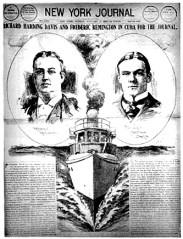
The artist Frederic Remington was back from Havana just a few days when on January 24, 1897, William Randolph Hearst’s New York Journal began publishing his sketches of the Cuban rebellion against Spanish colonial rule.

Remington later confided that he didn’t think much of the Journal’s reproduction techniques. But the newspaper played up Remington’s artwork, publishing them beneath an extravagant headline that read:

“Cuban War Sketches Gathered in the Field by Frederic Remington; The Gifted Artist, Visiting Cuba Especially for the Journal, Describes with Pen and Pencil Characters That Are Making the War Famous and Infamous.”

The prominent display given the sketches, and the Journal’s flattering references to the artist, serve to undercut a tenacious and prominent media-driven myth, an anecdote that ranks as one of the most popular in American journalism.

And that is the hoary tale that Hearst, in a telegraphic exchange with Remington, vowed to “furnish the war” with Spain.

As I discuss in my latest book, Getting It Wrong, the exchange, if it happened, would have occurred on or about January 17, 1897, when Remington was preparing to leave Cuba and return to New York.

Hearst had sent Remington and the correspondent Richard Harding Davis to Cuba to report on the rebellion against Spanish rule, a vicious conflict that gave rise in 1898 to the Spanish-American War.

Remington and Davis didn’t get along and parted ways after only a few days in Cuba. According to legend, Remington before leaving sent a cable to Hearst that said:

Everything is quiet. There is no trouble here. There will be no war. I wish to return.”

In reply, Hearst supposedly told Remington:

Please remain. You furnish the pictures, and I’ll furnish the war.”

Remington left anyway, taking the passenger steamer Seneca to New York, arriving January 21, 1897. His Cuba sketches began appearing in the Journal 115 years ago today.

So how do those sketches help debunk the tale about Hearst’s vow “furnish the war”?

As I discuss in Getting It Wrong, the sketches “depict unmistakable (if unremarkable) scenes of a rebellion — a scouting party of Spanish cavalry with rifles at the ready; a cluster of Cuban non-combatants trussed and bound and being herded into Spanish lines; a scruffy Cuban rebel kneeling to fire at a small Spanish fort; a knot of Spanish soldiers dressing a comrade’s leg wound.”

Their subject matter effectively disputes the notion that Remington had found “everything … quiet” in Cuba.

Remington, 'gifted artist'

That the sketches were accompanied by glowing references to Remington as a “gifted artist” indicates that Hearst was not angry with Remington as he surely would have been had the artist left Cuba after being told “please remain.”

Indeed, it is difficult to believe Hearst would have been so generous in his compliments and ordered such prominent display of Remington’s work had the artist in fact disregarded Hearst’s instructions to stay in Cuba.

“Far from being irritated and displeased with Remington,” I write in Getting It Wrong, “Hearst was delighted with his work. He recalled years later that Remington and Richard Harding Davis, the celebrated writer who traveled to Cuba with the artist, ‘did their work admirably and aroused much indignation among Americans’ about Spanish rule of the island.”

The sole source of the “furnish the war” anecdote was James Creelman, who in January 1897 was neither with Hearst in New York nor with Remington in Cuba. Creelman then was in Spain, as the Journal’s “special commissioner,” or correspondent, on the Continent.

Creelman incorporated the anecdote about the Remington-Hearst exchange in a book of reminiscences, On the Great Highway, which was published in 1901. Creelman, a blustery, cigar-chomping egotist, did not say how he learned about the purported Remington-Hearst exchange, which he presumes to quote verbatim.

Hearst denied ever having sent such a message. Remington apparently never spoke about the supposed exchange.

The display Remington’s sketches received in Hearst’s Journal, and the newspaper’s compliments about the artist, are two of several compelling reasons for doubting the anecdote and treating it as a media myth.

Another reason is that the telegrams Remington and Hearst supposedly sent have never turned up.

The anecdote, moreover, is illogical on its face: It would have made no sense for Hearst to have vowed to “furnish the war” because war — the rebellion against Spanish rule — was the reason he sent Remington to Cuba in the first place.

WJC

Recent and related:

ABC unaccountably excludes Bill Clinton from lineup of pols who led ‘double lives’

In Debunking, Media myths, Scandal on January 21, 2012 at 10:39 am

ABC News offered yesterday a risible lineup of two-timing politicians that omitted Bill Clinton, the philandering 42nd president, but included Thomas Jefferson, about whom the evidence of sexual dalliance is thin at best.

ABC’s roster of “the top eight politicians who led double lives” was posted online and promised “a look at some … tawdry affairs and public scandals” — and how the politicians implicated “weathered the storm.”

In addition to Jefferson, ABC included Grover Cleveland, the U.S. president in the 1880s and 1890s who fathered a child out of wedlock, and Eliot Spitzer, who as governor of New York consorted with a high-priced call girl.

The ABC roster also included an obscure and mostly forgotten former politician, Vito Fossella, a five-term New York congressman who in 2008 acknowledged fathering a child in an extramarital affair.

Given that the likes of Fossella made the list, it’s inexplicable that Clinton was omitted.

Clinton’s tawdry sexual affair with Monica Lewinsky, a White House intern, began in mid-November 1995 and continued intermittently until March 1997.

Disclosures of the Clinton-Lewinsky dalliance, and falsehoods he told under oath about the affair, nearly destroyed Clinton’s presidency.

He was impeached in December 1998 on two counts — lying under oath and obstructing justice to cover up the affair — but acquitted by the U.S. Senate in February 1999 and served out the 23 months remaining in his term.

Separately, a federal judge found Clinton in contempt of court for having lied under oath about the Lewinsky affair. Clinton was barred from practicing law for five years and ordered to pay nearly $90,000 to the lawyers of Paula Jones, who had accused him of sexual harassment while he was governor of Arkansas.

Clinton was the second U.S. president impeached in office. The other was Andrew Johnson, in 1868.

ABC’s including Jefferson in its “double lives” roster was little short of baffling: Indeed, its writeup about Jefferson’s purported sexual liaison with a slave-mistress named Sally Hemings offered no small amount of exculpatory evidence.

In fact, the writeup referred to “the myth of Jefferson’s double life” and noted:

“To this day, Jefferson’s paternity of any of her children has not been established with any absolute certainty.”

ABC also pointed out that a recent and detailed study about the purported Jefferson-Hemings affair which “did not show much support for the accusations” of a sexual liaison.

That study, a 400-page work titled The Jefferson-Hemings Controversy: Report of the Scholars Commission, was compiled by a commission of Jefferson scholars charged with puncturing the myriad misunderstandings about the third president and a slave whom he rarely mentioned in his letters.

Among the misunderstandings was the DNA testing released in 1998 — about the time Clinton was facing impeachment charges — confirmed that Jefferson fathered children by Hemings.

“While the tests were professionally done by distinguished experts,” the scholars commission pointed out, “they were never designed to prove, and in fact could not have proven, that Thomas Jefferson was the father of any of Sally Hemings’ children.

“The tests merely establish a strong probability that Sally Hemings’ youngest son, Eston, was fathered by one of the more than two dozen Jefferson men in Virginia at the time ….”

One of the more than two dozen Jefferson men.

Yet, news media reports at the time characterized the DNA tests as offering “compelling evidence” of a sexual relationship between Jefferson and Hemings.

The scholars commission — a panel of 13 experts organized by the Thomas Jefferson Heritage Society — said that circumstantial evidence points more powerfully to Jefferson’s younger brother, Randolph (or his sons), in the paternity question.

Randolph Jefferson, the book says, was known to have socialized with the slaves at Monticello, Thomas Jefferson’s home near Charlottesville, VA.

Randolph Jefferson was a dozen years younger than the president, and the available record offers no evidence that Thomas Jefferson “enjoyed socializing at night with Monticello slaves,” the book points out.

Eston Hemings’ was conceived around August 1807, when Thomas Jefferson was 64 and in declining health — factors that further diminish the likelihood of his paternity.

Also making ABC’s roster of politicians who led “double lives” were Mark Sanford, a former governor of South Carolina; John Edwards, a former U.S. senator from North Carolina; Arnold Schwarzenegger, a former governor of California, and Anthony Wiener, a former congressman from New York City.

WJC

Many thanks to Instapundit
Glenn Reynolds for linking to this post.

Recent and related:

Shep Smith ignores WaPo, blames ‘government’ for bogus Lynch-hero story

In Debunking, Jessica Lynch, Media myths, Washington Post on January 13, 2012 at 11:04 am

Shepard Smith interviewed former Army private Jessica Lynch on his Fox News afternoon program yesterday and indulged in the notion that “the government” deviously made up the tale about Lynch’s battlefield heroics early in the Iraq War.

Smith

Smith, however, made no attempt to specify to whom in “the government” may have concocted the tale.

Moreover, he ignored the singular role of the Washington Post, which thrust the bogus hero-warrior tale about Lynch into the public domain in a sensational, page-one story published April 3, 2003.

The Post’s report — which was picked up by news organizations around the world — said Lynch had fought fiercely in the ambush of her unit in Nasiriyah, Iraq, that she kept firing at her attackers even though her comrades were killed all around her.

The Post’s article was reported mostly in Washington and was published beneath the headline:

Lynch

“‘She was fighting to the death.'”

It was an electrifying account, but thoroughly wrong in crucial details.

Lynch had not fired a shot in the attack. She was injured not by gunfire but in the crash of her Humvee in attempting to flee the ambush. She was captured and hospitalized by the Iraqis, and rescued nine days later by U.S. special forces.

Smith’s interview with Lynch offered further evidence of an inclination, shared by commentators on the political left as well as the right, to overlook  the journalistic origins of the bogus hero-warrior tale about Lynch and to ascribe blame, vaguely and conspiratorially, to entities such as “the government” or “the military.”

Never when such claims are raised is a culprit identified. And rarely is the Post’s botched reporting recalled or much discussed.

But to overlook the newspaper’s central role in the bogus tale about Lynch is not only misleading, it’s unaccountably sloppy.

For her part, Lynch did not challenge Smith’s vague claims that “the government” concocted the tale about her heroism in Iraq.

“When you were captured,” Smith asked her, “that whole government story came out. Uh, you as one — shoot ’em up, rescuing everyone. That’s not what happened. And you called out the government on its lies. How did you get the strength and wherewithal to do that?”

Lynch replied:

“I felt that I had to because I knew those weren’t the accurate stories. And I just wouldn’t be able to live with myself…”

Lynch said “it would have been so easy for me to take credit” for the battlefield heroics wrongly attributed to her, “to go along with their stories, but that’s not who I am, that’s not how I was raised.”

Smith also asked:

“Have you had contact with anyone from the then-government of the United States that did all that?”

No, replied Lynch, “I feel it’s in the past. I’ve done my part in setting the record straight.”

But the record hardly has been set straight.

As yesterday’s interview suggests, the notion that the U.S. government concocted the hero-warrior tale for propaganda purposes has emerged as the popular dominant narrative of the Lynch case, obscuring evidence that the government — notably the Pentagon — had little to do with pushing the bogus tale.

Vernon Loeb, one of the authors of the Post’s report about Lynch, said in an interview on NPR in December 2003 said the newspaper’s sources for the Lynch story “were not Pentagon sources.”

He said the Post was “told by some really good intelligence sources here in Washington that, you know, there were indications that she had, you know, fired back and resisted her capture and actually been shot and possibly stabbed doing so.

“None of this turned out to be the case as we, you know, quickly learned.  But, you know, we basically told our readers that day [April 3, 2003] what the U.S. intelligence community was telling senior members of the U.S. government. It just kind of goes back to the old adage that, you know, initial reports from the battlefield are almost always wrong.”

Loeb, who then was the Post’s defense correspondent, also said in the interview:

“I could never get anybody from the Pentagon to talk about those reports at all. I got indications that they had, in fact, received those intelligence reports, but the Pentagon was completely unwilling to comment on those reports at all. They wouldn’t say anything about Jessica Lynch.

“I’ve never believed that, at least as far as the story we wrote goes, that it was a Pentagon attempt to create a hero there.”

The hoopla associated with the Lynch case, I point out in my latest book, Getting It Wrong, has “had the effect of blurring recognition of the American soldier whose actions at Nasiriyah were heroic and probably were misattributed to Lynch, initially.

“He was Sergeant Donald Walters, a cook in the 507thMaintenance Company,” Lynch’s Army unit.

Donald Walters

In the ambush at Nasiriyah, “Walters either stayed behind, or was left behind, to lay down covering fire as his fellow soldiers tried to make their escape,” I write. “Walters fought his attackers in a fashion that the Post attributed to Lynch.”

Walters fought until he was out of ammunition; he was taken prisoner and soon after executed by his captors.

The Army eventually acknowledged that Walters’ conduct “likely prevented his unit from suffering additional casualties and loss of life” and posthumously awarded him the Silver Star, the U.S. military’s third-highest decoration for valor.

Interestingly, Lynch seldom mentions Donald Walters; she made no reference to him yesterday during her interview with Smith.

WJC

Recent and relevant:

‘Getting It Wrong’ goes on ‘One Hour of Hope’

In Anniversaries, Cinematic treatments, Cronkite Moment, Debunking, Jessica Lynch, Media myths, Washington Post, Watergate myth on January 10, 2012 at 12:15 pm

I recently was on “One Hour of Hope,” a satirically named radio show in Gainesville, Florida, to speak about several of the media-driven myths debunked in my latest book, Getting It Wrong.

Among them are the heroic-journalist trope of Watergate, the so-called “Cronkite Moment” of 1968, and the battlefield derring-do misattributed to Jessica Lynch early in the Iraq War.

The host of “One Hour of Hope,” Doug Clifford, noted at the outset of the interview that 2012 marks the 40th anniversary of the Watergate scandal’s signal crime, the breakin in June 1972 at the headquarters of the Democratic National Committee.

I am sure the anniversary will give rise  to a resurgence of the heroic-journalist interpretation of Watergate, which holds that the dogged investigative reporting of Washington Post reporters Bob Woodward and Carl Bernstein uncovered the scandal and brought about President Richard M. Nixon’s resignation in August 1974.

That media myth has become the dominant narrative of Watergate, I noted during the radio interview, which aired on WSKY-FM.

The persistence of that misreading narrative, I said, can be traced to All the President’s Men, Woodward and Bernstein’s 1974 book about their Watergate reporting, and especially to the 1976 movie by the same title.

The movie, by focusing on the exploits of Woodward and Bernstein, projects the notion that the reporters, with help from a the stealthy, high-level source code-named “Deep Throat,” unearthed the evidence that forced Nixon to quit.

That, I said, is a very simplistic interpretation, “a serious misreading of history” that ignores the far more powerful forces and factors that combined to uncover evidence of Nixon’s culpability.

Those forces, I noted, were typically subpoena-wielding and included committees of both houses of Congress, the Justice Department, the FBI, and a federal judge in Washington named John Sirica.

(Interestingly, the Washington Post, in its obituary of Sirica, said the judge’s “persistence in searching for the facts while presiding over the Watergate cases led to President Nixon’s resignation.”)

The myth of the “Cronkite Moment” represents another serious misreading of history, I said.

Clifford summarized the purported “Cronkite Moment,” that President Lyndon Johnson, in reaction to the CBS News anchor Walter Cronkite’s pessimistic assessment of the Vietnam War, said, “If I’ve lost Cronkite, I’ve lost America.”

I noted that versions of what the president said vary markedly and also include:

  • “If I’ve lost Cronkite, I’ve lost Middle America.”
  • “If I’ve lost Cronkite, I’ve lost the country.”
  • “If I’ve lost Cronkite, I’ve lost the war.”

(Version variability of such magnitude, I write in Getting It Wrong, is a revealing marker of a media-driven myth.)

I noted in the interview that there’s no evidence Johnson saw Cronkite’s television report about Vietnam when it aired February 27, 1968. At the time, the president was attending a birthday party for Governor John Connally on the campus of the University of Texas at Austin.

Nor is there any credible evidence that Cronkite’s reporting about Vietnam influenced  Johnson’s decision, announced in late March 1968, not to seek reelection.

Clifford asked about reporting of the Jessica Lynch case, and I said the bogus tale of her battlefield heroics was largely due to “sloppy reporting by the Washington Post.”

I described the newspaper’s electrifying report, published April 3, 2003, that cited otherwise unidentified “U.S. officials” in saying Lynch had fought fiercely in the ambush of Army unit in Iraq, that she had kept firing at Iraqi attackers even as she suffered gunshot and stab wounds.

But none of that proved true. Lynch fired not a shot in the attack. She was wounded not in the firefight with the Iraqis but in the crash of her Humvee as it tried to flee the ambush.

I also noted in the interview how a “false narrative that the military made up the story” has come to define the Lynch tale.

One of the reporters on the Post’s botched story, I pointed out, has said that the Pentagon wasn’t the newspaper’s source, and also has said that far “from promoting stories about Lynch, the military didn’t like the story.”

The false narrative, I added, has had the additional effect of obscuring recognition of the heroics of Donald Walters, a cook-sergeant who apparently performed the heroics deeds wrongly attributed to Lynch.

Walters laid down covering fire as Lynch and others in their unit sought to escape. He was captured when he ran out of ammunition, and soon afterward executed.

Clifford said his show’s title, “One Hour of Hope,” is a satiric gesture; his once-weekly, 60-minute program leans left while much of the rest of the station’s talk-show content is conservative in political orientation.

WJC

Recent and related:

‘Follow the money’ and the power of cinema

In Cinematic treatments, Debunking, Media myths, Washington Post, Watergate myth on January 8, 2012 at 9:17 am

No film about the Watergate scandal has been viewed by more people than All the President’s Men, the cinematic paean to the Washington Post and the reporting of Bob Woodward and Carl Bernstein.

And no single line from All the President’s Men has proved more memorable and quotable than “follow the money.”

The line is so compelling that it’s often thought that “follow the money” was genuine and vital advice offered by the stealthy, high-level source whom the Post code-named “Deep Throat.”

Except that it wasn’t genuine advice.

Follow the money” was invented for the movie.

The line was spoke by Hal Holbrook, the actor who played “Deep Throat” in All the President’s Men. (The real “Deep Throat” was self-revealed in 2005 to have been W. Mark Felt, a senior FBI official.)

Although it is fundamentally a contrivance, “follow the money” is granted no small measure of reverence, as suggested by a commentary posted the other day at a blog of London’s Guardian newspaper.

The commentary in its opening paragraph declared :

“The famous advice of Deep Throat to Woodward and Bernstein in the dark underground car park during the Watergate investigation applies to the world of politics as much as it does to investigative journalism. ‘Follow the money,’ the FBI agent Mark Felt is said to advised the two Washington Post reporters.”

“Deep Throat” the source met Woodward a half-dozen times in 1972 and 1973 in a car park — a parking garage — in the Rosslyn section of Arlington, Va. That’s true.

But “Deep Throat”/Felt was exclusively Woodward’s source. Bernstein met Felt only a few weeks before Felt’s death in 2008.

And Felt never advised Woodward to “follow the money.” That he did is cinema-induced pseudo reality.

Not only that, but Felt as “Deep Throat” wasn’t all that vital to the Post’s reporting on Watergate, which won a Pulitzer Prize in 1973.

We know that from Barry Sussman, the Post’s lead editor on Watergate, who wrote in 2005:

“Deep Throat was nice to have around, but that’s about it. His role as a key Watergate source for the Post is a myth, created by a movie and sustained by hype for almost 30 years.”

Note the passage, “created by a movie.”

All the President’s Men is more than an engaging, mid-1970s film that has aged admirably well. As Sussman noted, the movie certainly helped propel the myth of “Deep Throat” — and make famous “follow the money.”

The film — which the Post once described as journalism’s “finest 2 hours and 16 minutes” — also was central in promoting and solidifying the heroic-journalist myth of Watergate.

As I discuss in my latest book, Getting It Wrong, the heroic-journalist myth is the notion that Woodward and Bernstein’s reporting brought down the corrupt presidency of Richard Nixon.

Which is an interpretation of Watergate that not even the Post embraces.

As Woodward once said in an interview with American Journalism Review:

To say the press brought down Nixon, that’s horse shit.”

But it’s clear, I write in Getting It Wrong, that the cinema “helped ensure the myth would live on by offering a neat, tidy, and vastly simplified account the Watergate scandal, one that allowed viewers to sidestep the scandal’s complexity while engaging in an entertaining storyline.”

Indeed, what could be more straightforward and understandable than a story featuring two young reporters guided by a shadowy source who, oracle-like, advises them to “follow the money”and helps them bring down a crooked president?

It’s Watergate simplified, Watergate made easy.

But it’s also a far-fetched and distorted version of America’s greatest political scandal.

WJC

Recent and related:

The military’s ‘fabrication’? No, Jessica Lynch was WaPo’s story

In Jessica Lynch, Media myths, Washington Post on January 5, 2012 at 9:15 am

A passage in a recent  essay at a Washington Post blog demonstrates just how insidious the notion is that the military made up the hero-warrior tale about Army private Jessica Lynch in the early days of the Iraq War.

The Post’s higher education blog, “College Inc.,” cited “the fabrication of the story of Jessica Lynch” as an example of “a serious problem in the military’s relationship with the civilian world.” (The essay discussed what the author called the “shrill insistence by the military on its own virtue.”)

Lynch in 2003

The author, a Naval Academy professor named Bruce Fleming, also invoked the case of Pat Tillman — an Army Ranger killed slain by friendly fire in Afghanistan — in asserting:

“This is lying to the people the military is meant to protect, and who pay for it. It is absolutely, completely, unacceptable. Yet it now has become common.”

Strong stuff.

But it’s exceedingly the top in the case of Jessica Lynch: The claim that the military made up the tale of her battlefield heroics is seriously misstated. And more than faintly ironic, given that it was the Washington Post that reported Lynch had “gone down firing,” that she had fought ferociously in the ambush of her unit, the 507th Maintenance Company, in southern Iraq in March 2003.

It was the Post — citing otherwise anonymous “U.S. officials” — that claimed Lynch had “shot several enemy soldiers” in the ambush.

It was the Post that said Lynch “continued firing at the Iraqis even after she sustained multiple gunshot wounds and watched several other soldiers in her unit die around her” in the fighting.

It was the Post that placed the electrifying heroic-warrior tale about Lynch on its front page of April 3, 2003, beneath a headline that read:

“‘She was fighting to the death.'”

It was the Post — alone — that placed the story into the public domain.

And none of it was true.

Lynch was neither shot nor stabbed. She suffered shattering injuries in the crash of a Humvee as it attempted to flight the ambush. But she fired not a shot in the attack.

Lynch was taken prisoner, but rescued nine days later from an Iraqi hospital by U.S. special forces.

The Post for its part has never fully explained how it got so utterly wrong a story that was picked up by news organizations around the world, turning the unsuspecting Lynch into the best-known Army private of the war.

However, as I point out in my latest book, Getting It Wrong, we know from one of the Post reporters on the Lynch story that the military wasn’t pushing the hero-warrior story.

That reporter, Vernon Loeb, said in an interview on NPR’s Fresh Air program in December 2003:

“Our sources for that story were not Pentagon sources.”

He also said in the interview:

“They wouldn’t say anything about Jessica Lynch.”

Loeb added:

“I just didn’t see the Pentagon trying to create a hero where there was none. I mean …they never showed any interest in doing that, to me.”

On another occasion, Loeb was quoted in a commentary in the New York Times as saying:

“Far from promoting stories about Lynch, the military didn’t like the story.”

The author of the Times commentary was Mark Bowden, who wrote the critically acclaimed Black Hawk Down, a book about the failed U.S. military mission in Somalia in 1998 1993. Of the Lynch case, Bowden said in his commentary:

“There is no doubt that the American media took these bits and pieces from the fog of war and assembled them into a heroic tale. … This is how the media works today, for better or worse. It happens without any prompting from the Pentagon.”

What, then, explains the persistence of the false narrative that military concocted the hero-warrior tale about Lynch?

Part of the answer lies in a dim understanding about the military and its ways. Few Americans have much first-hand knowledge about the armed services and warfare. Such limited familiarity can lead to the embrace of flawed narratives and misleading caricatures.

The Post’s erroneous account of Lynch as a female Rambo pouring lead into attacking Iraqis was cinematic — and more than vaguely reminiscent of scenes in the 1996 motion picture Courage Under Fire.

Another part of the answer lies in the news media’s tendency to shift blame away from major mistakes. As media critic Jack Shafer has pointed out:

“The rotten truth is that media organizations are better at correcting trivial errors of fact — proper spellings of last names, for example — than they are at fixing a botched story.”

The false narrative that the military concocted the Lynch tale has enabled the Post to dodge accountability for a botched story still oozes venom, suspicion, and misunderstanding.

The newspaper’s unwillingness to set the record straight by  identifying the sources that led it awry has given rise to false claims, including those about the military’s “fabrication.”

WJC

Many thanks to Instapundit Glenn Reynolds, and to smalldeadanimals.com and Blackfive.net, for linking to this post.

Recent and related: