Today’s the 72nd anniversary of the famous War of the Worlds radio dramatization, a show that was so realistic and made such effective use of simulated news reports that it pitched America into panic and mass hysteria.
That The War of the Worlds program created fear beyond measure on that long ago October night is a delicious tale, one inevitably recalled and retold with gusto as Halloween approaches.
The radio dramatization–the work of 23-year-old Orson Welles–was aired over the CBS radio network on Sunday evening, October 30, 1938.
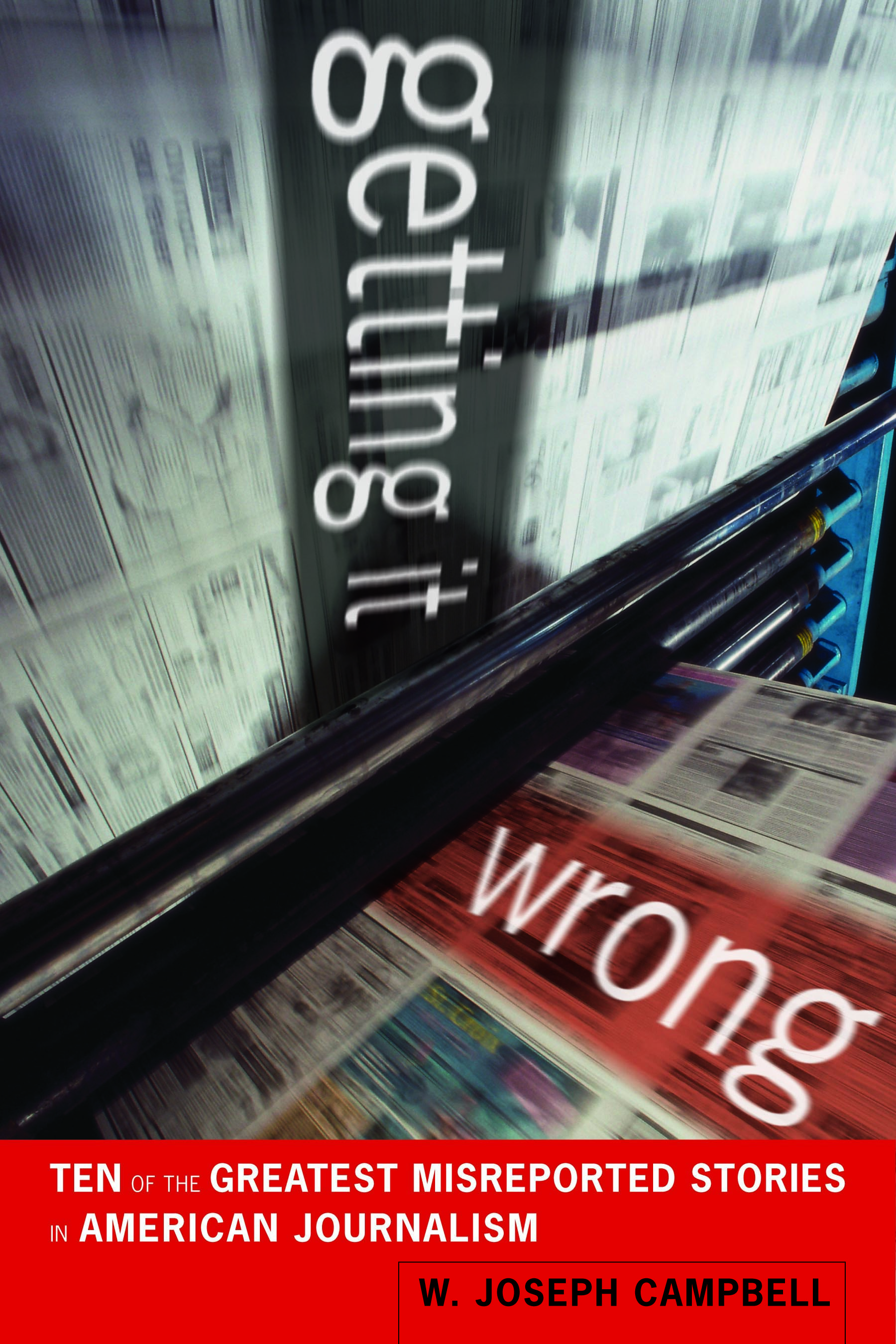
As I write in my latest book, Getting It Wrong: “So alarming was the show, so realistic were its accounts of invading Martians wielding deadly heat rays, that listeners by the tens of thousands—or maybe the hundreds of thousands—were convulsed in panic.
“They fled their homes, jammed highways, overwhelmed telephone circuits, flocked to houses of worship, set about preparing defenses, and even contemplated suicide in the belief that the end of the world was at hand.
“Fright beyond measure seized America that night more than seventy years ago. … Or so the media myth has it.”
Getting It Wrong presents a compelling case that the panic and hysteria so commonly associated with The War of The Worlds program did not occur on anything approaching nationwide dimension. That it did can be called Halloween’s greatest media myth.
Some Americans may have been frightened by what they heard on Welles’ show, but most listeners, in overwhelming numbers, were not.
“They recognized it for what it was—an imaginative and entertaining show on the night before Halloween,” I write, citing data from surveys taken shortly after the program.
But newspaper reports appearing the day after the program advanced the thesis of mass panic had indeed swept the country. From coast to coast, front-page newspaper headlines told of the fright, terror, and panic that the program supposedly caused.
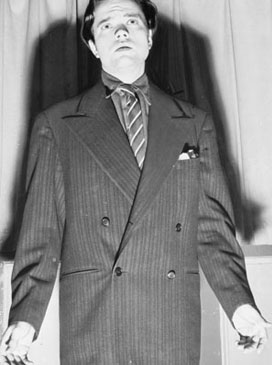
Welles, the day after
“U.S. Terrorized By Radio’s ‘Men From Mars,’” said the San Francisco Chronicle.
“Radio Listeners in Panic, Taking War Drama as Fact,” declared the New York Times.
“Attack From Mars In Radio Play Puts Thousands in Fear,” said the New York Herald Tribune.
“Radio Fake Scares Nation,” cried the Chicago Herald and Examiner.
These reports, however, were highly anecdotal and the reactions they reported simply did not rise to the level of nationwide panic and mass hysteria.
Newspapers, I point out, “had no reliable way of ascertaining the validity of the sweeping claims they offered in their columns the day after the program.”
Here’s why.
The broadcast aired late on Sunday evening in the Eastern time zone, a time when newsrooms of most daily newspapers were thinly staffed.
As such, collecting the reactions to The War of The Worlds broadcast represented no small challenge, especially for morning newspapers having late-night deadlines, I note in Getting It Wrong, adding:
“Given the constraints of time and staffing, relying on wire services such as the Associated Press became essential.
“This dependency, in turn, had the effect of promoting and deepening the notion that panic was widespread that night: On a late-breaking story of uncertain dimension and severity, many newspapers took their lead from wire service dispatches. They had little choice.”
The wire service reports were roundups that emphasized breadth rather than depth. Reliance on the roundups helps explain the consensus among U.S. newspapers that The War of the Worlds program had caused mass panic.
It also helps explains the striking similarity that characterized newspaper coverage of the broadcast. Many anecdotes transmitted by the wire services found their way into newspapers across the country.
One widely recounted anecdote told of a woman in Pittsburgh whose husband prevented her from poisoning herself. “I’d rather die like this,” she exclaimed, than fall victim to a Martian heat ray.
Also widely reported was the story of a woman who told the Boston Globe she could “see the fire” caused by the alien attack and that she and her neighbors were preparing to flee.
Newspapers in their coverage also tended to place considerable importance on the unusually large volume of calls placed that October night to their switchboards and to those of police and fire departments and local radio stations.
“The surge in call volume was routinely but mistakenly characterized by newspapers as evidence of widespread fright and hysteria,” I write, noting that call volume was a misleading marker of fear and alarm.
The increased call volume is in fact best understood as signaling an altogether rational response by people who neither panicked nor became hysterical. Instead, they sought confirmation or clarification from external sources–newspapers, ironically, as well as police and fire departments–known to be usually reliable.
“Moreover, the call volume surely included people who telephoned friends and relatives to talk about the unusual and clever program they had just heard,” I point out in Getting It Wrong.
Recent and related:




 Media Myth Alert