W. Joseph Campbell

Posts Tagged ‘Distortion’

Those delicious but phony quotes ‘that refuse to die’

In Cinematic treatments, Cronkite Moment, Debunking, Furnish the war, Media myths, Murrow-McCarthy myth, Spanish-American War, Washington Post, Watergate myth on June 25, 2011 at 10:31 am

Craig Silverman, author of Regret the Error, posted an intriguing column yesterday about appealing but dubious quotations that journalists seem especially prone to cite, noting that such famous lines “often turn out to be manufactured or inexact representations.”

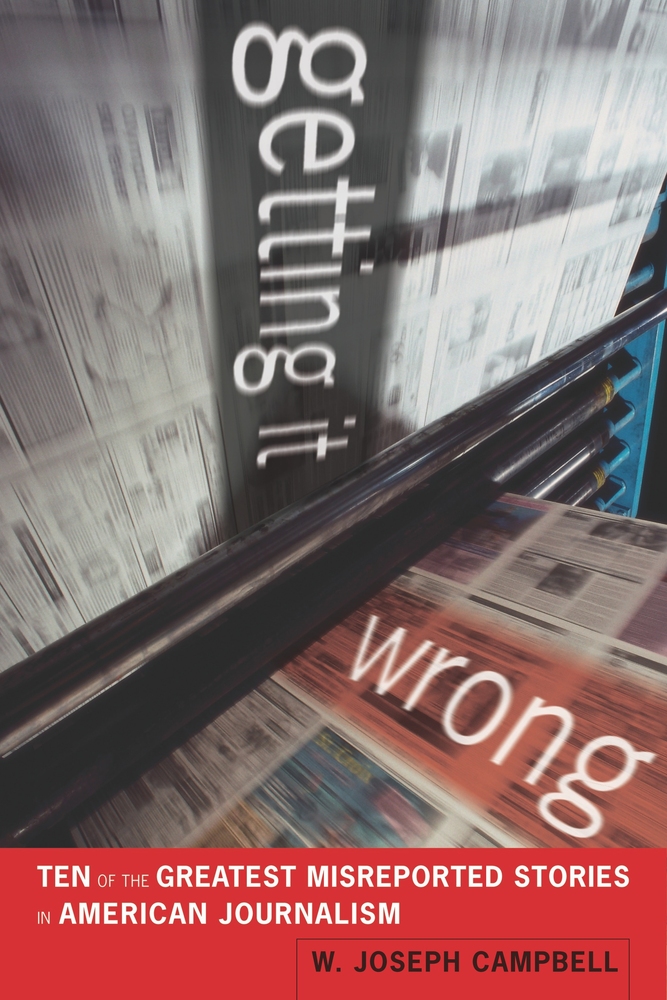
It’s an important reminder, given the endless popularity of quotations that are neat, tidy, and irresistibly delicious. As I note in my latest book, Getting It Wrong, “Turns of phrase that sound too neat and tidy often are too perfect to be true.”

Plouffe: Not so 'queasy'?

Silverman’s column, titled “Misquotes that refuse to die,” was centered around a comment attributed in 2009 to David Plouffe, Barrack Obama’s campaign manager in 2008.

Plouffe supposedly said he felt a bit “queasy” about the prospect of Obama’s facing Jon Huntsman, the Republican former Utah governor, in the presidential election in 2012.

“Plouffe never said it,” Silverman wrote, describing how the queasy line took on life of its own.

Journalists can be particularly susceptible to such succinct “little gems,” as Silverman put it, because the gems are so effective in making a point or in distilling complexity.

Silverman’s column noted two famous, dubious quotes that I dismantle in Getting It Wrong.

One of them is the comment misattributed to President Lyndon Johnson who,  in reaction to Walter Cronkite’s on-air assessment that the war in Vietnam was “mired in stalemate,” supposedly said:

“If I’ve lost Cronkite, I’ve lost Middle America.”

Or something to that effect.

Versions as to what Johnson supposedly said vary quite a lot — which can be a marker of a media myth. I also point out in Getting It Wrong that Johnson did not see the Cronkite report when it aired on CBS on February 27, 1968.

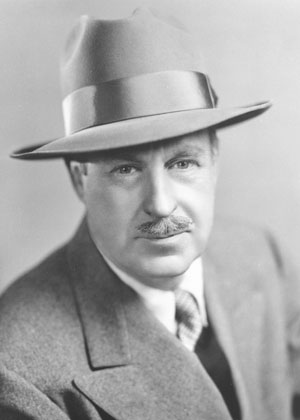
The other dubious quote discussed in Getting It Wrong and mentioned by Silverman is William Randolph Hearst’s purported vow to “furnish the war” with Spain.

Reasons for doubting the Hearstian vow are many, I write, and include the fact that the telegram in which Hearst supposedly made the statement has never turned up. Plus, Hearst denied making such a vow.

A number of other famous and delicious quotes favored by journalists likewise have proven to be false, made-up, or of mythical dimension; among them:

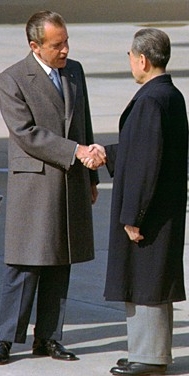
  • Too early to say.” It’s often said that Chinese premier Zhou Enlai offered the observation in 1972, as sage, far-sighted analysis about the effects of the French Revolution of 1789. But according to a retired American diplomat, Charles W.  (Chas) Freeman Jr., Zhou’s comment, which came during President Richard Nixon’s visit to China in February 1972, was about political turmoil in France in 1968. “I cannot explain the confusion about Zhou’s comment, except in terms of the extent to which it conveniently bolstered a stereotype” about Chinese leaders taking an exceptionally long and patient view of history, Freeman said recently. Freeman was Nixon’s interpreter on the trip.

So what to do about these delicious but dubious and phony quotations?

Keep pounding away at them, calling them out for what they are, whenever they appear. That’s the only effective way of debunking.

But even then, thorough and utter debunking can be rare.

WJC

Recent and related:

‘Getting It Wrong’ at ‘Reader’s Corner’ tonight

In Cronkite Moment, Debunking, Hurricane Katrina, Media myths, Washington Post, Watergate myth on June 24, 2011 at 6:02 am

I’ll be discussing my latest book, Getting It Wrong, in a half-hour interview that airs tonight at 7:30 (Eastern) on “Reader’s Corner,” a program of Boise State University public radio, KBSX 91.5 FM.

The host is the university’s president, Bob Kustra, an engaging interviewer who taped the show with me last week.

We discussed a number of the media-driven myths debunked in Getting It Wrong, including, in some detail, the mythical “Cronkite Moment” of 1968.

That was when CBS News anchor Walter Cronkite supposedly swung U.S. policy in Vietnam with his on-air assessment that the American military was “mired in stalemate” and that negotiations were a prospective way out of Southeast Asia.

The assessment, I write in Getting It Wrong, “supposedly was so singularly potent that it is has come to be remembered as the ‘Cronkite moment.'”

At the White House, President Lyndon Johnson supposedly watched Cronkite’s program about Vietnam — a special, hour-long report that aired February 27, 1968. Upon hearing Cronkite’s “mired in stalemate” statement, Johnson is said to have leaned over, snapped off the television set, and told an aide or aides:

“If I’ve lost Cronkite, I’ve lost Middle America.”

Or words to that effect. Versions vary. Markedly.

As I point out in Getting It Wrong, however, Johnson didn’t see the Cronkite report when it aired. The president wasn’t at the White House, either.

He was on the campus of the University of Texas at Austin, offering light-hearted banter at the 51st birthday party of Governor John Connally, one of the president’s long-time political allies.

About the time Cronkite intoned his “mired in stalemate” assessment, Johnson was saying this, about Connally’s age:

“Today you are 51, John. That is the magic number that every man of politics prays for—a simple majority.”

It’s difficult to imagine how Johnson was much moved by a show he didn’t see.

Even if the president did watch the Cronkite report at some later date on videotape — and there’s no evidence he did — it’s clear that Johnson did not take the anchorman’s assessment to heart. “Mired in stalemate” was no epiphany for the president.

Indeed, just three days after the Cronkite program aired, Johnson vowed in remarks at a testimonial dinner in Texas that the United States would “not cut and run” from Vietnam.

“We’re not going to be Quislings,” the president said, invoking the surname of a Norwegian politician who helped the Nazis take over his country. “And we’re not going to be appeasers….”

I noted in the interview with Kustra, that Cronkite until late in his life pooh-poohed the notion his assessment about Vietnam represented a pivotal moment.

In his memoir published in 1997, Cronkite wrote that his “mired in stalemate” assessment posed for Johnson “just one more straw in the increasing burden of Vietnam.”

But by 2006, three years before his death, Cronkite had come to embrace the conventional interpretation of the presumptive “Cronkite Moment,” saying in an interview with Esquire:

“To be honest, I was rather amazed that my reporting from Vietnam had such an effect on history.”

Among other topics, Kustra and I discussed the hero-journalist myth of Watergate (the notion that the dogged reporting of Bob Woodward and Carl Bernstein for the Washington Post brought down Richard Nixon’s presidency) and the woefully exaggerated reporting that characterized coverage of Hurricane Katrina’s aftermath in New Orleans.

I also noted during the interview that Getting It Wrong is best regarded as aligned with the fundamental imperative of newsgathering — that of getting it right, of seeking to obtain the most accurate version of events as possible.

WJC

Wrong-headed history: Yellow press stampeded U.S. to war

In Debunking, Media myths, Spanish-American War, Yellow Journalism on June 21, 2011 at 9:13 am

Glib but thinly substantiated.

Hearst: War-monger?

That characterizes the not-infrequent claims about William Randolph Hearst, Joseph Pulitzer, and the war-mongering ways of their yellow newspapers. The claims are readily offered but rarely documented.

Take, for example, an essay published yesterday at Huffington Post which addressed the farcical campaign of the satiric newspaper, the Onion, to seek a Pulitzer Prize.

The HuffPo essay was headlined, “Why not give The Onion a Pulitzer?” and offered this dollop of wrong-headed history:

“Pulitzer and William Randolph Hearst used their newspapers to stampede the country into the Spanish-American War. A century later, the publications most often honored by Pulitzer Prizes went along for the ride of our Iraqi adventure in the same fashion — which makes the point that today’s regular Pulitzer honorees haven’t come very far from the journalism practiced in Pulitzer’s day.”

The latter claim — “today’s regular Pulitzer honorees haven’t come very far” — is risible. The preceding claim about the yellow press and a “stampede” to war with Spain is utterly false.

As I discussed in my 2001 book, Yellow Journalism: Puncturing the Myths, Defining the Legacies:

“The yellow press is not to blame for the Spanish-American-War. It did not force — it could not have forced — the United States into hostilities with Spain over Cuba in 1898. The conflict was, rather, the result of a convergence of forces far beyond the control or direct influence of even the most aggressive of the yellow newspapers, William Randolph Hearst’s New York Journal. ”

In 1898, Pulitzer and Hearst published six newspapers between them. Pulitzer’s were the World and the Evening World in New York, and the Post-Dispatch in St. Louis. Hearst’s were the Journal, the New York Evening Journal, and the San Francisco Examiner.

Those half-dozen titles wielded no more than modest agenda-setting influence on the rest of the American press, which then numbered more than 2,200 daily newspapers.

As I pointed out in Yellow Journalism:

“There is little evidence that the press beyond New York City, especially in small-town and rural America, was influenced by the content of the yellow journals, including their demands for war after the destruction of the Maine,” the American battleship that blew up in Havana harbor in February 1898, killing 266 officers and sailors.

The destruction of the Maine was a triggering event of the war with Spain for the future of Cuba. But it was not the sole factor, or even necessarily the decisive factor.

Effects of 'reconcentration'

What more than anything led America to war in 1898 were Spain’s brutal efforts to suppress the rebellion on Cuba, a vicious conflict that began in February 1895.

Spain sought to crush the rebellion by forcing Cuban non-combattants – old men, women, and children– into were called “reconcentration centers,” to prevent the non-combattants from giving aid, succor, and supplies to the Cuban rebels.

Spain’s “reconcentration” policy was a disaster. Tens of thousands of Cubans fell victim to disease and starvation. U.S. newspapers — including but certainly not limited to the dailies of Pulitzer and Hearst — were aware of, and reported extensively about, the humanitarian crisis that had taken hold on Cuba by early 1898.

That crisis — and not the often-flamboyant contents of the yellow press — was what precipitated the conflict with Spain.

As the historian David Trask has written, Americans in 1898 “went to war convinced that they had embarked upon an entirely selfless mission for humanity,” to end Spain’s brutal rule of Cuba.

It’s important to note that the fierce Pulitzer-Hearst competition for readers in New York undercut whatever power their respective newspapers may have wielded in shaping U.S. public opinion and U.S. policy toward Spain.

As I noted in Yellow Journalism, the newspapers of Pulitzer and Hearst “were not in lockstep but sought instead to denigrate, undercut, or minimize the other’s coverage during the months before and after the United States declared war on Spain.”

The broader effect of the Pulitzer-Hearst rivalry, I noted, “likely was to diminish the integrity and, in turn, the credibility and  presumed influence” of their newspapers, further weakening their agenda-setting capacity.

WJC

Recent and related:

NYT’s Keller and the dearth of viewpoint diversity in newsrooms

In Debunking, Jessica Lynch, Media myths, New York Times on June 20, 2011 at 4:36 pm

I enjoy Bill Keller‘s column in the New York Times Sunday magazine, not so much for strength of argument and depth of reporting as for its tendency to offer grist to Media Myth Alert.

Keller of the Times

Keller’s assertion a few months ago that the Times corrects errors of fact when it detects them prompted me to point out that the Times hadn’t corrected an erroneous reference in January to the Army-McCarthy hearings.

And I’m still waiting for that correction.

In his most recent column, Keller poked at Sarah Palin, the former Alaska governor who’s flirting with the notion of making a run for president. Ill-fated that would be.

But Keller’s column — especially its opening observation — revealed more about the dearth of intellectual diversity and contrarian thinking in American journalism than it did about the limited appeal of Sarah Palin.

Keller, the Times executive editor, wrote blithely:

“If the 2012 election were held in the newsrooms of America and pitted Sarah Palin against Barack Obama, I doubt Palin would get 10 percent of the vote. However tempting the newsworthy havoc of a Palin presidency, I’m pretty sure most journalists would recoil in horror from the idea.”

Keller’s probably correct.

Ten percent of the U.S. newsroom vote may even be a generous assessment.

But rather than consider the implications of such intellectual lopsidedness, Keller breezily wrote that “watching Palin answer a question is like watching a runaway train struggling to stay on the rails, and fact-checking her is like fishing with dynamite.”

OK, that’s amusing.

But in acknowledging and then sidestepping the larger matter of viewpoint diversity in the newsroom, Keller left a more compelling issue unaddressed.

A broad-based ongoing discussion about the dearth of intellectual diversity in the newsroom — why so few American journalists self-identify as politically conservative — would be beneficial to American journalism.

As I note in my latest book, Getting It Wrong, which came out last year, intellectual diversity and contrarian thinking are objectives that deserve to be vigorously promoted in American newsrooms.

“It is certainly not inconceivable,” I write in Getting It Wrong, “that a robust newsroom culture that embraces viewpoint diversity, encourages skepticism, invites challenges to dominant narratives, and rewards contrarian thinking would have helped thwart publication of embarrassing tales such as the Washington Post’s ‘fighting to the death’ story about Jessica Lynch.”

The Post’s bogus front-page story in 2003 about Lynch’s supposed battlefield heroics in Iraq catapulted her to international fame and celebrity. The newspaper has never fully explained how it botched the Lynch story and has never identified the anonymous sources that led it astray.

To its credit, the Post has raised the issue of limited intellectual diversity in the newsroom.

Notably, Deborah Howell, the newspaper’s former ombudsman, wrote in mid-November 2008 that more “conservatives in newsrooms and rigorous editing would be two” ways to confront what she termed “the perception of bias” in political coverage. (The week before, Howell had reported a “tilt” in the Post’s 2008 campaign coverage, in Obama’s favor.)

In her column about perception bias, Howell wrote:

“I’ll bet that most Post journalists voted for Obama. I did. There are centrists at The Post as well. But the conservatives I know here feel so outnumbered that they don’t even want to be quoted by name in a memo.”

Tellingly, Howell quoted Tom Rosenstiel of the Project for Excellence in Journalism as saying:

“The perception of liberal bias is a problem by itself for the news media. It’s not okay to dismiss it. Conservatives who think the press is deliberately trying to help Democrats are wrong.

“But conservatives are right that journalism has too many liberals and not enough conservatives. It’s inconceivable that that is irrelevant.”

Rosenstiel called for “more intellectual diversity among journalists” and was further quoted by Howell as saying:

“More conservatives in newsrooms will bring about better journalism.”

I wonder what Keller would say to that.

I offer it as grist for one of his columns.

WJC

Many thanks to Instapundit
Glenn Reynolds for linking to this post

Recent and related:

Why history is badly taught, poorly learned

In Cinematic treatments, Debunking, Media myths on June 19, 2011 at 12:41 pm

I’m not much a fan of the work of David McCullough, the award-winning popular historian whose latest book is the well-received The Greater Journey: Americans in Paris.

I couldn’t get through McCullough’s acclaimed 1776, a military history of a decisive year in American life that oddly had little to say about the Declaration of Independence.

But McCullough, in an interview published in yesterday’s Wall Street Journal, offered several provocative and telling points about why American history is so badly taught and so poorly grasped.

The splintered state of historical studies is one of the factors, McCullough said, adding:

“History is often taught in categories — women’s history, African American history, environmental history — so that many of the students have no sense of chronology. They have no idea what followed what.”

That’s a fair point. History by interest group can be an invitation to incoherence.

McCullough also pointed out that textbooks on history tend to “so politically correct as to be comic. Very minor characters that are currently fashionable are given considerable space, whereas people of major consequence … are given very little space or none at all.”

What’s more, as McCullough noted, textbooks often are tedious, boring, and poorly written. Historians by and large “haven’t learned to write very well,” McCullough wrote.

Although McCullough didn’t mention this in the interview, learning history can be frustrating because history is prone to error, distortion, and myth.

History quite simply can be myth-encrusted — and unlearning the myths of history can be challenging, time-consuming, and often unrewarding.

As I discuss in Getting It Wrong, my media-mythbusting book that came out last year, myths in history spring from many sources, including the timeless appeal of the tale that’s simple and delicious.

A telling example is the undying tale about William Randolph Hearst’s purported vow in an exchange of telegrams with Frederic Remington to “furnish the war” with Spain at the end of the 19th century.

As I discuss in Getting It Wrong, among the many reasons for doubting that anecdote are Hearst’s denial and the absence of any supporting documentation. The Remington-Hearst telegrams have never surfaced.

But the tale lives on, as an appealing yet exceedingly simplified explanation about the causes of the Spanish-American War and as presumptive evidence of Hearst’s madcap and ethically compromised ways.

The urge to simplify history also explains the tenacity of the so-called “Cronkite Moment” of 1968, when the CBS News anchorman’s assessment of the Vietnam War as a “stalemate” supposedly prompted President Lyndon Johnson to realize the folly of his war policy and not to seek reelection.

However, as I discuss in Getting It Wrong, Johnson did not see the program when it aired, and Cronkite until late in his life claimed his “stalemate” assessment had at best modest influence, that it was “another straw on the back of a crippled camel.”

And even that effect was probably exaggerated.

But the notion that the “Cronkite Moment” was powerful and decisive has been promoted by many historians, notably David Halberstam in his error-riddled The Powers That Be.

The cinema, too, often injects error and misunderstanding into historical topics.

Hollywood’s treatment of Bob Woodward and Carl Bernstein’s investigative reporting for the Washington Post is an important reason why many people erroneously believe that Woodward and Bernstein brought down Richard Nixon’s corrupt presidency.

Good history and successful cinema are quite often at odds, as Richard Bernstein noted in a memorable essay published several years ago in the New York Times.

“Artists who present as fact things that never happened, who refuse to allow the truth to interfere with a good story, are betraying their art and history,” Bernstein wrote.

So there are plenty of reasons beyond McCullough’s useful observations as to why American history is so poorly understood.

It may always be that way. After all, as the Scottish historian Gerard De Groot has noted, history is “what we decide to remember.

“We mine the past,” he has written, “for myths to buttress our present.”

WJC

Recent and related:

That was quick: Crummy Cleveland mob pic now out on DVD

In Cinematic treatments, Cronkite Moment, Debunking, Furnish the war, Media myths, Spanish-American War on June 16, 2011 at 1:08 pm

It was just three months ago when a low-budget yet widely reviewed movie about Cleveland’s 1970s mob scene came out in limited release.

The film, Kill the Irishman, never much caught on and was released this week in DVD.

I’m hardly surprised that its time in theaters was so brief.

Update: I’ve now seen Kill the Irishman and it’s not as dreadful as anticipated. Still, the movie meanders without making much of a point, other than to glamorize the Cleveland mob scene of the 1970s and romanticize a violence-prone hood named Danny Greene.

I’ve not seen the movie but have enjoyed reading the reviews, such as the one in the New York Times that called Kill the Irishman “an extravagantly corny ode to the collapse of the Cleveland mafia in the 1970s” that “never misses an opportunity to mythologize the meatheads who populate [the] script.”

The Los Angeles Times review likened Kill the Irishman to “clichéd shards of mob movies that add up to the usual ‘Goodfellas’ knockoff.”

Plain Dealer, October 7, 1977

Kill the Irishman is based on the violent life of a Cleveland mob figure, Daniel J. (Danny) Greene, best known for having survived several attempts on his life before falling victim to a deadly car bombing in 1977.

I was in Cleveland then, a young reporter for the city’s morning newspaper, the Plain Dealer. I remember the city’s mob scene as murky, chaotic, and not at all glamorous; its figures — including Greene — were scarcely heroic.

Greene rather struck me as an arrogant, somewhat off-kilter punk.

He was hardly a legendary character possessing the stuff that would attract serious attention beyond Cleveland.

What most rankled me about Kill the Irishman was its exaggerated premise, that there were 36 bombing in the heart of Cleveland in the summer of 1976 as Greene waged a turf war with the local Italian mafia.

Sure, Hollywood exaggerates. A lot. But a documentary-esque film ought not to cock a snook at the truth. And there was no such bombing rampage in downtown Cleveland that summer.

The claim is preposterous.

As I’ve noted previously at Media Myth Alert, the figure of 36 bombings appears to have been mistakenly taken from an article published in May 1977 in the Plain Dealer, as a sidebar to the account of the bombing death of John A. Nardi, a mob figure allied with Greene.

The sidebar article said that in all of 1976, there had been 21 bombings in Cleveland and 37 in Cuyahoga County, which includes Cleveland and most of its many suburbs. That’s a lot, but nothing as stunning or sustained as 36 bombings in the heart of the city in a single summer. Such a spree would correspond to 12 bombings a month.

That never happened.

Also off-putting is the movie’s clear objective of glamorizing the unglamorous Danny Greene. One reviewer of the Blu-Ray version called Kill the Irishman “a clichéd offering of criminal worship ….” Well said.

So maybe I’ll rent the DVD. Some day.

WJC

Recent and related:

Commodity markets and Watergate’s most famous made-up line

In Cinematic treatments, Debunking, Media myths, Washington Post, Watergate myth on June 15, 2011 at 7:56 am

Follow the money,” that famous and dramatic line about the Watergate scandal, was made up for the cinema.

Not in this book

But because it’s so pithy and compelling, the passage is routinely treated as if it had been advice vital to unseating President Richard Nixon and unraveling the greatest scandal in American politics.

The Reuters wire service yesterday offered “follow the money” as if it were genuine, stating in a dispatch posted at the Commodities Now online site:

“‘Follow the money,’ FBI Deputy Director Mark Felt (‘Deep Throat’) told Washington Post reporters Bob Woodward and Carl Bernstein during their investigation into the Watergate break ins. It remains good advice for participants in commodity markets.”

Follow the money” may well be sound guidance for commodities brokers. But in the Watergate scandal, the line had relevance and as dramatic effect only in the movies.

Felt — whose family disclosed in 2005 that he had been the fabled “Deep Throat” source of the Washington Postdidn’t offer such guidance to Woodward during their periodic meetings in 1972 and 1973 as the scandal unfolded. Felt, moreover, never spoke with Bernstein during Watergate.

Nor does the advice to “follow the money” appear in All the President’s Men, Woodward and Bernstein’s book about their Watergate reporting. And the line can’t be found in any Watergate-related article or editorial in the Washington Post before 1981.

The derivation of the line lies in the screenplay of All the President’s Men, the cinematic version of Woodward and Bernstein’s book. The movie came out 35 years ago and has been seen by millions of people, easily qualifying it as the most-viewed film about Watergate.

All the President’s Men included a boffo performance by Hal Holbrook who played the stealthy, conflicted “Deep Throat” character.

Holbrook advised the Woodward character, played by Robert Redford, to “follow the money” — and did so with such quiet assurance and insistence that it sure seemed as if the guidance were vital to rolling up Watergate.

But had the advice indeed been given to Woodward, “follow the money” would’ve have taken the reporter only so far. Watergate, after all, was a scandal far more complex than the misuse of campaign monies.

As I write in Getting It Wrong, my media-mythbusting book that came out last year, some 20 men associated with Richard Nixon’s presidency or his 1972 reelection campaign went to jail for crimes linked to Watergate.

To unravel a scandal of such dimension, I write in Getting It Wrong, “required the collective if not always the coordinated forces of special prosecutors, federal judges, both houses of Congress, the Supreme Court, as well as the Justice Department and the FBI.

“Even then,” I add, “Nixon likely would have served out his [second] term if not for the audiotape recordings he secretly made of most conversations in the Oval Office of the White House. Only when compelled by the Supreme Court did Nixon surrender those recordings, which captured him plotting the cover-up and authorizing payments of thousands of dollars in hush money.”

As I’ve noted previously at Media Myth Alert, what cost Nixon the presidency wasn’t of the improper use of campaign funds but his obstruction of justice in attempting to thwart the FBI’s investigation of the scandal.

The misunderstanding about “follow the money” is an element in the broader mythology of Watergate, which centers around the historically inaccurate notion that Woodward and Bernstein, through their dogged investigative reporting, brought down Nixon’s presidency.

To embrace that interpretation of Watergate is, I write in Getting It Wrong, “to abridge and misunderstand the scandal and to indulge in a particularly beguiling media-driven myth.”

WJC

Recent and related:

‘Too early to say’: Zhou was speaking about 1968, not 1789

In Debunking, Media myths on June 14, 2011 at 8:50 am

Nixon and Zhou, 1972

When Chinese premier Zhou Enlai famously said it was “too early” to assess the implications of the French revolution, he was referring to turmoil in France in 1968 and not — as is commonly thought — to the more distant political upheaval of 1789.

So says a retired American diplomat, Charles W.  (Chas) Freeman Jr., who was present when Zhou made the comment during President Richard Nixon’s visit to China in February 1972.

Freeman, who was Nixon’s interpreter during the historic, weeklong trip, made the disclosure last week during a panel discussion in Washington about On China, the latest book by former Secretary of State Henry Kissinger.

The discussion was moderated by Richard McGregor, a journalist and China expert who wrote about Freeman’s comments for the Financial Times of London.

In an interview yesterday, Freeman elaborated on his recollection about Zhou’s comment, the conventional interpretation of which is frequently offered as evidence of China’s sage, patient, and far-sighted ways. Foreign Policy magazine, for example, referred last month to that interpretation, saying the comment was “a cautionary warning of the perils of judgments made in real time.”

The Washington Post’s recent review of Kissinger’s book likewise referred to the conventional understanding of Zhou’s remark.

Freeman described Zhou’s misconstrued comment as “one of those convenient misunderstandings that never gets corrected.”

He said Zhou’s remark probably was made over lunch or dinner, during a discussion about revolutions that had succeeded and failed. They included, Freeman said, the Prague Spring of 1968 and the Hungarian uprising of 1956, both of which the Soviet Union crushed.

He said it was clear from the context and content of Zhou’s comment that in saying it was “too early to say” the Chinese leader was speaking about the events in France in May 1968, not the years of upheaval that began in 1789.

Freeman acknowledged that the conventional interpretation makes for a better story but added that it was “absolutely clear” from the context of the discussion that Zhou was speaking about 1968.

Just how Zhou’s remark came to be misinterpreted, Freeman was unable to say.

“I cannot explain the confusion about Zhou’s comment except in terms of the extent to which it conveniently bolstered a stereotype (as usual with all stereotypes, partly perceptive) about Chinese statesmen as far-sighted individuals who think in longer terms than their Western counterparts,” Freeman said in a follow-up email. “It was what people wanted to hear and believe, so it took” hold.

He described Zhou’s misinterpreted remark as “a classic of the genre of a constantly repeated misunderstanding that has taken on a life of its own.”

The Zhou comment also represents a reminder about the often-irresistible quality of pithy and apparently telling quotations — a topic discussed in my latest book, Getting It Wrong, which addresses and debunks 10 prominent media-driven myths. (An expanded second edition of Getting It Wrong came out in late 2016.)

“Turns of phrase that sound too neat and tidy often are too perfect to be true,” I write in discussing such media myths as William Randolph Hearst’s reputed vow — supposedly made in an exchange of telegrams with the artist Frederic Remington — to “furnish the war” with Spain in the 1890s.

“Like many media-driven myths,” I write, the purported Hearstian vow “is succinct, savory, and easily remembered. It is almost too good not to be true.” As is the conventional interpretation of Zhou’s “too early to say” remark.

I note in Getting It Wrong that among the many reasons for doubting the anecdote is that it “would have been absurd for Hearst to vow to ‘furnish the war’ because war — specifically, the Cuban rebellion against Spain’s colonial rule — was the very reason Hearst sent Remington to Cuba in the first place.”

Anyone reading U.S. newspapers in January 1897, when Remington was in Cuba on assignment for Hearst’s New York Journal, “would have been well aware,” I write, “that Cuba was a theater of a nasty war.”

What I call version variability — the imprecision that alters or distorts an anecdote in its retelling — has afflicted Zhou’s “too early to say” comment. Some accounts, for example, have attributed the remark to Chinese dictator Mao Zedong.

Another account has it that Zhou, who died in 1976, made the comment in Geneva in 1953, in response to a French journalist’s question.

Freeman said he doubted that version was accurate.

Zhou, he said, “was a man with a graceful wit but not given to facetious remarks.”

WJC

Recent and related:

Invoking Murrow-McCarthy myth to assert the worthiness of TV

In Debunking, Media myths, Murrow-McCarthy myth on June 11, 2011 at 6:58 am

Murrow

Media-driven myths have a variety of perverse applications — including value in scoring points in arguments.

Today’s Sydney Morning Herald does just that in turning to a particularly hardy media myth — that of Edward R. Murrow’s supposedly decisive televised report in 1954 about Senator Joseph R. McCarthy.

In a commentary titled “In defense of the idiot box,” the Morning Herald argues for the worthiness of television, asserting that the medium “has the power to shock, appeal, nauseate and, if everything comes together, inspire.”

The commentary further states:

“TV has made a difference before. In the early days, Edward R. Murrow took on Joe McCarthy, starting a tradition of fearless TV journalism exposing the corruption of government, the horrors of war and the dark side of society. The medium may have numbed the odd brain but it’s also done a lot of good ….”

Mind-numbing television generally is.

More doubtful is the commentary’s extravagant claim about the fearlessness of Murrow. His report about McCarthy, which aired on the See It Now show of March 9, 1954, scarcely can be termed “fearless” and shouldn’t be seen as inaugurating any sort of “tradition” of searching, intrepid broadcast journalism.

That’s because Murrow was very late in taking on McCarthy and the senator’s heavy-handed campaign against communists in government.

Pearson, muckraking columnist

As I discuss in Getting It Wrong, my media mythbusting book that came out last year, the evidence “is overwhelming that Murrow’s famous program on McCarthy had no … decisive effect, that Murrow in fact was very late in confronting McCarthy, that he did so only after other journalists had challenged the senator and his tactics for months, even years.”

Notable among those journalists was Drew Pearson, who wrote the syndicated and widely read muckraking column, “Washington Merry-Go-Round.” Pearson was quick to call attention to the recklessness of McCarthy’s claims.

He took on McCarthy in February 1950, soon after the senator first raised his claims about communists in high places in the U.S. government.

Pearson wrote that month that “the alleged communists which [McCarthy] claims are sheltered in the State Department just aren’t.”

Far from being fearless, Murrow, it can be argued, waited till the risks had subsided before taking on McCarthy. By March 1954, McCarthy’s capacity to stir dread was in decided retreat.

I note in Getting It Wrong that Eric Sevareid, Murrow’s friend and colleague at CBS News, was among those who chafed at the interpretation of fearlessness attached to the Murrow program which, he noted, “came very late in the day.”

Sevareid said in the 1970s:

“The youngsters read back and they think only one person in broadcasting and the press stood up to McCarthy and this has made a lot of people feel very upset, including me, because that program came awfully late.”

I further note in Getting It Wrong how the media myth about Murrow took hold despite the protestations of its central figures.

“In the days and weeks after the See It Now program,” I write, “Murrow said he recognized his accomplishments were modest, that at best he had reinforced what others had long said about McCarthy.

“Jay Nelson Tuck, the television critic for the New York Post, wrote that Murrow felt ‘almost a little shame faced at being saluted for his courage in the McCarthy matter. He said he had said nothing that … anyone might not have said without a raised eyebrow only a few years ago.'”

Murrow, moreover, told Newsweek magazine: “It’s a sad state of affairs when people think I was courageous” in confronting McCarthy.

Fred W. Friendly, Murrow’s collaborator and co-producer, likewise rejected claims that the See It Now program on McCarthy was pivotal or decisive. As Friendly wrote in his memoir:

“To say that the Murrow broadcast of March 9, 1954, was the decisive blow against Senator McCarthy’s power is as inaccurate as it is to say that Joseph R. McCarthy … single-handedly gave birth to McCarthyism.”

WJC

Recent and related:

No bra-burning at Atlantic City?

In Bra-burning, Debunking, Media myths on June 10, 2011 at 8:19 am

Bra-burning” was a late 20th century phenomenon that’s given rise to considerable and enduring misunderstanding.

Atlantic City, 1968

The notion that feminists in the late 1960s and 1970s frequently and demonstratively set fire to bras is erroneous — as is the view that bra-burning never happened, that it was all a nasty media myth.

In a brief item posted online today, the Irish Independent veers toward the latter interpretation. It cites the women’s liberation protest in September 1968 at Atlantic City, a demonstration against the Miss America Pageant that gave dimension to the epithet “bra-burning.”

The Independent says that “hundreds of women protested the Miss America Pageant by tossing tweezers, high heels and bras — symbols of objectification — into a bin.” It adds, parenthetically:

“Bra burning at this event, however, is a myth.”

Not exactly.

In Getting It Wrong, my media mythbusting book that came out last year, I offer evidence that bras were set afire, if briefly, during the demonstration at the Atlantic City — where about 100 women (certainly not “hundreds of women”) protested the pageant as a demeaning spectacle.

The evidence is in separate witness accounts by journalists, including an article report published in the Press of Atlantic City on September 8, 1968, the day after the protest.

The article appeared on page 4 of the Press, beneath the byline of John L. Boucher, a gruff, locally prominent journalist known to take pains not to embroider or exaggerate his reporting.

Boucher’s article carried the headline:

“Bra-burners blitz boardwalk.”

The article mentioned a burn barrel that demonstrators had dubbed the “Freedom Trash Can,” stating:

“As the bras, girdles, falsies, curlers, and copies of popular women’s magazines burned in the ‘Freedom Trash Can,’ the demonstration reached the pinnacle of ridicule when the participants paraded a small lamb wearing a gold banner worded ‘Miss America.’”

Boucher’s report was buttressed by the separate recollections of Jon Katz, a writer who in 1968 was a young reporter for the Atlantic City Press. Katz was assigned to women’s liberation protest to gather material for a sidebar article about the reactions of passersby.

In correspondence with me as I researched Getting It Wrong, Katz wrote:

“I quite clearly remember the ‘Freedom Trash Can,’ and also remember some protestors putting their bras into it along with other articles of clothing, and some Pageant brochures, and setting the can on fire.

“I am quite certain of this.”

As I point out in Getting It Wrong, these accounts at very least “offer fresh dimension to the bra-burning legend.

“They represent two witness accounts that bras and other items were burned, or at least smoldered, in the Freedom Trash Can.”

This evidence, I write, cannot be taken lightly, dismissed or ignored.

At the same time, I add, the accounts of Boucher and Katz “lend no support to the far more vivid and popular imagery that many bras went up in flames in flamboyant protest that September day.”

Even so, I note that “bra-burning” is an epithet not at all misapplied to the protest at Atlantic City. The evidence is that bras and other items were set afire, briefly, at that long ago demonstration.

WJC

Recent and related: