W. Joseph Campbell

Posts Tagged ‘Fact-checking’

Is this bra-burning photo authentic?

In Bra-burning, Media myths, Newspapers, Photographs on February 15, 2011 at 8:21 am

Bra-burning in Toronto, 1979 (Bettmann/Corbis)

It is claimed from time to time that burning bras figured in no feminist protest of the late 1960s and 1970s. Bra-burning, it is sometimes said, was little more than a media-concocted myth.

But this photograph, taken near Toronto city hall in March 1979, suggests otherwise. (A larger version of the image is available here.)

Update: The photo is genuine.

The occasion was International Women’s Day and the demonstrators were protesting the contents of a controversial Ontario Provincial Police report about rape.

But why would protesters incensed about a police report burn bras? The connection seems elusive.

And that’s one reason why I wonder about the photo’s authenticity, whether it was improperly edited. I’m not saying it’s a hoax or a ruse; I’m saying I have reservations.

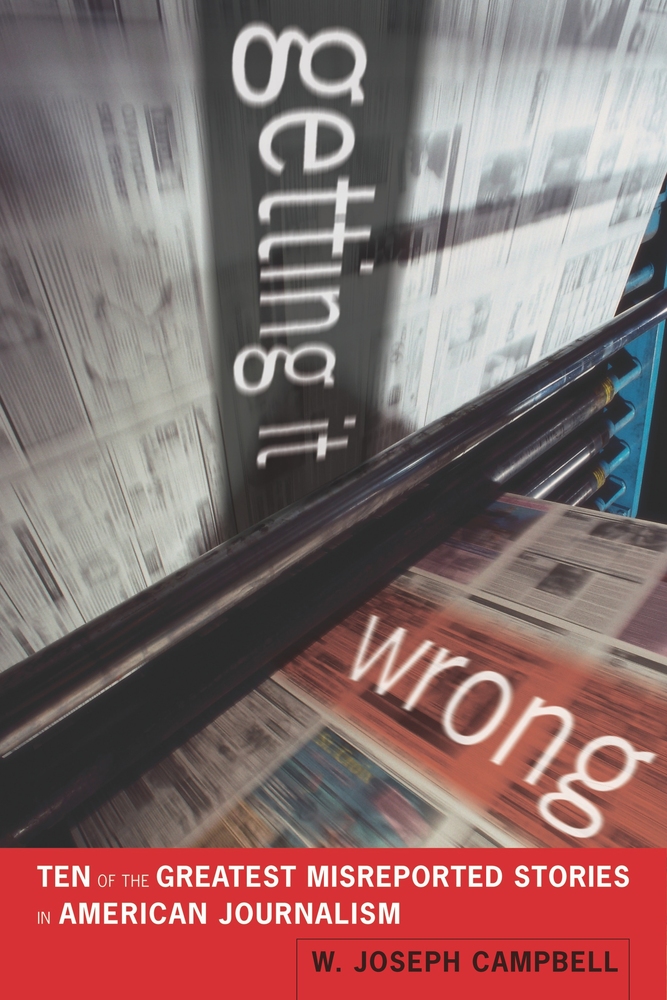
I’ve conducted a good deal of research about feminist bra-burning; my latest book, Getting It Wrong, offers evidence that — assertions to the contrary notwithstanding — bras were burned, briefly, at the famous women’s liberation protest in September 1968 against the Miss America pageant at Atlantic City.

That evidence “cannot be taken lightly, dismissed or ignored,” I write in Getting It Wrong, which debunks 10 prominent media-driven myths — those dubious stories about the news media that masquerade as factual.

I also acknowledge that the evidence of bra-burning at Atlantic City doesn’t corroborate the “widely held image of angry feminists demonstratively setting fire to their bras and tossing the flaming undergarments into a spectacular bonfire.”

I saw the image of bra-burning in Toronto for the first time last week, accompanying an article posted February 6 at the online site of the London Guardian. The image was credited to the Bettmann/Corbis photo archive.

The archive’s online record says the bra-burning photograph was taken in Toronto on March 8, 1979. Information about the photographer and place of publication are not available, however.

Corbis notes that it licenses photographs for sale; it doesn’t vouch for their authenticity.

The image of the Toronto protest certainly seems to pose a further challenge to claims that feminist bra-burning is a media myth. While the demonstrators in the photograph hardly look angry, their protest certainly seems flamboyant, what with flames leaping hungrily from the burn barrel.

The photograph suggests a vivid moment of demonstrative bra-burning.

But, then, maybe those flames are lapping a bit too hungrily at the dangling white bra.

Why hasn’t that bra yet caught fire?

And wouldn’t it have been more logical and emphatic to drop a copy of the controversial police report into the flaming burn barrel?

Interestingly, the leading Toronto newspapers of the time did not mention the bra-burning episode in their reports about the protest.

The Toronto Star of March 9, 1979, said that the demonstrators were outraged by the provincial police report, which had identified hitchhiking, alcohol consumption, and drug use as factors in many rapes.

“The [protesting] women lit sparklers and set a garbage can on fire as they booed the report’s findings,” the report in the Star said, identifying the demonstrators as members of Women Against Violence Against Women.

Lighted sparklers held aloft can be seen in the photograph; the placard shown in the image bears the acronym of Women Against Violence Against Women.

The report in Toronto’s Globe and Mail newspaper was more detailed — but likewise made no mention of the burning bra.

The Globe and Mail said the protest was “boisterous” and aimed at the police report, which the demonstrators dismissed as “‘dazzling in its illogic.'”

The newspaper also reported:

“The women carried signs saying: ‘Take a Rapist to Lunch — Charcoal Broiled’ and ‘Hookers Who Wink Go to the Clink! Men Who Rape Escape.’

“The women, after lighting a fire in a garbage can, to the obvious annoyance of about a dozen watchful constables, shouted: ‘Burn the rapists, burn the city, burn the OPP,” the acronym for Ontario Provincial Police.

The newspaper added: “The women charged that the OPP report was nothing less than state approval of rape and that no serious study of rape had even been done by the Government.

“The women then sang a surprisingly obscene song describing male domination of women and marched off, chanting anti-male slogans ….”

I spoke by phone the other day with Susan G. Cole, who was a member of Women Against Violence Against Women and who said she was at the protest in March 1979.

But Cole said she does not recall the bra-burning.

I shared with her a link to image posted at the Guardian site; Cole said she is not in the photograph but added that she recognized as prominent activists the women shown in the image. “We were so bright and energetic in those days,” Cole said, a bit wistfully.

Women Against Violence Against Women, Cole also said, was theatrical and very creative in its protests, adding that she is “not surprised that these guys were burning bras.”

She suggested that the Toronto demonstrators may have thought that if bras had not been flamboyantly set afire at Atlantic City in 1968, then “let’s do it now.”

I’ve tried without success to reach two of the women in the photograph. One is a lawyer in British Columbia, the other an activist in Toronto.

In the final analysis, if the image is authentic, then it represents impressive evidence of demonstrative bra-burning at a feminist protest in the 1970s. If it’s not, then it’s a well-done photo hoax, a composite that deserves unmasking.

WJC

Many thanks to FiveFeetofFury for linking to this post

Recent and related:

‘Follow the money’ and the ‘new blue bloods’ in Parliament

In Cinematic treatments, Debunking, Media myths, Washington Post, Watergate myth on February 12, 2011 at 10:17 am

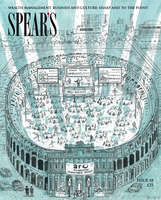
Spear’s is a glossy magazine published quarterly in London for the super rich. At its online site, Spear’s describes itself as “the essential resource for high net worths.”

In one of its recent articles, “The New Blue Bloods,” Spear’s discussed the number of entrepreneurs who sit in the British Parliament. The article opened by invoking the famous made-up line of Watergate:

“Deep Throat’s parking-lot exhortation to Bob Woodward to ‘follow the money’ has long established itself as shorthand for the pursuit of corruption in politics, but in the modern Parliament of the United Kingdom it has come to mean something altogether different.

“The otherwise-indecisive election of May 2010 saw one trend emerge strongly: a surprising number of those new members now sitting on the Government benches are successful entrepreneurs, and it is following the money they have made that has brought them into politics.”

I thought the 2010 election was decisive, that it turned out a Labor government and brought to power a Tory-led coalition.

Anyway. What most interests Media Myth Alert is Spear’s using that famous made-up line, “follow the money.”

The article, however inelegantly written, demonstrates anew the striking versatility of that contrived phrase as well as its impressive international resonance and its too-good-not-to-be-true quality.

“Follow the money” was never spoken by the Watergate source “Deep Throat” in his periodic meetings — sometimes in a parking garage in suburban Virginia — with Bob Woodward of the Washington Post.

The screenwriter William Goldman has taken credit for writing the line into the script of All the President’s Men, the cinematic version of Woodward and Carl Bernstein’s book about their Watergate reporting.

The movie came out in April 1976, less than two years after the Watergate scandal reached a climax with the resignation of President Richard Nixon.

The actor Hal Holbrook gave a stellar performance in All the President’s Men as the shadowy, conflicted, chain-smoking “Deep Throat” source.

“Follow the money” was uttered in a memorable scene of a late-night meeting in the parking garage, in which Holbrook tells the Woodward character, played by Robert Redford:

“I have to do this my way. You tell me what you know, and I’ll confirm. I’ll keep you in the right direction, if I can, but that’s all.

“Just follow the money.”

Holbrook’s lines were delivered with such authority that it’s not difficult to understand how “follow the money” has crossed from the screen to the vernacular, how the phrase has been embraced not only as plausible but as guidance that was genuine and essential.

But as I’ve noted, Watergate was more than a matter of pursuing and understanding a money trail. Rolling up a scandal of Watergate’s dimensions required more than simply following the money.

In the end, it was Nixon’s efforts to obstruct justice by covering up the break-in at headquarters Democratic national committee headquarters in 1972 that brought down his presidency.

As I note in my latest book, Getting It Wrong, the cinema can be a powerful agent in propelling and solidifying media-driven myths. Indeed, All the President’s Men, in its mediacentric focus on the supposed exploits of Woodward and Bernstein, helped inculcate the notion that the reporters’ investigative work was decisive in bringing down Nixon.

I point out in Getting It Wrong that “the cinematic treatment of All the President’s Men placed Woodward and Bernstein at the center of Watergate’s unraveling while denigrating the efforts of investigative agencies such as the FBI.

“The effect was to solidify and elevate the heroic-journalist myth, giving it dramatic power, and sustaining it in the collective memory.”

I further write that the movie “offers an unmistakable assertion of the power and centrality of the press in Nixon’s fall. All the President’s Men allows no other interpretation: It was the work Woodward and Bernstein that set in motion far-reaching effects that brought about the first-ever resignation of a U.S. president.

“And it is a message that has endured. More than thirty-five years later, what remains most vivid, memorable, and accessible about Watergate is the cinematic version of All the President’s Men.”

And a related and intriguing effect has been the tenacity of “follow the money” and the unwitting inclination to treat that pithy, well-delivered line as if it had been advice of decisive importance.

WJC

Recent and related:

Keller no keeper of the flame on famous NYT motto

In 1897, Anniversaries, Debunking, New York Times, Newspapers, Year studies, Yellow Journalism on February 11, 2011 at 8:56 am

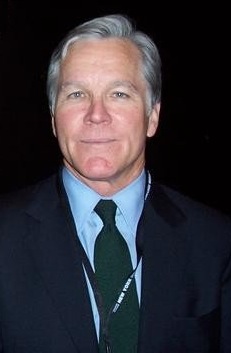
Keller

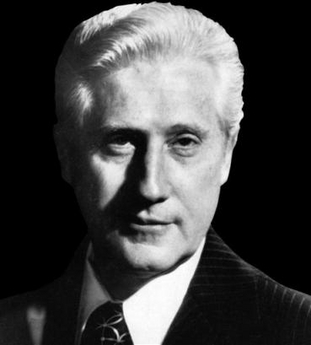
Bill Keller, executive editor of the New York Times, made clear the other day he doesn’t fully understand the derivation and significance of his newspaper’s famous, 114-year-old motto, “All the News That’s Fit to Print.”

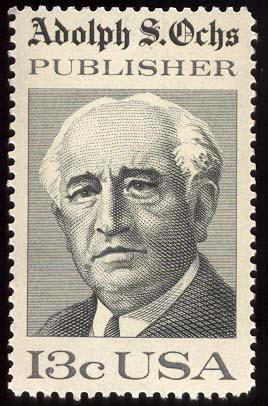
And he didn’t seem particularly comfortable with the slogan coined (most likely) by Adolph Ochs, who in 1896 acquired the then-beleaguered Times and eventually led the newspaper to preeminence in American journalism.

Ochs, commemorated

Sure, the motto’s smug and overweening, elliptical and easily parodied. But it is the most recognizable motto in American journalism, and it evokes a time now passed when slogans helped define and distinguish U.S. newspapers.

In an appearance not long ago at the National Press Club in Washington, Keller was asked about “All the News That’s Fit to Print,” which took a permanent place of prominence on the newspaper’s front page on February 10, 1897.

Keller rather sniffed at it, saying the motto “harkens back to a day when the aim of the newspaper was to be comprehensive.”

According to a transcript of his remarks, Keller said that nowadays the Times is “going to tell you maybe only a little bit, but a little bit about everything.

“And I think that slogan describes an aspiration, or a mindset. Now we tend to be more selective, and try to give you more depth, to tell you the stories that are not obvious.”

Actually, “All the News That’s Fit to Print” was framed a riposte to activist-oritented yellow journalism that flared in New York City in the closing years of the 19th century.

Ochs clearly meant the slogan to be a rebuke to the flamboyant ways of the  New York Journal of William Randolph Hearst and the New York World of Joseph Pulitzer. Their newspapers were the leading exemplars of the yellow press in fin-de-siècle urban America.

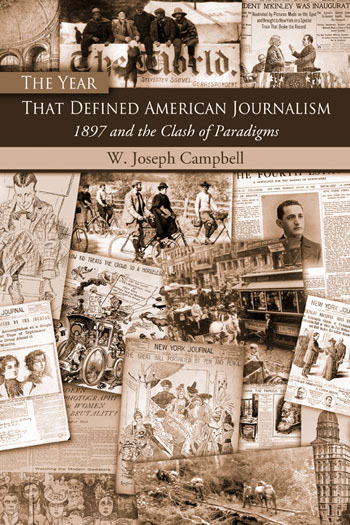
As I wrote in my 2006 book, a year study titled The Year That Defined American Journalism: 1897 and the Clash of Paradigms, the motto was, and remains, a daily rejection of flamboyant, self-promoting journalism.

And as the Times pointed out in 1935 in its obituary about Ochs, the motto “has been much criticized, but the criticisms deal usually with the phraseology rather than with its practical interpretation, and the phraseology was simply an emphatic announcement that The Times was not and would not be what the nineties called a yellow newspaper.”

I further noted in The Year That Defined American Journalism that the Times, at its 50th anniversary in 1901, “referred to ‘All the News That’s Fit to Print’ as its ‘covenant.’ One-hundred years later, a columnist for the Wall Street Journal aptly identified the motto as the ‘leitmotif not merely for the Times, but also, by a process of osmosis and emulation, for most other general-interest papers in the country, as well as for much of the broadcast media.'”

So, no, the motto wasn’t an assertion of intent to be comprehensive — although the Times surely carried a lot of news in the late 1890s. Thirty or more articles, many of them a paragraph or two in length, usually found places on its front page back then.

Ochs’ slogan was more than a daily slap at yellow journalism.

It also represents “a daily and lasting reminder of the Times’ triumph in a momentous … clash of paradigms that took shape in 1897—a clash that helped define the modern contours of American journalism,” as I noted in The Year That Defined American Journalism.

That clash pitted three rival, incompatible models for the future of American journalism.

“As suggested by its slogan,” I wrote, “the Times offered a detached, impartial, fact-based model that embraced the innovative technologies emergent in the late nineteenth century but eschewed extravagance, prurience, and flamboyance in presenting the news.

“Extravagance, prurience, and flamboyance were features typically associated with yellow journalism, a robust genre which, despite its controversial and self-indulgent ways, seemed to be irresistibly popular in 1897. The leading exemplar of yellow journalism was … Hearst’s New York Journal, which in 1897 claimed to have developed a new kind of journalism, a paradigm infused by a self-activating ethos that sidestepped the inertia of government to ‘get things done.’

“The Journal called its model the ‘journalism of action’ or the ‘journalism that acts,’ and declared it represented ‘the final state in the evolution of the modern newspaper.’

“The third rival paradigm,” I wrote, “was more modest and idiosyncratic than those of the Times and Journal. If improbable, it was nonetheless an imaginative response to the trends of commercialization in journalism. The paradigm was an anti-journalistic literary model devised and promoted by J. Lincoln Steffens, who in late 1897 became city editor of the New York Commercial Advertiser, then New York’s oldest newspaper.”

That model, Steffens said, was predicated on the notion “that anything that interested any of us would interest our readers and, therefore, would be news if reported interestingly.”

The Times ultimately prevailed in the three-sided rivalry that emerged in 1897, and “All the News That’s Fit to Print” lives on as a reminder of the outcome of that momentous clash of paradigms.

WJC

Recent and related:

114 years on the front page

In 1897, Anniversaries, New York Times, Newspapers, Yellow Journalism on February 9, 2011 at 7:37 am

Tomorrow makes 114 years on the front page for the best-known slogan in American journalism.

114 years on the front

The slogan, of course, is “All the News That’s Fit to Print,” which first appeared February 10, 1897, in the upper left corner (the left ear) of the front page New York Times.

I’ve called them the most famous seven words in American journalism and they have been endlessly parodied and analyzed since 1897. Even admirers of the Times have conceded that “All the News That’s Fit to Print” is “overweening” and even “elliptical.”

As I discussed in my 2006 book, The Year That Defined American Journalism: 1897 and the Clash of Paradigms, the motto has given rise to some lofty claims over the years. In 1901, at the 50th anniversary of its founding, the Times referred to “All the News That’s Fit to Print” as its “covenant.”

In 2001, a columnist for the Wall Street Journal described the motto as the “leitmotif not merely for the Times, but also, by a process of osmosis and emulation, for most other general-interest papers in the country, as well as for much of the broadcast media.”

Adolph Ochs began using the slogan soon after acquiring control of the then-beleaguered Times in August 1896. At first, Ochs made use of “All the News That’s Fit to Print” as an advertising and marketing device.

The slogan’s debut came in early October 1896, spelled out in a row of red lights on an advertising sign the Times had rented at New York’s Madison Square.

Four months later, without fanfare or explanation, the slogan appeared in the “left ear” of the front page. It has appeared in that place of prominence ever since.

In touting “All the News That’s Fit to Print,” Ochs clearly sought to distance the Times from the yellow press of William Randolph Hearst and Joseph Pulitzer. Their flamboyant newspapers dominated New York City’s media landscape in the late 1890s.

Ochs was nothing if not aggressive in promoting the Times and in seeking to position the newspaper as a sober counterweight to the activism and excesses of the yellow press.

To that end, he launched in late October 1896 a contest inviting readers to propose “a phrase more expressive of the Times’ policy” than “All the News That’s Fit to Print,” which by then had taken a modest place in a corner of the Times’ editorial page.

The Times promised to pay $100 to the person who proposed in ten words or fewer a slogan deemed better than “All the News That’s Fit to Print.”

The motto contest, cheesy though it may seem today, stirred a fair amount of attention–and reader interaction–in 1896.

Among the thousands of entries sent to the Times were such clunky suggestions as “All the News Worth Telling,” “All the News That Decent People Want,” and “The Fit News That’s Clean and True.”

Among the others:

“Full of meat, clean and neat.”

“Instructive to all, offensive to none.”

“The people’s voice, good the choice.”

“Aseptic journalism up to date.”

“Yours neatly, sweetly, and completely.”

As I wrote in The Year That Defined American Journalism: “Before the contest ended, the Times altered the stakes by making clear it would not abandon ‘All the News That’s Fit to Print.’

“The Times,” I wrote, “justified this change of heart by saying no phrase entered in the contest was more apt and expressive than ‘All the News That’s Fit to Print.’ The $100 prize would be awarded, to the person adjudged to have submitted the best entry. But the motto would not be changed.”

But the entries kept rolling in. Other suggestions included:

“Bright as a star and there you are.”

“All the news to instruct and amuse.”

“Pure in purpose, diligent in service.”

“You do not want what the New-York Times does not print.”

“All that’s new, true, and clever.”

Another entry was inspired by rival titles in fin-de-siècle New York:

“Out heralds The Herald, informs The World, extinguishes The Sun.” (That suggestion is evocative of the slogan of New York Newsday, a tabloid that ceased publication in 1995 after 10 years:  “On top of the News, ahead of the Times.”)

As the motto contest neared its close in early November 1896, the Times noted that that some people had “sent in diagrams and even pictures.

“While these exhibit both skill and thought,” the newspaper said, “they cannot be accepted, because they are not wanted.”

A committee of Times staffers winnowed the entries to 150 semi-finalists, which were submitted to Richard Watson Gilder, editor of The Century magazine. Gilder selected these as finalists:

  • Always decent; never dull.
  • The news of the day; not the rubbish.
  • A decent newspaper for decent people.
  • All the world’s news, but not a school for scandal.

As I wrote in The Year That Defined American Journalism, Gilder noted “that terms of the contest had changed from the original intent of selecting a slogan that ‘more aptly express the distinguishing characteristics of the New-York Times’ to the more theoretical task of determining which entry ‘would come nearest to it in aptness.’”

That entry, Gilder determined, had been submitted by D.M. Redfield of New Haven, Connecticut. Redfield’s suggestion:

“All the world’s news, but not a school for scandal.”

Catchy, that.

WJC

Many thanks to Jim Romenesko for linking to this post

Recent and related:

‘Follow the money’: Why the made-up Watergate line endures

In Cinematic treatments, Debunking, Furnish the war, Media myths, Washington Post, Watergate myth on February 8, 2011 at 10:32 am

Watergate’s most famous made-up line — “follow the money” — is impressively versatile and doggedly persistent, some 35 years after it was written into a screenplay.

Mark Felt, 'Deep Throat' source

It’s a phrase that has resonance internationally. It’s made its way onto the sports pages and into publications on topics as diverse as secondary education and systems analysis.

And yesterday, the CBS business news site BNET invoked the passage in a post discussing a recent report of the Financial Crisis Inquiry Commission.

The reference to “follow the money” appeared at the end of BNET, as if it were an attempt at a witty ending:

“As Deep Throat said about the Watergate investigation, ‘follow the money.'”

But “follow the money” is really more clichéd than witty.

More important, it was a line not spoken by the stealthy “Deep Throat” source (see photo, above) of the Washington Post during its investigation of the Watergate scandal. The passage never appeared in the newspaper’s Watergate-related coverage.

No, it wasn’t the “Deep Throat” newspaper source who uttered “follow the money.” It was the actor Hal Holbrook, who played “Deep Throat” in the motion picture, All the President’s Men. The movie was based on Bob Woodward and Carl Bernstein’s book about their Watergate reporting for the Post.

Screenwriter William Goldman has taken credit for writing “follow the  money” into the script of All the President’s Men, which came out in 1976, less than two years after Watergate reached a climax with the resignation of President Richard Nixon.

Since 1976, millions of people have repeated the line, oblivious to its derivation and unaware of its falsity.

So why does this made-up line persist? Why is “follow the money” so appealing and versatile?

Like many media myths, “follow the money” is pithy, accessible, and easy-to-remember.

As I write in my latest book, Getting It Wrong, “Turns of phrase that sound too neat and tidy often are too perfect to be true.” William Randolph Hearst’s pithy vow to “furnish the war” with Spain is a particularly telling example.

There are, of course, other explanations for the persistent popularity of “follow the money.” It is, after all, a supposedly famous piece of advice — advice presumably crucial in unraveling Watergate.

The line suggests that rolling up the scandal was accomplished by identifying, pursuing, and reporting on an illicit money trail. Its purported centrality to understanding the Watergate scandal is an important reason why “follow the money” crossed smoothly from the silver screen to the vernacular and lives on.

But the Watergate scandal was more than a matter of a money trail. In the end, Nixon’s attempts to obstruct justice by covering up the break-in at headquarters Democratic national committee headquarters in 1972 brought down his presidency.

Moreover, “follow the money” is adaptable advice. It can be applied in many contexts. As Frances Miller wrote last year in the American Journal of Law and Medicine:

“Follow the money is a versatile phrase; the term can be used as an exhortation, designate a pathway, or denote a lifestyle choice. When it comes to health care, following the money is at least part of the sine qua non for anyone seeking to understand how this complex sector of the U.S. economy has arrived at its present sorry state.”

Similarly, “follow the money” has offered pertinent lessons in systems thinking, a broad-based approach to organizational assessment.

The journal Quality Progress invoked “Deep Throat” and “follow the money” in observing in 2004:

“What Deep Throat did, in effect, was lead Woodward, his colleague Carl Bernstein and the rest of us Watergate observers through an experiential workshop in systems thinking. The general instruction he gave the reporters to unravel the plot was, ‘Follow the money.’

“He assured them the money would connect the dots for them and eventually reveal the conspiracy’s entire ‘circulatory’ system. Identifying resources is one way to sketch in the outlines of some systems.”

That assessment was offered in the year before W. Mark Felt, formerly the second-ranking official at the FBI, identified himself as having been the “Deep Throat” of the Washington Post.

WJC

Recent and related:

JHistory: ‘Getting It Wrong’ deserves to be ‘required reading’

In Bay of Pigs, Bra-burning, Cronkite Moment, Debunking, Hurricane Katrina, Media myths, New York Times, Newspapers, Reviews, War of the Worlds, Washington Post, Watergate myth on February 7, 2011 at 9:51 am

JHistory, the listserv devoted to issues in journalism history, posted yesterday a very insightful and favorable review of my latest book, Getting It Wrong, saying it “should be required reading for journalism students as well as journalists and editors.”

Getting It Wrong “reinforces the necessity of healthy skepticism; a commitment to fully understanding the implications of one’s research; and the importance of cultivating diverse, credible sources and viewpoints for probing, quality journalism,” the review says.

Getting It Wrong, which was published in summer 2010 by University of California Press, addresses and debunks 10 prominent media-driven myths — those dubious tales about and/or by the news media that masquerade as factual.

The reviewer for JHistory, Jeanette McVicker of SUNY-Fredonia, says Getting It Wrong is a “compelling book” that “generated a minor sensation in journalism circles all summer, with good reason.”

McVicker, whom I do not know, notes:

“In each chapter, Campbell delivers pithy, well-researched correctives for each sensational claim.

“No,” she writes, “Orson Welles’s ‘War of the Worlds‘ radio broadcast did not induce a national panic in October 1938. Yes, there was symbolic bra burning in the Freedom Trash Can at the 1968 protest of the Miss America pageant in Atlantic City, but no mass stripping of undergarments by wild women’s liberationists. No, the Kennedy administration did not request the New York Times to spike or delay a report on the imminent Bay of Pigs invasion: ‘utter fancy,’ Campbell writes.”

McVicker adds:

“The deconstruction of these cherished media myths by Campbell’s archival, source-driven research is praiseworthy, and makes for fascinating reading.”

She further notes:

“In most of these examples, the devastating legacy of the mythmaking media machine continues far beyond attempts to backpedal and correct the erroneous reporting: sensational stories tend to remain in public consciousness for years and sometimes decades.”

Indeed.

Getting It Wrong, McVicker adds, “demonstrates with tremendous force how discrete instances of media reporting and mythmaking have built up a golden age fallacy of journalism’s self-importance, and his work goes a long way toward deflating such heroic myths and consensus-narratives at the heart of modern journalism history.”

Her principal challenge to Getting It Wrong lies in my view that stripping away and debunking prominent media myths “enhances a case for limited news media influence. Media power tends to be modest, nuanced, diffused, and situational.”

Too often, I write, “the ubiquitous presence of the news media is mistaken for power and influence. … The influence of the news media is typically trumped by other forces.”

It’s an accurate assessment, especially given that media myths — such as the notion that investigative reporting by the Washington Post brought down Richard Nixon’s corrupt presidency in the Watergate scandal — often seek to “ascribe power, significance, and sometimes great courage to the news media and their practitioners.”

Puncturing media myths thus serves to deflate the notion of sweeping media power.

McVicker tends to disagree, writing that “it is surely not the case that the combined effects of such narratives are ‘modest, nuanced, diffused, and situational.'”

She notes as an example “the ongoing legacy of mainstream media’s failure to hold members of the Bush administration accountable during the buildup to the invasion of Iraq, a devastating correlate to Campbell’s spot-on analysis of the distorted, erroneous reporting of what was happening in the streets of New Orleans following Hurricane Katrina.”

There is, though, a fair amount of evidence that the news media were neither gullible nor comatose in the run-up to the war in Iraq, that tough questions were raised of the Bush administration’s pre-war plans.

While the notion of a docile news media has hardened into conventional wisdom about the pre-war coverage, that view has been challenged, notably by David Gregory of NBC News, who has asserted:

“I think the questions were asked [in the run-up to the war].  I think we pushed. I think we prodded. I think we challenged the president. I think not only those of us the White House press corps did that, but others in the rest of the landscape of the media did that.

“If there wasn’t a debate in this country” about going to war in Iraq, Gregory has said, “then maybe the American people should think about, why not?  Where was Congress? Where was the House? Where was the Senate? Where was public opinion about the war?”

I find quite telling this observation, offered in 2007 by Reason magazine:

“The ‘we should have done more to head off this war’ arguments assumes too much, exaggerates the media’s power to influence, removes the onus from politicians and infantilizes news consumers. … many in the media did ask tough questions of the administration, but the public wasn’t paying much attention.”

That the news media were comatose in the run-up to the Iraq War may be yet another media-driven myth.

WJC

Recent and related:


Campbell’s

book should be required reading for journalism students as well as

journalists and editors, for it reinforces the necessity of healthy

skepticism; a commitment to fully understanding the implications of one’s

research; and the importance of cultivating diverse, credible sources and

viewpoints for probing, quality journalism. There is an even greater lesson

here, however, pertinent for all readers: consistent with the rise of

“modern” journalism from the late 1800s to the present, the institution of

journalism has bolstered itself with narratives celebrating its own

strategic importance to society, even when the narratives turn out to be

fictions.

America ‘was saved by Murrow’? No way

In Debunking, Media myths, Murrow-McCarthy myth on February 5, 2011 at 10:14 am

He 'saved' America?

Edward R. Murrow’s legendary television report in 1954 about Senator Joseph R. McCarthy has stirred no small praise over the years.

The accolades for Murrow’s unflattering portrait of the senator and his communists-in-goverment witch-hunt have been many and often excessive.

Murrow’s show often is praised for putting an end to McCarthy’s blustering and erratic campaign that he had begun in 1950. But few bows to Murrow have been as deep as this characterization, which appeared yesterday in the Jerusalem Post:

“America under Joseph McCarthy’s influence was in danger of losing its right of dissent until it was saved by courageous men like Edward R. Murrow and Joseph Welch with his famous accusation, ‘Have you no shame?'” (Welch was a lawyer who famously confronted McCarthy at Senate hearing in June 1954.)

But what a minute: America “was in danger of losing its right of dissent” in 1954? How so?

And America was “saved by courageous men” like Murrow and Welch? “Saved“? Again, how so?

The article doesn’t say. So let’s examine, and debunk, both over-the-top assertions.

Simply put, America was in no danger in 1954 “of losing its right of dissent.” Notably, Americans had registered opposition to McCarthy and his hardball tactics well before Murrow’s program, which aired March 9, 1954.

McCarthy: Americans disapproved

A Gallup Poll published in mid-January 1954 reported that 47 percent of Americans disapproved of the methods McCarthy used in pressing his anti-communist campaign. Thirty-eight percent said they approved of the senator’s methods, and 15 percent said they had no opinion.

Disapproval rates were highest among what Gallup called the “professional and business” and “white-collar” occupations. A small plurality of “manual workers,” Gallup said, approved of McCarthy’s methods.

So Americans in early 1954 were well aware of McCarthy’s aggressive, often-bullying ways, and largely found them disagreeable. They didn’t need Murrow or Welch to demonstrate McCarthy’s offensiveness.

They knew.

Gallup also reported that objections to McCarthy’s tactics were many. Most frequently mentioned by Americans, Gallup said, was that “the senator is overly harsh in his methods, that ‘he goes too far,’ that ‘he is too rough,’ and ‘uses methods like the Gestapo.'”

Additionally, Gallup said, many Americans complained that “McCarthy ‘never has proof of what he claims’ in his investigations. ‘He should find out if they are Communists before exposing them to the public’ was the type of sentiment offered by many persons.”

So in their reactions to McCarthy, Americans were hardly cowed, hardly inclined to silence about the senator and his witch-hunting ways.

And as for the claim America was “saved” by the courage of Murrow and Welch?

As I write in my mythbusting book, Getting It Wrong, which came out last summer, “the evidence is overwhelming that Murrow’s famous program on McCarthy had no such decisive effect, that Murrow in fact was very late in confronting McCarthy, that he did so only after other journalists had challenged the senator and his tactics for months, even years.”

Among those journalists was the Washington-based syndicated columnist Drew Pearson, who took to challenging — and even ridiculing — McCarthy soon after the senator launched his communists-in-government witch-hunt in 1950, years before the Murrow program.

Indeed, I write, “McCarthy had no more relentless, implacable, or scathing foe in the news media than Drew Pearson, the lead writer of the syndicated muckraking column, ‘Washington Merry-Go-Round.'”

I also write in Getting It Wrong that Murrow was loath to claim much significance for his televised report about McCarthy, saying he “recognized his accomplishments were modest, that at best he had reinforced what others had long said about McCarthy.”

I note, for example, that Jay Nelson Tuck, then the television critic for the New York Post, wrote that Murrow felt “almost a little shame faced at being saluted for his courage in the McCarthy matter. He said he had said nothing that … anyone might not have said without a raised eyebrow only a few years ago.”

Indeed.

Murrow’s collaborator and co-producer, Fred W. Friendly, also rejected claims the 1954 program on McCarthy was pivotal or decisive. Friendly wrote in his memoir:

“To say that the Murrow broadcast of March 9, 1954, was the decisive blow against Senator McCarthy’s power is as inaccurate as it is to say that Joseph R. McCarthy … single-handedly gave birth to McCarthyism.”

Welch: 'No decency?'

As for Joseph Welch: He memorably upbraided McCarthy during a televised Senate hearing June  9, 1954, declaring:

“Have you no sense of decency, sir? At long last, have you left no sense of decency?”

Welch was counsel for the U.S. Army in the Senate’s Army-McCarthy hearings, which considered allegations that McCarthy and his top aide, Roy Cohn, sought favored treatment for a staff member who had been drafted into military service.

The New York Times reported that Welch’s rebuke of McCarthy was greeted by a burst of applause in the Senate gallery and that Welch the next day had reported having received 1,400 telegrams, most of them supportive.

However, a database review of coverage by the Times and four other leading U.S. newspapers indicates that the Welch-McCarthy encounter was, at the time, essentially a one-day story, to which lasting importance only later became attached.

WJC

Recent and related:

‘Follow the money’: As if it were genuine

In Cinematic treatments, Debunking, Media myths, Washington Post, Watergate myth on February 4, 2011 at 8:00 am

I followed a hyperlink the other day to the Winter 2010 number of Rethinking Schools magazine to find that Watergate’s most famous made-up line prominently presented as if it were advice vital to unraveling the scandal.

Nixon resigns, 1974

The opening paragraphs of an article in Rethinking Schools, titled “The Ultimate $uperpower,” read this way:

“In 1972, two young Washington Post reporters were investigating a low-level burglary at the Watergate Hotel and stumbled upon a host of unexplained coincidences and connections that reached to the White House.

“One of the reporters, Bob Woodward, went to a high-level government source and complained: ‘The story is dry. All we’ve got are pieces. We can’t seem to figure out what the puzzle is supposed to look like.’

“To which the infamous Deep Throat replied: ‘Follow the money. Always follow the money.’

“For nearly 40 years, ‘follow the money’ has been an axiom in both journalism and politics—although, as Shakespeare might complain, one ‘more honour’d in the breach than the observance.'”

It may be an axiomatic line — it’s certainly invoked frequently enough — but it wasn’t used in the Washington Post investigation of the Watergate scandal.

Nor, it should be noted, did the Post bring down Richard Nixon’s corrupt presidency.

As I note in my latest book, Getting It Wrong, the contributions of Woodward and Bernstein’s investigative reporting, I write, “were modest, and certainly not decisive” to the outcome of Watergate.

The line “follow the money” was created, for dramatic effect, for the movie version of Woodward and Bernstein’s book about their Watergate reporting, All the President’s Men.

It wasn’t the “Deep Throat” source who uttered the line. It was his cinematic character, played in All the President’s Men by the actor Hal Holbrook.

In a scene showing a late-night meeting in a parking garage, Holbrook tells the Woodward character, played by Robert Redford:

“I have to do this my way. You tell me what you know, and I’ll confirm. I’ll keep you in the right direction, if I can, but that’s all. Just follow the money.”

As an article in the Post last summer pointed out that “the film’s most iconic piece of dialogue — ‘Follow the money’ — was never spoken in real life.”

Indeed, as I’ve noted previously at Media Myth Alert, no Post article or editorial related to Watergate used “follow the money” until June 1981 – nearly seven years after Richard Nixon resigned the presidency and well after the successor who pardoned him, Gerald Ford, had lost reelection. (The article in June 1981 merely noted that the line was used in a fifth grade play.)

“Follow the money” was the creation of screenwriter William Goldman. He has taken credit for working it into the script of All the President’s Men, which came out in 1976.

Since then, millions of people — among them, the author of the Rethinking Schools article — have unwittingly repeated the line, oblivious to its falsity, believing it had been guidance vital in rolling up Watergate.

But what harm is there in that? It’s just a movie, after all. A movie made a long time ago.

The phony but often-quoted line is suggestive of the exaggerations that infuse the cinematic version of All the President’s Men — a version that offers up “a neat, tidy, and vastly simplified account” of the scandal, as I write in Getting It Wrong.

The simplified version of Watergate enables viewers “to sidestep the scandal’s complexity while engaging in an entertaining storyline,” I further note.

Follow the money” also lends the inaccurate suggestion that unraveling Watergate was a matter of identifying, pursuing, and reporting about an illicit money trail. It was more than that.

What ultimately brought down Nixon was indisputable evidence of his order to cover up the signal crime of Watergate, the 1972 break-in at the headquarters of the Democratic National Committee. Nixon’s guilty role in the coverup was captured by audiotape recordings he secretly made of his conversation in the Oval Office of the White House.

Moreover, the movie version of All the President’s Men celebrated and helped firm up what I call the heroic-journalist myth of Watergate. The film’s inescapable but erroneous conclusion is that Woodward and Bernstein were central to unraveling the scandal and to forcing the resignation of a dishonest president.

WJC

Recent and related:

Media myth and Truthout

In 1897, Debunking, Media myths, Newspapers, Spanish-American War, Yellow Journalism on February 3, 2011 at 6:47 am

It’s at least faintly ironic that an online news site called Truthout — which asserts an embrace of “equality, democracy, human rights, accountability and social justice” — would post a reference to one of American journalism’s most enduring and delicious media myths.

Not Hearst's doing

In its serializing a book by radio host Thom Hartmann, Truthout the other day indulged in the myth that William Randolph Hearst vowed to “furnish the war” with Spain in 1898 — and then made good on the supposed pledge.

The installment Truthout posted Monday said Hearst “had cabled his artist correspondent to Cuba, Frederick[sic] Remington, ‘You provide the pictures, and I’ll provide the war.’

“Hearst came through on his end of the deal, and the Spanish-American War—started largely by his newspapers and the public sentiment they controlled ….”

As I discuss in my latest book, Getting It Wrong, the anecdote about Hearst’s vow is almost certainly apocryphal — a media-driven myth.

And so is the notion that Hearst’s newspapers fomented the Spanish-American War.

In the first chapter of Getting It Wrong, I note that the Remington-Hearst tale remains popular “despite a nearly complete absence of supporting documentation. It lives on even though telegrams supposedly exchanged by Remington and Hearst have never turned up. It lives on even though Hearst denied ever sending such a message.”

Moreover, I write:

The anecdote endures “despite an irreconcilable internal inconsistency: It would have been absurd for Hearst to vow to ‘furnish the war’ because war—specifically, the Cuban rebellion against Spain’s colonial rule—was the very reason Hearst sent Remington to Cuba in the first place.”

Given the context of Remington’s assignment, a vow to “furnish the war” simply would have been incongruous, and illogical.

Had Hearst sent such an inflammatory telegram, it surely would have been intercepted by Spanish censors, who controlled incoming and outgoing cable traffic in Cuba. Spanish authorities undoubtedly would have called attention to what would have been a clear case of Hearst’s meddling.

So it’s highly improbable that a cable containing a vow to “furnish the war” would have flowed without interruption between Hearst in New York and Frederic Remington in Havana. (Had the cable been sent, it would have been in mid-January 1897, near the end of Remington’s lone pre-war visit to Cuba.)

Moreover, no one who repeats the purported vow seems to note, or much care, that Hearst denied having sent such a message and Remington, a prominent artist of the American West, apparently never spoke about it.

The related myth — that Hearst’s newspapers brought on the conflict with Spain — is just as hardy as “furnish the war.” Like many media myths, it offers a reductive, simplistic, and easy-to-remember version of a complex historical event.

The Spanish-American War, quite simply, was not caused by the contents of Hearst’s newspapers, of which he had three at the time — two in New York City, one in San Francisco.

As I discuss in my 2001 book, Yellow Journalism: Puncturing the Myths, Defining the Legacies:

“The yellow press [of Hearst and Joseph Pulitzer] is not to blame for the Spanish-American-War. It did not force—it could not have forced—the United States into hostilities with Spain over Cuba in 1898. The conflict was, rather, the result of a convergence of forces far beyond the control or direct influence of even the most aggressive of the yellow newspapers, William Randolph Hearst’s New York Journal.”

Besides, no one who asserts that the yellow press was responsible for the war with Spain can persuasively demonstrate just how the often-exaggerated contents of Hearst and Pulitzer’s newspapers were decisive in the declaration of war in April 1898.

“If the yellow press did foment the war,” I wrote in Yellow Journalism, then “researchers should be able to find some hint of, some reference to, that influence in the personal papers and the reminiscences of policymakers of the time.

“But neither the diary entries of cabinet officers nor the contemporaneous private exchanges among American diplomats indicate that the yellow newspapers exerted any influence at all.”

When it was discussed within the administration of President William McKinley, the yellow press was dismissed as a nuisance or disdained at as a complicating factor.

The truth is that the yellow press neither drove, shaped, nor  crystallized U.S. policy vis-à-vis Spain in 1898.

Put another way: Hearst did not follow through on a vow he never made.

WJC

Recent and related:

Pepco the rude

In Media myths, Washington Post on February 2, 2011 at 10:31 am

It’s no media myth: Pepco personnel can be downright rude to their customers.

Pepco is the bungling utility company that sells electricity to 778,000 households in and near Washington, D.C.

Pepco’s inability to keep the lights on during winter and summer storms, and its agonizing slowness in restoring power when the lights do go out, has stirred intense and richly deserved criticism from customers and politicians.

The criticism swelled anew in the aftermath of a snowstorm a week ago that brought some 8 inches of heavy snow to the Washington area and knocked out power to more than 200,000 Pepco customers. (The Washington Post noted that the utility “issued a series of promises about when service would be restored, and it did not keep them.”)

My place in suburban Maryland was without power for 44 hours, forcing a retreat to a local hotel.

Before dawn today, power went off again in the neighborhood. A light rain was falling, but that wasn’t enough to knock out the lights.

At the end of the otherwise darkened street I could see the flashing yellow lights of a Pepco repair truck. So I walked down to inquire about what was a puzzling outage.

“Good morning,” I said as I stepped across a snowbank and approached a helmeted Pepco worker standing near the truck.

“What was that?” the Pepco guy asked.

“I said, ‘Good morning.'”

“Good morning.”

“What are we looking at?” I asked Pepco guy. “Is this likely to be a brief outage or something more extended?”

“What do you mean, ‘more extended’?” Pepco guy asked.

“We were without power for 44 hours last week. That’s extended.”

Pepco guy replied, “I haven’t been home since Wednesday,” when the  snowstorm hit.

There was an abrupt and dismissive edge to his comment. He wasn’t seeking sympathy. He was suggesting my questions were inappropriate. Out of line. Trivial.

And I resented it.

“Well, you’re paid to do this work,” I said. “We pay Pepco to provide electricity, and they don’t do it very well.” Or reliably.

I asked again: “Are we looking at a brief outage, or something more extended?”

“We’ll have it on as soon as we can,” Pepco guy replied.

“What does that mean?” I asked.

“Within an hour,” he said, finally.

Thanks, I said, and walked back home — annoyed by Pepco guy’s rude responses, and wondering why he was so reluctant to be forthcoming.

If the repairs were minor, as they turned out to be, why not simply say so? Why attempt to shift the focus by injecting a curt and irrelevant comment — “I haven’t been home since Wednesday”? Why not respond directly, and in a professional manner, to what was a reasonable, straightforward, and polite inquiry?

The lights did come back on, in less than an hour. But the annoyance lingered.

Pepco does itself no favors when its personnel treat inquiring customers as if they were little more than nuisances. Customers pay for what they expect will be reliable electric service — and not surprisingly they will seek answers when the lights go out without warning or apparent cause.

Pepco says it has a five-year service-improvement plan that’s to cost $318 million. Five years is a prolonged period, given the extent and frequency of the utility’s service failings.

In any case, it shouldn’t take anywhere near five years for Pepco to commit to improving customer relations, to commit to training its personnel in properly fielding queries from people who pay the bill.

WJC

Recent: