W. Joseph Campbell

Posts Tagged ‘Furnish the war’

James Fallows and ‘furnish the war’: Indulging in a media myth

In 1897, Debunking, Furnish the war, Media myths, Spanish-American War on March 3, 2012 at 11:00 am

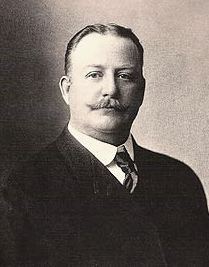
Young Hearst

In deploring “carefree talk” about pre-emptively bombing Iran’s nuclear installations, Atlantic correspondent James Fallows invokes the mythical tale about William Randolph Hearst’s vow to “furnish the war” with Spain in the late 1890s.

The “furnish the war” anecdote can be just too delicious to resist, as Fallows demonstrates in a rambling commentary posted yesterday at the Atlantic online site.

In it, Fallows writes that “only twice before in my memory, and maybe thrice in American history, has there been as much carefree talk about war and unprovoked strikes as we’ve had concerning Iran in recent months ….

“The twice in my experience were: during the runup to the invasion of Iraq in 2002, and in the ‘bomb ’em back to the stone age’ moments of the early Vietnam era.

“The time that even I don’t remember was the ‘you furnish the pictures, I’ll furnish the war’ yellow journalism drumbeat before the war with Spain in 1898. This is not good company for today’s fevered discussion to join.”

The line, “you furnish the pictures, and I’ll furnish the war,” was attributed to Hearst more than 110 years ago. But as decades passed, no compelling evidence ever emerged to support or document the tale.

Indeed, it’s often overlooked that Hearst denied making such vow, which he purportedly included in a telegram to the artist Frederic Remington, who was on assignment to Spanish-ruled Cuba in early 1897 for Hearst’s New York Journal.

The telegram to Remington has never surfaced. And Remington apparently never discussed the anecdote, which was recounted first in 1901, in a brief passage in memoir by James Creelman, a blowhard journalist known for frequent exaggeration.

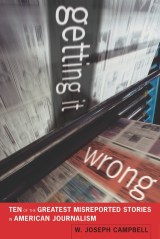
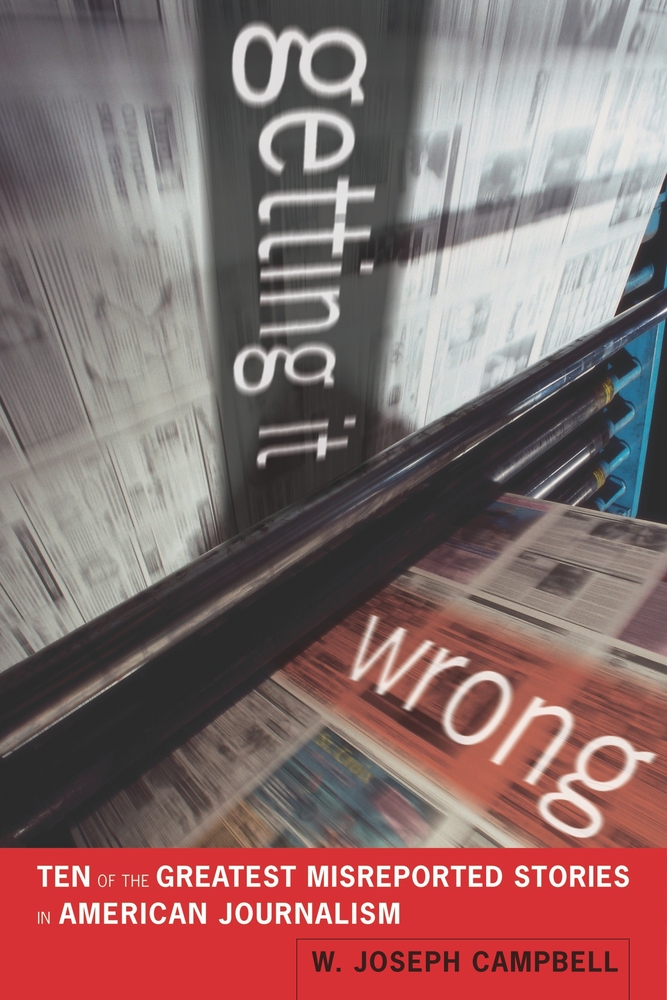
Creelman did not explain how he learned of the “furnish the war” tale which, as I describe in my latest book, Getting It Wrong, is almost surely apocryphal.

Not only does story live on despite the absence of supporting documentation; it lives on despite an irreconcilable internal inconsistency.

That is, it would have been absurd for Hearst to have vowed to “furnish the war” because war — specifically, the Cuban rebellion against Spain’s colonial rule — was the reason he sent Remington to Cuba in the first place.

Cuba in early 1897 was the theater of a nasty war. By then, Spain had dispatched nearly 200,000 troops in a failed attempt to put down the rebellion, which gave rise in 1898 to the Spanish-American War.

Spanish authorities controlled and censured international cable traffic to and from Cuba. They surely would have intercepted — and called attention to — Hearst’s bellicose message, had it been sent. There is little chance the cable would have moved unimpeded from Hearst in New York to Remington in Cuba.

But despite the compelling evidence arrayed against it, the vow attributed to Hearst lives on, and on.

That’s because it has, as I write in Getting It Wrong, “achieved unique status as an adaptable, hardy, all-purpose anecdote, useful in illustrating any number of media sins and shortcomings.
“It has been invoked to illustrate the media’s willingness to compromise impartiality, promote political agendas, and indulge in sensationalism. It has been used, more broadly, to suggest the media’s capacity to inject malign influence into international affairs.”

Which is what Fallows does.

WJC

Recent and related:

Sketches published 115 years ago undercut a tenacious media myth

In 1897, Anniversaries, Debunking, Furnish the war, Media myths, Spanish-American War on January 24, 2012 at 5:25 am

On assignment for Hearst

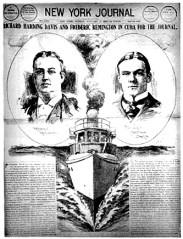
The artist Frederic Remington was back from Havana just a few days when on January 24, 1897, William Randolph Hearst’s New York Journal began publishing his sketches of the Cuban rebellion against Spanish colonial rule.

Remington later confided that he didn’t think much of the Journal’s reproduction techniques. But the newspaper played up Remington’s artwork, publishing them beneath an extravagant headline that read:

“Cuban War Sketches Gathered in the Field by Frederic Remington; The Gifted Artist, Visiting Cuba Especially for the Journal, Describes with Pen and Pencil Characters That Are Making the War Famous and Infamous.”

The prominent display given the sketches, and the Journal’s flattering references to the artist, serve to undercut a tenacious and prominent media-driven myth, an anecdote that ranks as one of the most popular in American journalism.

And that is the hoary tale that Hearst, in a telegraphic exchange with Remington, vowed to “furnish the war” with Spain.

As I discuss in my latest book, Getting It Wrong, the exchange, if it happened, would have occurred on or about January 17, 1897, when Remington was preparing to leave Cuba and return to New York.

Hearst had sent Remington and the correspondent Richard Harding Davis to Cuba to report on the rebellion against Spanish rule, a vicious conflict that gave rise in 1898 to the Spanish-American War.

Remington and Davis didn’t get along and parted ways after only a few days in Cuba. According to legend, Remington before leaving sent a cable to Hearst that said:

Everything is quiet. There is no trouble here. There will be no war. I wish to return.”

In reply, Hearst supposedly told Remington:

Please remain. You furnish the pictures, and I’ll furnish the war.”

Remington left anyway, taking the passenger steamer Seneca to New York, arriving January 21, 1897. His Cuba sketches began appearing in the Journal 115 years ago today.

So how do those sketches help debunk the tale about Hearst’s vow “furnish the war”?

As I discuss in Getting It Wrong, the sketches “depict unmistakable (if unremarkable) scenes of a rebellion — a scouting party of Spanish cavalry with rifles at the ready; a cluster of Cuban non-combatants trussed and bound and being herded into Spanish lines; a scruffy Cuban rebel kneeling to fire at a small Spanish fort; a knot of Spanish soldiers dressing a comrade’s leg wound.”

Their subject matter effectively disputes the notion that Remington had found “everything … quiet” in Cuba.

Remington, 'gifted artist'

That the sketches were accompanied by glowing references to Remington as a “gifted artist” indicates that Hearst was not angry with Remington as he surely would have been had the artist left Cuba after being told “please remain.”

Indeed, it is difficult to believe Hearst would have been so generous in his compliments and ordered such prominent display of Remington’s work had the artist in fact disregarded Hearst’s instructions to stay in Cuba.

“Far from being irritated and displeased with Remington,” I write in Getting It Wrong, “Hearst was delighted with his work. He recalled years later that Remington and Richard Harding Davis, the celebrated writer who traveled to Cuba with the artist, ‘did their work admirably and aroused much indignation among Americans’ about Spanish rule of the island.”

The sole source of the “furnish the war” anecdote was James Creelman, who in January 1897 was neither with Hearst in New York nor with Remington in Cuba. Creelman then was in Spain, as the Journal’s “special commissioner,” or correspondent, on the Continent.

Creelman incorporated the anecdote about the Remington-Hearst exchange in a book of reminiscences, On the Great Highway, which was published in 1901. Creelman, a blustery, cigar-chomping egotist, did not say how he learned about the purported Remington-Hearst exchange, which he presumes to quote verbatim.

Hearst denied ever having sent such a message. Remington apparently never spoke about the supposed exchange.

The display Remington’s sketches received in Hearst’s Journal, and the newspaper’s compliments about the artist, are two of several compelling reasons for doubting the anecdote and treating it as a media myth.

Another reason is that the telegrams Remington and Hearst supposedly sent have never turned up.

The anecdote, moreover, is illogical on its face: It would have made no sense for Hearst to have vowed to “furnish the war” because war — the rebellion against Spanish rule — was the reason he sent Remington to Cuba in the first place.

WJC

Recent and related:

Apocryphal, but still quotable

In Debunking, Media myths, Quotes on December 24, 2011 at 7:24 am

Apocryphal, but still quotable.

That’s the takeaway from a commentary posted yesterday at the online site of the Nation. The commentary invoked Zhou Enlai’s misinterpreted comment about the upshot of the French Revolution.

Zhou supposedly said in 1972 that it was “too early to say” what the effects would be. But Zhou was speaking about the political turmoil in France in 1968, not the years-long upheaval that began in 1789.

The Nation’s commentary, “The Soviet Union’s Afterlife,” tried to have it both ways with Zhou’s remark; the opening paragraph asserted:

“Asked to evaluate the French Revolution nearly 200 years later, the Chinese Premier Zhou Enlai was famously reported to have replied, ‘Too early to say.’ Though apocryphal, the long perspective attributed to Zhou is better informed than the certitudes of American commentators about the causes and consequences of the end of the Soviet Union only twenty years ago.”

If it’s apocryphal, then why invoke it? To do is to distort and confuse and even mislead.

The temptation to invoke telling quotes of dubious derivation can be too powerful to avoid. As I point out in my latest book, Getting It Wrong, “Turns of phrase that sound too neat and tidy often are too perfect to be true.”

Craig Silverman, author of Regret The Error and a columnist for Columbia Journalism Review, has likened dubious quotes to “little gems that supposedly tell a story in just a few words. They lodge themselves in our culture and consciousness.”

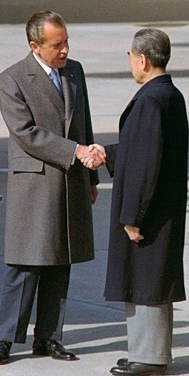
So it is with Zhou’s remark, which was made during President Richard Nixon’s historic trip to China in February 1972.

The conventional interpretation — which the Nation commentary invoked — is that the comment stands as evidence of the sage and far-sighted ways of Chinese leaders.

But we know from a retired U.S. diplomat, Charles W. (Chas) Freeman, that Zhou in his talks with Nixon in 1972 was taking a decidedly shorter and more immediate view of turmoil in France.

Freeman was Nixon’s interpreter during the trip and was present when Zhou made the “too early” comment.

Freeman has said that Zhou’s remark came during a discussion about revolutions that had succeeded and failed. The revolutions cited, Freeman said, included the Prague Spring of 1968 and the Hungarian uprising of 1956, both of which the Soviet Union crushed.

Freeman said it was clear from the context that in saying it was “too early to say,” Zhou was speaking about the events in France in May 1968.

How Zhou’s “too early” remark came to be so badly misinterpreted, Freeman was unable to say.

“I cannot explain the confusion about Zhou’s comment except in terms of the extent to which it conveniently bolstered a stereotype (as usual with all stereotypes, partly perceptive) about Chinese statesmen as far-sighted individuals who think in longer terms than their Western counterparts,” he said, adding:

“It was what people wanted to hear and believe, so it took” hold.

First to report Freeman’s debunking was Richard McGregor, a journalist and China expert writing for London’s Financial Times.

As I’ve pointed out, the appeal and tenacity of Zhou’s misinterpreted remark is reminiscent of William Randolph Hearst’s purported vow to “furnish the war” with Spain at the end of the 19th century.

Hearst’s reputed vow  supposedly was made in an exchange of telegrams with the artist Frederic Remington, who was on assignment in Cuba for Hearst’s New York Journal.

As I point out in Getting It Wrong, it “would have been absurd for Hearst to vow to ‘furnish the war’ because war — specifically, the Cuban rebellion against Spain’s colonial rule — was the very reason Hearst sent Remington to Cuba in the first place.”

“Like many media-driven myths,” I further note, the purported Hearstian vow “is succinct, savory, and easily remembered.

“It is almost too good not to be true.”

WJC

Many thanks to Instapundit
Glenn Reynolds for linking to this post.

Recent and related:

Where do they get this stuff?

In 1897, Debunking, Furnish the war, Media myths, Spanish-American War, Yellow Journalism on September 24, 2011 at 5:06 am

William Randolph Hearst almost surely never vowed to “furnish the war” with Spain, and his newspapers of the late 19th century were much more than rumor-mongering sheets.

Hearst: Never made the vow

None of this is particularly new, though.

The tale about “furnish the war” was debunked as a media myth years ago, for example.

And Hearst’s leading biographer, David Nasaw, noted in his authoritative 2000 work, The Chief, that “Hearst and his staff improved on their product” day by day in the late 1890s.

“Their headlines,” Nasaw wrote, “were more provocative than anyone else’s, their drawings more lifelike … the writing throughout the paper outstanding, if, at times, a bit long-winded. Equally important in attracting new readers, the paper’s layout was excellent, with text and drawing breaking through columns to create new full-page landscapes….”

So it’s a bit baffling just where the exaggerated and cartoonish characterizations about Hearst come from. When they are cited, they’re usually accompanied by little or no sourcing information — as was the case in a commentary posted yesterday at the Technorati news site.

The commentary asserted:

“Media magnate William Randolph Heart once quipped, ‘You furnish the pictures and I’ll furnish the war.’ As the father of yellow journalism, he was well known for providing his stories as a game of Telephone, repeating a rumor of a rumor of a rumor. It made him billions, and lowered the discourse of media to this day.”

I revisit the tale about “furnish the war” in my latest book, Getting It Wrong, noting that it was first recounted in a memoir published in 1901 by James Creelman, a portly, Canadian-born journalist prone to pomposity and exaggeration.

Creelman

Creelman, I write, “never explained how he learned about the anecdote” about Hearst’s purported vow to “furnish the war.” Creelman offered no citation for it in his memoir, On the Great Highway.

According to Creelman, Hearst’s vow was contained in an exchange of telegrams with the artist Frederic Remington, who went to Cuba in early 1897 to draw sketches for Hearst’s newspapers about the rebellion against Spanish colonial rule.

The Cuba rebellion gave rise 15 months later to the Spanish-American War.

At the time Remington was in Cuba, Creelman was in Madrid, which means he had no first-hand knowledge of the purported exchange of telegrams.

I point out in Getting It Wrong that the artifacts — the telegrams supposedly exchanged by Remington and Hearst — have never turned up and that Hearst denied ever having sent such a message.

What’s more, I write, the anecdote “lives on despite an irreconcilable internal inconsistency: It would have been absurd for Hearst to vow to ‘furnish the war’ because war — specifically, the Cuban rebellion against Spain’s colonial rule — was the very reason Hearst sent Remington to Cuba in the first place.”

Interestingly, Creelman recounted Hearst’s purported vow not as a rebuke but, I write, “as a compliment, to commend Hearst and the activist, anticipatory ‘yellow journalism’ that he had pioneered in New York City.”

The anecdote was, to Creelman, illustrative of the power and potential of what Hearst championed as the “journalism of action” — the journalism that gets things done.

It was journalism with a social conscience.

Hearst’s leading newspaper, the New York Journal, insisted in editorials that a newspaper’s duty should not be “confined to exhortation.” Rather, newspapers had an obligation to inject themselves into public life, to right the wrongs that government could not or would not address.

So Hearstian journalism of the late 19th century was scarcely a game of “telephone,” of rumor piled upon rumor.

Why is all this significant?

Because the anecdote about “furnish the war” is often presented as evidence that Hearst did foment the conflict with Spain over Cuba in 1898.

Which is nonsense.

The reasons why the United States went to war in 1898 are far more profound and complex than the supposed manipulative powers of Hearst and his newspapers.

WJC

‘Kane’ at 70: ‘More relevant than ever’?

In Anniversaries, Cinematic treatments on September 10, 2011 at 9:53 am

In the year of its 70th anniversary, Orson Welles’ cinematic masterpiece Citizen Kane “is more relevant than ever,” says a polished, thoughtful essay posted yesterday at TechCentral, a South African site devoted to technology news and reviews.

Orson Welles in 'Kane'

In pressing the point about Kane’s relevance, the essay argues:

“Newspaper magnate Charles Foster Kane, sitting in his already-crumbling but unfinished Xanadu, is Colonel Gaddafi railing at the Libyan rebels from his exile or a doddering Rupert Murdoch stumbling over his words in front of the commission investigating the News of the World scandal.”

Those are telling observations, particularly the reference to the 80-year-old Murdoch and his excruciating, hapless performance before a Parliamentary commission hearing in July in London.

“Today,” the TechCentral essay adds, “you’ll see Citizen Kane’s influence in the strangest places,” including parodies in The Simpsons” television show.

As superb and influential as it was, Kane took liberties and in doing so helped popularize a powerful media-driven myth.

The movie was released in 1941 and was based loosely on the life and times of American media magnate William Randolph Hearst.

A rollicking scene early in Kane offers clear evidence that Hearst was the movie’s principal inspiration; the scene paraphrased Hearst’s purported vow, which he supposedly cabled to an artist in Cuba months before the Spanish-American War:

You furnish the pictures, and I’ll furnish the war.”

As I note in my latest book, Getting It Wrong, that scene in Kane “firmly and finally pressed Hearst’s purported vow to ‘furnish the war’ into the public’s consciousness.”

I also point out in Getting It Wrong that the anecdote about Hearst’s vow “is almost too good not to be true” and note that the “furnish the war” line “has made its way into countless textbooks of journalism.

“It [also] has figured in innumerable discussions about Hearst and about the news media and war. It has been repeated over the years by no small number of journalists, scholars, and critics of the news media such as Ben Bagdikian, Helen Thomas, Nicholas Lemann, and the late David Halberstam.”

Interestingly, “furnish the war” endures despite a near-total absence of supporting documentation. It lives on even though cable containing Hearst’s purported vow has never turned up.

It lives on even though Hearst denied ever sending such a message.

It lives on despite of what I call “an irreconcilable internal inconsistency”: It would have been absurd for Hearst to vow to “furnish the war” because war — specifically, the Cuban rebellion against Spanish rule — was the very reason Hearst sent the artist, Frederic Remington, to Cuba in the first place.

And Remington’s trip to Cuba came in January 1897 — more than 15 months before the start of the Spanish-American War.

Kane is no faithful portrait of Hearst.

As David Nasaw pointed out in The Chief, his admirably even-handed biographyof Hearst:

“Welles’ Kane is a cartoon-like caricature of a man who is hollowed out on the inside, forlorn, defeated, solitary because he cannot command the total obedience … of those around him. Hearst, to the contrary, never regarded himself as a failure, never recognized defeat, never stopped loving Marion [his mistress] or his wife.

“He did not, at the end of his life, run away from the world to entomb himself in a vast, gloomy, art-choked hermitage,” as portrayed in Citizen Kane.

WJC

Recent and related:

That’s not what Zhou meant

In Debunking, Furnish the war, Media myths, Spanish-American War on August 17, 2011 at 7:52 am

Nixon and Zhou, 1972

In 1972, Chinese premier Zhou Enlai told President Richard M. Nixon that it was “too early to say” what would be the implications of political upheaval in France.

It’s long been thought that Zhou was referring to the French Revolution that began in 1789 — that Zhou was taking a decidedly wise, sagacious, and patient view of history.

But in reality, according to a former U.S. diplomat who was present at the discussion in China, Zhou was referring to the more recent turmoil that had shaken France in 1968.

Still, the conventional interpretation — the Zhou was thinking in centuries, not in mere years — is so appealing that it lives on, as was suggested by a commentary posted yesterday by the English-language Moscow Times newspaper.

The commentary, which considered the significance of the attempted coup in the former Soviet Union in August 1991, began this way:

“Chinese leader Zhou Enlai may have been correct when he told U.S. President Richard Nixon in 1972 that it was too early to determine the impact of the French Revolution, but 20 years is usually enough to assess the importance of most historical events.”

The commentary may be quite correct about a 20-year interval being sufficient for assessing historical events.

But the characterization about Zhou’s comment is off-target, in light of recollections offered in June by Charles W.  (Chas) Freeman Jr., a retired diplomat who was interpreter for Nixon on his famous 1972 trip to China.

The Financial Times of London was first to report about the revised interpretation of Zhou’s comment. The newspaper quoted Freeman’s remarks at a panel discussion in Washington, D.C., that the Chinese leader was referring to the events of 1968.

Freeman, in a subsequent interview with me, described Zhou’s comment as “one of those convenient misunderstandings that never gets corrected,” noting that “it conveniently bolstered a stereotype … about Chinese statesmen as far-sighted individuals who think in longer terms than their Western counterparts.”

The misconstrued comment fit nicely with “what people wanted to hear and believe,” Freeman said, “so it took” hold.  And is not infrequently repeated.

Freeman said it was “absolutely clear” from the context of the discussion that Zhou’s “too early to say” remark was in reference to upheaval of 1968, not the years of turmoil that began in 1789.

Freeman described Zhou’s remark as “a classic of the genre of a constantly repeated misunderstanding that has taken on a life of its own.”

In that way, it’s akin to other deliciously irresistible quotations that are just too neat and too tidy to be true — a topic I discuss in my latest book, Getting It Wrong, which addresses and debunks 10 prominent media-driven myths.

One of the too-perfect-to-be-true quotations I discuss is the vow attributed to William Randolph Hearst, who purportedly pledged to “furnish the war” with Spain in the late 19th century.

The Hearstian vow suggests the depths to which journalists can stoop — to agitate for a war the country otherwise would not fight. That’s a reason for the tenacity of the purported Hearst quote. It reveals journalists at their most depraved.

But the purported vow, however well-known, is surely apocryphal.

Hearst denied having sent such a message, and the artifact — the telegram conveying the vow — has never turned up.

What’s more, pledging to “furnish the war” would have made no sense, given the context. Hearst’s telegram was supposedly sent to an artist, Frederic Remington, who was in Cuba to draw sketches of the rebellion against Spanish colonial rule.

It’s illogical that Hearst would have vowed to “furnish the war” when war — the Cuban rebellion — was the reason he sent Remington to the island in the first place.

WJC

Recent and related:

60 years after his death, media myth towers around Hearst

In Anniversaries, Debunking, Furnish the war, Media myths, Spanish-American War on August 15, 2011 at 4:35 am

The BBC over the weekend marked the 60th anniversary of the death of William Randolph Hearst by posting a piece I wrote about the mythology surrounding the often-scorned media tycoon of the late 19th and 20th centuries.

Hearst: Routinely scorned

Hearst, I wrote, “lives on 60 years after his death as the mythical bogeyman of American journalism, the personification of the field’s most egregious impulses,” and the inspiration for the epithet “yellow journalism.”

I discussed the hardy media myths that Hearst famously vowed to “furnish the war” with Spain and then made good on the pledge.

“The towering mythology that envelopes Hearst,” I noted, “began to take hold long before his death on 14 August 1951.

“The lore dates to the late 1930s and the first in a succession of wretched biographies about Hearst.

“Among them was Imperial Hearst, a truculent work that excoriated Hearst’s increasingly conservative politics and resurrected the ‘furnish the war’ myth.”

Even more important to the mythology around Hearst, I wrote, was Orson Welles’ cinematic masterpiece, Citizen Kane.

“The movie was based loosely on Hearst’s life and times, and received mostly mixed reviews when it was released in 1941,” I noted, adding:

“Hearst did try to have the film killed, which served to enhance its latent appeal. Kane was rediscovered in the 1960s and ultimately gained deserved recognition as a classic.”

I noted that a rollicking scene in Kane “borrows from and paraphrases the ‘furnish the war’ anecdote, which further helped to implant the myth in the popular consciousness.”

Hearst was a ready target for the contempt of his peers and rivals because of inherited wealth enabled him to enter journalism at the top — as publisher of the San Francisco Examiner and, later in the 19th century, the New York Journal.

Hearst’s quixotic personality also made his a target of media mythmaking. I quoted David Nasaw’s fine biography of Hearst, The Chief, which noted:

“William Randolph Hearst was a huge man with a tiny voice; a shy man who was most comfortable in crowds; a war hawk in Cuba and Mexico but a pacifist in Europe; an autocratic boss who could not fire people; a devoted husband who lived with his mistress; a Californian who spent half his life in the East.”

It’s little wonder then why Hearst was, and remains, the object of so much myth and misunderstanding.

He also used his newspapers as platforms for pursuing his mostly unfulfilled political ambitions — which further accounts for the mythology, which further explains why he became a lightning rod for enduring scorn.

Hearst ran for the Democratic Party’s nomination for the presidency in 1904, but fell well short. Later, he ran for governor of New York and mayor of New York City, and lost.

By 1910 or so, Hearst’s political ambitions were, I noted, mostly spent.

And now, 60 years after his death, the mythology surrounding Hearst is so firmly entrenched so as never to be expunged.

WJC

Recent and related:

More media myths from CounterPunch

In Bay of Pigs, Debunking, Furnish the war, Jessica Lynch, Media myths, Washington Post, Watergate myth on July 24, 2011 at 8:30 am

CounterPunch touts itself as “America’s best political newsletter.”

It’s building a reputation for indulging in media-driven myths, too.

Since mid-March, essays posted at CounterPunch have:

CounterPunch has indulged yet again in media myth, in a commentary in its weekend edition about Rupert Murdoch’s troubled media empire.

CounterPunch claimed the tough old media mogul has “surpassed William Randolph Hearst,” press baron of the 19th and early 20th centuries, “in practicing yellow journalism.”

The commentary invoked the hoary media myth about Hearst’s purported vow to “furnish the war” with Spain.

According to CounterPunch, Hearst said: “Get me the photos and I’ll get you the war.”

That was, CounterPunch added, “Hearst’s 1898 dictum to help start the Spanish-American War.”

Provocative tale. But it’s pure media myth.

Hearst’s vow is almost surely apocryphal, for reasons I discuss in my myth-busting book, Getting It Wrong, which came out last year.

Among the reasons:  The telegram that supposedly contained Hearst’s vow — a cable sent to artist Frederic Remington, on assignment to Cuba — has never turned up.

More significantly, as I point out Getting It Wrong, the anecdote about Hearst’s purported vow suffers from “an irreconcilable internal inconsistency.”

That is, it would have been absurd and illogical for Hearst to have vowed to “furnish the war” because war — specifically, the Cuban rebellion against Spain’s colonial rule — was the reason he sent Remington to Cuba in the first place.

In addition, the Spanish colonial authorities who ruled Cuba closely controlled and censored incoming and outgoing telegraphic traffic: They surely would have intercepted and called attention to Hearst’s incendiary telegram, had it been sent.

But in fact, there was, as I write in Getting It Wrong, no chance that telegrams would have flowed freely between Remington in Cuba and Hearst in New York.

So “furnish the war” (or, “provide the war”) wasn’t at all Hearst’s “dictum to help start the Spanish-American War.”

That Hearst helped bring on the war with Spain is a media myth, too.

It’s a myth dismantled in my 2001 book, Yellow Journalism: Puncturing the Myths, Defining the Legacies, in which I pointed out that the yellow press of Hearst and his rival, Joseph Pulitzer, “is not to blame for the Spanish-American-War.

“It did not force — it could not have forced — the United States into hostilities with Spain over Cuba in 1898.

“The conflict was, rather, the result of a convergence of forces far beyond the control or direct influence of even the most aggressive of the yellow newspapers, William Randolph Hearst’s New York Journal.”

The proximate cause of the war was the humanitarian crisis created by Spain’s bungled attempts to quell a rebellion that had begun in Cuba in 1895 and had spread across the island by 1897, when Remington arrived in Havana on assignment for Hearst.

WJC

Recent and related:

Tarring Murdoch with Hearst’s evil ‘vow’ to ‘furnish the war’

In 1897, Debunking, Furnish the war, Media myths, Spanish-American War on July 20, 2011 at 8:28 am

Rupert Murdoch’s much-anticipated hearing yesterday before a Parliament committee was hardly very dramatic — save for the assault on the tough old media mogul by a chucklehead wielding a shaving cream-pie.

The hearing, which centered around the misconduct of journalists formerly in Murdoch’s employ, was more farce and tedium than high-noon encounter that threatened Murdoch’s far-reaching media empire.

Murdoch, who is 80 and clearly doddering, even won a measure of sympathy as victim of the none-too-bright shaving cream-pie attack.

What was fairly remarkable was that in the hearing’s aftermath at least a couple of U.S. commentators turned credulously to a hoary media myth to make points about Murdoch’s supposedly evil ways.

Hearst: Made no vow

The media myth is the tale that press baron William Randolph Hearst, in an exchange of telegrams with the artist Frederic Remington, vowed to “furnish the war” with Spain in the late 19th century.

I describe in my latest book, Getting It Wrong, why that tale is almost surely apocryphal for reasons that include Hearst’s denial and the improbable context in which his message supposedly was sent.

One of the pundits invoking the media myth was Milos Stehlik, a commentator on WBEZ, an FM radio station in Chicago.

Stehlik likened Murdoch to Hearst and Charles Foster Kane, the fictional media baron in Citizen Kane, the 1941 movie loosely based on Hearst’s life.

“Kane, Hearst and Murdoch … share a political activism which pretends to help the media-consuming masses while, in reality, mostly helped their own privileged class,” Stehlik declared, before invoking the “furnish the war” myth as if it were genuine.

“Hearst,” he said, “told artist Frederic Remington, who was in Cuba, to send dispatches about the war. Remington sent Hearst a telegram saying there was no war in Cuba. Hearst famously told Remington to just provide him the pictures, and he would furnish the war.”

Meanwhile in Seattle, Jon Talton, a newspaper columnist on economic issues, posted a commentary that began this way:

“Press lord Rupert Murdoch isn’t accused of doing anything some of his notorious forebears wouldn’t have attempted given the technology. ‘You supply the pictures and I’ll supply the war,’ William Randolph Hearst is said to have instructed his Cuba correspondents as he ginned up circulation on the eve of the Spanish-American War.”

If Hearst had made the vow, it wouldn’t have been “on the eve of the Spanish-American War,” as Talton wrote in his column for the Seattle Times. It would have been in January 1897 — 15 months before the war began.

That was when Remington arrived in Havana, on a brief assignment for Hearst’s New York Journal to draw sketches of the Cuban rebellion against Spanish colonial rule.

Remington soon tired of the assignment and, the myth has it, cabled Hearst, stating:

“Everything is quiet. There will be no war. I wish to return.”

Hearst, in New York, supposedly replied by stating:

“Please remain. You furnish the pictures, and I’ll furnish the war.”

The anecdote’s sole original source was a blustering, cigar-chomping journalist named James Creelman, who recounted the tale in his 1901 memoir, On the Great Highway.

Creelman, though, did not explain how he heard about the Remington-Hearst exchange. It couldn’t have been first hand because at the time Remington was in Cuba, Creelman was in Spain, on assignment for the Journal.

That means Creelman could only have learned about the tale second-hand or, as is more likely, just made it up.

Significantly, the context of the supposed Remington-Hearst exchange makes no sense.

I write in Getting It Wrong that “it would have been absurd for Hearst to vow to ‘furnish the war’ because war — specifically, the Cuban rebellion against Spain’s colonial rule — was the very reason Hearst sent Remington to Cuba in the first place.”

The rebellion was a vicious conflict that began in early 1895; by early 1897, it had reached islandwide proportion. As such, the rebellion attracted much attention in U.S. newspapers, including those published by Hearst.

So what may prompt pundits to turn credulously and not infrequently to the anecdote about Hearst and his supposed wickedness?

Because it’s arguably the most deliciously evil tale in journalism history, a tale that reveals Hearst’s ruthlessness and his warmongering. It’s a tale about journalism at its most sinister and malign, a tale wrapped in a dark and arrogant pledge to bring on a war the country otherwise wouldn’t have fought.

And these days, it’s a handy if indirect way of tarring Murdoch, by associating him with Hearst in the exclusive club of vile and villainous media magnates.

WJC

Many thanks to Instapundit
Glenn Reynolds for linking to this post

Recent and related:

BBC calls Hearst vow apocryphal, quotes it anyway

In 1897, Debunking, Furnish the war, Media myths, Spanish-American War, Yellow Journalism on July 15, 2011 at 10:28 am

Apocryphal but still quotable.

That’s how Britain’s venerable broadcaster, the BBC, treated the mythical anecdote about media titan William Randolph Hearst and his purported vow to “furnish the war” with Spain in the late 19th century.

In an article posted online yesterday, the BBC described Hearst as the “definitive [news] baron” and declared:

“He’s credited with the invention of tabloid journalism in the 1890s when his New York Journal began a bitter circulation war with Joseph Pulitzer’s New York World. He also had a reputation as a warmonger.

“‘You furnish the pictures and I’ll furnish the war,’ goes an apocryphal instruction he was supposed to have sent in a telegram to an illustrator in Havana.”

That’s right, the line is apocryphal. What, then, is the point in using it? As a none-too-clever, back-handed way of buttressing the dubious notion that Hearst and his newspapers were capable of fomenting a war?

That’s sloppy journalism from a leading international news organization.

As I discuss in my latest book, Getting It Wrong, Hearst’s purported vow to “furnish the war” with Spain is a particularly tenacious media-driven myth — a prominent but dubious tale about journalism that masquerades as factual.

I note that the tale about Hearst’s vow “has achieved unique status as an adaptable, hardy, all-purpose anecdote, useful in illustrating any number of media sins and shortcomings.

“It has been invoked to illustrate the media’s willingness to compromise impartiality, promote political agendas, and indulge in sensationalism. It has been used, more broadly, to suggest the media’s capacity to inject malign influence into international affairs.”

Hearst: Didn't say it

Reasons for doubting the presumptive Hearstian vow are many, I point out in Getting It Wrong, and include the fact that the telegram in which Hearst supposedly made the statement — in an exchange with the artist Frederic Remington, on assignment to Cuba — has never turned up.

Plus, Hearst denied making such a vow.

Not only that, but the anecdote lives on lives on despite what I call “an irreconcilable internal inconsistency.” That is, it would have been absurd for Hearst to vow to “furnish the war” because war— specifically, the Cuban rebellion against Spanish colonial rule— was the reason he sent Remington to Cuba in the first place.

The artist was in Cuba for just six days in January 1897. By that time, the Cuban rebellion — a war for political independence — had reached islandwide proportions. “Anyone reading U.S. newspapers in early 1897 would have been well aware that Cuba was a theater of a nasty war,” I write in Getting It Wrong.

Given the context, Hearst’s purported vow is utterly illogical.

And to invoke the anecdote knowing that it’s apocryphal is little short of disingenuous.

The BBC’s reference to Hearst’s being “credited with the invention of tabloid journalism in the 1890s” also is questionable.

Hearst’s style of flamboyant journalism certainly helped inspire the epithetyellow journalism,” but he was no father of tabloid journalism.

If anything, Hearst was a latecomer to that genre.

As David Nasaw wrote in The Chief, his admirably even-handed biography of Hearst, the press baron didn’t embrace the tabloid until the 1920s “because he was not comfortable with the format.

“He  had no interest in publishing a picture newspaper that had little room for political coverage, columns, cartoons, and the editorials he cared so much about.”

WJC

Many thanks to Instapundit
Glenn Reynolds for linking to this post.

Recent and related: