W. Joseph Campbell

Posts Tagged ‘Furnish the war’

Mythmaking in Moscow: Biden says WaPo brought down Nixon

In Debunking, Media myths, Newspapers, Washington Post, Watergate myth on March 12, 2011 at 7:23 am

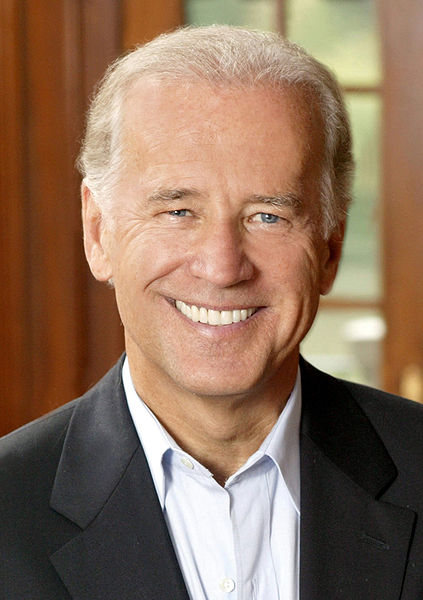
Gaffe-prone Joe Biden offered Russians this week a mythical and distorted version of American history,  declaring at Moscow State University that the Washington Post “brought down” Richard Nixon’s corrupt presidency in the Watergate scandal.

It’s an interpretation of Watergate that few serious historians embrace.
Gaffe-prone

And yet, according to the transcript of the vice president’s remarks posted online by the White House, Biden told his audience:

“In my country it was a newspaper, not the FBI, or the Justice Department, it was a newspaper, the Washington Post that brought down a President for illegal actions.”

Not even the Washington Post buys into that myth-encrusted version of history. Principals at the Post have from time to time over the years sought to distance the newspaper from such a misleading assessment.

For example, Katharine Graham, the newspaper’s doughty publisher during and after the Watergate scandal, said in 1997, at a program marking the 25th anniversary of the scandal:

“Sometimes people accuse us of bringing down a president, which of course we didn’t do. The processes that caused [Nixon’s] resignation were constitutional.”

Ben Bradlee,who was executive editor at the Post during Watergate, said on the “Meet the Press” interview show in 1997:

“[I]t must be remembered that Nixon got Nixon. The Post didn’t get Nixon.”

More recently, Michael Getler, then the newspaper’s ombudsman, wrote in 2005:

“Ultimately, it was not The Post, but the FBI, a Congress acting in bipartisan fashion and the courts that brought down the Nixon administration.”

Their comments are not the representations of false modesty: They speak to a more accurate reading of the history of Watergate than Biden offered his audience in Moscow.

Watergate-related reporting in the Post — even though it won a Pulitzer Prize in 1973 — was scarcely enough to turn from office a sitting president.
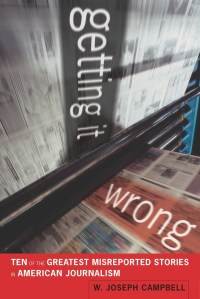
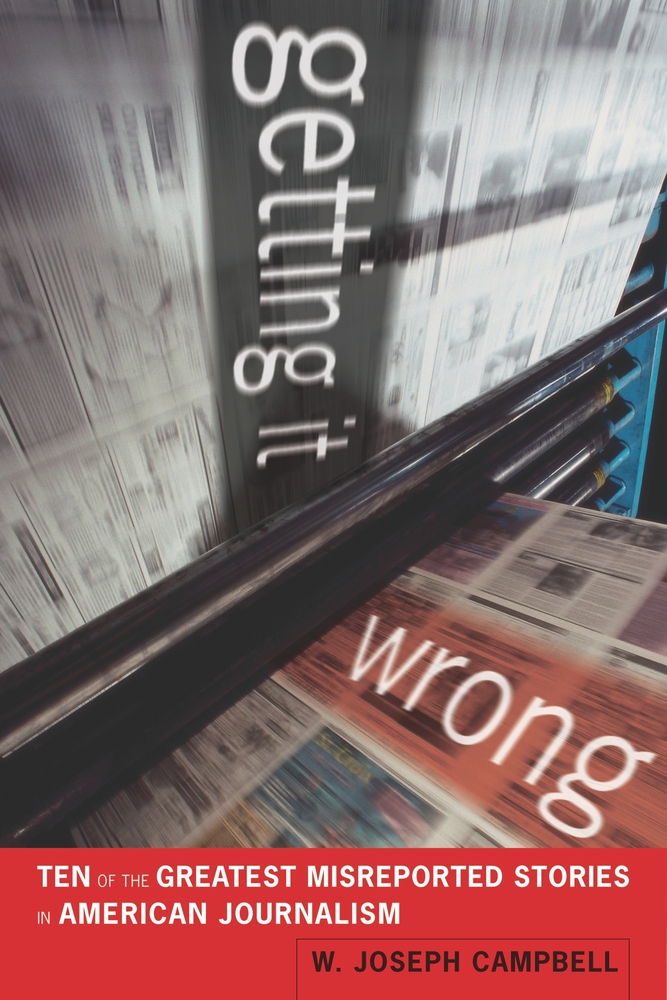
As I write in my latest book, Getting It Wrong, rolling up a scandal of the dimension and magnitude of Watergate “required the collective if not always the coordinated forces of special prosecutors, federal judges, both houses of Congress, the Supreme Court, as well as the Justice Department and the FBI.”

And even then, I write, “Nixon likely would have served out his term if not for the audiotape recordings he secretly made of most conversations in the Oval Office of the White House.

“Only when compelled by the Supreme Court did Nixon surrender those recordings, which captured him plotting the cover-up” of Watergate’s signal crime — the break-in at the headquarters of the Democratic National Committee in June 1972.

Biden’s remarks reflect an endorsement of I call the “heroic-journalist” myth of Watergate — the simplified and misleading interpretation that the reporting of  Post reporters Bob Woodward and Carl Bernstein uncovered evidence that forced Nixon’s resignation in 1974.

But not even Woodward endorses that interpretation. He said in 2004 in an interview with American Journalism Review:

To say the press brought down Nixon, that’s horseshit.”

But as I note in Getting It Wrong, the heroic-journalist meme has nonetheless “become the most familiar storyline of Watergate: ready short-hand for understanding Watergate and its denouement, a proxy for grasping the scandal’s essence while avoiding its forbidding complexity.

“How the Post and its reporters uncovered Watergate is deeply ingrained in American journalism as one of the field’s most important and self-reverential stories,” I write.

But being deeply ingrained and popular doesn’t mean it’s accurate. Far from it.

I note in Getting It Wrong that “to explain Watergate through the lens of the heroic-journalist is to abridge and misunderstand the scandal and to indulge in a particularly beguiling media-driven myth.

“The heroic-journalist interpretation minimizes the far more decisive forces that unraveled the scandal and forced Nixon from office.” And they included the very forces Biden dismissed in his remarks in Moscow –the FBI and the Justice Department.

The transcript of Biden’s speech, delivered Thursday, also shows that he flubbed the characterization of the news media, which sometimes are collectively referred to as the “Fourth Estate.”

According to Biden, they’re the “Third Estate.”

WJC

Recent and related:

‘Furnish the war’ finds a place in sports

In 1897, Debunking, Furnish the war, Media myths, Newspapers, Spanish-American War, Yellow Journalism on February 28, 2011 at 8:13 am

Hearst: Didn't say it

William Randolph Hearst’s famous vow to “furnish the war” with Spain is one of American journalism’s most enduring myths. It’s a stunningly hardy though dubious tale that has been deployed in discussing journalistic sins and shortcomings of all sorts.

As I write in my myth-debunking book Getting It Wrong, the Hearstian vow “has been invoked to illustrate the media’s willingness to compromise impartiality, promote political agendas, and indulge in sensationalism.

“It has been used, more broadly, to suggest the media’s capacity to inject malign influence into international affairs.”

It even has application in news about collegiate sports.

An online sports-news site, Bleacher Report, turned to “furnish the war” in a commentary posted yesterday about the whiff of scandal around Auburn University’s championship football program.

Hearst’s reputed vow was a way to set up the commentary, which defended the program from what it called “the incessant beating of the investigation drum by Auburn detractors” suspicious of player-recruitment violations.

Of interest to Media Myth Alert is the commentary’s total buy-in of the Hearst anecdote, which, as evidence offered in Getting It Wrong clearly shows, is counterfeit, a discredited media myth.

The Bleacher Report commentary declared:

“When photographer Frederic Remington was dispatched to Cuba in the late 1800s to document a war and found none, he sent a message to publisher William Randolph Hearst: ‘There is no war.’

“Hearst allegedly responded: ‘Please remain. You furnish the pictures and I’ll furnish the war.’

“In the ensuing months Hearst’s newspaper fanned the flames with sensationalized front page articles that were of dubious accuracy and in many cases patently false. His articles stirred passions among a readership that neither knew nor cared if the reports were accurate. His relentless attacks eventually helped push U.S. administration into declaring war on Spain.  Hearst got his war.

“Since October, the Auburn football program has endured a similar smear campaign. …”

Reasons for doubting that Hearst ever made such a vow are many, and include the anecdote’s breathtaking illogic.

War was the reason Hearst, owner of the flamboyant New York Journal, sent Remington (an artist, not a “photographer”) to Cuba in the first place. That war was the Cuban rebellion against Spain’s colonial rule, which began in February 1895.

Remington

Remington was in Cuba briefly in January 1897.

By that time, I note in Getting It Wrong, newspaper readers “would have been well aware that Cuba was a theater of a nasty war. By then, the Cuban rebellion had reached island-wide proportion and not a single province had been pacified by Spain’s armed forces.”

It would have made no sense for Hearst to vow to “furnish the war.”

In addition, Hearst denied having made such a statement. Remington, apparently, never discussed it. And the telegrams bearing the content of the purported Remington-Hearst exchange have never surfaced.

Moreover, as I point out in Getting It Wrong, “there was no chance” that the telegrams “would have flowed freely between Remington in Havana and Hearst in New York.

“Spanish control of the cable traffic in Havana was too vigilant and severe to have allowed such an exchange to have gone unnoticed and unremarked upon,” I write, adding:

“A vow such as Hearst’s to ‘furnish the war‘ surely would have been intercepted and publicized by Spanish authorities as a clear-cut example of Yankee meddling in Cuba.”

Like many media myths, the tale of the Hearstian vow is accessible, pithy, and easily recalled. It supposedly illuminates larger lessons about the news media — in this case, the media’s malign potential to bring about a war the country otherwise wouldn’t have fought.

Which is nonsense, and historically inaccurate.

The Spanish-American War of 1898 was hardly a matter of Hearst’s having “got his war.” Rather, the conflict was the consequence of an intractable, three-sided standoff.

Cuba’s rebels would settle for nothing short of political independence. Spain refused to grant self-rule to the most important remnant of its once-sprawling American empire. And the United States, for economic and humanitarian reasons, could no longer tolerate an inconclusive war just 90 miles from its shores.

Simply put, Hearst and newspaper content were non-factors in the decision to go to war.

WJC

Recent and related:

Scoring political points with ‘follow the money,’ that made-up line

In Cinematic treatments, Debunking, Media myths, Washington Post, Watergate myth on February 20, 2011 at 8:06 am

Media myths have many uses, none of them necessarily praiseworthy.

Media myths can offer simplified and misleading versions of important historical events. They can be invoked as presumptive evidence of the power of the news media.

And they can be used to score points against political opponents.

That latter application was evident the other day in a commentary at Huffington Post that invoked the most famous made-up line of Watergate, “follow the money.”

Pope (Sierra Club)

The HuffPo commentary — written by Carl Pope, chairman of the Sierra Club environmental group — declared:

“But if, as Watergate’s ‘Deep Throat’ advised Woodward and Bernstein, we ‘follow the money,’ it’s clear that the real strategic objective of the far right is an American society ruled domestically by a predatory oligarchy and projected globally as a militaristic empire.”

While the claim is exaggerated nonsense, Media Myth Alert is most interested in Pope’s blithe, off-handed use of “follow the money” as if it were genuine, as if it had been vital guidance offered by a stealthy Watergate source. As if it lends Pope’s argument some sort of higher moral authority.

Felt

Deep Throat” — who as it turned out was the second-ranking official at the FBI, W. Mark Felt — spoke periodically with Bob Woodward (but never Carl Bernstein) as the two reporters investigated the emergent Watergate scandal for the Washington Post.

But “follow the money” was advice never given by Felt in periodic meetings with Woodward, which sometimes took place in a parking garage in the Rosslyn section of Arlington, Virginia, across the Potomac River from Washington.

And as I’ve noted at Media Myth Alert, no Post article or editorial related to Watergate invoked “follow the money” until June 1981 – nearly seven years after the scandal forced Richard Nixon to resign the presidency. (The Post article in 1981 simply mentioned that “follow the money” had been used in a fifth grade play.)

“Follow the money” was the creation of screenwriter William Goldman. He has taken credit for writing it into the script of All the President’s Men, the cinematic version of Woodward and Bernstein’s book about their Watergate reporting.

The book came out in 1974, just as Watergate was reaching a climax. The movie was released in 1976, as the wounds of the scandal were just beginning to heal. The book and, especially, the movie served to promote what I call the heroic-journalist interpretation of Watergate — the endlessly appealing notion that Woodward and Bernstein’s reporting brought down Nixon.

Since 1976, untold millions of people — now including Carl Pope — have invoked the line, oblivious to its derivation.

“Follow the money” was spoken by the actor Hal Holbrook, who was the “Deep Throat” character in All the President’s Men.

And Holbrook, who turned 85 last week, played the part exquisitely well.

In a memorable scene depicting a late-night meeting in the parking garage, in which Holbrook tells the Woodward character, played by Robert Redford:

“I have to do this my way. You tell me what you know, and I’ll confirm. I’ll keep you in the right direction, if I can, but that’s all.

“Just follow the money.”

The line was delivered with authority, certainty, and insistence — and it sounded for all the world as if it were advice crucial to understanding and unraveling Watergate.

In that way, it represents a simplified version about how the scandal was uncovered, about how the thread of Watergate corruption led to the Oval Office and Nixon.

Watergate, though, was far more complex than identifying and pursuing a money trail.

As I point out in my latest book, Getting It Wrong, rolling up a scandal of Watergate’s dimensions required more than simply following the money.

I note in Getting It Wrong:

“To roll up a scandal of such dimension required the collective if not always the coordinated forces of special prosecutors, federal judges, both houses of Congress, the Supreme Court, as well as the Justice Department and the FBI.”

Against the tableau of prosecutors, courts, federal investigations, and bipartisan congressional panels, I write, “the contributions of Woodward and Bernstein were modest, and certainly not decisive,” in the outcome of Watergate.

In the end, Nixon’s efforts to obstruct justice by covering up the break-in at headquarters Democratic national committee headquarters in 1972 was what forced his resignation in 1974.

It’s important to note, too, that “Deep Throat” in real life was no hero. As I point out in Getting It Wrong, Felt was convicted in 1980 on felony charges related to break-ins he had authorized as part of FBI investigations into leftists associated with the radical Weather Underground.

Felt was pardoned by President Ronald Reagan.

WJC

Recent and related:

Remembering the ‘Maine,’ Hearst, and Remington

In 1897, Anniversaries, Debunking, Furnish the war, Media myths, Spanish-American War on February 16, 2011 at 7:01 am

Wreckage of the 'Maine'

The battleship Maine blew up in Havana harbor 113 years ago yesterday, a development that rocked Americans and helped trigger the brief but decisive Spanish-American War.

The Brooklyn Daily Eagle recalled the battleship’s destruction in a post yesterday that invoked one of American journalism’s most tenacious myths — the purported vow of William Randolph Hearst to “furnish the war” with Spain.

The item in the Eagle — a latter-day version of the storied Brooklyn Daily Eagle that was published from 1841 until 1955 — said in its post that after the Maine blew up, Hearst “sent artist Frederic Remington to cover the war story in Cuba.

“When Remington found little happening there, he asked about coming home. Hearst wired back: ‘Please remain. You furnish the pictures and I’ll furnish the war.'”

As I discuss in the first chapter of my latest book, Getting It Wrong, the Hearstian vow, while well-known and often retold, is almost surely apocryphal.

I note in Getting It Wrong that that the vow “has achieved unique status” in American journalism “as an adaptable, hardy, all-purpose anecdote, useful in illustrating any number of media sins and shortcomings.

“It has been invoked to illustrate the media’s willingness to compromise impartiality, promote political agendas, and indulge in sensationalism. It has been used, more broadly, to suggest the media’s capacity to inject malign influence into international affairs.”

Reasons for doubting that Hearst ever sent such a message are many, and include the fact that the artifacts — the purported telegrams exchanged between Remington and Hearst — have never turned up.

Hearst

Hearst, moreover, denied ever having sent such a message, and there’s no known record of Remington ever having discussed the purported exchange.

I note in Getting It Wrong that the Remington-Hearst anecdote “lives on despite an irreconcilable internal inconsistency: It would have been absurd for Hearst to vow to ‘furnish the war’ because war — specifically, the Cuban rebellion against Spain’s colonial rule — was the very reason Hearst sent Remington to Cuba in the first place.”

Had the Remingt0n-Hearst exchange taken place, it would have been in mid-January 1897, at the end of Remington’s lone visit to Cuba in the months before the loss of the Maine.

We know that because the sole original source of the anecdote, a self-centered journalist named James Creelman, claimed in a book of reminiscences that exchange took place “some time before the destruction of the battleship Maine in the harbor of Havana” on February 15, 1898.

Creelman, who titled his book On the Great Highway, did not say how he learned about the purported exchange. In early 1897, Creelman was not in New York with Hearst, nor in Cuba with Remington. Creelman was in Spain, on assignment for Hearst’s New York Journal, the leading exemplar of what was called “yellow journalism.”

It is exceedingly unlikely that the telegrams would have flowed freely between Hearst and Remington as Creelman suggested. Spanish authorities in Havana, after all, had imposed strict censorship of international cable traffic. As I note in Getting It Wrong:

“Spanish control of the cable traffic in Havana was too vigilant and severe to have allowed such an exchange to have gone unnoticed and unremarked upon. A vow such as Hearst’s to ‘furnish the war’ surely would have been intercepted and publicized by Spanish authorities as a clear-cut example of Yankee meddling in Cuba.”

I also note in Getting It Wrong that the purported Hearstian vow is a telling example of a quote that’s so neat and tidy that it should immediately trigger suspicions.

“Like many media-driven myths,” I write, “it is succinct, savory, and easily remembered.

“It is almost too good not to be true.”

WJC

Recent and related:

‘Follow the money’: Why the made-up Watergate line endures

In Cinematic treatments, Debunking, Furnish the war, Media myths, Washington Post, Watergate myth on February 8, 2011 at 10:32 am

Watergate’s most famous made-up line — “follow the money” — is impressively versatile and doggedly persistent, some 35 years after it was written into a screenplay.

Mark Felt, 'Deep Throat' source

It’s a phrase that has resonance internationally. It’s made its way onto the sports pages and into publications on topics as diverse as secondary education and systems analysis.

And yesterday, the CBS business news site BNET invoked the passage in a post discussing a recent report of the Financial Crisis Inquiry Commission.

The reference to “follow the money” appeared at the end of BNET, as if it were an attempt at a witty ending:

“As Deep Throat said about the Watergate investigation, ‘follow the money.'”

But “follow the money” is really more clichéd than witty.

More important, it was a line not spoken by the stealthy “Deep Throat” source (see photo, above) of the Washington Post during its investigation of the Watergate scandal. The passage never appeared in the newspaper’s Watergate-related coverage.

No, it wasn’t the “Deep Throat” newspaper source who uttered “follow the money.” It was the actor Hal Holbrook, who played “Deep Throat” in the motion picture, All the President’s Men. The movie was based on Bob Woodward and Carl Bernstein’s book about their Watergate reporting for the Post.

Screenwriter William Goldman has taken credit for writing “follow the  money” into the script of All the President’s Men, which came out in 1976, less than two years after Watergate reached a climax with the resignation of President Richard Nixon.

Since 1976, millions of people have repeated the line, oblivious to its derivation and unaware of its falsity.

So why does this made-up line persist? Why is “follow the money” so appealing and versatile?

Like many media myths, “follow the money” is pithy, accessible, and easy-to-remember.

As I write in my latest book, Getting It Wrong, “Turns of phrase that sound too neat and tidy often are too perfect to be true.” William Randolph Hearst’s pithy vow to “furnish the war” with Spain is a particularly telling example.

There are, of course, other explanations for the persistent popularity of “follow the money.” It is, after all, a supposedly famous piece of advice — advice presumably crucial in unraveling Watergate.

The line suggests that rolling up the scandal was accomplished by identifying, pursuing, and reporting on an illicit money trail. Its purported centrality to understanding the Watergate scandal is an important reason why “follow the money” crossed smoothly from the silver screen to the vernacular and lives on.

But the Watergate scandal was more than a matter of a money trail. In the end, Nixon’s attempts to obstruct justice by covering up the break-in at headquarters Democratic national committee headquarters in 1972 brought down his presidency.

Moreover, “follow the money” is adaptable advice. It can be applied in many contexts. As Frances Miller wrote last year in the American Journal of Law and Medicine:

“Follow the money is a versatile phrase; the term can be used as an exhortation, designate a pathway, or denote a lifestyle choice. When it comes to health care, following the money is at least part of the sine qua non for anyone seeking to understand how this complex sector of the U.S. economy has arrived at its present sorry state.”

Similarly, “follow the money” has offered pertinent lessons in systems thinking, a broad-based approach to organizational assessment.

The journal Quality Progress invoked “Deep Throat” and “follow the money” in observing in 2004:

“What Deep Throat did, in effect, was lead Woodward, his colleague Carl Bernstein and the rest of us Watergate observers through an experiential workshop in systems thinking. The general instruction he gave the reporters to unravel the plot was, ‘Follow the money.’

“He assured them the money would connect the dots for them and eventually reveal the conspiracy’s entire ‘circulatory’ system. Identifying resources is one way to sketch in the outlines of some systems.”

That assessment was offered in the year before W. Mark Felt, formerly the second-ranking official at the FBI, identified himself as having been the “Deep Throat” of the Washington Post.

WJC

Recent and related:

Media myth and Truthout

In 1897, Debunking, Media myths, Newspapers, Spanish-American War, Yellow Journalism on February 3, 2011 at 6:47 am

It’s at least faintly ironic that an online news site called Truthout — which asserts an embrace of “equality, democracy, human rights, accountability and social justice” — would post a reference to one of American journalism’s most enduring and delicious media myths.

Not Hearst's doing

In its serializing a book by radio host Thom Hartmann, Truthout the other day indulged in the myth that William Randolph Hearst vowed to “furnish the war” with Spain in 1898 — and then made good on the supposed pledge.

The installment Truthout posted Monday said Hearst “had cabled his artist correspondent to Cuba, Frederick[sic] Remington, ‘You provide the pictures, and I’ll provide the war.’

“Hearst came through on his end of the deal, and the Spanish-American War—started largely by his newspapers and the public sentiment they controlled ….”

As I discuss in my latest book, Getting It Wrong, the anecdote about Hearst’s vow is almost certainly apocryphal — a media-driven myth.

And so is the notion that Hearst’s newspapers fomented the Spanish-American War.

In the first chapter of Getting It Wrong, I note that the Remington-Hearst tale remains popular “despite a nearly complete absence of supporting documentation. It lives on even though telegrams supposedly exchanged by Remington and Hearst have never turned up. It lives on even though Hearst denied ever sending such a message.”

Moreover, I write:

The anecdote endures “despite an irreconcilable internal inconsistency: It would have been absurd for Hearst to vow to ‘furnish the war’ because war—specifically, the Cuban rebellion against Spain’s colonial rule—was the very reason Hearst sent Remington to Cuba in the first place.”

Given the context of Remington’s assignment, a vow to “furnish the war” simply would have been incongruous, and illogical.

Had Hearst sent such an inflammatory telegram, it surely would have been intercepted by Spanish censors, who controlled incoming and outgoing cable traffic in Cuba. Spanish authorities undoubtedly would have called attention to what would have been a clear case of Hearst’s meddling.

So it’s highly improbable that a cable containing a vow to “furnish the war” would have flowed without interruption between Hearst in New York and Frederic Remington in Havana. (Had the cable been sent, it would have been in mid-January 1897, near the end of Remington’s lone pre-war visit to Cuba.)

Moreover, no one who repeats the purported vow seems to note, or much care, that Hearst denied having sent such a message and Remington, a prominent artist of the American West, apparently never spoke about it.

The related myth — that Hearst’s newspapers brought on the conflict with Spain — is just as hardy as “furnish the war.” Like many media myths, it offers a reductive, simplistic, and easy-to-remember version of a complex historical event.

The Spanish-American War, quite simply, was not caused by the contents of Hearst’s newspapers, of which he had three at the time — two in New York City, one in San Francisco.

As I discuss in my 2001 book, Yellow Journalism: Puncturing the Myths, Defining the Legacies:

“The yellow press [of Hearst and Joseph Pulitzer] is not to blame for the Spanish-American-War. It did not force—it could not have forced—the United States into hostilities with Spain over Cuba in 1898. The conflict was, rather, the result of a convergence of forces far beyond the control or direct influence of even the most aggressive of the yellow newspapers, William Randolph Hearst’s New York Journal.”

Besides, no one who asserts that the yellow press was responsible for the war with Spain can persuasively demonstrate just how the often-exaggerated contents of Hearst and Pulitzer’s newspapers were decisive in the declaration of war in April 1898.

“If the yellow press did foment the war,” I wrote in Yellow Journalism, then “researchers should be able to find some hint of, some reference to, that influence in the personal papers and the reminiscences of policymakers of the time.

“But neither the diary entries of cabinet officers nor the contemporaneous private exchanges among American diplomats indicate that the yellow newspapers exerted any influence at all.”

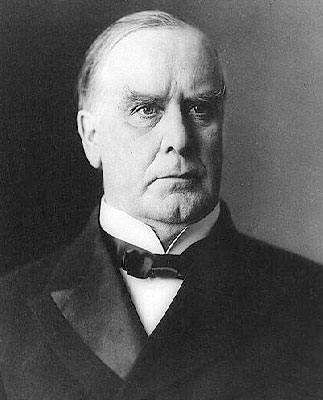
When it was discussed within the administration of President William McKinley, the yellow press was dismissed as a nuisance or disdained at as a complicating factor.

The truth is that the yellow press neither drove, shaped, nor  crystallized U.S. policy vis-à-vis Spain in 1898.

Put another way: Hearst did not follow through on a vow he never made.

WJC

Recent and related:

On ‘transformational moments’ that journalists see

In Debunking, Media myths, Murrow-McCarthy myth, New York Times, Newspapers, Spanish-American War, Washington Post on January 20, 2011 at 9:04 am

The “turning points” that journalists seem eager to find in dramatic events usually turn out to be mythical–chimeras built on a convenient if faulty and clichéd storyline.

'Turning points' sculpture in Ohio (Marty Gooden)

That’s a central point blogger and political scientist Brendan Nyhan offered the other day in a perceptive commentary dismissing the notion that the shootings this month in Tucson may be seen, sooner or later, as a turning point in American political life.

Nyhan argued that “single events almost never reshape social and political life” and added:

“The turning points of the past seem more clear in large part because the messiness of those events has faded in our memory and we remember the narratives that have been constructed after the fact.”

Well said.

Nyhan’s particular target was the New York Times and two rather superficial commentaries written by Matt Bai in the aftermath of the Tucson shootings. The longer and more recent piece was published Sunday in the Times “Week in Review” section. In it, Bai ruminated:

“If the shooting didn’t feel like the turning point in the civic life of the nation that some of us had imagined it might become, then it may be because such turning points aren’t always immediately evident.”

Welch (Library of Congress)

He went on to consider a few supposedly “transformational moments” of the past, such as the televised Senate hearing in 1954, when lawyer Joseph N. Welch upbraided Senator Joseph McCarthy, declaring:

“Have you no sense of decency, sir? At long last, have you left no sense of decency?”

It was a moment, Bai wrote, that “resonated throughout a country that was just then discovering the nascent power of television. Years of ruinous disagreement over the threat of internal Communism seemed to dissipate almost overnight.”

The sweeping claim caught my eye, given that my latest book, Getting It Wrong, addresses and debunks the media myth that broadcast journalist Edward R. Murrow put an end to McCarthy’s communists-in-government witch-hunt in a 30-minute television program in March 1954.

I don’t discuss the Welch-McCarthy encounter in Getting It Wrong, but barnacles of media myth seem to cling to that tale, too.

Take, for example, the claim that Welch’s famous line — uttered on the 30th day of what were called the Army-McCarthy hearings — “resonated throughout” the country.

The hearings centered around the Army’s accusations that McCarthy and his top aide, Roy Cohn, had sought special treatment for a McCarthy staffer who had been drafted into military service. The hearings were televised live, gavel to gavel, by the fledgling ABC and by the declining DuMont networks.

As Thomas Doherty pointed out in Cold War, Cool Medium, a fine study of television during the McCarthy period,the hearings “were not a saturation television event in the modern sense. The refusal of NBC and CBS [for commercial reasons] to telecast the hearings blacked out whole regions of the country from live coverage.”

He also wrote:

“With cable costs keeping ABC from relaying the hearings to Denver and points west, the coverage on the Pacific Coast was particularly sparse.”

Given such gaps in television’s coverage, it’s hard to see how the sudden and dramatic put down by Welch, a Boston lawyer who was the Army’s lead counsel at the hearings, could have “resonated” across the entire country.

Welch’s comment certainly attracted attention. But briefly.

The New York Times said the rebuke of McCarthy was greeted by a burst of applause in the Senate gallery and that Welch the next day reported having received 1,400 telegrams, most of them supportive.

Even so, a database review of the reporting in the Times and four other leading U.S. newspapers indicates the Welch-McCarthy encounter was at the time essentially a one-day story.

The database search for articles, editorials, transcriptions, and letters to the editor that contained “McCarthy,” “Welch,” and “sense of decency” returned 14 items in the period from June 9, 1954, to June 30, 1955.

Ten of the 14 items were published June 10, 1954, a day after Welch rebuked McCarthy.  The remarks were reported that day on the front pages of all five newspapers–the Times, Baltimore Sun, Chicago Tribune, Los Angeles Times, and Washington Post.

But none of the 14 items was published after June 25, 1954. In other words, none of the items was published during the time late in 1954 when the Senate voted to censure (“condemn” was the term) McCarthy’s conduct.

What’s more, lengthy excerpts of the hearing record published in the New York Times show that Welch’s “sense of decency” rebuke didn’t stun McCarthy into silence. The senator blundered on, insinuating that Welch had sought to include on his hearing staff a young lawyer with a dubious background.

The Welch-McCarthy encounter assumed “turning point” status in the years after 1954. But in the moment, in June 1954, it was recognized as dramatic but not “transformational.”

Bai’s “Week in Review” piece offered up this dubious point as well:

“A century ago, news traveled slowly enough for Americans to absorb and evaluate it; today’s events are almost instantaneously digested and debated, in a way that makes even the most cataclysmic event feel temporal.”

A century ago, news traveled rapidly by telegraph. It was scarcely  unusual then for large-circulation urban newspapers to publish multiple extra editions to report fresh elements of a major breaking story.

During the Spanish-American War in 1898, for example, William Randolph Hearst’s New York Evening Journal published as many as 40 extra editions a day. On such occasions, news surely wasn’t traveling slowly.

Indeed, at the end of the 19th century, it was not uncommon for Americans to claim they were living at “a time of rush and hurry.”

WJC

Recent and related:

The ‘anniversary’ of a media myth: ‘I’ll furnish the war’

In 1897, Anniversaries, Debunking, Furnish the war, Media myths, Newspapers, Spanish-American War, Yellow Journalism on January 13, 2011 at 7:31 am

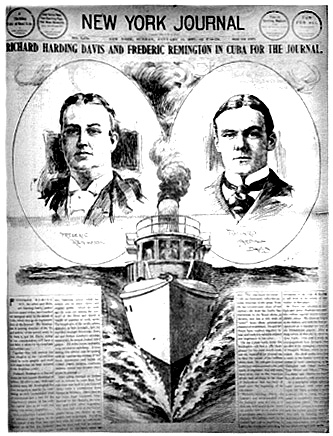
Remington, Davis in Cuba for Hearst

Had it occurred, the legendary but improbable exchange of telegrams between William Randolph Hearst and the artist Frederic Remington–in which Hearst supposedly vowed to “furnish the war” with Spain–would have taken place in mid-January 1897.

The uncertainty as to exactly when the purported exchange occurred is one of many signals the tale is apocryphal, a media-driven myth.

As I discuss in my media-mythbusting book, Getting It Wrong, the Remington-Hearst anecdote is “perhaps the hardiest myth in American journalism.”

It lives on in part because it is a pithy and delicious tale. It corresponds well to the image of Hearst the war-monger, the unscrupulous newspaper published who fomented the Spanish-American War in 1898.

As I point out in the first chapter of Getting It Wrong, the Remington-Hearst tale is often retold “despite a nearly complete absence of supporting documentation. It lives on even though telegrams supposedly exchanged by Remington and Hearst have never turned up. It lives on even though Hearst denied ever sending such a message.”

Moreover, I write:

The anecdote “lives on despite an irreconcilable internal inconsistency: It would have been absurd for Hearst to vow to ‘furnish the war’ because war—specifically, the Cuban rebellion against Spain’s colonial rule—was the very reason Hearst sent Remington to Cuba in the first place.”

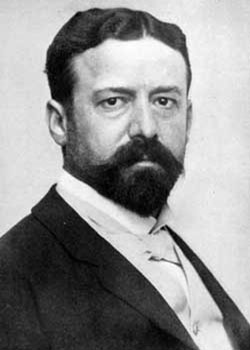
The sole original source for the “furnish the war” quotation was On the Great Highway, a slim volume of reminiscences that came out in 1901. The author was James Creelman, a portly, cigar-chomping journalist prone to pomposity and exaggeration.

Creelman did not explain in On the Great Highway how or where he learned about the purported Remingt0n-Hearst exchange. Creelman–who was in Madrid at the time Remington was in Cuba–recounted the anecdote a not as a rebuke but as a compliment to Hearst and the activist “yellow journalism” he had pioneered in New York City.

Nor did Creelman say exactly when the presumed exchange took place, writing only that it was “some time before the destruction of the battleship Maine in the harbor of Havana” in mid-February 1898. The only time Remington was in Cuba before the explosion that destroyed the Maine was in January 1897.

Creelman: Sole source

Remington, an accomplished artist of the American West, went to Cuba in 1897 to draw sketches of scenes of the uprising against Spanish rule. He traveled with Richard Harding Davis, who then was burnishing a reputation as one of American journalism’s leading correspondents.

Hearst recruited Remington and Davis for a month, and the plan was for them to reach a force of Cuban rebels under the command of Máximo Gómez.

But Remington and Davis never reached the rebels. What’s more, they proved to be an oddly matched team. In Matanzas on January 15, 1897, they parted ways. Remington returned to Havana and the next day boarded a steamship bound for New York.

Legend has it that before leaving Havana, Remington sent Hearst a telegram that supposedly said:

“Everything is quiet. There will be no war. I wish to return.”

Hearst purportedly cabled Remington in reply:

“Please remain. You furnish the pictures, and I’ll furnish the war.”

Had it occurred, the exchange would have taken place late on January 15, 1897, or early on January 16, 1897.

Remington disregarded Hearst’s purported instructions to “remain” in Cuba. The artist was one of seven passengers aboard the Seneca when it sailed from Havana on January 16, 1897. The steamer reached New York four days later and soon afterward, Hearst’s New York Journal began publishing Remington’s sketches drawn in Cuba.

“The work was given prominent display,” I note in Getting It Wrong. Headlines in the Journal hailed Remington as a “gifted artist”–hardly the sort of accolade Hearst would have extended to someone in his employ who had brazenly disregarded instructions to remain on the scene.

That’s further reason for doubting that Hearst ever sent a telegram vowing to “furnish the war.”

And yet another reason is that Spanish censors, who controlled all incoming and outgoing cable traffic in Havana, surely would have intercepted Hearst’s inflammatory message, had it been sent. It’s highly improbable that cables such as those attributed to Hearst and Remington would have flowed readily between New York and Havana.

Additionally, the correspondence of Davis gives lie to the anecdote.

Davis wrote frequently to his family, especially to his mother, Rebecca Harding Davis. His letters make clear that  Remington did not leave because they found “everything is quiet” in Cuba.

In fact, Davis wrote on the day he and Remington parted ways:

“There is war here and no mistake.”

His correspondence offered detailed descriptions of what he called the grim process “of extermination and ruin” in Cuba.

More important, Davis’ letters make clear that Remington left for home not on the pretext that “everything is quiet,” but because Davis wanted him to go.

“I am as relieved at getting old Remington to go as though I had won $5000,” Davis wrote to his mother on January 15, 1897. “He was a splendid fellow but a perfect kid and had to be humored and petted all the time.”

Davis added that he “was very glad” Remington left “for he kept me back all the time and I can do twice as much in half the time.”

I note in Getting It Wrong that the Remington-Hearst tale was “Creelman’s singular contribution to American journalism.” The anecdote has proven to have timeless appeal, in part because it promotes what I call “the improbable notion the media are powerful and dangerous forces, so powerful they can even bring on a war.”

WJC

Recent and related:

Fact-checking WaPo columnist on the ‘McKinley moment’

In Debunking, Media myths, Spanish-American War, Washington Post, Yellow Journalism on January 12, 2011 at 7:42 am

Washington Post columnist Dana Milbank offered up a glib and flabby column yesterday, arguing that the false charges of incitement raised long ago in the McKinley assassination should serve as a cautionary reminder to the likes of Sarah Palin and Fox News commentator Glenn Beck.

They should experience what Milbank vaguely termed a “McKinley moment.”

McKinley

He recalled–and not entirely accurately–the efforts in 1901 to link the contents of William Randolph Hearst’s newspapers to the fatal shooting of President William McKinley.

I discussed that topic in a post Monday at Media Myth Alert, noting how extreme and wrong-headed attempts to exploit and politicize the weekend’s shooting rampage in Tucson was reminiscent of the smear campaign against Hearst following McKinley’s slaying.

The rampage in Arizona left six people dead, including a federal judge. Congresswoman Gabrielle Giffords was severely wounded.

Milbank’s column seizes on the shootings in Tuscon as a pretext to condemn the views and rhetoric of Palin and Beck, neither of whom I much care for.

Milbank began his column by declaring:

“If any good can come of the horror in Tucson, it will be that this becomes a McKinley moment for Sarah Palin and her chief spokesman, Glenn Beck.”

A “McKinley moment”? Meaning what? An occasion for self-censorship because of the insinuations and false allegations raised against them in the aftermath of the shootings in Tucson–much as false allegations were raised against Hearst following McKinley’s slaying?

Not only is “McKinley moment” an imprecise construct: It suggests that using smears to batter foes into silence is somehow worthy or admirable.

Milbank in his column briefly reviewed the false and improbable charges of incitement leveled against Hearst after McKinley was fatally shot in September 1901 and wrote:

“The outcry against Hearst’s incitement–there were boycotts and a burning in effigy–dashed his presidential ambitions.

“A similar, and long overdue, outcry has followed the Tucson killings.”

“Maybe,” Milbank added, “Beck and Palin will be good enough to show us what a real moment of silence is–by having themselves a nice long one.”

A more fitting and appropriate response from the violence in Tucson would be not to seek to mute the rhetoric of foes, but to condemn the smear, to call attention to the hazards of battering opponents with indirect and groundless allegations of incitement.

Hearst was so battered in 1901.

He, not unlike Palin and Beck, was a brash and controversial figure, easy to dislike.

Hearst’s aggressive, activist-oriented approach to newspapering–his yellow journalism–shook up New York City’s media scene in late 1890s and served as a platform for his political ambitions during the first decade of the 20th century.

But Hearst was no villain, no violence-monger. As I write in my latest book, Getting It Wrong, Hearst almost surely never vowed to bring on the Spanish-American War of 1898, although that hardy myth is often invoked and readily believed.

His newspapers were known to publish intemperate commentary, as were rival newspapers at the turn of the 20th century. And ill-advised surely defines the column written in 1900 by Ambrose Bierce, who ruminated about a bullet “speeding here to stretch McKinley on his bier.”

Milbank’s column suggested that Bierce’s commentary was published in the Hearst papers some six months before McKinley was shot.

In fact, it appeared 20 months before the assassination, in a quatrain about the fatal shooting of William Goebel, the governor of Kentucky. Bierce said he meant to call attention to risks of not finding and prosecuting Goebel’s killer.

Milbank’s column, moreover, erred in claiming the uproar that followed McKinley’s assassination “dashed” Hearst’s presidential ambitions.

Not so.

Hearst mounted a serious bid for Democratic nomination for president in 1904. He was by then a congressman, and his presidential bandwagon  gathered some momentum during the first months of that year.

In the end, though, his candidacy was doomed–not by the smears and fabrications raised after the McKinley assassination but by the reluctance of William Jennings Bryan to embrace Hearst’s bid.

Bryan, who lost presidential elections to McKinley in 1896 and 1900, had been expected to endorse Hearst for Democratic nomination in 1904. After all, Hearst had supported Bryan’s ill-fated campaigns for the presidency and had even financially supported Bryan’s travels in Europe following the 1900 election.

When Bryan did not deliver the hoped-for endorsement (thinking, perhaps, he might again emerge as the party’s standard-bearer), Hearst’s candidacy was faded, according to David Nasaw, Hearst’s leading biographer.

“Without Bryan’s endorsement,” Nasaw wrote in his 2000 work, The Chief, “Hearst had no hope of securing the votes [of convention delegates] he needed for the nomination.”

Still, Hearst pursued his bid for the nomination to the Democratic convention in St. Louis in 1904. He lost by a wide margin to Judge Alton B. Parker.

Parker in turn lost the 1904 election in a landslide to Teddy Roosevelt, who as vice president had succeeded McKinley to the presidency.

The “McKinley moment,” as Milbank used the term, seems a misnomer.

More appropriate and accurate would be to call it the “Hearst moment,” given that Hearst was the target, the victim, of distortion and falsehood.

The “Hearst moment” offers a useful and pertinent reminder about the use and effect of the smear.

WJC

Recent and related:

Many thanks to Glenn Reynolds
at Instapundit for linking to this post.

Murrow, Cronkite myths cited in Poland’s top paper

In Cronkite Moment, Debunking, Media myths, Murrow-McCarthy myth, New York Times, Newspapers, Watergate myth on January 4, 2011 at 10:25 am

I’ve discussed from time to time at Media Myth Alert how media-driven myths about the U.S. news media have a way of traveling well and finding expression in news outlets overseas.

Watergate-related myths are notable examples of this tendency.

A couple of prominent media myths popped up yesterday in an article posted at the online site of Gazeta Wyborca, the leading daily in Poland and a newspaper with a remarkable past.

Gazeta Wyborca traces its lineage to what was the leading underground newspaper in Poland of the 1980s, Tygodnik Mazowsze. The clandestine title appeared under the noses of Poland’s communist authorities, week after week, from 1982 to 1989–some 290 issues in all.

Tygodnik Mazowsze was run almost entirely by women affiliated with Poland’s then-banned Solidarity opposition. When the country’s communist rulers permitted Solidarity candidates to stand in elections in 1989, one of the conditions was that the movement be permitted to publish an above-ground newspaper.

So the staff of Tygodnik Mazowsze moved up from the underground to launch Gazeta Wyborca, which means “electoral newspaper.” In the years since, Gazeta has become the dominant news outlet in Poland, which now is a thriving democracy.

Gazeta yesterday referred to the debate that bubbled last week in U.S. news media over a New York Times article that likened TV comedian Jon Stewart to legendary CBS newsman Edward R. Murrow.

Gazeta noted that U.S. news media “triumphantly” mentioned “cases in which journalists have changed the course of history” and referred to Murrow’s “instrumental” role in ending Senator Joseph McCarthy’s communists-in-government witch-hunt.

It also noted CBS anchorman Walter Cronkite’s criticism of the Vietnam War in 1968, which supposedly forced President Lyndon Johnson to realize his war policy was a shambles.

It’s too bad Gazeta didn’t point out that both cases are media-driven myths.

As I discuss in my latest book, Getting It Wrong, Murrow was quite late in confronting McCarthy, doing so most prominently in a half-hour television program that aired March 9, 1954.

That show came months, even years after other American journalists–notably, syndicated columnist Drew Pearson–had reported critically, closely, and often about McCarthy and his exaggerated charges.

“To be sure,” I write in Getting It Wrong, “it wasn’t as if Americans in early 1954 were hoping for someone to step up and expose McCarthy, or waiting for a white knight like Murrow to tell them about the toxic threat the senator posed.”

By then, they knew all too well.

Nor was Cronkite at the cutting edge of criticism of the U.S. war effort in Vietnam.

Far from it.

The CBS anchorman declared in a televised special report on February 27, 1968, that the U.S. military was “mired in stalemate” in Vietnam.

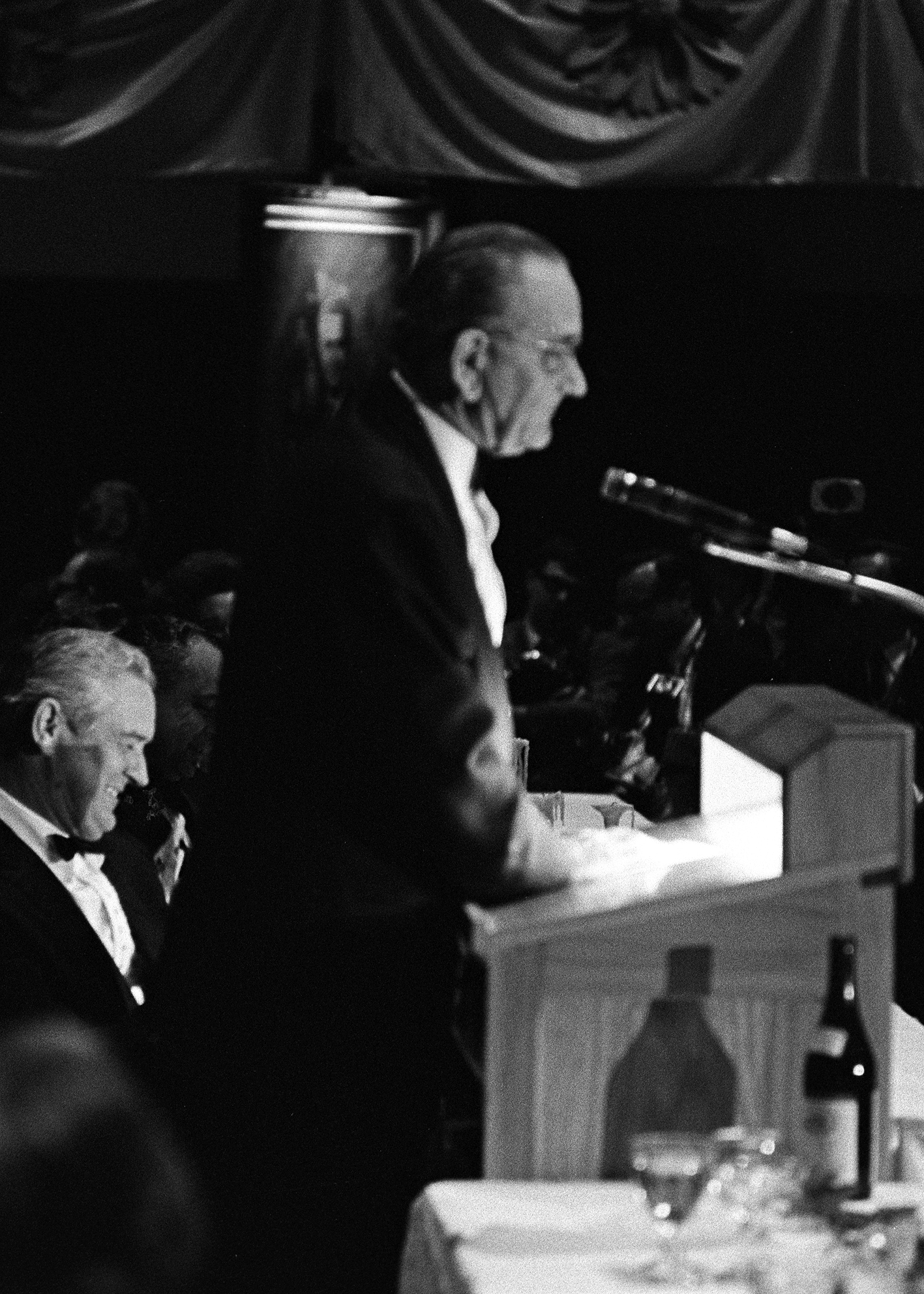
LBJ in Texas, February 27, 1968

But that scarcely was a remarkable assertion.

As I note in Getting It Wrong, stalemate” had been appearing as early as the summer of 1967 in New York Times editorials and analyses about the war.

What supposedly made the Cronkite characterization stand out is that President Johnson saw the program and, as it ended, said to an aide or aides, “If I’ve lost Cronkite, I’ve lost Middle America.”

Or something to that effect.

But in fact, Johnson wasn’t in front of a television set that night. He didn’t see the Cronkite program when it aired.

At the time Cronkite was intoning his “mired in stalemate” assessment, Johnson was offering light-hearted banter in Austin, Texas, at the 51st birthday party of one of his longtime political allies, Governor John Connally.

So it’s difficult to fathom how Johnson could have been much moved by a program that he hadn’t seen.

WJC

Recent and related: