W. Joseph Campbell

Posts Tagged ‘History’

Cronkite report on Vietnam was ‘most influential TV show ever’?

In Cronkite Moment, Debunking, Error, Hurricane Katrina, Media myths, Television on June 18, 2013 at 10:41 am

The most influential TV show ever?
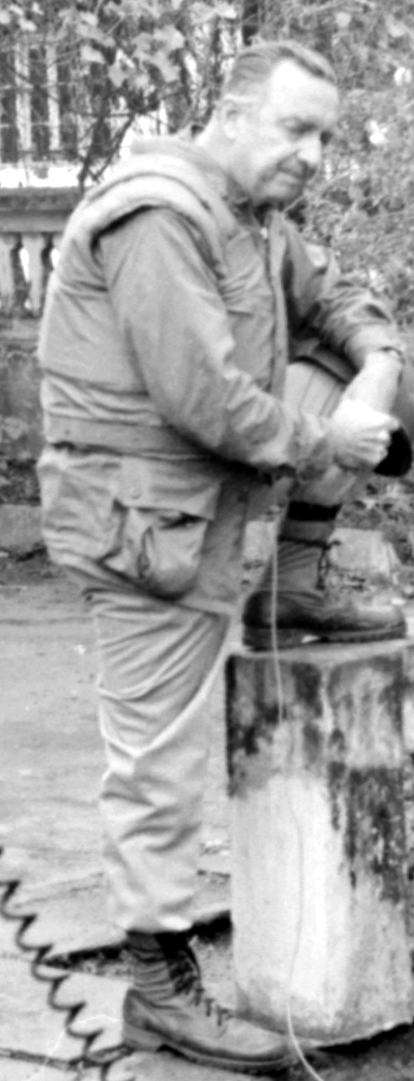
Cronkite in Vietnam, 1968

Cronkite in Vietnam, 1968

It’s rather a thumbsucker, but it’s the topic of the “Big Question” feature in the June number of the Atlantic. And the responses, culled from TV executives, producers, and show creators, range from All in the Family, to the Simpson’s, to Saturday Night Light, to Walter Cronkite’s special report about Vietnam.

I always thought All in the Family was grating and repetitive; the Simpson’s predictable, and Saturday Night Light ever-erratic. But the Cronkite report about Vietnam, which aired February 27, 1968?

The most influential?

That’s just wrong. Factually wrong.

The Cronkite program was proposed as “most influential” by John Langley, co-creator of the series Cops, who wrote in explaining his choice:

“Public opinion followed Cronkite’s assessment, leading President Johnson to observe, ‘If I’ve lost Cronkite, I’ve lost Middle America.'”

That assessment includes a couple of important errors, to be addressed in moment.

Some background, first: Walter Cronkite, the anchor of the CBS Evening News, went to Vietnam in February 1968, shortly after the communist North Vietnamese and their Viet Cong allies launched a surprisingly extensive but ultimately failed offensive across South Vietnam.

Upon returning to New York, Cronkite prepared a report about Vietnam, describing the U.S. war effort there as “mired in stalemate” and suggesting that negotiations could offer a way out.

In the supposed reactions to Cronkite’s report lurks one the most popular and enduring myths of American journalism.

As Langley writes, American public opinion supposedly followed Cronkite: Americans were swayed, supposedly, by the assessment of someone as trusted as Cronkite, and they likewise turned against the war. President Lyndon B. Johnson, after watching Cronkite’s special report, knew his war policy was in tatters and purportedly uttered something to the effect of:

“If I’ve lost Cronkite, I’ve lost Middle America.”

In fact, public opinion had begun turning against the Vietnam War months before the Cronkite program: Cronkite followed rather than precipitated deepening doubts about the wisdom of fighting in Vietnam.

As I discuss in my media-mythbusting book, Getting It Wrong, a plurality of Americans (47 percent) told pollsters for Gallup in October 1967 that sending U.S. troops to Vietnam had been a mistake. That plurality edged upward to 49 percent in a Gallup Poll completed the day of Cronkite’s program about Vietnam.

Journalists, moreover, had detected a softening of popular support for the war.

In December 1967, for example, Don Oberdorfer, a national correspondent for Knight newspapers, reported that the “summer and fall of 1967 [had] been a time of switching, when millions of American voters — along with many religious leaders, editorial writers and elected officials — appeared to be changing their views about the war.”
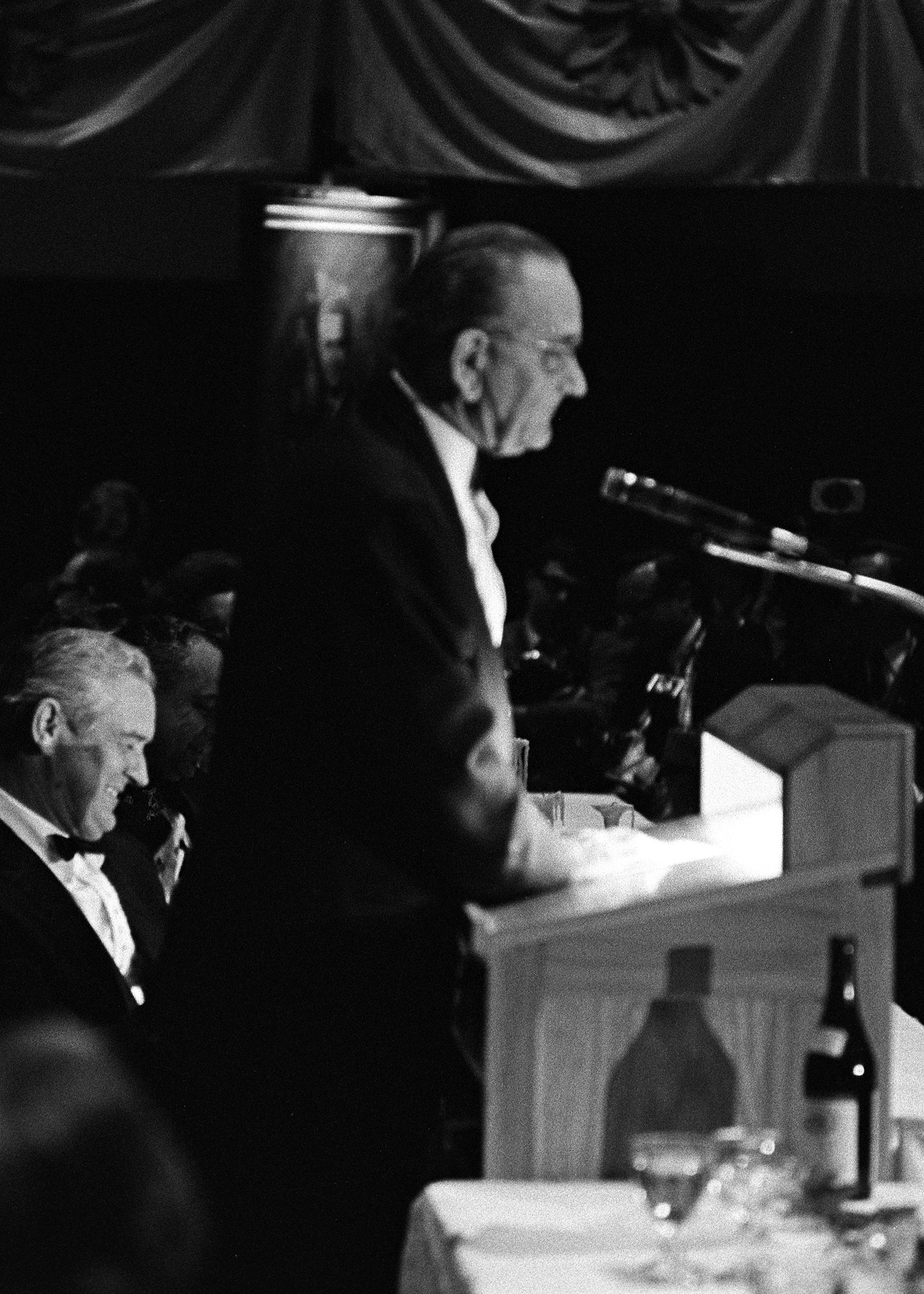
LBJ: Wasn't watching Cronkite

LBJ: Wasn’t watching Cronkite

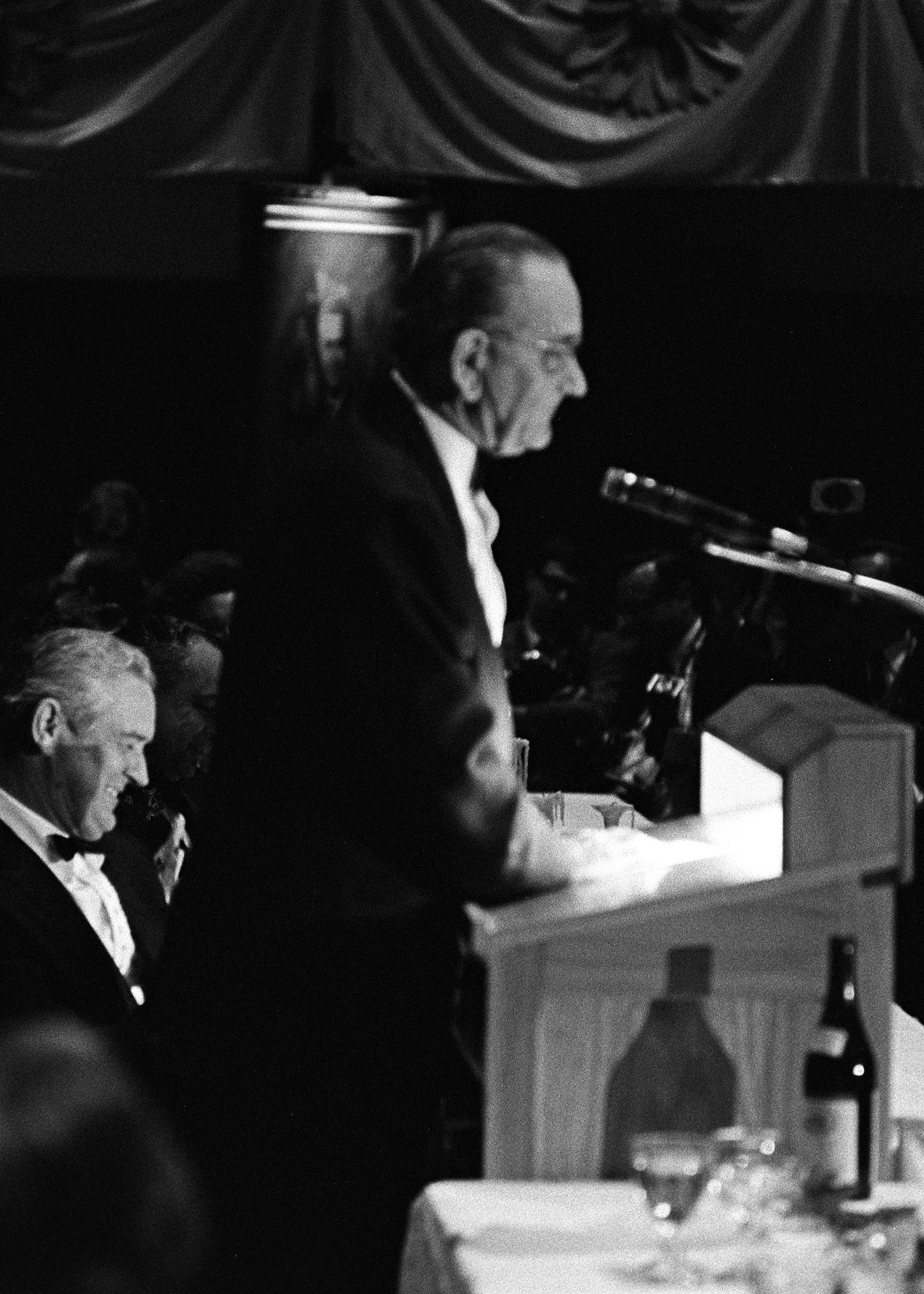
As for Johnson, he didn’t see the Cronkite report on Vietnam when it aired. He wasn’t in front a television set that night; he was in Austin, Texas, at a black-tie party marking the 51st birthday party of Governor John Connally.

And about the time Cronkite was intoning his pessimistic, “mired in stalemate” editorial comment about the war, Johnson was offering light-hearted remarks about Connally’s age.

“Today, you are 51, John,” the president said. “That is the magic number that every man of politics prays for — a simple majority.”

Cronkite’s “mired in stalemate” was an appraisal that was neither stunning nor novel in late February 1968. U.S. news organizations had been invoking “stalemate” to describe the war effort for months before the Cronkite program.

For example, the New York Times asserted in an analysis published August 7, 1967,  that “the war is not going well. Victory is not close at hand.”

The Times analysis, filed from Saigon, further declared:

“‘Stalemate’ is a fighting word in Washington. President Johnson rejects it as a description of the situation in Vietnam. But it is the word used by almost all Americans here, except the top officials, to characterize what is happening.”

The Times’ assessment appeared on its front page, beneath the headline:

Vietnam: The Signs of Stalemate.

While the Atlantic’s “Big Question” had the intended effect of stirring debate and discussion, it wasn’t nearly as intriguing as the rankings issued last year of the “most impactful moments” on U.S. television of the past 50 years. Notably, none of the top 20 was an entertainment program.

The rankings were prepared from a survey conducted by Nielsen and Sony Electronics, and topping that list was coverage of the terrorist attacks of September 11, 2001, followed by the reporting of the Hurricane Katrina disaster in 2005 and of the O.J. Simpson not-guilty verdicts in 1995.

While dramatic, the Katrina coverage, was no high, heroic moment in American journalism.

As I discuss in Getting It Wrong, the reporting on TV and in print “was in important respects flawed and exaggerated. On crucial details, journalists erred badly, and got it wrong. In the days following Katrina’s landfall, news reports described apocalyptic horror that the hurricane supposedly had unleashed.”

But few if any of the nightmarish accounts of violence, anarchy, and mayhem proved true.

WJC

More from Media Myth Alert:

‘Furnish the war’ media myth infiltrates NPR tribute to Evelyn Waugh’s ‘Scoop’

In 1897, Debunking, Error, Furnish the war, Media myths, Quotes, Spanish-American War, Yellow Journalism on June 16, 2013 at 11:07 am

Media myths often are pressed into the service of emphasis, to underscore telling points and broader themes about media performance.

Hearst in caricature, 1896

Hearst in caricature, 1896

So it is with the mythical tale about William Randolph Hearst’s vow to “furnish the war” with Spain at the end of the 19th century. The anecdote speaks to the arrogance and dangers of media power — that at their worst, the news media can even bring on war.

Which is nonsense.

Even so, “furnish the war” is a tale too tempting sometimes not to be pressed into the service of emphasis.

Which takes us to an essay posted today at the NPR’s online “You Must Read This” column, where writers discuss their favorite books. In the essay, Alexander Nazaryan of the “Page Views” blog of the New York Daily News pays tribute to Evelyn Waugh’s Scoop, a delicious send-up of war reporting that was published in 1938.

ScNPR books_logooop centers around William Boot, a hapless nature writer for the fictional London newspaper Daily Beast who inadvertently is assigned to cover the turmoil in Ishmaelia, a fictional state in East Africa.

While slow to get going, Scoop offers hilarious turns. Its portraits of arrogant, suspicious, hype-prone war reporters are entertaining and resonate even today, 75 years on.

Why the NPR essay about Scoop much matters to Media Myth Alert is that it invokes the tale about “furnish the war.”

The essay notes how the bumbling Boot inevitably incurs the wrath of editors back in London, and adds:

“After filing the kind of stories that wouldn’t get a single retweet these days, he receives an unambiguous telegram from the Daily Beast:  ‘LORD COPPER PERSONALLY REQUIRES VICTORIES.’ If that seems like rather heavy-handed satire, remember that the not-at-all-fictional Randolph William Hearst once allegedly told a correspondent in Cuba, ‘You furnish the pictures. I’ll furnish the war.'”

Actually, it’s  not “Randolph William Hearst.”

And William Randolph Hearst almost certainly never sent a message vowing to “furnish the war.”

That anecdote revolves around a purported exchange of telegrams between Hearst and Frederic Remington, the famous American artist who in January 1897 went to Cuba for Hearst’s New York Journal.

Remington’s assignment was to draw sketches about Cuba’s rebellion against Spanish colonial rule. He was in Cuba six days, then returned to New York.

Before leaving, Remington supposedly wired Hearst, saying:

“Everything is quiet. There is no trouble here. There will be no war. I wish to return.”

In reply, Hearst supposedly said:

“Please remain. You furnish the pictures, and I’ll furnish the war.”

As I discuss in my 2010 book, Getting It Wrong, reasons for doubting the Remington-Hearst exchange are many, and include the absence of documentary evidence: The telegrams supposedly exchanged by Remington and Hearst have never turned up.

Moreover, Hearst denied ever having sent such a message, and Remington apparently never discussed it.

And the tale lives on despite an irreconcilable internal inconsistency:  It would have been absurd for Hearst to have sent a message vowing to “furnish the war” because war— the Cuban rebellion against Spain’s colonial rule — was the reason Hearst dispatched Remington to Cuba in the first place.

“Anyone reading U.S. newspapers in early 1897 would have been well aware that Cuba was a theater of a nasty war,” I write in Getting It Wrong. “By then, the Cuban rebellion had reached island-wide proportion and not a single province had been pacified by Spain’s armed forces.”

The “furnish the war” anecdote first appeared in 1901, a brief passage in a slim memoir titled On the Great Highway: The Wanderings and Adventures of a Special Correspondent. The author was James Creelman, a portly, bearded, cigar-chomping journalist prone to hype and pomposity.

Creelman did not explain how or from whom he learned about the purported Remington-Hearst exchange. Creelman in January 1897 was Hearst’s correspondent in Europe, which means he wasn’t with Remington in Cuba, nor with Hearst in New York.

Creelman invoked the anecdote not to condemn Hearst, but to compliment him. For Creelman, the “furnish the war” vow was suggestive of the aggressive, anticipatory “yellow journalism” that he saw and liked in Hearst’s newspapers.

But in the mid- and late-1930s, the anecdote’s meaning shifted dramatically, to become emblematic of the supposedly wretched character of Hearst and his journalism.

The transformation made “furnish the war” a far more engaging tale, and ensured that it would live on and on. And ready to be pressed into the service of emphasis.

WJC

More from Media Myth Alert:

‘Strategy for peace’ and blocking the schoolhouse door: Recalling a crowded week in June 1963

In Anniversaries, Newspapers, Photographs, Quotes, Television, Year studies on June 6, 2013 at 5:56 am

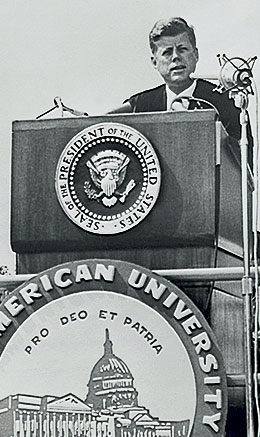
Monday marks the 50th anniversary of President John F. Kennedy’s “strategy for peace” commencement address at American University, a speech delivered at the height of the Cold War in which he called for a rapprochement with the Soviet Union.

JFK_AU_speech

Kennedy, June 10, 1963

The speech often is ranked among the finest of its kind.

Speaking to about 10,000 people out-of-doors on a 90-degree day in Washington, D.C., Kennedy announced that talks would soon begin in Moscow on a comprehensive nuclear test ban treaty. He also said the United States would suspend atmospheric testing as long as other nuclear powers did the same.

Fifty years on, the speech is still recalled for such passages as: “[W]e must labor on— not towards a strategy of annihilation but towards a strategy of peace.”

And:

“Let us examine our attitude toward peace itself. Too many of us think it is impossible. Too many think it unreal. But that is a dangerous, defeatist belief. It leads to the conclusion that war is inevitable, that mankind is doomed, that we are gripped by forces we cannot control.”

Those sentiments represented something of a modest departure from the rhetoric common at the time. Kennedy spoke at American University less than eight months after the Cuban Missile Crisis, which brought the United States and Soviet Union to the brink of a nuclear exchange.

The speech was not without significance: The talks Kennedy announced on June 10, 1963, led fairly quickly to a limited test-ban treaty with the Soviets and British.

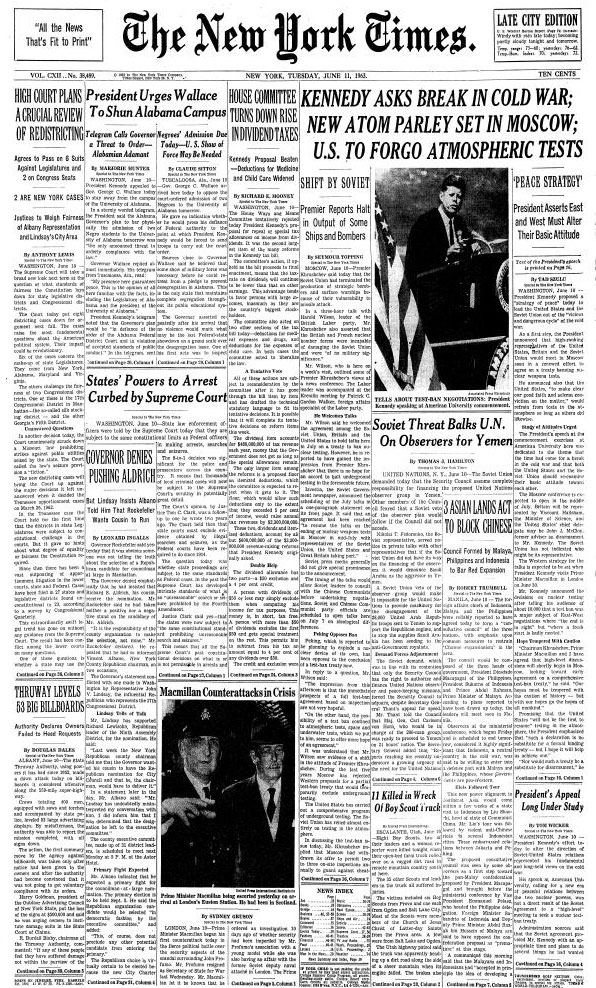
Interestingly, Kennedy’s address was in short order crowded off the front pages. His “strategy for peace” remarks hardly dominated the news that week.

Indeed, few weeks arguably have been as packed with such a variety of major and memorable news events as June 9-15, 1963.

Kennedy’s commencement speech received prominent treatment for a day or two in U.S. newspapers. Then it was overtaken by some of the most dramatic moments of the Civil Rights era — among them, Governor George Wallace’s stand at the schoolhouse door, symbolically blocking the desegregation of the University of Alabama.

It has been said that the “drama of the nation’s division over desegregation came sharply into focus” that day, June 11, 1963.

In the face of the governor’s defiance, Kennedy federalized the Alabama National Guard. After reading a bitter statement denouncing the “unwelcomed, unwanted, unwarranted and force-induced intrusion upon the campus of the University of Alabama,” Wallace stepped aside. Two black students were allowed to register for classes.

NYT-front_11June1963_full

New York Times front, June 11, 1963

Kennedy referred to the confrontation in Alabama in a radio and television speech that night in which he proposed that Congress pass civil rights legislation to end discrimination in voting, enhance educational opportunities, and ensure access to restaurants, hotels, and other public places.

The resulting legislation became the Civil Rights Act of 1964.

Also on June 11, 1963,  an Associated Press correspondent in South Vietnam, Malcolm Browne, took one of the iconic images of the long war in Southeast Asia — that of a Buddhist monk who had set himself afire in downtown Saigon, to protest the government’s religious oppression.

“It was clearly theater staged by the Buddhists to achieve a certain political end,” Browne later said. “At the same time, there was a human element to it that was just horrifying, because the sequence of pictures showed the initial shock of the flames touching his face, and so forth. He never cried out or screamed ….”

The following day, Civil Rights leader Medgar Evers was shot to death outside his home in Mississippi. Byron De La Beckwith was tried three times for Evers’ killing, most recently in 1994 when he was convicted and sentenced to life in prison. The other two trials ended in hung juries.

Evers, an Army veteran who had fought in World War II, was buried at Arlington National Cemetery.

The space race, as it was known, seldom was far from the news in 1963. At the close of the crowded week, the Soviets were preparing to launch Vostok 6. On board was Valentina Tereshkova, destined to become the first woman in space.

The flight lifted off on June 16, 1963, and lasted nearly 71 hours. Tereshkova’s 49 Earth orbits more than doubled the most compiled to that point by any American astronaut.

And 20 years would pass before the first American woman flew in space. She was Sally Ride, a mission specialist aboard the space shuttle Challenger in 1983.

The crowded week 50 years ago was a microcosm of the Cold War era, what with nuclear arms, civil rights, Southeast Asia, and the U.S.-Soviet space race all prominently in the news.

Even so, why does it much matter to look back on that week in June?

Doing so offer some useful and interesting perspective, given that we tend to think we live in such busy and momentous times.

Taking a look back also reveals how unsettled the country seemed to be in 1963, given the violence and the confrontations in the South, the Cold War rivalry with the Soviets, the strife in Vietnam.

So looking back to the crowded week in June tells us the 1960s were churning well before the climatic and tumultuous year of 1968.

One wouldn’t immediately have recognized this in mid-June 1963, but dominance was shifting in the news media, flowing from newspapers  to television.

Confirmation of this transition came in late November 1963 with wall-to-wall television coverage of the Kennedy assassination and its aftermath. “Even television’s critics had to admit that the medium had been transformed into an even more powerful force,” media historian David Davies wrote in a book of the postwar decline of American newspapers.

Nineteen sixty-three was pivotal for the news media.

WJC

More from Media Myth Alert:

Ignoring nuance in the bra-burning myth

In Bra-burning, Debunking, Error, Media myths on May 30, 2013 at 9:01 am

“Myths die hard.”

So says the latest issue of the Economist magazine, in an article that addresses the nuanced myth of bra-burning.

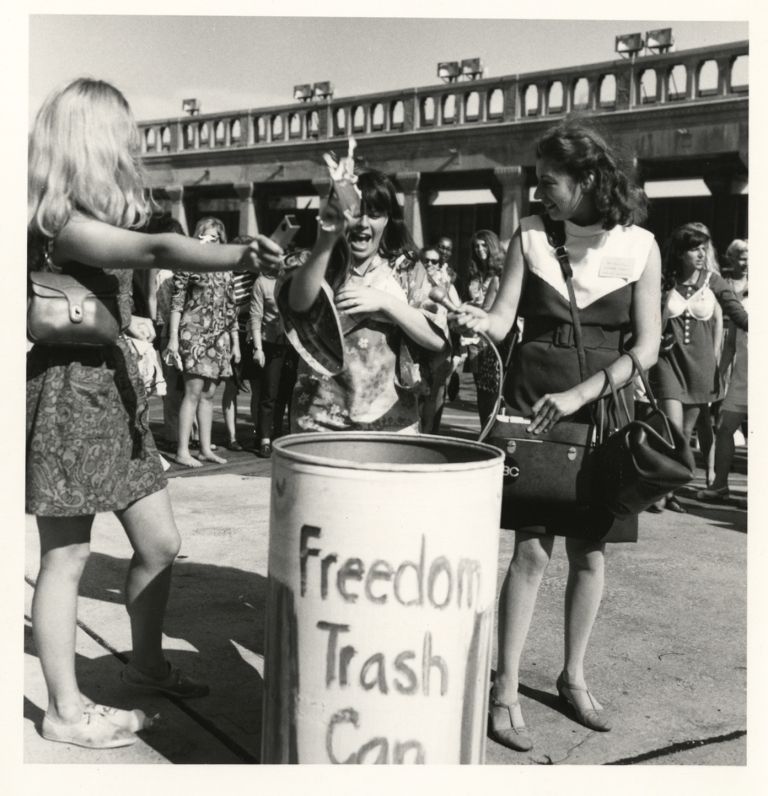
bra-burning_freedomtrashcan

At the ‘Freedom Trash Can,’ 1968

Only there’s not much nuance in the Economist’s description.

“When a handful of feminists protested at the 1968 Miss America pageant in Atlantic City,” the Economist says, “they burned no brassières. They did, however, dump a few (and make-up and high-heeled shoes) into a ‘freedom trash can,’ while also crowning a sheep.”

The syntax of that paragraph is certainly awkward. But what most interests Media Myth Alert is the assertion “they burned no brassières.”

And that’s not quite right.

As I discuss in my myth-busting book, Getting It Wrong, there is compelling evidence that bras were indeed set afire, briefly, during a women’s liberation protest on the boardwalk at Atlantic City.

That protest took place September 7, 1968, and denounced the Miss America pageant as a degrading spectacle. Demonstrators carried placards that expressed such unsubtle sentiments as: “Up Against the Wall, Miss America,” “Miss America Sells It,” “Miss America Is a Big Falsie,” and “Miss America Goes Down.”

A centerpiece of the demonstration was what the organizers called the “Freedom Trash Can.” The Economist is correct in noting that high-heel shoes and other items were tossed into that converted burn barrel.

Bras went into the Freedom Trash Can, too. And according to a first-hand account published the following day in the Atlantic City newspaper, the Press, “bras, girdles, falsies, curlers, and copies of popular women’s magazines [were] burned in the ‘Freedom Trash Can.'”

The Press account appeared beneath this headline:

“Bra-burners blitz boardwalk.”

That account was endorsed by Jon Katz, who in 1968 was a young reporter for the Press and who wrote a sidebar article about the women’s liberation demonstration.

“I quite clearly remember the ‘Freedom Trash Can,’ and also remember some protestors putting their bras into it along with other articles of clothing, and some Pageant brochures, and setting the can on fire,” Katz told me in my research for Getting It Wrong.

“I am,” he added, “quite certain of this.”

Katz also said:

“I recall and remember noting at the time that the fire was small, and quickly was extinguished, and didn’t pose a credible threat to the Boardwalk. I noted this as a reporter in case a fire did erupt.”

When the fire flickered out, Katz said, the police dragged the trash bin to the sand.

The reference to bra-burning in the Press article the day afterward as well as Katz’s recollections “offer fresh dimension to the bra-burning legend,” I write in Getting It Wrong, noting:

“They represent two witness accounts that bras and other items were burned, or at least smoldered, in the Freedom Trash Can. There is now evidence that bras and other items were set afire, if briefly, at the 1968 Miss America protest in Atlantic City.

“This evidence cannot be taken lightly, dismissed or ignored.”

However, these accounts do not support the much more vivid and popular notion that bras went up in flames that day, in a flamboyant protest on the boardwalk.

The witness accounts, I write, do not corroborate the “widely held image of angry feminists demonstratively setting fire to their bras and tossing the flaming undergarments into a spectacular bonfire.”

And yet, as the evidence presented in Getting It Wrong makes clear, “bra-burning” is an epithet not entirely misapplied to the women’s liberation demonstration at Atlantic City.

WJC

More from Media Myth Alert:

Still hardy after 40 years: The myth that Woodward, Bernstein ‘brought down’ Nixon

In Anniversaries, Debunking, Error, Media myths, Scandal, Washington Post, Watergate myth on May 17, 2013 at 10:30 am

Forty years ago today, a Senate select committee convened public hearings into the then-emergent Watergate scandal. The hearings stretched into the summer of 1973 and helped make “Watergate” a household term.

More important, the panel’s inquiry produced the disclosure that President Richard Nixon had secretly taped many of his private conversations at the White House — a revelation that was to prove decisive to the scandal’s outcome.

The most incriminating tape, released under Supreme Court directive in July 1974, captured Nixon plotting a coverup of the FBI’s investigation into the break-in at the headquarters of the Democratic National Committee in Washington in June 1972.

If not for the tapes, Nixon likely would have remained in office — a wounded and hobbled president, but one who would have completed his term.

So the Senate select committee was vital in the array of subpoena-wielding forces that produced evidence that eventually compelled Nixon’s resignation.

And yet, on this anniversary, the simplistic, media myth circulates anew — that two dogged reporters for the Washington Post, Bob Woodward and Carl Bernstein, exposed the crimes of Watergate and brought down Nixon’s corrupt presidency.

The latest to invoke what I call the heroic-journalist myth of Watergate was the executive director of the ACLU of Massachusetts, Carol Rose, who declared in a commentary for Boston’s NPR station, WBUR:

“Nixon himself was brought down by two enterprising young reporters at the Washington Post and a whistleblower by the name of ‘Deep Throat.'”

Rose’s commentary, posted yesterday at the “Cognoscenti” page of WBUR’s Web site, focused on and rightly took issue with the Justice Department’s snooping into phone records of Associated Press reporters and editors in Washington, New York, and Hartford, Connecticut.

“Lest there be any confusion: This is a big deal,” Rose says of the Justice Department’s activity. (She also writes, “Dismantle the free press, and you pretty much dismantle democracy,” which probably is to put it backwards: A free press is a marker and byproduct of democratic government, not an essential precondition.)

But what most concerns Media Myth Alert is the blithely offered claim about the work of Woodward and Bernstein — those “enterprising young reporters” to whom Rose refers.

Simply put, Woodward and Bernstein did not bring down Nixon’s corrupt presidency.

Their Watergate reporting for the Post as the scandal slowly unfolded in the summer and fall of 1972 did win a Pulitzer Prize in 1973. But Woodward and Bernstein were not central to the major disclosures of Watergate.

Notably, they did not reveal the existence of the Nixon’s tapes.

Nor did they describe the extent of the Nixon administration’s coverup of the crimes of Watergate.

Interestingly, authorities at the Post over the years have scoffed at claims that Woodward and Bernstein’s reporting took down Nixon.

Katharine Graham, the Post’s publisher during Watergate, said in 1997:

“Sometimes people accuse us of bringing down a president, which of course we didn’t do. The processes that caused [Nixon’s] resignation were constitutional.”

Woodward, himself, has pooh-poohed the notion, too. He once told an interviewer:

To say the press brought down Nixon, that’s horse shit.”

More delicately, Woodward said in an interview with the PBS “Frontline” program that “the mythologizing of our role in Watergate has gone to the point of absurdity, where journalists write … that I, single-handedly, brought down Richard Nixon. Totally absurd.”

As for the “whistleblower” Rose mentions, the shadowy “Deep Throat” source?

He turned out to be W. Mark Felt, a senior FBI official motivated not so much by whistleblowing as by high-stakes, inter-office politics.

Felt wanted the FBI top job after the death in May 1972 of the agency’s director, J. Edgar Hoover. Leaking to Woodward (Felt never met Bernstein during Watergate) was a way to pursue those ambitions — and to undercut the official who was appointed acting FBI director, L. Patrick Gray.

Felt was no noble figure. As I note in my media-mythbusting book, Getting It Wrong, he authorized burglaries as part of the FBI’s investigations into leftists associated with the radical Weather Underground.

Felt was convicted in 1980 on felony charges related to the break-ins, but was pardoned the following year by President Ronald Reagan.

WJC

More from Media Myth Alert:

Obama’s ‘Cronkite Moment’? ‘Salon’ dials up a media myth

In Cronkite Moment, Debunking, Error, Media myths, Quotes, Scandal, Television on May 14, 2013 at 6:48 pm

The online news and commentary site Salon today invokes the mythical “Cronkite Moment” of 1968 in mulling TV comedian Jon Stewart’s obscenity-laced criticism last night about the scandals battering the administration of President Barack Obama.

Salon logoStewart’s remarks on his Daily Show are evocative, Salon declares, of “one of the most famed moments in broadcasting, when CBS News legend Walter Cronkite delivered an editorial opinion after the Tet Offensive in February 1968,” in which he suggested that negotiations could offer a way out of Vietnam.

Salon adds the media myth, stating:

“Apparently watching at the White House, President Johnson, who had lost the left long ago, reportedly turned to an aide and said, ‘If I’ve lost Cronkite, I’ve lost Middle America.’ Just a few weeks later, Johnson announced he would not seek reelection.”

Salon then injects a muddled caveat, stated parenthetically: “Critics say the event has been widely misreported and overblown, but it still looms large in the American consciousness of the era, even if apocryphally.”

How’s that? It “looms large … even if apocryphally”?

Simply put, the “Cronkite Moment” is apocryphal.

And here are a few of the reasons why:

  • Johnson did not see the Cronkite program when it aired on February 27, 1968. He wasn’t at the White House, either. He was in Austin, Texas, at a black-tie party marking the 51st birthday of a longtime political ally, Governor John Connally. About the time Cronkite was intoning his commentary about Vietnam, Johnson was making light of Connally’s age, saying: “Today, you are 51, John. That is the magic number that every man of politics prays for — a simple majority.”
  • Cronkite’s on-air remarks had little to do with Johnson’s decision, announced at the end of March 1968, not to seek reelection. Far more decisive was Johnson’s eroding political support: By mid-March 1968, the president was confronting intra-party challenges from Democratic senators Eugene McCarthy and Robert F. Kennedy. And Johnson may have decided well before then against another term. He wrote in his 1971 memoir, The Vantage Point, that well before March 1968, he “had told a number of people” of his “intention not to run again.”
  • Cronkite for years rejected the notion that his on-air comments about Vietnam had had much effect on Johnson. The anchorman characterized his observations as akin to “another straw on the back of a crippled camel.” Evidence is scant, moreover, that Cronkite’s commentary had much influence on popular opinion, either. Polls had detected shifts in public sentiment against Vietnam months before Cronkite’s on-air remarks. Which means the anchorman can be said to have followed rather than have precipitated deepening disenchantment about the war.

What’s more, as I discuss in my media-mythbusting book, Getting It Wrong, Cronkite’s commentary — he also said the U.S. war effort was “mired in stalemate” — was far less emphatic than the on-air remarks not long afterward by a rival network newsman, Frank McGee of NBC News.

On March 10, 1968, McGee declared: “The war is being lost by the administration’s definition.”

Lost: No hedging there about a stalemate.

Not only does Salon indulge in media myth, its commentary probably overstates the impact of Stewart’s segment about the scandals.

The comedian was hardly direct or unrelenting in criticizing Obama. His frustration was aimed primarily at IRS and the agency’s stunning recent acknowledgement that it had singled out conservative organizations for detailed scrutiny.

As such, Stewart’s remarks are unlikely to be remembered as much of a turning point in popular views about the Obama administration.

WJC

More from Media Myth Alert:

PBS set to embrace ‘mass hysteria’ myth in anniversary show on ‘War of Worlds’?

In Anniversaries, Debunking, Error, Media myths, Media myths and radio, Newspapers, Television, War of the Worlds on May 13, 2013 at 12:20 pm
Welles and 'War of the Worlds'

Orson Welles and ‘War of the Worlds’: No panic

PBS plans to air an “American Experience” program in October about the famous War of the Worlds radio adaptation, which starred Orson Welles and cleverly told of Earth’s invasion by Martians wielding deadly heat rays.

The PBS description sounds as if the program will embrace a hoary media-driven myth — that The War of the Worlds show of October 30, 1938, set off widespread panic and mass hysteria.

As I discuss in my media-mythbusting book, Getting It Wrong, “the panic and mass hysteria so readily associated with The War of The Worlds program did not occur on anything approaching nationwide dimension.”

In overwhelming numbers, I write in referring to contemporaneous polling data, most listeners “recognized it for what it was — an imaginative and entertaining show on the night before Halloween.”

But here’s the PBS summary of an hour-long “American Experience” program, to be aired October 29, on the eve of the radio show’s 75th anniversary:

“AMERICAN EXPERIENCE ‘War of the Worlds’ Orson Welles’ infamous radio dramatization of H.G. Wells’ War of the Worlds set off one of the biggest mass hysteria events in U.S. history 75 years ago. The film examines the elements that made America ripe for the hoax. Tuesday, October 29, 9:00-10:00 p.m. ET.”

The reference to “one of the biggest mass hysteria events in U.S. history” raises eyebrows — and commanded the attention of Media Myth Alert.

(Asked for details about the content of the “American Experience” show, Cara White, a spokeswoman, said by email: “We don’t have additional information at this time since the program isn’t premiering until October. But we should have more information closer to the broadcast.”)

The 1938 radio adaptation of The War of the Worlds may have produced fleeting, localized fright and confusion. But there’s no persuasive evidence that it stirred anything approaching panic of nationwide dimension.

This is more than an academic argument: Listener reaction to The War of the Worlds program in 1938 speaks to whether the media have the capacity to create powerful, immediate, and unnerving effects.

I point out in Getting It Wrong that “the notion that The War of the Worlds program sent untold thousands of people into the streets in panic, is a media-driven myth that offers a deceptive message about the influence radio wielded over listeners in its early days and, more broadly, about the media’s potential to sow fright, panic, and alarm.”

I’m not alone in my conclusions about The War of the Worlds program, an hour-long adaptation that aired on CBS radio.

Robert E. Bartholomew, an authority on mass hysteria and social delusions, has noted there is scant evidence that many frightened listeners acted on their fears that night in 1938.

Michael J. Socolow wrote in a fine essay in 2008 that “panic was neither as widespread nor as serious as many have believed at the time or since.”

Socolow also noted:

“The streets were never flooded with a terrified citizenry” during or after the radio program.

Moreover, had Welles’ show “set off one of the biggest mass hysteria events in U.S. history,” the resulting turmoil and trauma certainly would have resulted in serious injuries and deaths, including suicides.

But none were linked to the program.

The erroneous notion that The War of the Worlds dramatization had convulsed the country in panic and mass hysteria certainly was afoot in 1938 — and for U.S. newspapers of the time, that misleading interpretation offered a delicious opportunity to assail an upstart rival medium, radio.

By the late 1930s, radio had become an important source for news and advertising, and American newspapers had, as I write in Getting It Wrong, “competitive incentives to denounce radio, and characterize it as irresponsible and unreliable.

“Many newspapers seized the chance to do with enthusiasm,” I note. “It was as an opportunity they could not fail to let pass.”

The New York Times, for example, declared in an editorial titled “Terror by Radio”:

“Radio is new but it has adult responsibilities. It has not mastered itself or the material it uses.”

The Times and other American newspapers in 1938 seemed eager to chastise radio. And their overwhelmingly negative commentary helped seal the lingering and erroneous view that The War of the Worlds dramatization set off panic and hysteria across the country.

Judging from its news release, PBS seems ready to embrace that media myth.

WJC

More from Media Myth Alert:

A ‘Cronkite Moment’ in the war on terror? There never was a ‘Cronkite Moment’

In Cronkite Moment, Debunking, Error, Media myths, Quotes, Television, Year studies on April 27, 2013 at 12:56 pm

When Walter Cronkite of CBS News called the Vietnam War a stalemate in 1968, he supposedly set a standard of courage that some journalists yearn desperately to find in contemporary practice.

Did he inspire a 'Brokaw Moment'?

Did he inspire a ‘Brokaw Moment’?

The latest example of such nostalgic longing appeared yesterday, in a column praising Tom Brokaw’s remarks during Sunday’s Meet the Press program about the terrorist bombings at this month’s Boston Marathon.

The surviving of the two suspected bombers reportedly has said the attack was motivated by U.S.-led wars in Afghanistan and Iraq.

To David Sirota, that signals retributive blowback in America’s war on terror. And in a column posted at the In These Times site (also posted at Salon.com), Sirota lavished praise on Brokaw for having said on Meet the Press:

“But we’ve got to look at the roots of all of this. Because it exists across the whole [Asian] subcontinent and the Islamic world around the world. And I think we also have to examine the use of drones that the United States is involved in. And there are a lot of civilians who are innocently killed in a drone attack in Pakistan, in Afghanistan, and in Iraq.

“And I can tell you, having spent a lot of time over there, young people will come up to me on the streets and say, ‘We love America. But if you harm one hair on the head of my sister, I will fight you forever.’ And there is this enormous rage against what they see in that part of the world as a presumptuousness of the United States.”

While not particularly pithy or eloquent, such sentiments qualify Brokaw as “a Walter Cronkite of his age,” Sirota wrote in his column, adding that Brokaw’s “declaration recalls Cronkite’s seminal moment 45 years ago.

“Back in 1968,” Sirota went on, “opponents of the Vietnam War were being marginalized in much the same way critics of today’s wars now are. But when such a revered voice as Cronkite took to television to declare the conflict an unwinnable ‘stalemate,’ he helped create a tipping point whereby Americans began to reconsider their assumptions.

“In similarly making such an assumption-challenging statement, Brokaw has followed in Cronkite’s heroic footsteps,” Sirota declared. His commentary carried the headline, “A Cronkite Moment for the War on Terror.”

Whether media historians one day will refer to the “Brokaw Moment” in the war on terror is questionable: I doubt whether Brokaw’s remarks on Meet the Press will prove very memorable.

But what most interests Media Myth Alert is embellishing the so-called “Cronkite Moment” as a kind of lofty and inspiring standard of journalistic conduct, as a singular moment of memorable courage.

It wasn’t.

Now, there is no doubt that Walter Cronkite declared that the U.S. military was “mired in stalemate” in Vietnam. He said so on February 27, 1968, in a special report that aired on CBS television.

But over time, the effects of Cronkite’s “stalemate” observation have been inflated out of proportion to the decidedly modest impact it had in 1968. Sirota’s column is emblematic of that tendency to inflate.

After all, it was scarcely original or provocative to describe the Vietnam War as a “stalemate” in early 1968. In his well-regarded study of that year, Mark Kurlansky wrote that Cronkite’s view was “hardly a radical position” at the time.

News organizations such as the New York Times had invoked “stalemate” as early as the summer of 1967 in reporting and commenting about Vietnam.

Indeed, a front-page new analysis about the war, published in the Times in August 1967,  carried the headline:

Vietnam: The Signs of Stalemate.”

The evidence is scant, moreover, that Cronkite’s “mired in stalemate” comment “helped create a tipping point” in U.S. public opinion about the war.

The “tipping point” had been reached months before.

As I point out in my media-mythbusting book, Getting It Wrong, opinion polling had detected shifts in views about the war long before Cronkite’s program. In a very real sense, Cronkite followed rather than precipitated deepening popular doubts about the wisdom of the war.

For example, a Gallup Poll conducted in early October 1967 — 4½ months before Cronkite’s “mired in stalemate” observation — reported that 47 percent of respondents, a plurality, said it was a mistake to have sent U.S. troops to fight in Vietnam. A little more that two years earlier, Gallup had reported that only 24 percent of respondents felt that way.

Journalists detected other evidence in late 1967 of a shift in views about the war. Don Oberdorfer, then a national correspondent for the Knight newspapers, wrote in December 1967 that the previous five or six months had been “a time of switching, when millions of American voters — along with many religious leaders, editorial writers and elected officials — appeared to be changing their views about the war.”

Opponents of the war hardly “were being marginalized” in early 1968. They were increasingly outspoken, and prominent.

As for Cronkite, he pooh-poohed for years the notion his “mired in stalemate” observation was of much consequence.

In his 1997 memoir, Cronkite said his “stalemate” assessment was for President Lyndon Johnson “just one more straw in the increasing burden of Vietnam.” Cronkite repeated the analogy in the years immediately afterward, saying on a CNN program in 1999:

“I think our broadcast simply was another straw on the back of a crippled camel.”

The presumed power of the “Cronkite Moment” lies in the immediate and visceral effects Cronkite’s “stalemate” comment supposedly had on Johnson.

It often has been said that Johnson watched the Cronkite program at the White House and, upon hearing the “mired in stalemate” remark, turned to an aide or aides and said something along these lines:

“If I’ve lost Cronkite, I’ve lost Middle America.”

Johnson: Not in front of a TV

Johnson: Not in front of a television set

But as I discuss in Getting It Wrong, Johnson wasn’t at the White House when the Cronkite program aired. He wasn’t in front of a television set, either.

Johnson was in Austin, Texas, at the 51st birthday party of Governor John Connally.

About the time Cronkite was uttering his “mired in stalemate” opinion, Johnson wasn’t bemoaning the loss of Cronkite. He was making light of Connally’s age.

“Today, you are 51, John,” the president said. “That is the magic number that every man of politics prays for — a simple majority.”

WJC

Many thanks to Instapundit
Glenn Reynolds
for linking to this post.

More from Media Myth Alert:

‘All the President’s Men Revisited’: A mediacentric rehash, with some insight

In Anniversaries, Cinematic treatments, Debunking, Media myths, Scandal, Washington Post, Watergate myth on April 22, 2013 at 2:49 pm

The much-ballyhooed documentary, All the President’s Men Revisited, was mostly a mediacentric rehash of the Watergate scandal 40 years ago. Even so, the show, which aired last night on the Discovery channel, managed to present insight into the forces that really uncovered the criminality of what was America’s gravest political scandal.

The two-hour program took a look back at Watergate often through the context of All the President’s Men, the 1976 cinematic adaptation of Bob Woodward and Carl Bernstein’s eponymous book about their Watergate reporting for the Washington Post.

The movie, which starred Robert Redford and Dustin Hoffman, idealized Woodward and Bernstein, identifying their reporting as central to uncovering the scandal that toppled Richard Nixon’s corrupt presidency. The first hour of the Discovery program similarly emphasized that misleading interpretation, mostly through frequent snippets of interviews with the aging Woodward and Bernstein.

The inescapable impression was that their reporting was essential to spurring the federal and congressional investigations that ultimately produced tape-recorded evidence that showed Nixon conspired to cover up the signal crime of Watergate — the break-in in June 1972 at the headquarters of the Democratic National Committee.

That interpretation — that Woodward and Bernstein’s reporting set the table for the crucial official inquiries — is favored by the Post (its Web site explains Watergate that way).

But  it is utterly misleading.

As serious historians of Watergate have demonstrated, federal investigators were far ahead of Woodward and Bernstein in their piecemeal reporting about the unfolding scandal in the summer and fall of 1972.

For example, Max Holland, author of Leak, a book about Watergate published last year, has aptly noted:

“Federal prosecutors and agents never truly learned anything germane from The Washington Posts [Watergate] stories — although they were certainly mortified to see the fruits of their investigation appear in print. … The government was always ahead of the press in its investigation of Watergate; it just wasn’t publishing its findings.”

What’s more, the Post’s investigation into Watergate “ran out of gas” by late October 1972, Barry Sussman, then the newspaper’s city editor, acknowledged in an interview in 1974.

The most interesting segments of All the President’s Men Revisited were during the program’s second hour, when the federal and congressional investigations of Watergate figured prominently. At the same time, Woodward and Bernstein receded noticeably from the limelight, replaced by the likes of Alexander Butterfield, the former White House aide who disclosed that Nixon recorded his conversations in the Oval Office.

Butterfield’s revelation about the tapes came during a U.S. Senate select committee’s investigation into Watergate — and represented a decisive pivot in the unfolding the scandal. Nixon ultimately was compelled to surrender audiotapes that demonstrated his role in attempting to coverup the Watergate breakin. He resigned soon afterward.

Interestingly, All the President’s Men Revisited  made clear that Woodward and Bernstein did not break the story about the existence of the tapes — and pinned the blame on the Post’s executive editor, Ben Bradlee.

Woodward recounted in the program (as he did in the book All the President’s Men) that he had heard about the tapes and asked Bradlee about pursuing a story along those lines. Bradlee, according to Woodward’s recollections, rated a prospective story about the tapes a B-plus: Not good enough for Woodward to pursue immediately.

(In the book, Bradlee is quoted as saying: “See what more you can find out, but I wouldn’t bust one on it.” And the reporters didn’t, thus failing to report a pivotal story about the scandal.)

The program’s second-half focus on the federal and congressional inquiries in a way addresses a major flaw of All the President’s Men, the movie, which was criticized for ignoring the contributions of federal investigators, special prosecutors, and congressional panels in ripping away the coverup of the Watergate break-in.

The movie’s narrow focus, I wrote in my media-mythbusting book Getting It Wrong, served “to solidify and elevate the heroic-journalist myth” of Watergate — the notion that the dogged work of Woodward and Bernstein brought down Nixon.

While the program did not challenge the deeply entrenched heroic-journalist myth, All the President’s Men Revisited did offer an historically accurate interpretation about how the scandal unspooled: As such, it rather succeeded where the movie had clearly failed.

WJC

More from Media Myth Alert:

Both left, right embrace media myth about WaPo and Watergate

In Debunking, Error, Media myths, Washington Post, Watergate myth on April 8, 2013 at 1:10 pm

Curious thing about the media myth of Watergate: The notion that the Washington Post’s dogged reporting toppled Richard Nixon’s corrupt presidency is readily embraced both by liberals and conservatives.

FoxNewsSunday_logoThe most recent example of this tendency  came yesterday, on the “Power Player of the Week” segment of the Fox News Sunday program.

The “Power Player” segment featured Martin Baron, who’s been executive editor of the Washington Post for a little more than three months. It was a fair-minded look at a respected, veteran journalist; Baron was a top editor at the Miami Herald and the Boston Globe before joining the Post at the start of the year.

But whether Baron truly is a “power player” in Washington is speculative. What most interests Media Myth Alert was how the Watergate myth was blithely injected into the Fox News Sunday segment.

In his voice-over introducing the segment, the show’s host, Chris Wallace flatly and inaccurately asserted that the Post is “the paper that brought down Richard Nixon.”

It’s a not uncommon characterization. But it’s utterly exaggerated — and thoroughly undeserved.

As I note in my media-mythbusting book, Getting It Wrong, it’s an interpretation of Watergate that not even the Post embraces.

Some of the Post’s leading figures over the years have openly dismissed the notion that the newspaper’s reporting of Watergate ended Nixon’s presidency. (He resigned in 1974.)

For example, Katharine Graham, the Post’s publisher during Watergate, said in 1997:

Not the Post's doing

Not the Post’s doing

“Sometimes people accuse us of bringing down a president, which of course we didn’t do. The processes that caused [Nixon’s] resignation were constitutional.”

In addition, the newspaper’s then-media writer, Howard Kurtz, asserted in 2005:

“Despite the mythology, The Post didn’t force Richard Nixon from office — there were also two special prosecutors, a determined judge, bipartisan House and Senate committees … and those infamous White House tapes.”

If not for the tapes — the secret audio recordings Nixon made of many of his conversations in the Oval Office — Nixon likely would have survived the scandal.

The Post, by the way, did not disclose the existence of the tapes, which demonstrated that Nixon had sought to derail the FBI’s investigation of Watergate’ signal crime — the burglary in June 1972 at the headquarters of the Democratic National Committee.

The existence of the tapes — evidence that was so pivotal to the scandal’s outcome — was made known in July 1973 by Alexander Butterfield, under questioning by investigators of a Senate select committee.

There’s more to deplore here than a Sunday TV show’s puffing up one of its segments by declaring the Post “brought down Richard Nixon.” The Watergate myth is more insidious than that.

It is a disservice to history: The Watergate myth distorts and dumbs down what was the most significant American political scandal of the 20th century.

And it extends to journalists the unmerited status of having been heroic central actors in exposing the crimes of Watergate.

WJC

More from Media Myth Alert: