W. Joseph Campbell

Posts Tagged ‘Journalism’

Correction or clarification needed in WaPo reference to Nixon’s ‘secret plan’ on Vietnam

In Debunking, Error, Media myths, Washington Post on July 27, 2013 at 1:57 pm
WaPo_HThomas obit_2013

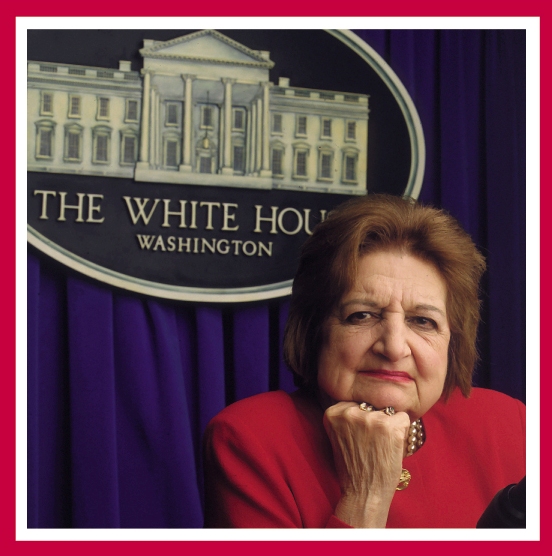
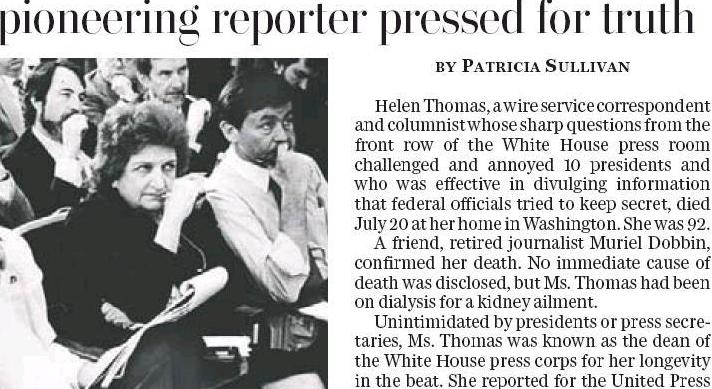
Portion of WaPo’s front-page obit about Thomas

The Washington Post needs to correct or clarify a questionable claim in its recent glowing obituary about journalist Helen Thomas.

The obituary stated that Thomas once “asked President Richard M. Nixon point-blank” about “his secret plan to end the Vietnam War.”

I have asked the obituary’ author, Patricia Sullivan, when and where Thomas posed such a question, but Sullivan has not offered a direct reply.

As noted in a Media Myth Alert post on Sunday, the nearest reference I could find to Thomas’ having raised such a question was at a White House news conference on January 27, 1969. According to a transcript the Post published the following day, Thomas asked:

“Mr. President, what is your peace plan for Vietnam?” She did not ask about a secret plan.

The issue here is larger than a likely error in a front-page obituary.

The more important issue centers around the notion that Nixon campaigned for the presidency in 1968 saying he had a “secret plan” to end the Vietnam War. That notion is historically imprecise. Yet it circulates still, as evidence supposedly of Nixon’s duplicity.

There’s better evidence of his duplicity than the “secret plan” chestnut. Simply put, Nixon did not tout a “secret plan” for Vietnam during his 1968 campaign.

I sent Sullivan an email a week ago (when the obituary was posted online), asking when and where Thomas had questioned Nixon about a “secret plan.” Five days later, Sullivan replied by email, saying:

“I recall the Nixon years and his promise during his candidacy that he had a plan to end the Vietnam War, which he would not explain in detail. Hence it was dubbed his ‘secret plan’ to end the war, and is widely referenced as such in the news articles of the time, many of which I reviewed while writing this obit (in 2008).”

I sent Sullivan a follow-up email, asking again when and where Thomas questioned Nixon about a “secret plan.” She has not replied to that query.

Meantime, I consulted a database containing full-text content of leading U.S. daily newspapers, and found almost no reporting in 1968 and early 1969 about Nixon’s having, or claiming to have, a “secret plan.”

The combined search terms “Nixon,” “secret plan” and “Vietnam” produced only three returns — an advertisement taken out by Democrats,  an article about Nelson Rockefeller’s plans to run for president, and a brief wire service item in the Post that quoted a Democratic congressman as urging Nixon to discuss his “secret plan” on Vietnam. The search period was January  1, 1968, through February 1, 1969, a time span covering the 1968 campaign, Nixon’s inauguration, and his news conference in late January 1969. Newspapers in the database include the New York TimesLos Angeles Times, Baltimore Sun, Chicago Tribune, Wall Street  Journal, and the Washington Post.

Searching the same period for “Nixon,” “secret plans” and “Vietnam” produced one return, an article published in the Los Angeles Times in which Nixon insisted he had “no gimmicks or secret plans” for ending the war.

The article further quoted Nixon as saying:

“If I had any way to end the war, I would pass it on to President [Lyndon] Johnson.” (Nixon’s comments came a few days before Johnson announced he would not seek reelection.).

The database search makes clear that Nixon’s having a “secret plan” was not, contrary to Sullivan’s claim in her email, “widely referenced” in news articles at that time.

Additionally, neither The Making of the President 1968  nor The Selling of the President — major book-length treatments about the 1968 presidential election — contain the phrase “secret plan” or “secret plans.” (Neither phrase turned up in applying the Amazon.com “search inside” feature to those books.)

If Sullivan can point to an occasion when Thomas asked Nixon “point-blank” about having a “secret plan” on Vietnam, then that would represent an interesting if modest contribution to our understanding about Nixon’s campaign in 1968. It would indicate that journalists then suspected he was less than candid and forthcoming about his intended war policy.

If, on the other hand, Sullivan cannot identify such an occasion, then a correction seems in order.

As I say, the Post’s obituary was glowing, so glowing it took until the 12th paragraph to mention Thomas’ anti-Semitic remarks in 2010 — hateful words that effectively ended her career.

A far more searching and clear-eyed assessment of Thomas and her journalism was offered in Jonathan S. Tobin’s essay for Commentary magazine.

“Thomas’s prejudice was not a minor flaw,” Tobin wrote, referring to her anti-Semitic comments. “It was a symptom not only of her Jew-hatred but also of a style of journalism that was brutally partisan and confrontational.”

Thomas, he wrote, deserves a “share of the credit for the creation of an ugly spirit of partisanship that characterizes much of the press.”

Indeed.

WJC

More from Media Myth Alert:

WaPo, Helen Thomas, and Nixon’s ‘secret plan’

In Debunking, Error, Media myths, Newspapers, Washington Post on July 21, 2013 at 11:55 am

Today’s Washington Post carries a lengthy obituary about Helen Thomas, lauding the 92-year-old former White House reporter who died yesterday for her “unparalleled experience covering the presidency.”

A glowing tribute to Helen Thomas

WaPo’s glowing tribute to Helen Thomas

What caught the eye of Media Myth Alert was the Post’s unsourced claim that Thomas had once asked President Richard M. Nixon “point-blank what his secret plan to end the Vietnam War was.” I sent an email yesterday to Patricia Sullivan, author of Thomas obituary, asking about the unsourced claim; she has not replied.

The only proximate reference I could find to Thomas’s having posed such a question was at a White House news conference on January 27, 1969. Given her seniority, Thomas was granted the first question.

“Mr. President,” she asked, “what is your peace plan for Vietnam?” Peace plan, not secret plan.

According to a transcript of the news conference that the Washington Post published the following day, Nixon focused his response on the Vietnam peace talks then underway in Paris.

The issue here is greater than a possible error in a glowing tribute — so glowing that the obituary waits until the 12th paragraph to mention Thomas’ ugly remarks about Jews, which ended her career in 2010.

The notion that Nixon campaigned for the presidency in 1968 on a “secret plan” to end the Vietnam War is a hoary assertion that circulates still, often invoked as telling evidence of Nixon’s duplicity. The claim is of thin grounding.

Helen Thomas embraced the tale, though, writing in her wretched 2006 book, Watchdogs of Democracy?:

“Throughout that campaign in 1968 … Nixon said he had a ‘secret’ plan to end the war. Reporters never got to ask him what it was. Not until he got into the White House did we learn it was Vietnamization — to try to turn the fighting over to the South Vietnamese.”

But Nixon was asked during the campaign whether he had a secret plan to end the war.  According to a report published by the Los Angeles Times on March 28, 1968, Nixon replied that he had “no gimmicks or secret plans.”

He also said: “If I had any way to end the war, I would pass it on to President [Lyndon] Johnson.” (Nixon’s comments were made a few days before Johnson announced he would not seek reelection.)

A fairly detailed assessment of the “secret war” tale was published in 2000 by William Safire, a columnist for the New York Times and a former Nixon speechwriter. Safire wrote:

“That sinister phrase — secret plan — has resonance to veteran rhetoricians and students of presidential campaigns. In the 1968 primaries, candidate Richard Nixon was searching for a way to promise he would extricate the U.S. from its increasingly unpopular involvement in Vietnam. The key verb to be used was end, though it would be nice to get the verb win in some proximity to it.

“One speechwriter came up with the formulation that ‘new leadership will end the war and win the peace in the Pacific.’ Nixon made it part of his stump speech, and the juxtaposition of end and win — though it did not claim to intend to win the war, but only the peace ….

“When a U.P.I. reporter pressed Nixon for specifics, the candidate demurred; the reporter wrote that it seemed Nixon was determined to keep his plan secret, though he did not quote Nixon as having said either secret or plan. But …  it became widely accepted that Nixon had said, ‘I have a secret plan to end the war.'”

The lead paragraph of the United Press International report to which Safire referred stated:

“Former Vice President Richard M. Nixon vowed Tuesday [March 5, 1968] that if elected president, he would ‘end the war’ in Vietnam. He did not spell out how.”

It does sound a bit slippery, a bit Nixonian. But it’s no claim of a “secret plan.” So there seems little substance to the notion, which Thomas embraced in her book, that Nixon campaigned in 1968 on a “secret plan” to end the war.

WJC

More from Media Myth Alert:

The Nixon tapes: A pivotal Watergate story that WaPo missed

In Anniversaries, Error, Media myths, Newspapers, Scandal, Washington Post, Watergate myth on July 14, 2013 at 8:45 am

Forty years ago this week, Alexander Butterfield told a U.S. Senate select committee investigating the Watergate scandal that President Richard Nixon had installed a secret audiotaping system in his offices.

Butterfield’s disclosure was one of the most decisive moments in the Watergate. It focused the scandal’s multiple investigations into a months-long pursuit of the tapes — one of which clearly revealed Nixon’s role in attempting to cover up the crimes of Watergate. That revelation forced his resignation in August 1974.

The disclosure of Nixon’s audiotaping system was a major story which the Washington Post — often and inaccurately credited with having “uncovered” or “broken” the Watergate scandal — missed badly.

How the Post fumbled that story makes for an intriguing sidebar at the anniversary of Butterfield’s stunning disclosure. The newspaper’s lead Watergate reporters, Bob Woodward and Carl Bernstein, described in a book about their reporting how leads about the taping system were not pursued.

The book, All the President’s Men, says that Woodward had found out about private testimony that Butterfield had given to staff members of the select committee and he called Ben Bradlee, the Post’s executive editor, for guidance.

The call to Bradlee was on a Saturday night. After outlining what he knew, Woodward, according to the book, said:

“We’ll go to work on it, if you want.”

In reply, Bradlee is quoted as saying with some slight irritation, “Well, I don’t know.”

How would you rate the prospective story? Woodward asked him.

“B-plus,” Bradlee replied.

Woodward figured a B-plus wasn’t much, according to the book.

“See what more you can find out, but I wouldn’t bust one on it,” Bradlee is quoted as instructing Woodward.

And Woodward didn’t “bust one.”

Two days later, on July 16, 1973, Butterfield made his reluctant disclosure at a public session of the Senate select committee.

The following day, according to All the President’s Men, Bradlee conceded that the lead about the taping system was “more than a B-plus.”

The anecdote from All the President’s Men is suggestive of the overall minor role that the Post played in uncovering Watergate. As I point out in my media-mythbusting book, Getting It Wrong, unraveling a scandal of the dimension of Watergate “required the collective if not always the coordinated forces of special prosecutors, federal judges, both houses of Congress, the Supreme Court, as well as the Justice Department and the FBI.

“Even then, Nixon likely would have served out his term if not for the audiotape recordings he secretly made of most conversations in the Oval Office of the White House. Only when compelled by the Supreme Court did Nixon surrender those recordings, which captured him plotting the cover-up” of Watergate’s signal crime, the breakin in June 1972 at the headquarters of the Democratic National Committee.

All the President’s Men was revealing in other ways about the work and conduct of Woodward and Bernstein. Media critic Jack Shafer, in a column in 2004, revisited a number of reporting flaws and ethical lapses that Woodward and Bernstein acknowledged in their book.

It’s a roster of transgressions that is too-little remembered.

WJC

More from Media Myth Alert:

Mistaking conspiracy for sloppy history in Hearst’s ‘vow’ to ‘furnish the war’

In 1897, Debunking, Furnish the war, Media myths, Newspapers, Spanish-American War, Yellow Journalism on June 29, 2013 at 3:31 pm

The media myth of William Randolph Hearst’s vow to “furnish the war” with Spain has proved irresistible in a number of ways.

Hearst in the late 1890s

Hearst, activist publisher

The vow has been invoked as evidence of the sketchy character of Hearst, an activist newspaper publisher whose “yellow journalism” brought him prominence in the closing years of the 19th century.

The vow has been cited to illustrate the potential malignant power of the news media — that at their worst, they can bring on a war.

And in a column in the weekend issue of the Wall Street Journal, the vow is offered as evidence of how conspiracy theories can double back on their makers.

Or something like that.

The fuzzy conspiracy argument is advanced by Amanda Foreman, an historian who writes the Journal’s “historically speaking” column. The latest column is of interest to Media Myth Alert in that it offers an unusual twist to Hearst’s mythical vow.

Not that Foreman is all that persuasive in advancing her conspiracy argument. What she sees as conspiracy looks a lot like sloppy history.

Like all media myths, the “furnish the war” anecdote has some factual scaffolding. But Foreman misstates a key factual element in the tale, which stems from a reputed exchange of telegrams between Hearst and the artist Frederic Remington, who went to Cuba in early 1897 for Hearst’s New York Journal.

Remington’s assignment was to draw sketches of the island-wide Cuban rebellion against Spanish rule. Soon, supposedly, the artist sought permission to return to New York, saying in a telegram that “everything is quiet.”

Hearst, in reply, is said to have told Remington:

“Please remain. You furnish the pictures, and I’ll furnish the war.”

Remington left Cuba anyway, and his sketches of the Cuban rebellion began appearing in the Journal in late January 1897.

Foreman in her column writes that Hearst was both “peddler and victim of the same conspiracy theory.”

span-am war_journal

Wasn’t the Journal’s war

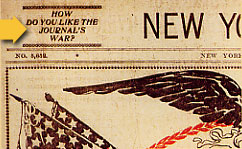
She says he promoted the notion that he fomented the conflict with Spain by proclaiming in the New York Journal in May 1898: “How do you like the Journal’s war?” But in that epigram, the Journal was taunting its rivals, not claiming responsibility for the war — an important distinction that will be discussed in some detail below.

Foreman writes that “when critics started labeling Hearst a warmonger, he became the victim of his own success” of having advanced the notion he had fomented the war.

She then introduces the “furnish the war” vow, calling it “a fictitious communiqué” that “remains the single-most quoted proof that Hearst engineered the Spanish-American War.”

Foreman says the “chief problem” with the Remington-Hearst anecdote “is that Remington was nowhere near Cuba at the time.”

But Remington was in Cuba before the war — for six days in January 1897. That he was there, on assignment for Hearst, is a component of the factual scaffolding of the “furnish the war” tale, which entered the public domain in 1901, in a book by James Creelman.

He was a journalist known for hyperbole and bluster. And he recounted the anecdote without documentation, writing:

“Some time before the destruction of the battleship Maine in the harbor of Havana [in February 1898], the New York Journal sent Frederic Remington, the distinguished artist, to Cuba. He was instructed to remain there until the war began; for ‘yellow journalism’ was alert and had an eye for the future.”

Creelman then described the purported Remington-Hearst exchange of telegrams, invoking it to praise the aggressive, anticipatory character of Hearst’s “yellow journalism.” Only years later did Creelman’s unsourced anecdote become popular as evidence of Hearst’s perfidy.

While Hearst for a time in 1898 may have thought that he had brought about the war with Spain, supporting evidence is not to be found in the pithy epigram that Foreman cites.

As I discuss in my 2001 book, Yellow Journalism: Puncturing the Myths, Defining the Legacies, context and timing matter in evaluating the epigram, which appeared in the upper-left corner, or left ear, of the New York Journal on May 8, 9, and 10, 1898.

The epigram

The Journal’s taunt

In asking “How do you like the Journal’s war?” Hearst’s newspaper, I wrote, was not boasting but “mocking the claims” of its rivals — notably the anti-war New York Evening Post, which in an editorial published April 30, 1898, accused the Journal of fomenting the war.

The following day, U.S. naval vessels destroyed a Spanish squadron in Manila Bay in the war’s first major engagement.

First reports of the naval battle appeared in U.S. newspapers on May 2, 1898. That day on its editorial page, the Journal published the portion of the Evening Post editorial accusing the Journal of fomenting the war. That assertion was derided in a headline spread across the Journal’s editorial page, which stated:

“Some People Say the Journal Brought on This War. How Do You Like It as Far as It’s Gone[?] ”

The headline and the epigram that appeared at the Journal’s left ear a few days later (“How do you like the Journal’s war?”) clearly were snarky retorts aimed at the Evening Post in the aftermath of a stunning U.S. naval victory.

When it did specifically address the notion of fomenting the war, Hearst’s Journal was far more oblique and ambiguous. For example, the newspaper stated in early May 1898:

“This war has been called a war brought on by the New York Journal and the press which it leads. This is merely another way of saying that the war is the war of the American people, for it is only as a newspaper gives voice to the American spirit that it can be influential with the American masses. The Journal is powerful with the masses because it believes in them — because it believes that on issues of national policy, their judgment is always likely to be sounder than that of the objecting few.”

The statement hardly qualifies as a ringing assertion of responsibility for bringing on the war.

WJC

More from Media Myth Alert:

Cronkite report on Vietnam was ‘most influential TV show ever’?

In Cronkite Moment, Debunking, Error, Hurricane Katrina, Media myths, Television on June 18, 2013 at 10:41 am

The most influential TV show ever?

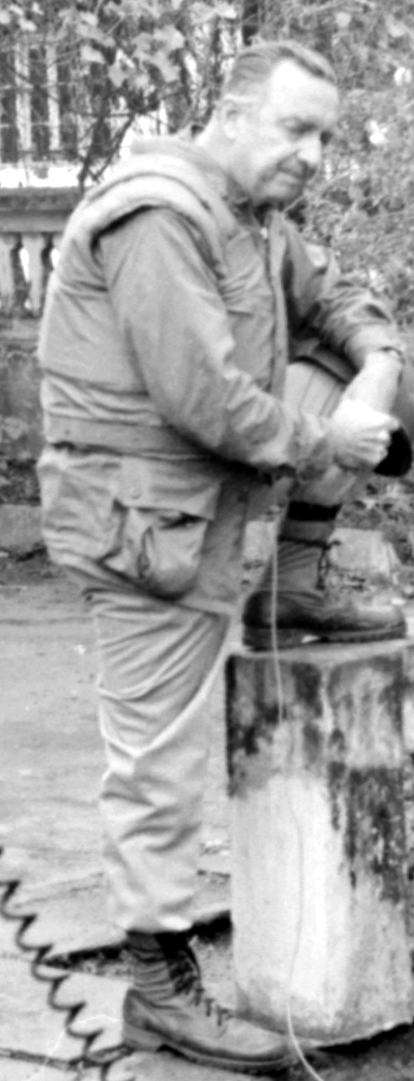
Cronkite in Vietnam, 1968

Cronkite in Vietnam, 1968

It’s rather a thumbsucker, but it’s the topic of the “Big Question” feature in the June number of the Atlantic. And the responses, culled from TV executives, producers, and show creators, range from All in the Family, to the Simpson’s, to Saturday Night Light, to Walter Cronkite’s special report about Vietnam.

I always thought All in the Family was grating and repetitive; the Simpson’s predictable, and Saturday Night Light ever-erratic. But the Cronkite report about Vietnam, which aired February 27, 1968?

The most influential?

That’s just wrong. Factually wrong.

The Cronkite program was proposed as “most influential” by John Langley, co-creator of the series Cops, who wrote in explaining his choice:

“Public opinion followed Cronkite’s assessment, leading President Johnson to observe, ‘If I’ve lost Cronkite, I’ve lost Middle America.'”

That assessment includes a couple of important errors, to be addressed in moment.

Some background, first: Walter Cronkite, the anchor of the CBS Evening News, went to Vietnam in February 1968, shortly after the communist North Vietnamese and their Viet Cong allies launched a surprisingly extensive but ultimately failed offensive across South Vietnam.

Upon returning to New York, Cronkite prepared a report about Vietnam, describing the U.S. war effort there as “mired in stalemate” and suggesting that negotiations could offer a way out.

In the supposed reactions to Cronkite’s report lurks one the most popular and enduring myths of American journalism.

As Langley writes, American public opinion supposedly followed Cronkite: Americans were swayed, supposedly, by the assessment of someone as trusted as Cronkite, and they likewise turned against the war. President Lyndon B. Johnson, after watching Cronkite’s special report, knew his war policy was in tatters and purportedly uttered something to the effect of:

“If I’ve lost Cronkite, I’ve lost Middle America.”

In fact, public opinion had begun turning against the Vietnam War months before the Cronkite program: Cronkite followed rather than precipitated deepening doubts about the wisdom of fighting in Vietnam.

As I discuss in my media-mythbusting book, Getting It Wrong, a plurality of Americans (47 percent) told pollsters for Gallup in October 1967 that sending U.S. troops to Vietnam had been a mistake. That plurality edged upward to 49 percent in a Gallup Poll completed the day of Cronkite’s program about Vietnam.

Journalists, moreover, had detected a softening of popular support for the war.

In December 1967, for example, Don Oberdorfer, a national correspondent for Knight newspapers, reported that the “summer and fall of 1967 [had] been a time of switching, when millions of American voters — along with many religious leaders, editorial writers and elected officials — appeared to be changing their views about the war.”

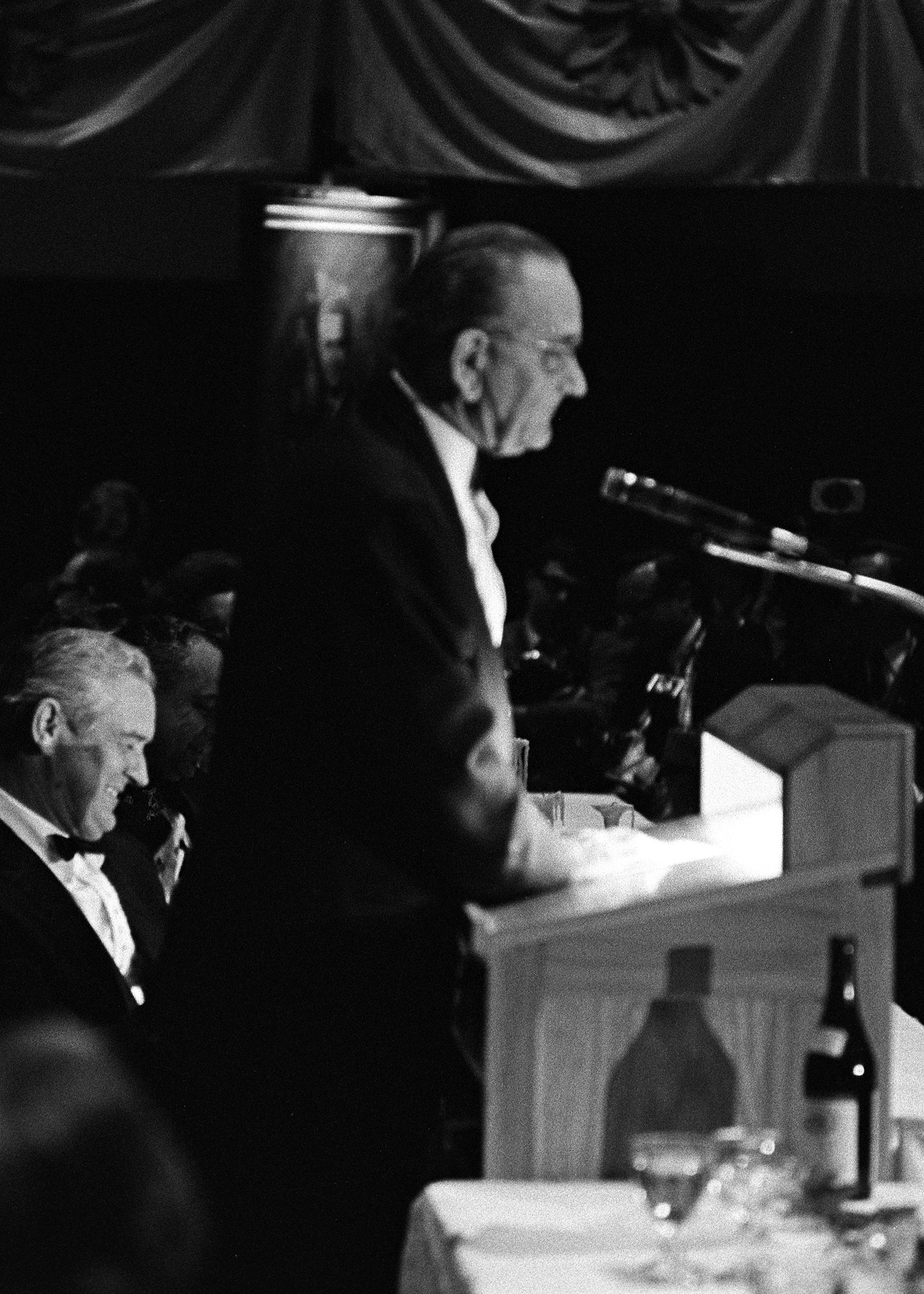
LBJ: Wasn't watching Cronkite

LBJ: Wasn’t watching Cronkite

As for Johnson, he didn’t see the Cronkite report on Vietnam when it aired. He wasn’t in front a television set that night; he was in Austin, Texas, at a black-tie party marking the 51st birthday party of Governor John Connally.

And about the time Cronkite was intoning his pessimistic, “mired in stalemate” editorial comment about the war, Johnson was offering light-hearted remarks about Connally’s age.

“Today, you are 51, John,” the president said. “That is the magic number that every man of politics prays for — a simple majority.”

Cronkite’s “mired in stalemate” was an appraisal that was neither stunning nor novel in late February 1968. U.S. news organizations had been invoking “stalemate” to describe the war effort for months before the Cronkite program.

For example, the New York Times asserted in an analysis published August 7, 1967,  that “the war is not going well. Victory is not close at hand.”

The Times analysis, filed from Saigon, further declared:

“‘Stalemate’ is a fighting word in Washington. President Johnson rejects it as a description of the situation in Vietnam. But it is the word used by almost all Americans here, except the top officials, to characterize what is happening.”

The Times’ assessment appeared on its front page, beneath the headline:

Vietnam: The Signs of Stalemate.

While the Atlantic’s “Big Question” had the intended effect of stirring debate and discussion, it wasn’t nearly as intriguing as the rankings issued last year of the “most impactful moments” on U.S. television of the past 50 years. Notably, none of the top 20 was an entertainment program.

The rankings were prepared from a survey conducted by Nielsen and Sony Electronics, and topping that list was coverage of the terrorist attacks of September 11, 2001, followed by the reporting of the Hurricane Katrina disaster in 2005 and of the O.J. Simpson not-guilty verdicts in 1995.

While dramatic, the Katrina coverage, was no high, heroic moment in American journalism.

As I discuss in Getting It Wrong, the reporting on TV and in print “was in important respects flawed and exaggerated. On crucial details, journalists erred badly, and got it wrong. In the days following Katrina’s landfall, news reports described apocalyptic horror that the hurricane supposedly had unleashed.”

But few if any of the nightmarish accounts of violence, anarchy, and mayhem proved true.

WJC

More from Media Myth Alert:

‘Strategy for peace’ and blocking the schoolhouse door: Recalling a crowded week in June 1963

In Anniversaries, Newspapers, Photographs, Quotes, Television, Year studies on June 6, 2013 at 5:56 am

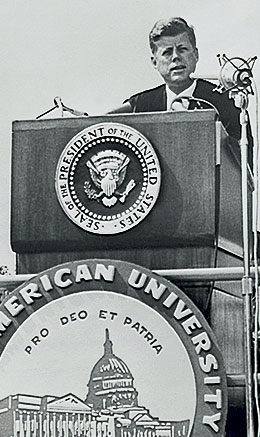
Monday marks the 50th anniversary of President John F. Kennedy’s “strategy for peace” commencement address at American University, a speech delivered at the height of the Cold War in which he called for a rapprochement with the Soviet Union.

JFK_AU_speech

Kennedy, June 10, 1963

The speech often is ranked among the finest of its kind.

Speaking to about 10,000 people out-of-doors on a 90-degree day in Washington, D.C., Kennedy announced that talks would soon begin in Moscow on a comprehensive nuclear test ban treaty. He also said the United States would suspend atmospheric testing as long as other nuclear powers did the same.

Fifty years on, the speech is still recalled for such passages as: “[W]e must labor on— not towards a strategy of annihilation but towards a strategy of peace.”

And:

“Let us examine our attitude toward peace itself. Too many of us think it is impossible. Too many think it unreal. But that is a dangerous, defeatist belief. It leads to the conclusion that war is inevitable, that mankind is doomed, that we are gripped by forces we cannot control.”

Those sentiments represented something of a modest departure from the rhetoric common at the time. Kennedy spoke at American University less than eight months after the Cuban Missile Crisis, which brought the United States and Soviet Union to the brink of a nuclear exchange.

The speech was not without significance: The talks Kennedy announced on June 10, 1963, led fairly quickly to a limited test-ban treaty with the Soviets and British.

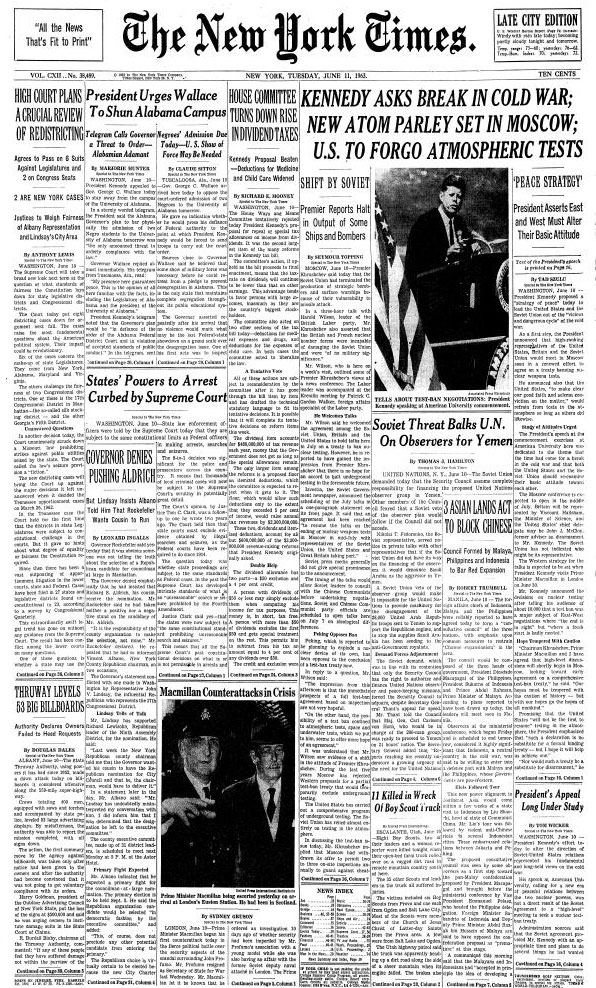
Interestingly, Kennedy’s address was in short order crowded off the front pages. His “strategy for peace” remarks hardly dominated the news that week.

Indeed, few weeks arguably have been as packed with such a variety of major and memorable news events as June 9-15, 1963.

Kennedy’s commencement speech received prominent treatment for a day or two in U.S. newspapers. Then it was overtaken by some of the most dramatic moments of the Civil Rights era — among them, Governor George Wallace’s stand at the schoolhouse door, symbolically blocking the desegregation of the University of Alabama.

It has been said that the “drama of the nation’s division over desegregation came sharply into focus” that day, June 11, 1963.

In the face of the governor’s defiance, Kennedy federalized the Alabama National Guard. After reading a bitter statement denouncing the “unwelcomed, unwanted, unwarranted and force-induced intrusion upon the campus of the University of Alabama,” Wallace stepped aside. Two black students were allowed to register for classes.

NYT-front_11June1963_full

New York Times front, June 11, 1963

Kennedy referred to the confrontation in Alabama in a radio and television speech that night in which he proposed that Congress pass civil rights legislation to end discrimination in voting, enhance educational opportunities, and ensure access to restaurants, hotels, and other public places.

The resulting legislation became the Civil Rights Act of 1964.

Also on June 11, 1963,  an Associated Press correspondent in South Vietnam, Malcolm Browne, took one of the iconic images of the long war in Southeast Asia — that of a Buddhist monk who had set himself afire in downtown Saigon, to protest the government’s religious oppression.

“It was clearly theater staged by the Buddhists to achieve a certain political end,” Browne later said. “At the same time, there was a human element to it that was just horrifying, because the sequence of pictures showed the initial shock of the flames touching his face, and so forth. He never cried out or screamed ….”

The following day, Civil Rights leader Medgar Evers was shot to death outside his home in Mississippi. Byron De La Beckwith was tried three times for Evers’ killing, most recently in 1994 when he was convicted and sentenced to life in prison. The other two trials ended in hung juries.

Evers, an Army veteran who had fought in World War II, was buried at Arlington National Cemetery.

The space race, as it was known, seldom was far from the news in 1963. At the close of the crowded week, the Soviets were preparing to launch Vostok 6. On board was Valentina Tereshkova, destined to become the first woman in space.

The flight lifted off on June 16, 1963, and lasted nearly 71 hours. Tereshkova’s 49 Earth orbits more than doubled the most compiled to that point by any American astronaut.

And 20 years would pass before the first American woman flew in space. She was Sally Ride, a mission specialist aboard the space shuttle Challenger in 1983.

The crowded week 50 years ago was a microcosm of the Cold War era, what with nuclear arms, civil rights, Southeast Asia, and the U.S.-Soviet space race all prominently in the news.

Even so, why does it much matter to look back on that week in June?

Doing so offer some useful and interesting perspective, given that we tend to think we live in such busy and momentous times.

Taking a look back also reveals how unsettled the country seemed to be in 1963, given the violence and the confrontations in the South, the Cold War rivalry with the Soviets, the strife in Vietnam.

So looking back to the crowded week in June tells us the 1960s were churning well before the climatic and tumultuous year of 1968.

One wouldn’t immediately have recognized this in mid-June 1963, but dominance was shifting in the news media, flowing from newspapers  to television.

Confirmation of this transition came in late November 1963 with wall-to-wall television coverage of the Kennedy assassination and its aftermath. “Even television’s critics had to admit that the medium had been transformed into an even more powerful force,” media historian David Davies wrote in a book of the postwar decline of American newspapers.

Nineteen sixty-three was pivotal for the news media.

WJC

More from Media Myth Alert:

Still hardy after 40 years: The myth that Woodward, Bernstein ‘brought down’ Nixon

In Anniversaries, Debunking, Error, Media myths, Scandal, Washington Post, Watergate myth on May 17, 2013 at 10:30 am

Forty years ago today, a Senate select committee convened public hearings into the then-emergent Watergate scandal. The hearings stretched into the summer of 1973 and helped make “Watergate” a household term.

More important, the panel’s inquiry produced the disclosure that President Richard Nixon had secretly taped many of his private conversations at the White House — a revelation that was to prove decisive to the scandal’s outcome.

The most incriminating tape, released under Supreme Court directive in July 1974, captured Nixon plotting a coverup of the FBI’s investigation into the break-in at the headquarters of the Democratic National Committee in Washington in June 1972.

If not for the tapes, Nixon likely would have remained in office — a wounded and hobbled president, but one who would have completed his term.

So the Senate select committee was vital in the array of subpoena-wielding forces that produced evidence that eventually compelled Nixon’s resignation.

And yet, on this anniversary, the simplistic, media myth circulates anew — that two dogged reporters for the Washington Post, Bob Woodward and Carl Bernstein, exposed the crimes of Watergate and brought down Nixon’s corrupt presidency.

The latest to invoke what I call the heroic-journalist myth of Watergate was the executive director of the ACLU of Massachusetts, Carol Rose, who declared in a commentary for Boston’s NPR station, WBUR:

“Nixon himself was brought down by two enterprising young reporters at the Washington Post and a whistleblower by the name of ‘Deep Throat.'”

Rose’s commentary, posted yesterday at the “Cognoscenti” page of WBUR’s Web site, focused on and rightly took issue with the Justice Department’s snooping into phone records of Associated Press reporters and editors in Washington, New York, and Hartford, Connecticut.

“Lest there be any confusion: This is a big deal,” Rose says of the Justice Department’s activity. (She also writes, “Dismantle the free press, and you pretty much dismantle democracy,” which probably is to put it backwards: A free press is a marker and byproduct of democratic government, not an essential precondition.)

But what most concerns Media Myth Alert is the blithely offered claim about the work of Woodward and Bernstein — those “enterprising young reporters” to whom Rose refers.

Simply put, Woodward and Bernstein did not bring down Nixon’s corrupt presidency.

Their Watergate reporting for the Post as the scandal slowly unfolded in the summer and fall of 1972 did win a Pulitzer Prize in 1973. But Woodward and Bernstein were not central to the major disclosures of Watergate.

Notably, they did not reveal the existence of the Nixon’s tapes.

Nor did they describe the extent of the Nixon administration’s coverup of the crimes of Watergate.

Interestingly, authorities at the Post over the years have scoffed at claims that Woodward and Bernstein’s reporting took down Nixon.

Katharine Graham, the Post’s publisher during Watergate, said in 1997:

“Sometimes people accuse us of bringing down a president, which of course we didn’t do. The processes that caused [Nixon’s] resignation were constitutional.”

Woodward, himself, has pooh-poohed the notion, too. He once told an interviewer:

To say the press brought down Nixon, that’s horse shit.”

More delicately, Woodward said in an interview with the PBS “Frontline” program that “the mythologizing of our role in Watergate has gone to the point of absurdity, where journalists write … that I, single-handedly, brought down Richard Nixon. Totally absurd.”

As for the “whistleblower” Rose mentions, the shadowy “Deep Throat” source?

He turned out to be W. Mark Felt, a senior FBI official motivated not so much by whistleblowing as by high-stakes, inter-office politics.

Felt wanted the FBI top job after the death in May 1972 of the agency’s director, J. Edgar Hoover. Leaking to Woodward (Felt never met Bernstein during Watergate) was a way to pursue those ambitions — and to undercut the official who was appointed acting FBI director, L. Patrick Gray.

Felt was no noble figure. As I note in my media-mythbusting book, Getting It Wrong, he authorized burglaries as part of the FBI’s investigations into leftists associated with the radical Weather Underground.

Felt was convicted in 1980 on felony charges related to the break-ins, but was pardoned the following year by President Ronald Reagan.

WJC

More from Media Myth Alert:

‘All the President’s Men Revisited’: A mediacentric rehash, with some insight

In Anniversaries, Cinematic treatments, Debunking, Media myths, Scandal, Washington Post, Watergate myth on April 22, 2013 at 2:49 pm

The much-ballyhooed documentary, All the President’s Men Revisited, was mostly a mediacentric rehash of the Watergate scandal 40 years ago. Even so, the show, which aired last night on the Discovery channel, managed to present insight into the forces that really uncovered the criminality of what was America’s gravest political scandal.

The two-hour program took a look back at Watergate often through the context of All the President’s Men, the 1976 cinematic adaptation of Bob Woodward and Carl Bernstein’s eponymous book about their Watergate reporting for the Washington Post.

The movie, which starred Robert Redford and Dustin Hoffman, idealized Woodward and Bernstein, identifying their reporting as central to uncovering the scandal that toppled Richard Nixon’s corrupt presidency. The first hour of the Discovery program similarly emphasized that misleading interpretation, mostly through frequent snippets of interviews with the aging Woodward and Bernstein.

The inescapable impression was that their reporting was essential to spurring the federal and congressional investigations that ultimately produced tape-recorded evidence that showed Nixon conspired to cover up the signal crime of Watergate — the break-in in June 1972 at the headquarters of the Democratic National Committee.

That interpretation — that Woodward and Bernstein’s reporting set the table for the crucial official inquiries — is favored by the Post (its Web site explains Watergate that way).

But  it is utterly misleading.

As serious historians of Watergate have demonstrated, federal investigators were far ahead of Woodward and Bernstein in their piecemeal reporting about the unfolding scandal in the summer and fall of 1972.

For example, Max Holland, author of Leak, a book about Watergate published last year, has aptly noted:

“Federal prosecutors and agents never truly learned anything germane from The Washington Posts [Watergate] stories — although they were certainly mortified to see the fruits of their investigation appear in print. … The government was always ahead of the press in its investigation of Watergate; it just wasn’t publishing its findings.”

What’s more, the Post’s investigation into Watergate “ran out of gas” by late October 1972, Barry Sussman, then the newspaper’s city editor, acknowledged in an interview in 1974.

The most interesting segments of All the President’s Men Revisited were during the program’s second hour, when the federal and congressional investigations of Watergate figured prominently. At the same time, Woodward and Bernstein receded noticeably from the limelight, replaced by the likes of Alexander Butterfield, the former White House aide who disclosed that Nixon recorded his conversations in the Oval Office.

Butterfield’s revelation about the tapes came during a U.S. Senate select committee’s investigation into Watergate — and represented a decisive pivot in the unfolding the scandal. Nixon ultimately was compelled to surrender audiotapes that demonstrated his role in attempting to coverup the Watergate breakin. He resigned soon afterward.

Interestingly, All the President’s Men Revisited  made clear that Woodward and Bernstein did not break the story about the existence of the tapes — and pinned the blame on the Post’s executive editor, Ben Bradlee.

Woodward recounted in the program (as he did in the book All the President’s Men) that he had heard about the tapes and asked Bradlee about pursuing a story along those lines. Bradlee, according to Woodward’s recollections, rated a prospective story about the tapes a B-plus: Not good enough for Woodward to pursue immediately.

(In the book, Bradlee is quoted as saying: “See what more you can find out, but I wouldn’t bust one on it.” And the reporters didn’t, thus failing to report a pivotal story about the scandal.)

The program’s second-half focus on the federal and congressional inquiries in a way addresses a major flaw of All the President’s Men, the movie, which was criticized for ignoring the contributions of federal investigators, special prosecutors, and congressional panels in ripping away the coverup of the Watergate break-in.

The movie’s narrow focus, I wrote in my media-mythbusting book Getting It Wrong, served “to solidify and elevate the heroic-journalist myth” of Watergate — the notion that the dogged work of Woodward and Bernstein brought down Nixon.

While the program did not challenge the deeply entrenched heroic-journalist myth, All the President’s Men Revisited did offer an historically accurate interpretation about how the scandal unspooled: As such, it rather succeeded where the movie had clearly failed.

WJC

More from Media Myth Alert:

Both left, right embrace media myth about WaPo and Watergate

In Debunking, Error, Media myths, Washington Post, Watergate myth on April 8, 2013 at 1:10 pm

Curious thing about the media myth of Watergate: The notion that the Washington Post’s dogged reporting toppled Richard Nixon’s corrupt presidency is readily embraced both by liberals and conservatives.

FoxNewsSunday_logoThe most recent example of this tendency  came yesterday, on the “Power Player of the Week” segment of the Fox News Sunday program.

The “Power Player” segment featured Martin Baron, who’s been executive editor of the Washington Post for a little more than three months. It was a fair-minded look at a respected, veteran journalist; Baron was a top editor at the Miami Herald and the Boston Globe before joining the Post at the start of the year.

But whether Baron truly is a “power player” in Washington is speculative. What most interests Media Myth Alert was how the Watergate myth was blithely injected into the Fox News Sunday segment.

In his voice-over introducing the segment, the show’s host, Chris Wallace flatly and inaccurately asserted that the Post is “the paper that brought down Richard Nixon.”

It’s a not uncommon characterization. But it’s utterly exaggerated — and thoroughly undeserved.

As I note in my media-mythbusting book, Getting It Wrong, it’s an interpretation of Watergate that not even the Post embraces.

Some of the Post’s leading figures over the years have openly dismissed the notion that the newspaper’s reporting of Watergate ended Nixon’s presidency. (He resigned in 1974.)

For example, Katharine Graham, the Post’s publisher during Watergate, said in 1997:

Not the Post's doing

Not the Post’s doing

“Sometimes people accuse us of bringing down a president, which of course we didn’t do. The processes that caused [Nixon’s] resignation were constitutional.”

In addition, the newspaper’s then-media writer, Howard Kurtz, asserted in 2005:

“Despite the mythology, The Post didn’t force Richard Nixon from office — there were also two special prosecutors, a determined judge, bipartisan House and Senate committees … and those infamous White House tapes.”

If not for the tapes — the secret audio recordings Nixon made of many of his conversations in the Oval Office — Nixon likely would have survived the scandal.

The Post, by the way, did not disclose the existence of the tapes, which demonstrated that Nixon had sought to derail the FBI’s investigation of Watergate’ signal crime — the burglary in June 1972 at the headquarters of the Democratic National Committee.

The existence of the tapes — evidence that was so pivotal to the scandal’s outcome — was made known in July 1973 by Alexander Butterfield, under questioning by investigators of a Senate select committee.

There’s more to deplore here than a Sunday TV show’s puffing up one of its segments by declaring the Post “brought down Richard Nixon.” The Watergate myth is more insidious than that.

It is a disservice to history: The Watergate myth distorts and dumbs down what was the most significant American political scandal of the 20th century.

And it extends to journalists the unmerited status of having been heroic central actors in exposing the crimes of Watergate.

WJC

More from Media Myth Alert:

Confused and illogical: WaPo commentary on effects of ‘Cronkite Moment’

In Cronkite Moment, Debunking, Error, Media myths, Quotes, Television, Washington Post on March 3, 2013 at 8:20 am

The Washington Post today offers one of the more baffling and illogical characterizations of the supposed effects of Walter Cronkite’s mythical report about Vietnam, which aired in February 1968.

Cronkite in Vietnam, 1968

Cronkite in Vietnam, 1968

Cronkite’s assessment supposedly was so exceptional, so influential on American policy and politics, that it has come to be call the “Cronkite Moment.”

A commentary in today’s Post addresses that occasion in a broader discussion of hostility between the news media and the White House. In referring to President Lyndon B. Johnson, the commentary says:

“Walter Cronkite’s on-air report from Vietnam — which the president did not see — supposedly elicited his famous lament: ‘If I’ve lost Cronkite, I’ve lost middle America.’ Shortly thereafter, Johnson would make his most memorable television appearance, announcing that he would not run for president in 1968.”

How’s that? Johnson “did not see” the Cronkite report; even so, it packed such wallop that Johnson knew without watching that he had “lost Cronkite”?

Who’s editing this stuff?

Not only is that passage confused and illogical: It’s historically inaccurate.

Let’s unpack the passage:

  • Cronkite’s report was aired February 27, 1968, on CBS television. In closing, the anchorman offered the comparatively mild assessment that U.S. forces were “mired in stalemate” in Vietnam — an assessment reflecting the conventional wisdom that had been circulating for months among the news media in Washington and Saigon, the South Vietnamese capital.
  • Johnson did not see Cronkite’s report: When it aired, the president was in Austin, Texas, attending a black-tie birthday party for Governor John B. Connally, a long-time political ally.
  • There’s no persuasive evidence or documentation that Johnson ever said, “If I’ve lost Cronkite, I’ve lost middle America.” Or anything close to that statement.  Indeed, versions of what Johnson purportedly said vary markedly — and such variability can be a marker of a media-driven myth.
  • Nearly five weeks after Cronkite’s report about Vietnam, Johnson announced that he would neither seek nor accept the Democratic party’s nomination for president. But Cronkite’s downbeat assessment about the war had nothing to do with Johnson’s decision not to stand for reelection (see below).

In the days following Cronkite’s “mired in stalemate” commentary, Johnson remained outwardly hawkish about the war in Vietnam. In mid-March 1968, for example, he traveled Minnesota to deliver a rousing speech in which he urged “a total national effort to win the war” in Vietnam.

Johnson punctuated his remarks in Minnesota by pounding the lectern and jabbing his finger in the air. “We love nothing more than peace,” he declared, “but we hate nothing worse than surrender and cowardice.” The president disparaged critics of the war as being inclined to “tuck our tail and violate our commitments.”

Johnson’s decision not to seek reelection stemmed from at least two sources: his health and his rivals for the Democratic nomination for president.

There’s evidence that Johnson never intended to seek another term, that in 1967 or before, he had decided against another campaign for the presidency in part because of concerns about his health. “Long before I settled on the proper forum to make my announcement,” Johnson wrote in his memoir, The Vantage Point, “I had told a number of people of my intention not to run again.”

Johnson’s announcement not to seek another term came after insurgent Democratic candidate Eugene McCarthy had won more than 40 percent of the vote in the New Hampshire presidential primary on March 12, 1968, and after had Johnson nemesis Robert F. Kennedy had entered the race for the Democratic nomination on March 16.

Johnson, moreover, was facing near-certain defeat in the Wisconsin primary, on April 2, 1968.

Those were considerations weighing on Johnson on March 31, 1968, when he said he would not seek reelection. Cronkite’s remarks about Vietnam on February 27, 1968, were not a factor.

As I discuss in my media-mythbusting book, Getting It Wrong, the purported “Cronkite Moment,” when scrutinized, “dissolves as illusory—a chimera, a media-driven myth.”

WJC

Many thanks to Instapundit
Glenn Reynolds for linking to this post

More from Media Myth Alert: