W. Joseph Campbell

Posts Tagged ‘Media-driven myths’

Knocking down the ‘Cronkite Moment’

In Cronkite Moment, Debunking, Media myths, New York Times on December 22, 2010 at 9:28 am

That’s more like it.

A blog sponsored by the Hollywood Reporter yesterday invoked–and parenthetically disputed–the so-called “Cronkite Moment” of 1968, when CBS news anchorman Walter Cronkite declared on-air that the U.S. war effort in Vietnam was “mired in stalemate.”

The media myth has it that President Lyndon Johnson watched the Cronkite report and, upon hearing the anchorman’s “mired in stalemate” assessment, snapped off the television set and told an aide or aides:

“If I’ve lost Cronkite, I’ve lost Middle America.” Or something to that effect.
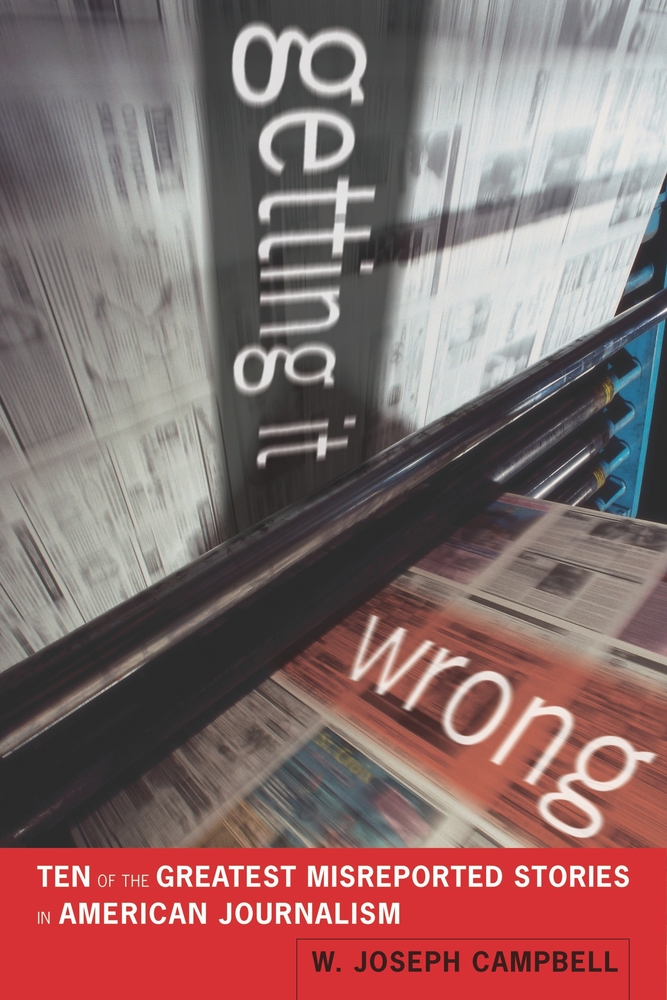
As I discuss in my latest book, Getting It Wrong, the tale almost certainly is a media myth.

Johnson didn’t see the Cronkite report when it aired on February 27, 1968. The president at the time was in Austin, Texas, attending the 51st birthday party of Governor John Connally, one of his longtime allies.

About the time Cronkite was intoning “mired in stalemate,” Johnson wasn’t lamenting the loss of the anchorman’s support. Johnson was making light-hearted comments about Connally’s age, saying:

“Today you are 51, John. That is the magic number that every man of politics prays for—a simple majority.”

Moreover, there is no compelling evidence that Johnson saw the Cronkite program later, on videotape.

And as I point out in Getting It Wrong, “The power of the ‘Cronkite moment’ resides in the sudden, unexpected, and decisive effect it supposedly had on the president: Such an effect would have been absent, or greatly diminished, had Johnson had seen the program on videotape at some later date.”

So here’s what the Hollywood Reporter blog said yesterday, in a column that discussed leading candidates for best motion picture of 2010:

“They say that when President LBJ saw newscaster Walter Cronkite editorialize against Vietnam, he said, ‘If I’ve lost Cronkite, I’ve lost the war.’ (Actually, this is an urban legend, but it’s a fine metaphor so it endures.)”

While it’s not entirely clear why the writer felt compelled to invoke the “Cronkite Moment,” that he promptly knocked it down is commendable.

Calling it out as dubious is necessary if the myth ever is to be unmade.

The “Cronkite Moment,” despite its wobbly and improbable elements, is a delicious story of a journalist telling truth to power–and producing a powerful effect. As such, it probably will live on.

It certainly will live on if efforts aren’t made repeatedly to call attention to its improbability: A news anchorman’s brief editorial statement was sufficient to alter a president’s thinking?

Come on.

It doesn’t work that way.

Besides, as I point out in Getting It Wrong, Cronkite’s assessment of the U.S. war effort was hardly original.

Nearly seven months before the “Cronkite Moment,” the New York Times had reported the war in Vietnam “is not going well.”

Victory, the Times said in August 1967, “is not close at hand. It may be beyond reach.”

This analysis was published on the Times’ front page beneath the headline:

Vietnam: The Signs of Stalemate.”

WJC

Recent and related:

Recalling Mark Twain and the ‘calamity of calamities’

In 1897, Debunking, Media myths, Reviews, Year studies, Yellow Journalism on December 21, 2010 at 10:18 am

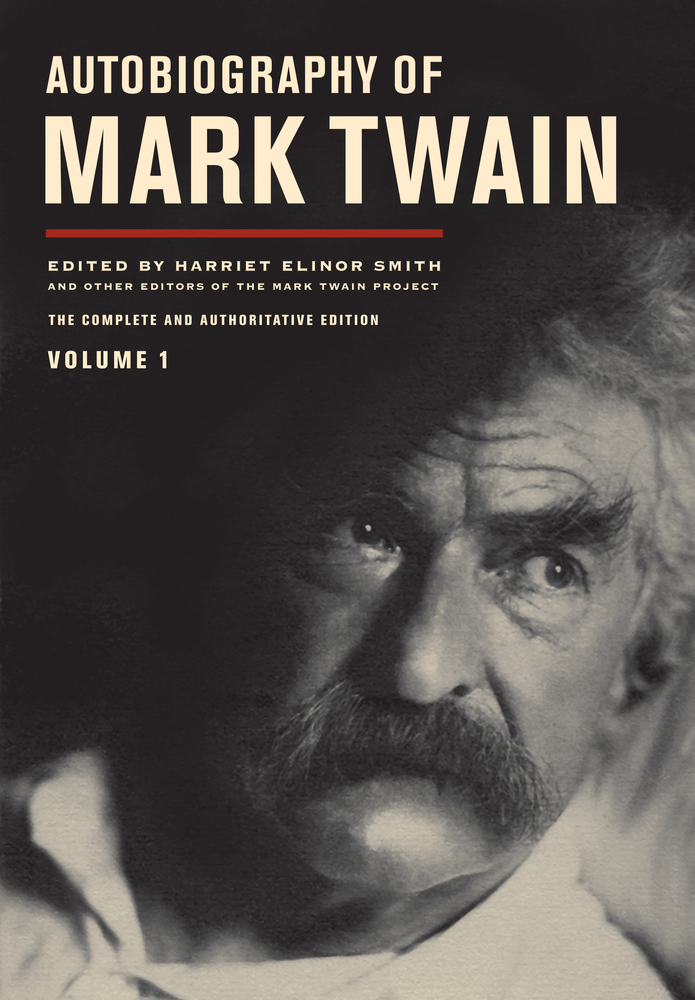
The first volume of Autobiography of Mark Twain–published 100 years after his death–has been a best-seller for the University of California Press, the publisher that brought out my latest book, Getting It Wrong.

The Twain volume has received largely favorable reviews, although the New York Times did say, in a critique the other day by the insufferable Garrison Keillor, that “there’s precious little frankness and freedom here and plenty of proof that Mark Twain, in the hands of academics, can be just as tedious as anybody else when he is under the burden of his own reputation.”

A more generous review, posted online yesterday by the North County Times in California, caught my eye–mostly for its reference to Twain (Samuel Clemens) and yellow journalism. The review quoted this passage from Twain’s autobiography:

“I was converted to a no-party independence by the wisdom of a rabid Republican. This was a man who was afterward a United States Senator, and upon whose character rests no blemish that I know of, except that he was the father of the William R. Hearst of to-day, and therefore grandfather of Yellow Journalism–that calamity of calamities.”

The reference was to George Hearst, an adventurer-miner who struck it rich in the silver fields of the 19th century American West. After securing his fortune, George Hearst became a U.S. senator from California, serving from 1886-1891.

Twain’s reference to “a rabid Republican” is puzzling, though, because George Hearst was a committed Democrat, as was his son, William Randolph Hearst.

More interesting was Twain’s characterization of yellow journalism as “that calamity of calamities.”

It’s an amusing line, but it ignores the generosity young Hearst extended to Twain in 1897, when the writer was down on his luck in London.

Hearst by then was running the provocative and activist-oriented New York Journal — the newspaper that helped give rise in 1897 to the sneer, “yellow journalism.”

The Journal preferred the term “journalism of action” and asserted that a newspaper had an obligation to inject itself routinely and conspicuously into civic life, to address the ills that government wouldn’t or couldn’t.

As I wrote in my 2006 year-study, The Year That Defined American Journalism: 1897 and the Clash of Paradigms, Hearst arranged for Twain, then 51, to report for the Journal on Queen Elizabeth’s Diamond Jubilee in June 1897.

Lining up Twain to cover the Jubilee was emblematic of Hearst’s willingness to spend money lavishly to recruit big-name talent, if only for spot assignments.

In Twain, though, Hearst must have been disappointed.

As I wrote in The Year That Defined American Journalism:

“Twain’s reporting about Victoria’s jubilee seemed half-hearted and hardly inspired. The spectacle was easily the most regal international story of 1897, and came at a time when the British empire at or near its height. But Twain found the celebration overwhelming—’a spectacle for the kodak [camera], not the pen,’” as he wrote in a dispatch published June 23, 1897.

Twain’s dispatch to the Journal included this odd observation:

“I was not dreaming of so stunning a show. All the nations seemed to be filing by. They all seemed to be represented. It was a sort of allegorical suggestion of the Last Day, and some who live to see that day will probably recall this one if they are not too much disturbed in mind at the time.”

Twain’s association with the Journal in 1897 did give rise to one of his most memorable lines–and allowed the newspaper to puncture rumors about the writer’s health.

In early June 1897, the New York Herald reported that Twain was “grievously ill and possibly dying. Worse still, we are told that his brilliant intellect is shattered and that he is sorely in need of money.”

The Journal promptly exposed the Herald report as erroneous, and published Twain famous, if often-misquoted, denial:

“The report of my death was an exaggeration,” Twain said.

He lived until 1910.

WJC

Recent and related:

Mythmaking on Blu-ray?

In Cinematic treatments, Debunking, Media myths, Washington Post, Watergate myth on December 20, 2010 at 11:11 am

All the President’s Men, the most-seen movie about the Watergate scandal, may be released on Blu-ray early next year, according to a post yesterday at a blog sponsored by a Canadian newspaper.

“Word is that Warner Bros. will release the Watergate movie … in a feature loaded  Blu-ray book in February,” said the item at the Leader-Post newspaper in Saskatchewan.

Now at best, the Blu-ray version of All the President’s Men is of mild interest to Media Myth Alert. What caught the  eye, though, was this characterization in the Leader-Post item:

“The 1976 movie is perhaps the greatest ever on newspaper journalism. It tells the true story of how Washington Post reporters Carl Bernstein and Bob Woodward exposed the real story behind the break-in at Democratic Party offices in the Watergate building by Republican political operatives. Their exposé, fed by a mysterious source called ‘Deep Throat,’ led to the resignation of President Richard Nixon.”

I placed the words in bold for emphasis.

As I note in my latest book, Getting It Wrong, Woodward and Bernstein didn’t expose the Watergate scandal. It was at first a police beat story that spiraled into an intricate and sprawling scandal that sent to jail nearly 20 men associated with Nixon’s presidency or his 1972 reelection campaign.

And the reporting of Woodward and Bernstein didn’t lead to Nixon’s resignation.

As I point out in Getting It Wrong:

“To roll up a scandal of such dimension [as Watergate] required the collective if not always the coordinated forces of special prosecutors, federal judges, both houses of Congress, the Supreme Court, as well as the Justice Department and the FBI.

“Even then, Nixon likely would have served out his term if not for the audiotape recordings he secretly made of most conversations in the Oval Office of the White House. Only when compelled by the Supreme Court [in 1974] did Nixon surrender those recordings, which captured him plotting the cover-up and authorizing payments of thousands of dollars in hush money.”

Against the tableau of subpoena-wielding investigative authorities, the work of Woodward and Bernstein for the Washington Post fades into relative insignificance.

Even so, as I write in Getting It Wrong, the heroic-journalist interpretation of Watergate–the endlessly appealing notion that the  reporting of Woodward and Bernstein did bring down Nixon’s  presidency–“has become the most familiar storyline of Watergate.”

The heroic-journalist interpretation is, I note, “a proxy for grasping the scandal’s essence while avoiding its forbidding complexity.”

Perhaps the factor most important in propelling and solidifying the heroic-journalist meme of Watergate was the movie All the President’s Men, an adaptation of Woodward and Bernstein’s 1974 book by the same title.

“The book in fact had been written with the cinema in mind,” I write in Getting It Wrong, noting that the actor Robert Redford “had taken keen interest in the Woodward-Bernstein collaboration in reporting the scandal and encouraged the reporters to structure the book around their experiences.”

Redford paid $450,000 for the rights to All the President’s Men, and he played Woodward in the movie.

The cinematic version of All the President’s Men focuses on the work of Woodward and Bernstein while mostly ignoring, and even denigrating, the efforts of investigative agencies like the FBI.

I further note that the movie All the President’s Men allows no interpretation other than it was the work Woodward and Bernstein that set in motion far-reaching effects that brought about the first-ever resignation of a U.S. president.

The movie, I write, helped ensure the heroic-journalist myth “would live on by offering a neat, tidy, and vastly simplified account the Watergate scandal, one that allowed viewers to sidestep the scandal’s complexity while engaging in an entertaining storyline.”

The myth is solidly entrenched in popular culture. It is one of the heartiest of media-driven myths, those dubious, media-centric tales that masquerade as factual.

The Blu-ray version of All the President’s Men may serve to introduce the myth of Watergate to yet another generation of movie-goers.

WJC

Recent and related:

Watergate and its hardy myths

In Debunking, Media myths, Washington Post, Watergate myth on December 16, 2010 at 1:38 pm

The heroic-journalist interpretation of Watergate is one of those hardy media-driven myths to have produced its own spinoff or subsidiary myth.

The heroic-journalist myth has it that the investigative reporting of Bob Woodward and Carl Bernstein of the Washington Post exposed the Watergate scandal and forced President Richard Nixon’s resignation in 1974.

But as I point out in my latest book, Getting It Wrong, not even the Post buys that interpretation. Plus, I note in debunking the myth:

“The heroic-journalist interpretation minimizes the far more decisive forces that unraveled the scandal and forced Nixon from office.”

Those forces included special Watergate prosecutors, federal judges, bipartisan panels of both houses of Congress, the U.S. Supreme Court, as well as the Justice Department and the FBI.

To explain Watergate through the lens of the heroic-journalist, I write in Getting It Wrong, is to short-change and “misunderstand the scandal and to indulge in a particularly beguiling media-driven myth.”

The myth, though, is endlessly appealing–as suggested anew by the comment posted yesterday at the eWeekEurope online site. In a discussion about legal troubles facing Wikileaks founder and frontman Julian Assange, eWeekEurope declares that the Washington Post “played a major part in bringing down Nixon with its Watergate exposé.”

As I noted often at Media Myth Alert: No, the Post didn’t.

Woodward himself noted a few years ago:

To say that the press brought down Nixon, that’s horseshit.”

The heroic-journalist myth has given rise to what I call “a stubborn subsidiary myth of Watergate—namely, that the exploits of Woodward and Bernstein were a profound stimulus to enrollments in collegiate journalism programs.”

Journalism supposedly was made sexy by the reporters’ exploits, as recounted in their best-selling book, All the President’s Men, and the cinematic version by the same title.

“After Watergate, colleges were swamped with kids wanting to study journalism and find the next big government scandal to expose,” as a commentary at the online site of the Herald News in Fall River, Massachusetts, put it the other day.

But there is no evidence to support the notion that “enrollments in journalism programs surged” in any meaningful way in Watergate’s aftermath, I write in Getting It Wrong, noting:

“The subsidiary myth lives on despite its thorough repudiation in scholarly research.”

One such study was financed by the Freedom Forum media foundation and conducted by researchers Lee B. Becker and Joseph D. Graf. They reported in 1995 that “growth in journalism education result[ed] not from specific events as Watergate … but rather to a larger extent from the appeal of the field to women, who ha[d] been attending universities in record numbers. The growth also in part reflect[ed] the applied nature of the field and its link to specific job skills.”

Becker and Graf added:

“There is no evidence … that Watergate had any effect on enrollments.”

Regrettably, there is little evidence that such fine research has put much of a dent at all in the subsidiary myth of Watergate.

WJC

Recent and related:

Many thanks to fivefeetoffury for linking to this post

‘Spiegel’ thumbsucker invokes Watergate myth

In Cronkite Moment, Debunking, Media myths, Washington Post, Watergate myth on December 14, 2010 at 10:20 am

In the fallout from the Wikileaks disclosure of 25o,000 U.S. diplomatic cables, commentators seeking a point of reference sometimes have turned to what I call the heroic-journalist myth of Watergate.

The German newsmagazine Der Spiegel is the latest to do so, offering up the Watergate myth in a thumbsucker about Wikileaks, posted in English yesterday at its online site. The commentary–titled “Is Treason a Civic Duty?”–included this passage:

“The Washington Post, whose reporters Bob Woodward and Carl Bernstein once exposed the Watergate affair, describes WikiLeaks as a ‘criminal organization.'”

That passage has two significant problems.

First, searches of the LexisNexis database produce no reference to the Post or its online affiliate washingtonpost.com having taken an editorial view that Wikileaks is a “criminal organization.”

Indeed, just last Sunday the Post declared in an editorial that Wikileaks founder Julian Assange acted “irresponsibly” in releasing the cache of diplomatic cables. “But that does not mean he has committed a crime,” the Post added.

The newspaper did run a column in August by Marc A. Thiessen who called Wikileaks “a criminal enterprise. Its reason for existence is to obtain classified national security information and disseminate it as widely as possible–including to the United States’ enemies.”

But Thiessen is a visiting fellow at the American Enterprise Institute who writes a weekly op-ed column for the Post. As such, he hardly sets or expresses the newspaper’s editorial policy.

Second, and far more pertinent to Media Myth Alert, is the reference in the Spiegel essay to Woodward and Bernstein’s having “once exposed the Watergate affair.”

They didn’t.

The seminal crime of the Watergate scandal was a break-in at Democratic headquarters at the Watergate complex in Washington, D.C. The crime was thwarted by local police and word of the arrest of five Watergate burglars began circulating within hours.

The Post reported on June 18, 1972:

“Five men, one of whom said he is a former employee of the Central Intelligence Agency, were arrested at 2:30 a.m. yesterday in what authorities described as an elaborate plot to bug the offices of the Democratic National Committee here.”

Woodward and Bernstein were listed as contributors to that report, which carried the byline of Alfred E. Lewis, a veteran police reporter.

The reporting of Woodward and Bernstein didn’t expose the cover-up of crimes linked to the break-in or the payment of hush money to the burglars, either. As I note in my latest book, Getting It Wrong, Woodward was quoted as saying in 1973 that those crucial aspects of the scandal were “held too close. Too few people knew. We couldn’t get that high.”

Nor did Woodward and Bernstein expose or disclose the existence of the White House audiotaping system that proved so pivotal to Watergate’s outcome.

Audiotapes secretly made by President Richard Nixon captured his approving a plan to impede the FBI investigation into the Watergate burglary and related crimes. The taping system was disclosed by investigators of the Senate select committee on Watergate, which convened hearings during spring and summer 1973.

The U.S. Supreme Court in July 1974 ordered Nixon to surrender the tapes to the Watergate special prosecutor; he complied. The tapes’ contents forced him to resign the presidency.

As I write in Getting It Wrong, against “the tableau of prosecutors, courts, federal investigations, and bipartisan congressional panels, the contributions of Woodward and Bernstein [in exposing the Watergate scandal] were modest, and certainly not decisive.”

I also point out that principals at the Post have acknowledged as much” over the years. They have sought from time to time to dispute the notion the newspaper brought down Nixon.

So Watergate is indeed a misleading point of reference in assessing the Wikileaks fallout.

Especially wrong-headed is the eagerness to ascribe great significance in the Wikileaks disclosures, including those of last summer. There was interest then in characterizing the leaks of Afghanistan war logs as another “Cronkite Moment.” Which they weren’t.

After all, the original “Cronkite Moment” of 1968 was a media-driven myth.

The Wikileaks disclosures–especially the recent release of diplomatic cables–have proven to be remarkably unshocking.

The cables have tended to confirm what many people who follow (and teach) foreign affairs and foreign policy have long known or suspected: The Saudis are fearful of the Iranian nuclear program and want it dismantled; the Chinese aren’t too keen about Kim Jong Il and his ilk in North Korea; Russia under Vladimir Putin has become a mafia regime; Italian prime minister Silvio Berlusconi is a buffoon.

None of that comes as a shock or surprise.

If Assange and Wikileaks meant to sabotage U.S. foreign policy in the disclosure of the diplomatic cables, they’ve failed.

WJC

Recent and related:

‘Follow the tenspot’

In Debunking, Media myths, Washington Post, Watergate myth on December 12, 2010 at 10:39 am

I’ve noted at Media Myth Alert how Watergate’s most memorable made-up line — “follow the money” — finds surprising and unexpected use in news media abroad.

Further confirmation of that observation came yesterday, in a whimsical, travelogue sort of story in London’s Guardian newspaper.

In 3,300 words, a writer for the Guardian recounted how tracked the movement of a single $10 bill across six heartland states in October this year. The article was framed as a way of gathering insight into the ailing U.S. economy–and it invoked the made-up Watergate line in its opening paragraph, which read:

“What do you do if you want to test the mood of a country as it emerges from the deepest recession for almost a century? You can delve into banking reports or believe what you hear from politicians. You can spend endless hours with academics and accountants. Or you can take the advice Bob Woodward was given by his Watergate source Deep Throat: ‘Follow the money.'”

Following a single tenspot as it moves from the place to place is intriguing if gimmicky.

While light-hearted and amusing in places, the Guardian article offers little telling insight. (The American heartland suffers from rural flight as well as blight in places: Not much new, there. There are 1.6 billion $10 bills in circulation: Interesting, but mildly.)

In the end, the over-long article invites such questions as: “So what?” and “Why bother?”

It’s more than a little gimmicky, and self-absorbed.

What’s of particular interest to Media Myth Alert is the casual and erroneous reference to “the advice” the stealthy anonymous source “Deep Throat” offered Woodward of the Washington Post during the newspaper’s Watergate investigation.

“Follow the money.”

It is, as I’ve noted, one of the most memorable phrases of Watergate-era American journalism. But the phrase never figured in the Post in its Watergate coverage–the topic of a chapter in my mythbusting book, Getting It Wrong.

A search of the electronic archive of issues of the Post from June 1, 1972, to October 1, 1974, the period embracing the Watergate scandal, turned up no returns for the phrase “follow the money.”

Indeed, no Post article or editorial invoked “follow the money” in a Watergate-related context until June 1981–long after Richard Nixon had resigned the presidency, well after the successor who pardoned him, Gerald Ford, had lost reelection. (And the occasion then noted the line’s use in a fifth grade play.)

“Follow the money” was made for the movies, specifically the cinematic version of All the President’s Men, Woodward and Carl Bernstein’s book about their Watergate reporting.

The line was uttered, and rather insistently, by Hal Holbrook, the actor who played “Deep Throat” in All the President’s Men.

Holbrook-“Deep Throat” tells Woodward: “I have to do this my way. You tell me what you know, and I’ll confirm. I’ll keep you in the right direction, if I can, but that’s all. Just follow the money.”

The line’s most likely author was William Goldman, the screenwriter of All the President’s Men. He told a New York Times columnist in 2005 that he had invented “follow the money.”

So let’s return those questions raised about the Guardian article–“so what” and “why bother”–and apply them to “follow the money.” So what difference does it make if “follow the money” is a made-up line? Why bother tracking down its derivation?

A number of reasons offer themselves–notably that “follow the money” contributes to a simplistic interpretation of what was a sprawling scandal that sent nearly 20 of Nixon’s men to jail.

As I write in Getting It Wrong:

Media myths … tend to minimize or negate complexity in historical events and offer simplistic and misleading interpretations instead. Edward Murrow no more took down Joseph McCarthy than Walter Cronkite swayed a president’s views about the war in Vietnam. Yet those and other media myths endure, because in part they are reductive: They offer unambiguous, easily remembered explanations about complex historic events.”

So it is with “follow the money”: The line is easily remembered, yet undeniably reductive and misleading.

It is recalled nowadays as having represented crucial guidance, as a key to unraveling the scandal: Follow the money trail and you will lay bare the crimes of Watergate.

Were it only that easy.

As I note in Getting It Wrong, rolling up a scandal of the dimensions of Watergate “required the collective if not always the coordinated forces of special prosecutors, federal judges, both houses of Congress, the Supreme Court, as well as the Justice Department and the FBI.

“Even then,” I add, “Nixon likely would have served out his term if not for the audiotape recordings he secretly made of most conversations in the Oval Office of the White House. Only when compelled by the Supreme Court did Nixon surrender those recordings, which captured him plotting the cover-up and authorizing payments of thousands of dollars in hush money.”

WJC

Recent and related:

‘You might bring down a government’: Sure, that happens

In Cinematic treatments, Debunking, Media myths, Washington Post, Watergate myth on December 11, 2010 at 7:49 am

From time to time, the Washington Post has sought to dismiss the notion that its Watergate reporting was decisive in bringing down the corrupt presidency of Richard Nixon.

Not the Post's work

In 1997, at the 25th anniversary of the break-in at Democratic headquarters–the scandal’s seminal crime–the newspaper’s publisher during the Watergate period, Katharine Graham, insisted it was not the Post that toppled Nixon.

“Sometimes people accuse us of bringing down a president, which of course we didn’t do,” she said on that occasion. “The processes that caused [Nixon’s] resignation were constitutional.”

In 2005, Michael Getler, then the newspaper’s ombudsman, wrote in a column: “Ultimately, it was not The Post, but the FBI, a Congress acting in bipartisan fashion and the courts that brought down the Nixon administration.”

Still, the notion that the Post was decisive in Wategate’s outcome pops up occasionally. Political writer Dana Milbank, for example, referred in a column early this year to how the newspaper “took down a president.”

And yesterday, a blog item at the Post online site asserted that the newspaper’s Watergate reporters, Bob Woodward and Carl Bernstein, had brought Nixon down. (Update: The item, an essay, was published Sunday, December 11, in the book section of the Post.)

The essay praised the cinematic version of Woodward and Bernstein’s book, All the President’s Men, and stated:

“I just re-watched ‘All the President’s Men,’ which I do every year or so, and, every time, I marvel at how interesting Woodward and Bernstein’s lives were at The Post, and how well the film explains the reporting process, its doggedness and randomness, and how great an excuse it is to get out in the world and ask every seemingly obvious question you can think of (What books did the man check out?), because you never know, you might bring down a government that has it coming.

“When I watch that movie,” the writer added, “I also think about how mundane my own ‘writing life’ can be.”

As it often is for journalists.

But to write “bring down a government that has it coming” — that’s to indulge in a media-driven myth, the beguiling heroic-journalist myth of Watergate.

As I note in my latest book, Getting It Wrong:

“The heroic-journalist interpretation minimizes the far more decisive forces that unraveled the scandal and forced Nixon from office” in 1974.

Even so, that interpretation has become the dominant popular narrative of Watergate–a David vs. Goliath storyline in which the courageous reporting of Woodward and Bernstein exposed the crimes of the Nixon administration.

The movie All the President’s Men is a central reason the heroic-journalist trope lives on.

All the President’s Men, which starred Robert Redford as Woodward and Dustin Hoffman as Bernstein, was released in April 1976, as the wounds of Watergate had slowly begun to close.

“The movie,” I write in Getting It Wrong, “suggested their reporting was more hazardous than it was, that by digging into Watergate, Woodward and Bernstein exposed themselves to not insignificant risk and peril.

“To an extent far greater than the book, the cinematic version of All the President’s Men placed Woodward and Bernstein at the center of Watergate’s unraveling while denigrating the efforts of investigative agencies such as the FBI.”

The effect, I add, “was to solidify and elevate the heroic-journalist myth, giving it dramatic power, and sustaining it in the collective memory.”

And it has become a particularly tenacious and defining media-driven myth.

WJC

Recent and related:

My thanks to Jim Romenesko for linking to this post.

Remembering when Joe McCarthy beat up a columnist

In Anniversaries, Debunking, Media myths, Murrow-McCarthy myth on December 9, 2010 at 12:09 am

It may seem unimaginable these days, but a U.S. Senator once assaulted a prominent newspaper columnist at an exclusive club in Washington, D.C.

Assaulted a columnist

The brief but violent confrontation between Joe McCarthy and columnist Drew Pearson took place December 12, 1950, at the end of a dinner at the Sulgrave Club, which occupies a Gilded Age Beaux Arts mansion on DuPont Circle.

I recount this episode in my book, Getting It Wrong — in a chapter puncturing the myth about CBS newsman Edward R. Murrow and his half-hour television report on McCarthy in March 1954. The myth has it that Murrow confronted and single-handedly took down McCarthy, the Red-baiting Republican senator from Wisconsin.

I note in Getting It Wrong that “the evidence is overwhelming” that Murrow’s television report on McCarthy “had no such decisive effect, that Murrow in fact was very late in confronting McCarthy, that he did so only after other journalists had challenged the senator and his tactics for months, even years.”

Notable among those journalists was Pearson, a veteran, Washington-based syndicated columnist and radio commentator who, long before Murrow’s show, raised pointed and repeated challenges to McCarthy’s claims that communists had infiltrated high positions in the State Department, the Army, and other American institutions.

McCarthy, I write in Getting It Wrong, “had no more relentless, implacable, or scathing foe in the news media than Drew Pearson.”

The columnist readily made enemies, “and almost seemed to relish doing so,” I note. (Jack Shafer, the inestimable media critic, once referred to Pearson not long ago as “one of the skuzziest journalists to ever write a story.”)

Pearson became a target of McCarthy and his threats after writing repeatedly and critically about the senator’s bullying tactics, his tax troubles, and his thinly documented allegations about subversives in government.

In May 1950, McCarthy approached the columnist at a Gridiron Club dinner in Washington, placed a hand on his arm and muttered, “Someday I’m going to get a hold of you and really break your arm….”

The threat was in effect a prelude to the encounter at the Sulgrave Club, then a hush-hush meeting place for Washington socialites and powerbrokers.

In December 1950, a 27-year-old socialite named Louise Tinsley (“Tinnie”) Steinman invited Pearson and McCarthy to join her guests at dinner at the Sulgrave. She seated the men at the same table and they traded barbs and insults throughout the evening.

Pearson and McCarthy “are the two biggest billygoats in the onion patch, and when they began butting, all present knew history was being made,” Time magazine said about their encounter, which took place on the eve of Pearson’s 53rd birthday. The columnist was born December 13, 1897.

At the Sulgrave, McCarthy repeatedly warned Pearson that he planned to attack the columnist in a speech in the Senate. Pearson in turn chided McCarthy on his tax troubles in Wisconsin.

As the evening ended, McCarthy confronted Pearson in the Sulgrave’s coat check room. Accounts differ about what happened.

Pearson said McCarthy pinned his arms to one side and kneed him twice in the groin. McCarthy said he slapped Pearson, hard, with his open hand. A third account, offered by a radio broadcaster friendly to McCarthy, said the senator slugged Pearson, a blow so powerful that it lifted Pearson three feet into the air.

Richard Nixon, who had recently been sworn in as a U.S. Senator and who was guest at Tinnie Steinman’s party, intervened and broke up the encounter.

Nixon, in his memoir RN, said Pearson “grabbed his coat and ran from the room. McCarthy said, ‘You shouldn’t have stopped me, Dick.'”

Pearson

Pearson said he was embarrassed by McCarthy’s assault but insisted the senator had caused no harm.

In his 1999 book, Joseph McCarthy: Reexamining the Life and Legacy of America’s Most Hated Senator, a revisionist treatment of McCarthy, Arthur Herman wrote of the encounter:

“If some were horrified and disgusted with what McCarthy had done, many were not,” given the many enemies that Pearson had made.

The encounter certainly didn’t stir the outrage that such an attack would cause today.

Soon after, McCarthy followed through on his threat to attack Pearson verbally.

From the libel-proof confines of the Senate floor, McCarthy  delivered a vicious speech denouncing his nemesis as the “diabolically” clever “voice of international communism,” a “prostitute of journalism,” and a “Moscow-directed character assassin.”

McCarthy’s speech about Pearson was given December 15, 1950–more than three years before Murrow’s television report about the senator.

WJC

Recent and related:

Lynch and mythical ‘Pentagon propaganda machine’

In Debunking, Jessica Lynch, Media myths, Washington Post on December 7, 2010 at 6:36 pm

I’ve frequently noted at Media Myth Alert that the dominant narrative in the case of Jessica Lynch, the single most famous American soldier of the Iraq War, is that the Pentagon concocted a story about her battlefield heroics in order to boost popular support for the conflict.

The Post's botched report

It is, however, a false narrative that utterly obscures the singular role of the Washington Post in thrusting the bogus hero-warrior story about Lynch into the public domain.

But the false narrative lives on. It’s a tenacious media-driven myth–one of 10 that I address and debunk in my latest book, Getting It Wrong. The false narrative popped up in a Michigan newspaper the other day, in a commentary that took a look back at the first decade of the 21st century.

The retrospective appeared in the Niles Daily Star and the author in writing about the Lynch case said “insult [was] added to her injuries by the Pentagon propaganda machine [by] exaggerating her heroics” in Iraq.

The reference was to Lynch’s supposed derring-do in an ambush in Nasiriyah, in the first days of the war.

Lynch then was a 19-year-old private, a supply clerk in the 507th Maintenance Company, elements of which were attacked March 23, 2003.

The Post reported 11 days later that Lynch had fought ferociously in the ambush, despite watching “several other soldiers in her unit die around her.”

Lynch was shot and stabbed, the Post said, but kept firing at the attacking Iraqis until she ran out of ammunition, and was taken prisoner.

The Post quoted a source identified only as a “U.S. official” as saying:

“She was fighting to the death. She did not want to be taken alive.”

It was an electrifying, front-page account which, as I note in Getting It Wrong, was picked up by news organizations around the world. The Times of London, for example, declared that “one thing is certain”–Lynch “has won a place in history as a gritty, all-American hero.”

But Lynch was no hero.

She never fired a shot in Iraq. It turned out that her gun had jammed during the ambush.

She was neither shot nor stabbed. She did suffer shattering injuries in the crash of Humvee while trying to flee the ambush.

Rescuing Jessica Lynch

Lynch was hospitalized in Nasiriyah for nine days, until rescued by a commando team of U.S. special forces. The sensational article about her heroics appeared two days later, on April 3, 2003; it was a Post exclusive.

Ten weeks later, as Lynch slowly recovered from her injuries, the Post begrudgingly acknowledged that key elements of its hero-warrior story were wrong. (One critic said the embarrassing rollback was “the journalistic equivalent of Napoleon’s retreat from Moscow.”)

But over time, as American public opinion curdled and turned against the Iraq War, the role of the Post in propelling Lynch into unwarranted fame receded in favor of the false narrative that the Pentagon made up the hero-warrior tale.

However, as I discuss in Getting It Wrong, the Pentagon was not the source for the botched report in the Post about Lynch’s supposed heroics. The U.S. military was loath to discuss the sketchy reports from the battlefield that told of her derring-do.

I note in Getting It Wrong that Vernon Loeb, then the defense writer for the Post, went on the NPR program Fresh Air in late 2003 to say that he “could never get anybody from the Pentagon to talk about” the Lynch case.

“They wouldn’t say anything about Jessica Lynch,” Loeb said on the radio show.

“I just didn’t see the Pentagon trying to create a hero where there was none,” he added. “I mean …they never showed any interest in doing that, to me.”

Loeb declared:

“Our sources for that story were not Pentagon sources.”

Not surprisingly, news outlets that embrace the false narrative about the Pentagon and Jessica Lynch never explain how it worked–how the Post was so thoroughly duped into publishing the bogus report. No one ever addresses how the “Pentagon propaganda machine” accomplished its purported task.

And the Post, to its lasting discredit, has never disclosed the sources of its botched story about Lynch.

WJC

Recent and related:

Mythical ‘follow the money’ line turns up in sports

In Cronkite Moment, Debunking, Media myths, Washington Post, Watergate myth on December 5, 2010 at 6:29 pm

I’ve noted at Media Myth Alert how media-driven myths–those dubious and improbable stories that masquerade as factual–can infiltrate the sports pages.

There was, for example, a sports column a month ago that invoked the mythical “Cronkite Moment” of 1968–a hardy media myth that I take up and debunk in my latest book, Getting It Wrong.

And today, the famous made-up line of Watergate, “follow the money,” popped up in the sports pages of a newspaper in Midland, Texas.

The phrase supposedly was offered as advice by “Deep Throat,” the high-level, anonymous source who met from time to time with Bob Woodward of the Washington Post during the newspaper’s Watergate investigation.

A sports writer for the Midland Reporter-Telegram, invoked the “follow the money” line in referring to the NCAA investigation of Auburn quarterback  Cam Newton, whose father is suspected of having sought more than $100,000 if his son would sign with Mississippi State University. (The NCAA recently said it had determined that Cam Newton knew nothing about the purported scheme.)

The Reporter-Telegram item stated:

“In the words of Bob Woodward’s famous Watergate source ‘Deep Throat’ it’s time to ‘follow the money’ when it comes to Cam Newton. Newton has been ruled eligible [to play], but I don’t think we’ve heard the last of this.”

While the NCAA ruling certain raises eyebrows, it’s the use of “follow the money” that most interests Media Myth Alert.

While the line often is attributed to “Deep Throat,” it never figured in the Post’s Watergate coverage.

I’ve conducted a search of an electronic archive of the issues of the Post from June 1, 1972, to October 1, 1974, the period embracing the Watergate scandal, and no article or editorial published during that time contained the phrase “follow the money.”

However, the line was uttered in the cinematic version of All the President’s Men by Hal Holbrook, the actor who played “Deep Throat.” (The movie, an adaptation of Woodward and Carl Bernstein’s book by the same title, came out in 1976.)

“Follow the money,” Holbrook advises the Woodward character, played Robert Redford. The scene is a parking garage, not unlike the one in suburban Virginia where Woodward and “Deep Throat” sometimes conferred.

“What do you mean?” Redford asks in the garage scene. “Where?”

“Oh,” Holbrook says, “I can’t tell you that.”

“But you could tell me?”

“No,” Holbrook says. “I have to do this my way. You tell me what you know, and I’ll confirm. I’ll keep you in the right direction, if I can, but that’s all.

“Just follow the money.”

The most likely author of “follow the money” was William Goldman, the screenwriter of All the President’s Men. Frank Rich, a columnist for the New York Times, wrote in 2005 that Goldman told him, “I just want you to remember that I wrote, ‘Follow the money.'”

Goldman’s comment to Rich came shortly after the disclosure in Vanity Fair magazine that W. Mark Felt, a former senior FBI official, had been Woodward‘s “Deep Throat” source.

As I point out in Getting It Wrong, the 30-year guessing game about the identity of “Deep Throat” helped keep Woodward, the Post, and its Watergate coverage “in the public eye far longer than they otherwise would have been.”

And that guessing game is an important reason why the dominant popular narrative about Watergate is the notion that the reporting of Woodward and Bernstein brought down Richard Nixon’s corrupt presidency.

But that, I note, is “a particularly beguiling media-driven myth.”

WJC

Recent and related: