W. Joseph Campbell

Posts Tagged ‘Washington Post’

‘Spiegel’ thumbsucker invokes Watergate myth

In Cronkite Moment, Debunking, Media myths, Washington Post, Watergate myth on December 14, 2010 at 10:20 am

In the fallout from the Wikileaks disclosure of 25o,000 U.S. diplomatic cables, commentators seeking a point of reference sometimes have turned to what I call the heroic-journalist myth of Watergate.

The German newsmagazine Der Spiegel is the latest to do so, offering up the Watergate myth in a thumbsucker about Wikileaks, posted in English yesterday at its online site. The commentary–titled “Is Treason a Civic Duty?”–included this passage:

“The Washington Post, whose reporters Bob Woodward and Carl Bernstein once exposed the Watergate affair, describes WikiLeaks as a ‘criminal organization.'”

That passage has two significant problems.

First, searches of the LexisNexis database produce no reference to the Post or its online affiliate washingtonpost.com having taken an editorial view that Wikileaks is a “criminal organization.”

Indeed, just last Sunday the Post declared in an editorial that Wikileaks founder Julian Assange acted “irresponsibly” in releasing the cache of diplomatic cables. “But that does not mean he has committed a crime,” the Post added.

The newspaper did run a column in August by Marc A. Thiessen who called Wikileaks “a criminal enterprise. Its reason for existence is to obtain classified national security information and disseminate it as widely as possible–including to the United States’ enemies.”

But Thiessen is a visiting fellow at the American Enterprise Institute who writes a weekly op-ed column for the Post. As such, he hardly sets or expresses the newspaper’s editorial policy.

Second, and far more pertinent to Media Myth Alert, is the reference in the Spiegel essay to Woodward and Bernstein’s having “once exposed the Watergate affair.”

They didn’t.

The seminal crime of the Watergate scandal was a break-in at Democratic headquarters at the Watergate complex in Washington, D.C. The crime was thwarted by local police and word of the arrest of five Watergate burglars began circulating within hours.

The Post reported on June 18, 1972:

“Five men, one of whom said he is a former employee of the Central Intelligence Agency, were arrested at 2:30 a.m. yesterday in what authorities described as an elaborate plot to bug the offices of the Democratic National Committee here.”

Woodward and Bernstein were listed as contributors to that report, which carried the byline of Alfred E. Lewis, a veteran police reporter.

The reporting of Woodward and Bernstein didn’t expose the cover-up of crimes linked to the break-in or the payment of hush money to the burglars, either. As I note in my latest book, Getting It Wrong, Woodward was quoted as saying in 1973 that those crucial aspects of the scandal were “held too close. Too few people knew. We couldn’t get that high.”

Nor did Woodward and Bernstein expose or disclose the existence of the White House audiotaping system that proved so pivotal to Watergate’s outcome.

Audiotapes secretly made by President Richard Nixon captured his approving a plan to impede the FBI investigation into the Watergate burglary and related crimes. The taping system was disclosed by investigators of the Senate select committee on Watergate, which convened hearings during spring and summer 1973.

The U.S. Supreme Court in July 1974 ordered Nixon to surrender the tapes to the Watergate special prosecutor; he complied. The tapes’ contents forced him to resign the presidency.

As I write in Getting It Wrong, against “the tableau of prosecutors, courts, federal investigations, and bipartisan congressional panels, the contributions of Woodward and Bernstein [in exposing the Watergate scandal] were modest, and certainly not decisive.”

I also point out that principals at the Post have acknowledged as much” over the years. They have sought from time to time to dispute the notion the newspaper brought down Nixon.

So Watergate is indeed a misleading point of reference in assessing the Wikileaks fallout.

Especially wrong-headed is the eagerness to ascribe great significance in the Wikileaks disclosures, including those of last summer. There was interest then in characterizing the leaks of Afghanistan war logs as another “Cronkite Moment.” Which they weren’t.

After all, the original “Cronkite Moment” of 1968 was a media-driven myth.

The Wikileaks disclosures–especially the recent release of diplomatic cables–have proven to be remarkably unshocking.

The cables have tended to confirm what many people who follow (and teach) foreign affairs and foreign policy have long known or suspected: The Saudis are fearful of the Iranian nuclear program and want it dismantled; the Chinese aren’t too keen about Kim Jong Il and his ilk in North Korea; Russia under Vladimir Putin has become a mafia regime; Italian prime minister Silvio Berlusconi is a buffoon.

None of that comes as a shock or surprise.

If Assange and Wikileaks meant to sabotage U.S. foreign policy in the disclosure of the diplomatic cables, they’ve failed.

WJC

Recent and related:

‘Follow the tenspot’

In Debunking, Media myths, Washington Post, Watergate myth on December 12, 2010 at 10:39 am

I’ve noted at Media Myth Alert how Watergate’s most memorable made-up line — “follow the money” — finds surprising and unexpected use in news media abroad.

Further confirmation of that observation came yesterday, in a whimsical, travelogue sort of story in London’s Guardian newspaper.

In 3,300 words, a writer for the Guardian recounted how tracked the movement of a single $10 bill across six heartland states in October this year. The article was framed as a way of gathering insight into the ailing U.S. economy–and it invoked the made-up Watergate line in its opening paragraph, which read:

“What do you do if you want to test the mood of a country as it emerges from the deepest recession for almost a century? You can delve into banking reports or believe what you hear from politicians. You can spend endless hours with academics and accountants. Or you can take the advice Bob Woodward was given by his Watergate source Deep Throat: ‘Follow the money.'”

Following a single tenspot as it moves from the place to place is intriguing if gimmicky.

While light-hearted and amusing in places, the Guardian article offers little telling insight. (The American heartland suffers from rural flight as well as blight in places: Not much new, there. There are 1.6 billion $10 bills in circulation: Interesting, but mildly.)

In the end, the over-long article invites such questions as: “So what?” and “Why bother?”

It’s more than a little gimmicky, and self-absorbed.

What’s of particular interest to Media Myth Alert is the casual and erroneous reference to “the advice” the stealthy anonymous source “Deep Throat” offered Woodward of the Washington Post during the newspaper’s Watergate investigation.

“Follow the money.”

It is, as I’ve noted, one of the most memorable phrases of Watergate-era American journalism. But the phrase never figured in the Post in its Watergate coverage–the topic of a chapter in my mythbusting book, Getting It Wrong.

A search of the electronic archive of issues of the Post from June 1, 1972, to October 1, 1974, the period embracing the Watergate scandal, turned up no returns for the phrase “follow the money.”

Indeed, no Post article or editorial invoked “follow the money” in a Watergate-related context until June 1981–long after Richard Nixon had resigned the presidency, well after the successor who pardoned him, Gerald Ford, had lost reelection. (And the occasion then noted the line’s use in a fifth grade play.)

“Follow the money” was made for the movies, specifically the cinematic version of All the President’s Men, Woodward and Carl Bernstein’s book about their Watergate reporting.

The line was uttered, and rather insistently, by Hal Holbrook, the actor who played “Deep Throat” in All the President’s Men.

Holbrook-“Deep Throat” tells Woodward: “I have to do this my way. You tell me what you know, and I’ll confirm. I’ll keep you in the right direction, if I can, but that’s all. Just follow the money.”

The line’s most likely author was William Goldman, the screenwriter of All the President’s Men. He told a New York Times columnist in 2005 that he had invented “follow the money.”

So let’s return those questions raised about the Guardian article–“so what” and “why bother”–and apply them to “follow the money.” So what difference does it make if “follow the money” is a made-up line? Why bother tracking down its derivation?

A number of reasons offer themselves–notably that “follow the money” contributes to a simplistic interpretation of what was a sprawling scandal that sent nearly 20 of Nixon’s men to jail.

As I write in Getting It Wrong:

Media myths … tend to minimize or negate complexity in historical events and offer simplistic and misleading interpretations instead. Edward Murrow no more took down Joseph McCarthy than Walter Cronkite swayed a president’s views about the war in Vietnam. Yet those and other media myths endure, because in part they are reductive: They offer unambiguous, easily remembered explanations about complex historic events.”

So it is with “follow the money”: The line is easily remembered, yet undeniably reductive and misleading.

It is recalled nowadays as having represented crucial guidance, as a key to unraveling the scandal: Follow the money trail and you will lay bare the crimes of Watergate.

Were it only that easy.

As I note in Getting It Wrong, rolling up a scandal of the dimensions of Watergate “required the collective if not always the coordinated forces of special prosecutors, federal judges, both houses of Congress, the Supreme Court, as well as the Justice Department and the FBI.

“Even then,” I add, “Nixon likely would have served out his term if not for the audiotape recordings he secretly made of most conversations in the Oval Office of the White House. Only when compelled by the Supreme Court did Nixon surrender those recordings, which captured him plotting the cover-up and authorizing payments of thousands of dollars in hush money.”

WJC

Recent and related:

‘You might bring down a government’: Sure, that happens

In Cinematic treatments, Debunking, Media myths, Washington Post, Watergate myth on December 11, 2010 at 7:49 am

From time to time, the Washington Post has sought to dismiss the notion that its Watergate reporting was decisive in bringing down the corrupt presidency of Richard Nixon.

Not the Post's work

In 1997, at the 25th anniversary of the break-in at Democratic headquarters–the scandal’s seminal crime–the newspaper’s publisher during the Watergate period, Katharine Graham, insisted it was not the Post that toppled Nixon.

“Sometimes people accuse us of bringing down a president, which of course we didn’t do,” she said on that occasion. “The processes that caused [Nixon’s] resignation were constitutional.”

In 2005, Michael Getler, then the newspaper’s ombudsman, wrote in a column: “Ultimately, it was not The Post, but the FBI, a Congress acting in bipartisan fashion and the courts that brought down the Nixon administration.”

Still, the notion that the Post was decisive in Wategate’s outcome pops up occasionally. Political writer Dana Milbank, for example, referred in a column early this year to how the newspaper “took down a president.”

And yesterday, a blog item at the Post online site asserted that the newspaper’s Watergate reporters, Bob Woodward and Carl Bernstein, had brought Nixon down. (Update: The item, an essay, was published Sunday, December 11, in the book section of the Post.)

The essay praised the cinematic version of Woodward and Bernstein’s book, All the President’s Men, and stated:

“I just re-watched ‘All the President’s Men,’ which I do every year or so, and, every time, I marvel at how interesting Woodward and Bernstein’s lives were at The Post, and how well the film explains the reporting process, its doggedness and randomness, and how great an excuse it is to get out in the world and ask every seemingly obvious question you can think of (What books did the man check out?), because you never know, you might bring down a government that has it coming.

“When I watch that movie,” the writer added, “I also think about how mundane my own ‘writing life’ can be.”

As it often is for journalists.

But to write “bring down a government that has it coming” — that’s to indulge in a media-driven myth, the beguiling heroic-journalist myth of Watergate.

As I note in my latest book, Getting It Wrong:

“The heroic-journalist interpretation minimizes the far more decisive forces that unraveled the scandal and forced Nixon from office” in 1974.

Even so, that interpretation has become the dominant popular narrative of Watergate–a David vs. Goliath storyline in which the courageous reporting of Woodward and Bernstein exposed the crimes of the Nixon administration.

The movie All the President’s Men is a central reason the heroic-journalist trope lives on.

All the President’s Men, which starred Robert Redford as Woodward and Dustin Hoffman as Bernstein, was released in April 1976, as the wounds of Watergate had slowly begun to close.

“The movie,” I write in Getting It Wrong, “suggested their reporting was more hazardous than it was, that by digging into Watergate, Woodward and Bernstein exposed themselves to not insignificant risk and peril.

“To an extent far greater than the book, the cinematic version of All the President’s Men placed Woodward and Bernstein at the center of Watergate’s unraveling while denigrating the efforts of investigative agencies such as the FBI.”

The effect, I add, “was to solidify and elevate the heroic-journalist myth, giving it dramatic power, and sustaining it in the collective memory.”

And it has become a particularly tenacious and defining media-driven myth.

WJC

Recent and related:

My thanks to Jim Romenesko for linking to this post.

Woah, WaPo: Mythmaking in the movies

In Cinematic treatments, Debunking, Jessica Lynch, Media myths, Washington Post, Watergate myth on December 8, 2010 at 12:09 pm

I was traveling last week and only recently caught up with the eye-opening recent editorial in the Washington Post that took to task the makers of Fair Game, a just-released movie about the Valerie Plame-CIA leak affair, which stirred a lot of misplaced fury seven years ago.

The Post editorial is eye-opening in a revealing way, describing Fair Game as “full of distortions–not to mention outright inventions.”

Even more revealing–and pertinent to Media Myth Alert–was this observation:

“Hollywood has a habit of making movies about historical events without regard for the truth; ‘Fair Game’ is just one more example. But the film’s reception illustrates a more troubling trend of political debates in Washington in which established facts are willfully ignored.”

That’s akin to the point I make in my latest book, Getting It Wrong, about how cinema can propel and solidify media-driven myths.

On that point, I write in Getting It Wrong:

“High-quality cinematic treatments are powerful agents of media myth-making, and can enhance a myth’s durability.

“Untold millions of Americans born after 1954 were introduced to the Murrow-McCarthy confrontation through Good Night, and Good Luck, a critically acclaimed film released in 2005 that cleverly promoted the myth that Murrow stood up to McCarthy when no one else would or could.”

Good Night, and Good Luck is but one example of cinema’s mythmaking capacity.

Not surprisingly, comments made online about the Post editorial were largely critical. Said one: “You just reminded me why I stopped reading the Washington Post editorials and began subscribing to the New York Times.”

Said another: “This editorial proves the thesis that The Post is willing to go to any length to suck up to the power elite in order to maintain access to the same.”

And another, more perceptive comment read:

“The myth-making in ‘Fair Game’ is no more or less egregious than it was in ‘All the President’s Men.’ Hollywood loves simplistic story lines (which is why the likes of John Sirica and Archibald Cox were nowhere to be found in ‘ATPM’).”

Now that’s an excellent point.

As I note in Getting It Wrong:

“The 1976 cinematic version of All the President’s Men solidified the notion that young, diligent reporters for the Washington Post brought down President Richard Nixon. That myth of Watergate may be stronger than ever, given that All the President’s Men is the first and perhaps only extended exposure many people have to the complex scandal that was Watergate.

“Thanks in part to Hollywood, the heroic-journalist myth of Watergate has become the most familiar and readily accessible explanation about why Nixon left office in disgrace.”

Indeed, All the President’s Men has been a significant contributor to the misleading yet dominant popular narrative of Watergate, that the reporting of Post reporters Bob Woodward and Carl Bernstein uncovered evidence that forced Nixon’s resignation. The movie focuses on the reporters and their work, ignoring the more significant contributions of Sirica, a federal judge, and Cox, a special prosecutor, in unraveling the Watergate scandal.

As bold as it may have been, the Post editorial about Hollywood and Fair Game might have gone farther and ruminated about the effects of All the President’s Men.  Still, it was a telling and impressive commentary.

I not infrequently take the Post to task at Media Myth Alert, usually for its unwillingness to confront its singular role in thrusting the Jessica Lynch case into the public domain. The Post, I’ve argued, ought to disclose the sources for its electrifying but bogus story about Lynch’s supposed battlefield heroics in Iraq.

The newspaper’s unwillingness to do so has allowed the false popular narrative that the Pentagon concocted the story to emerge and become dominant. Even one of the reporters on the Lynch story has said, “Our sources for that story were not Pentagon sources.”

But for its clear-eyed editorial about Fair Game, the Post deserves a tip of the chapeau.

WJC

Recent and related:

Lynch and mythical ‘Pentagon propaganda machine’

In Debunking, Jessica Lynch, Media myths, Washington Post on December 7, 2010 at 6:36 pm

I’ve frequently noted at Media Myth Alert that the dominant narrative in the case of Jessica Lynch, the single most famous American soldier of the Iraq War, is that the Pentagon concocted a story about her battlefield heroics in order to boost popular support for the conflict.

The Post's botched report

It is, however, a false narrative that utterly obscures the singular role of the Washington Post in thrusting the bogus hero-warrior story about Lynch into the public domain.

But the false narrative lives on. It’s a tenacious media-driven myth–one of 10 that I address and debunk in my latest book, Getting It Wrong. The false narrative popped up in a Michigan newspaper the other day, in a commentary that took a look back at the first decade of the 21st century.

The retrospective appeared in the Niles Daily Star and the author in writing about the Lynch case said “insult [was] added to her injuries by the Pentagon propaganda machine [by] exaggerating her heroics” in Iraq.

The reference was to Lynch’s supposed derring-do in an ambush in Nasiriyah, in the first days of the war.

Lynch then was a 19-year-old private, a supply clerk in the 507th Maintenance Company, elements of which were attacked March 23, 2003.

The Post reported 11 days later that Lynch had fought ferociously in the ambush, despite watching “several other soldiers in her unit die around her.”

Lynch was shot and stabbed, the Post said, but kept firing at the attacking Iraqis until she ran out of ammunition, and was taken prisoner.

The Post quoted a source identified only as a “U.S. official” as saying:

“She was fighting to the death. She did not want to be taken alive.”

It was an electrifying, front-page account which, as I note in Getting It Wrong, was picked up by news organizations around the world. The Times of London, for example, declared that “one thing is certain”–Lynch “has won a place in history as a gritty, all-American hero.”

But Lynch was no hero.

She never fired a shot in Iraq. It turned out that her gun had jammed during the ambush.

She was neither shot nor stabbed. She did suffer shattering injuries in the crash of Humvee while trying to flee the ambush.

Rescuing Jessica Lynch

Lynch was hospitalized in Nasiriyah for nine days, until rescued by a commando team of U.S. special forces. The sensational article about her heroics appeared two days later, on April 3, 2003; it was a Post exclusive.

Ten weeks later, as Lynch slowly recovered from her injuries, the Post begrudgingly acknowledged that key elements of its hero-warrior story were wrong. (One critic said the embarrassing rollback was “the journalistic equivalent of Napoleon’s retreat from Moscow.”)

But over time, as American public opinion curdled and turned against the Iraq War, the role of the Post in propelling Lynch into unwarranted fame receded in favor of the false narrative that the Pentagon made up the hero-warrior tale.

However, as I discuss in Getting It Wrong, the Pentagon was not the source for the botched report in the Post about Lynch’s supposed heroics. The U.S. military was loath to discuss the sketchy reports from the battlefield that told of her derring-do.

I note in Getting It Wrong that Vernon Loeb, then the defense writer for the Post, went on the NPR program Fresh Air in late 2003 to say that he “could never get anybody from the Pentagon to talk about” the Lynch case.

“They wouldn’t say anything about Jessica Lynch,” Loeb said on the radio show.

“I just didn’t see the Pentagon trying to create a hero where there was none,” he added. “I mean …they never showed any interest in doing that, to me.”

Loeb declared:

“Our sources for that story were not Pentagon sources.”

Not surprisingly, news outlets that embrace the false narrative about the Pentagon and Jessica Lynch never explain how it worked–how the Post was so thoroughly duped into publishing the bogus report. No one ever addresses how the “Pentagon propaganda machine” accomplished its purported task.

And the Post, to its lasting discredit, has never disclosed the sources of its botched story about Lynch.

WJC

Recent and related:

Mythical ‘follow the money’ line turns up in sports

In Cronkite Moment, Debunking, Media myths, Washington Post, Watergate myth on December 5, 2010 at 6:29 pm

I’ve noted at Media Myth Alert how media-driven myths–those dubious and improbable stories that masquerade as factual–can infiltrate the sports pages.

There was, for example, a sports column a month ago that invoked the mythical “Cronkite Moment” of 1968–a hardy media myth that I take up and debunk in my latest book, Getting It Wrong.

And today, the famous made-up line of Watergate, “follow the money,” popped up in the sports pages of a newspaper in Midland, Texas.

The phrase supposedly was offered as advice by “Deep Throat,” the high-level, anonymous source who met from time to time with Bob Woodward of the Washington Post during the newspaper’s Watergate investigation.

A sports writer for the Midland Reporter-Telegram, invoked the “follow the money” line in referring to the NCAA investigation of Auburn quarterback  Cam Newton, whose father is suspected of having sought more than $100,000 if his son would sign with Mississippi State University. (The NCAA recently said it had determined that Cam Newton knew nothing about the purported scheme.)

The Reporter-Telegram item stated:

“In the words of Bob Woodward’s famous Watergate source ‘Deep Throat’ it’s time to ‘follow the money’ when it comes to Cam Newton. Newton has been ruled eligible [to play], but I don’t think we’ve heard the last of this.”

While the NCAA ruling certain raises eyebrows, it’s the use of “follow the money” that most interests Media Myth Alert.

While the line often is attributed to “Deep Throat,” it never figured in the Post’s Watergate coverage.

I’ve conducted a search of an electronic archive of the issues of the Post from June 1, 1972, to October 1, 1974, the period embracing the Watergate scandal, and no article or editorial published during that time contained the phrase “follow the money.”

However, the line was uttered in the cinematic version of All the President’s Men by Hal Holbrook, the actor who played “Deep Throat.” (The movie, an adaptation of Woodward and Carl Bernstein’s book by the same title, came out in 1976.)

“Follow the money,” Holbrook advises the Woodward character, played Robert Redford. The scene is a parking garage, not unlike the one in suburban Virginia where Woodward and “Deep Throat” sometimes conferred.

“What do you mean?” Redford asks in the garage scene. “Where?”

“Oh,” Holbrook says, “I can’t tell you that.”

“But you could tell me?”

“No,” Holbrook says. “I have to do this my way. You tell me what you know, and I’ll confirm. I’ll keep you in the right direction, if I can, but that’s all.

“Just follow the money.”

The most likely author of “follow the money” was William Goldman, the screenwriter of All the President’s Men. Frank Rich, a columnist for the New York Times, wrote in 2005 that Goldman told him, “I just want you to remember that I wrote, ‘Follow the money.'”

Goldman’s comment to Rich came shortly after the disclosure in Vanity Fair magazine that W. Mark Felt, a former senior FBI official, had been Woodward‘s “Deep Throat” source.

As I point out in Getting It Wrong, the 30-year guessing game about the identity of “Deep Throat” helped keep Woodward, the Post, and its Watergate coverage “in the public eye far longer than they otherwise would have been.”

And that guessing game is an important reason why the dominant popular narrative about Watergate is the notion that the reporting of Woodward and Bernstein brought down Richard Nixon’s corrupt presidency.

But that, I note, is “a particularly beguiling media-driven myth.”

WJC

Recent and related:

In Wikileaks, a hint of Watergate? Not so much

In Cinematic treatments, Debunking, Media myths, New York Times, Washington Post, Watergate myth on December 1, 2010 at 12:30 pm

It was just a matter of time before someone found a hint of Watergate in the recent, massive Wikileaks disclosures of sensitive U.S. diplomatic traffic.

Voilá. A commentary posted today at examiner.com invokes such a linkage in arguing that leaked cables describing Afghan President Hamid Karzai’s misconduct underscore the importance of turning him from office.

The commentary refers to Bob Woodward and Carl Bernstein, who reported on Watergate for the Washington Post, and asserts that Wikileaks disclosures “add to the well-documented trail of President Karzai’s abuse of Presidential power and his incessant attempts to exceed his constitutional authority.

Nixon quits, August 1974

“I have written before and shall point out again,” the commentary’s author stated, “that there is … the same amount of evidence derived from open source intelligence alone to impeach Karzai as Woodward and Bernstein had amassed to force Nixon to resign.”

Of keen interest to Media Myth Alert is not so much Karzai’s brazenness but the extravagant claim about the Watergate reporting of Woodward and Bernstein, that they “amassed” evidence to “force” Nixon’s resignation. He quit in 1974.

As I point out in my latest book, Getting It Wrong, their reporting had at best only a marginal effect on the outcome of the scandal, in which 19 men associated with Nixon’s presidency or his 1972 reelection campaign went to jail.

“To roll up a scandal of such dimension,” I write in Getting It Wrong, “required the collective if not always the coordinated forces of special prosecutors, federal judges, both houses of Congress, the Supreme Court, as well as the Justice Department and the FBI.”

Efforts of that dimension were required to uncover evidence implicating Nixon and his top aides in what was a sprawling scandal.

And even then, Nixon likely would have served out his second term if not for secret audiorecordings he made of many conversations in the Oval Office–conversations that captured his guilty role in authorizing a coverup of the Watergate scandal.

“Only when compelled by the Supreme Court,” I note, “did Nixon surrender those recordings, which captured him plotting the cover-up and authorizing payments of thousands of dollars in hush money.”

So against that tableau, the contributions of Woodward, Bernstein, and the Washington Post recede to minor significance: They were not decisive to the outcome of Watergate.

But because the scandal was so intricate, and because it is no longer a day-to-day preoccupation, the details have become blurred and what I call the “heroic-journalist” interpretation has taken hold as the dominant popular narrative of Watergate.

And that’s the endlessly appealing notion–propelled by the mediacentric motion picture All the President’s Men–that Woodward and Bernstein’s tireless and dogged reporting brought down Nixon.

The heroic-journalist interpretation, I write in Getting It Wrong, “has become the most familiar storyline of Watergate,” noting that it’s “ready short-hand for understanding Watergate and its denouement, a proxy for grasping the scandal’s essence while avoiding its forbidding complexity.”

It’s a view that’s widely held. Even the New York Times, the keenest rival of the Washington Post, has embraced the heroic-journalism interpretation of Watergate.

Interestingly, though, principals at the Post have over the years disputed the notion the newspaper was decisive in Nixon’s fall.

Katharine Graham, the newspaper’s publisher during and after the Watergate period, said in 1997, at the 25th anniversary of the foiled burglary at Democratic national headquarters that touched off the Watergate scandal:

“Sometimes people accuse us of bringing down a president, which of course we didn’t do. The processes that caused [Nixon’s] resignation were constitutional.”

And Woodward, himself, has concurred, if in earthier terms.  In an interview several years ago with American Journalism Review, Woodward declared:

To say that the press brought down Nixon, that’s horseshit.”

WJC

Recent and related:

That made-up Watergate line resonates abroad

In Cinematic treatments, Cronkite Moment, Debunking, Furnish the war, Murrow-McCarthy myth, Newspapers, Washington Post, Watergate myth on November 30, 2010 at 9:38 am

Watergate’s most famous made-line up — “follow the money,” which was a cinematic invention not the revealing words of guidance — is often invoked by U.S. news outlets. Surprisingly, it resonates as well in news media abroad.

“Follow the money” is often attributed to “Deep Throat,” the stealthy, anonymous source to whom Bob Woodward of the Washington Post frequently turned during the newspaper’s Watergate investigation.

But the phrase “follow the money” never figured in the Post’s Watergate coverage, which is the topic of a chapter in my mythbusting book, Getting It Wrong.

What’s more, a search of the electronic archive of all issues of the Post from June 1, 1972, to October 1, 1974, the period embracing the Watergate scandal, produced no returns for the phrase “follow the money.”

The line, however, was uttered in the cinematic version of All the President’s Men by the character who played “Deep Throat.” The movie, which was released in 1976, was an adaptation of Woodward and Carl Bernstein’s book by the same title.

The most likely inventor of “follow the money” was the screenwriter of All the President’s Men, William Goldman.

Testimony to the line’s impressive adaptability abroad appeared yesterday in an item posted at a South Africa news outlet called the Daily Maverick. The item included this passage:

“‘Follow the money,’ as the informant ‘Deep Throat’ famously told Bob Woodward and Carl Bernstein during the Watergate scandal.”

The line also popped up not long ago in Le Devoir, a French-language daily newspaper in Quebec. The article in Devoir stated:

“Comme Deep Throat disait dans l’affaire du Watergate: follow the money.” [As Deep Throat said in the Watergate affair: follow the money.]

So why does this made-up line from a long-ago motion picture possess such international appeal?

In a way, “follow the money” is like media-driven myths that have gained popularity abroad–among them, the mythical Cronkite Moment, the Murrow-McCarthy tale, the famous “furnish the war” vow attributed to William Randolph Hearst. And, of course, the heroic-journalist myth, according to which the investigative reporting of Woodward and Bernstein brought down Richard Nixon’s corrupt presidency in the Watergate scandal.

They are decidedly American tales that offer reductive, mediacentric interpretations of important historical moments.  News outlets abroad–intrigued as they often are by American culture and politics–are scarcely immune from the temptation to offer up these tales. Or pithy lines like “follow the money,” which sums up fairly well an important path of inquiry in the Watergate scandal.

Pithiness can be a powerful propellant of movie lines–and media myths.

Besides, these tales are straightforward, unambiguous, and as such memorable. They can be readily invoked to make a telling point, usually about the power and importance of the news media.

But often, that message is misleading.

As I write in Getting It Wrong, “media-driven myths are neither trivial nor innocuous. They can and do have adverse consequences. Notably, they tend to distort understanding about the role and function of journalism in American society, conferring on the news media far more power and influence than they necessarily wield.”

Media myths, I add, “often emerge from an eagerness to find influence and lasting significance in what journalists do….”

Debunking these myths helps to place media influence in a more coherent context.

WJC

Recent and related:

He may be arrogant, but he’s right about presentism

In Debunking, Media myths, Spanish-American War, Watergate myth on November 29, 2010 at 6:57 am

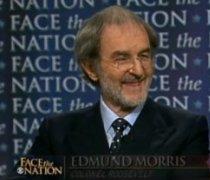
Edmund Morris, the Pulitzer Prize-winning biographer of Theodore Roosevelt, is a bit of an arrogant twit. But he was absolutely on-target in dismissing as “presentist” an inane question raised yesterday by host Bob Schieffer on the Face the Nation interview program.

Morris on 'Face the Nation'

Schieffer asked Morris, who recently completed the third of three volumes about Roosevelt’s life and times:

“What would Teddy Roosevelt think of today’s politics, Edmund?”

To which the Kenya-born Morris, who has lived in the United States since 1968, replied:

“You keep asking these presentist questions, Bob. As the immortal Marisa Tomei said in [the movie] My Cousin Vinny, that’s a bullshit question. Because you cannot pluck people out of the past and expect them to comment on what’s happening today.

“I can only say that what he represented in his time was that what we look for in our presidents now, what we hope for in our presidents now and we’re increasingly disappointed. He was somebody who understood foreign cultures. He represented the dignity of the United States. He was forceful but at the same time civilized.

“And what I really feel these days is we’ve become such an insular people … I see an insular people who are insensitive to foreign sensibilities, who are lazy, obese, complacent, and increasingly perplexed as to why we are losing our place in the world to people who are more dynamic than us and more disciplined.”

Morris’ comments–especially his profanity and his condescending swipes at Americans–quickly drew flak in the blogosphere.

And it’s true enough, as Matt Schneider of mediate.com observed with tongue in check, that “nothing compares to the thrilling unpredictability of an uninhibited guest like Morris who in one breath idolizes America’s ‘immortal’ movie stars, but in the next laments the rest of America as fat and lazy.”

Still, Morris was quite right to challenge Schieffer’s question. He was quite right to say that “you cannot pluck people out of the past and expect them to comment on what’s happening today.” It was a useful lesson.

Morris in effect was calling attention to the fallacy of presentism–that of applying contemporary standards and ideals to events and characters of the past. In other words, reading the present into the past.

Earlier in the show, Schieffer had asked Morris:

“What would T.R. have thought about what’s going on today? … Is there any correlation that you see between what he thought about and his vision for the country and, say, the rise of the Tea Party movement?”

To which Morris replied: “Well, I’m not going to pluck him out of the past because you can’t do that. He lived in his time. And he represented his time.”

Presentism is one of the fallacies David Hackett Fischer discussed 40 years ago in his superb study, Historians’ Fallacies.

Fischer noted: “The fallacy of presentism is a common failing in historical writing by men who have never been trained in the discipline of history.” He also wrote: “Academic historians are not exempt from the same error.”

Morris, whose Colonel Roosevelt has just been published, appeared on Face the Nation with three other authors of recent historical or political books. Among them was Bob Woodward, he of the Washington Post Watergate fame and author most recently of Obama’s Wars.

I’ve previously discussed at Media Myth Alert another, even more common fallacy of history–the “golden age” fallacy.The fallacy also is addressed in my latest book, Getting It Wrong, which debunks 10 prominent myths about the news media. Among them is the heroic-journalist myth of Watergate–the notion that the tireless reporting by Woodward and his colleague Carl Bernstein brought down Richard Nixon’s corrupt presidency.

I note in Getting It Wrong that the “golden age” fallacy is a “flawed but enticing belief that there really was a time when journalism and its practitioners were respected and inspiring”—the time, say, of Woodward and Bernstein.

WJC

Recent and related:

Some snarky history from WaPo

In Debunking, Spanish-American War on November 28, 2010 at 4:27 pm

Today’s Washington Post offers up a snarky commentary about the USS Olympia, the famous 19th century warship that helped launched an American empire.

The Olympia in 1899

The Olympia was Commodore George Dewey’s flagship in the Battle of Manila Bay that opened the Spanish-American War in May 1898. In recent years, the old warship has been a floating museum, docked at the Independence Seaport Museum on the Delaware River in Philadelphia.

The Post commentary says the Olympia, which was launched in 1892, is at risk of falling apart, and if it millions of dollars aren’t raised to save it, the vessel “will be dismantled for scrap or sunk to build an artificial reef off Cape May, N.J.

“And with it will go a symbol of America’s age of empire. When the Olympia was built, the United States was redefining itself as a global power, taking on expensive, elective wars in ever-more-distant places.”

Just what were those “expensive, elective wars” of the 1890s is left unsaid. The authors seem to be referring to the Spanish-American War, which marked the first time the United States projected its military power in a sustained way beyond the Western Hemisphere.

But the Spanish-American War was the consequence of no imperialist design. Rather, the conflict stemmed from an impasse over Spain’s reluctance to grant political independence to Cuba.

More specifically, as I wrote in my 2005 book, The Spanish-American War: American War and the Media in Primary Documents:

“The United States went to war in April 1898 to fulfill a moral and humanitarian imperative—that of ending the abuses created by Spain’s failed attempt to quell an island-wide rebellion in Cuba.”

I further wrote:

“While conditions [in Cuba] were the primary cause of the Spanish-American War, the conflict’s first and the last important military engagements were fought not in the Caribbean but in the distant Philippines.

“When the two-front war ended in August 1898, the United States had in effect become an imperial power, with new dependencies in the West Indies, Asia and the Pacific—an outcome wholly unanticipated four months before.”

Indeed, the outcome was unimagined at the war’s outset.

The commentary about the Olympia invokes one of the more misunderstood moments in the run-up to the Spanish-American War–an episode that in a snarky way might be called Teddy Roosevelt’s busy afternoon. Roosevelt then was an assistant secretary of the Navy.

The commentary says that when Navy Secretary John Long took “the day off” in late February 1898, Roosevelt “seized the opportunity to put the Navy on war footing.

“Roosevelt,” the commentary adds, “ordered Commodore George Dewey, aboard the Olympia in Hong Kong, to attack Spanish ships at their port in Manila, capital of the Philippines. That April, the Spanish-American War began.”

Teddy Roosevelt’s agency that day does make for a delicious story–but it didn’t happen quite the way the commentary recounts it. Roosevelt ordered no immediate attack.

Long, the navy secretary, took an afternoon off in late February 1898, not long after the explosion that destroyed the USS Maine in Havana harbor. And Roosevelt took it upon himself to dash off secret instructions to Dewey, telling him to concentrate the U.S. Asiatic squadron at Hong Kong and to be at the ready with coal bunkers topped off.

Roosevelt’s instructions said that “in the event of [a] declaration of war” with Spain, Dewey was to make sure the Spanish fleet at Manila did “not leave the Asiatic coast” and then undertake “offensive operations in the Philippines.”

The instructions were clearly conditional on war being declared, as it was several weeks later.

But the instructions represented no dramatic departure. They were much in keeping with U.S. planning.

As Ivan Musicant wrote in Empire by Default, his splendid history of the Spanish-American War:

“Revisionists to the contrary, Roosevelt’s orders to Dewey were not part of an imperialist cabal to get a jump on … American expansion. A naval attack on the Philippines in a war with Spain had been contemplated at least since the previous summer in the Naval War College scenarios. Long was aware of it and had endorsed the operation should it come.

“Roosevelt’s action in triggering the movement, though certainly beyond the scope of his nominal duties, was a sensible act of military preparedness.”

While impetuous perhaps, Roosevelt’s conduct that long ago afternoon hardly bore the sinister implications suggested by the Post commentary.

So not only was the commentary snarky. It was misleading and flabby.

WJC

Recent and related: