W. Joseph Campbell

Posts Tagged ‘Watergate’

The journos who saved us

In Cinematic treatments, Debunking, Media myths, Murrow-McCarthy myth, Washington Post, Watergate myth on July 5, 2011 at 12:49 pm

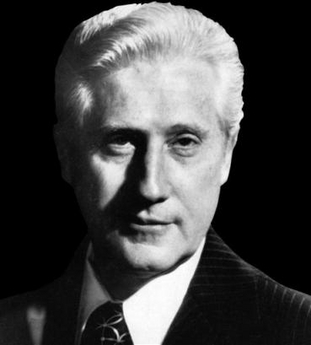
Murrow: Savior?

At their extreme, media-driven myths are hero-worshipping devices, invoked to venerate journalists as saviors.

Thankfully, such treatment is rare, and typically reserved for such journalists the legendary CBS newsman Edward R. Murrow and the Watergate reporting duo, Bob Woodward and Carl Bernstein.

Brian Unger, host of a history program on cable television, indulged in a bit of journalists-idolatry in compiling for an Entertainment Weekly blog a list of a dozen heroic figures from TV shows and the movies.

On the list was Ed Murrow, whom Unger praised for “saving us from someone who pretended to be a great American patriot, Sen. Joseph McCarthy.”

Also selected were Robert Redford and Dustin Hoffman, the movie stars who played Washington Post reporters Woodward and Bernstein in the film All the President’s Men. “Armed only with a pen,” Unger wrote, “they saved the country from itself.”

Journalists as saviors: Like most media-driven myths, the notion is simply too good to be true, too simplistic to be credible.

Murrow hardly took down Joe McCarthy in Murrow’s famous See It Now program on CBS in March 1954.

The show was aired four years after McCarthy began his communists-in-government witch-hunt, and four years after muckraking columnist Drew Pearson piercingly challenged and punctured many of McCarthy’s claims.
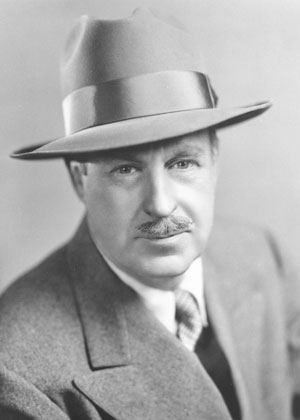
Pearson

The television critic for the New York Post, Jay Nelson Tuck, wrote that Murrow in the days after the show felt “almost a little shame faced at being saluted for his courage in the McCarthy matter. He said he had said nothing that … anyone might not have said without a raised eyebrow only a few years ago.”

Years later, Murrow’s CBS colleague, Eric Severaid, chafed at the misleading interpretation attached to the See It Now program on McCarthy which, he noted, “came very late in the day.”

Sevareid said: “The youngsters read back and they think only one person in broadcasting and the press stood up to McCarthy and this has made a lot of people feel very upset, including me, because that program came awfully late.”

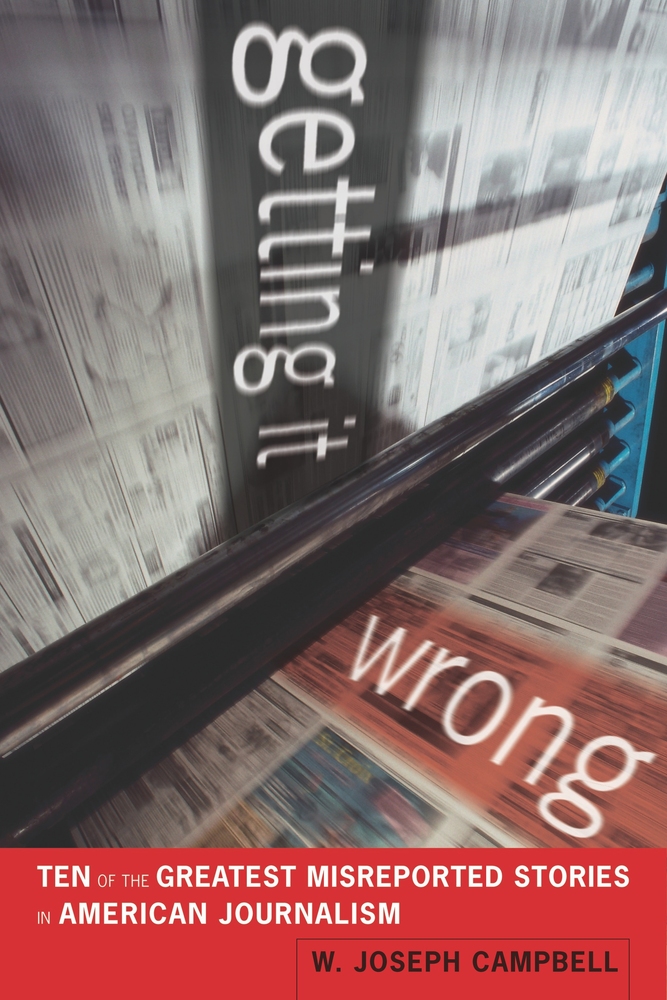
As I write in my media myth-busting book, Getting It Wrong, Americans in early 1954 weren’t “hoping for someone to step up and expose McCarthy, or waiting for a white knight like Murrow to tell them about the toxic threat the senator posed.”

By then they knew, thanks to the work of journalists such as Pearson.

Murrow no more ended McCarthy’s witch-hunt than Woodward and Bernstein brought down Richard Nixon’s corrupt presidency in Watergate — and, as Unger wrote, “saved the country from itself.”

Whatever that means.

It is clear that Woodward and Bernstein’s contributions to unraveling the Watergate scandal of 1972-74 were modest, and pale in significance when compared to the work of such subpoena-wielding entities as special prosecutors, both houses of Congress, the Justice Department, the FBI.

“Even then,” I write in Getting It Wrong, Nixon “likely would have served out his term if not for the audiotape recordings he secretly made of most conversations in the Oval Office of the White House. Only when compelled by the Supreme Court did Nixon surrender those recordings, which captured him plotting” to obstruct justice in the Watergate scandal.

Interestingly, principals at the Washington Post over the years have scoffed at the mythical and mediacentric interpretation that the newspaper brought down Nixon.

In 2005, for example, Michael Getler, then the newspaper’s ombudsman, wrote in a column:

“Ultimately, it was not The Post, but the FBI, a Congress acting in bipartisan fashion and the courts that brought down the Nixon administration. They saw Watergate and the attempt to cover it up as a vast abuse of power and attempted corruption of U.S. institutions.”

Woodward, himself, declared in 2004, in an interview with American Journalism Review:

To say the press brought down Nixon, that’s horseshit.”

But undoubtedly it’s the film All the President’s Men that’s largely responsible for the heroic-journalist trope that Woodward and Bernstein took down Nixon and saved the country.

All the President’s Men easily is the most-viewed movie made about Watergate. And as I note in Getting It Wrong, it places “Woodward and Bernstein at the center of Watergate’s unraveling while denigrating the efforts of investigative agencies such as the FBI.

“The effect was to solidify and elevate the heroic-journalist myth, giving it dramatic power, and sustaining it in the collective memory.”

WJC

Recent and related:

‘Sneakily patriotic’ movies that promote media myths

In Cinematic treatments, Debunking, Media myths, Murrow-McCarthy myth, Washington Post, Watergate myth on July 1, 2011 at 7:28 am

The film critic for Gannett News Service has identified in time for the Fourth of July weekend 10 movies he says are “sneakily patriotic.”

Meaning they promote patriotism indirectly, without a lot of flag-waving flamboyance.

The list, compiled by critic Bill Goodykoontz, includes Apollo 13, the dramatic 1995 movie about an ill-fated lunar mission that ended safely, and Miracle, the 2004 film about the gold medal-winning 1980 U.S. Olympics hockey team, a movie that does feature a fair amount of flag-waving.

Notably, two of the “sneakily patriotic” films have promoted and propelled media-driven myths — those dubious and improbable tales about news media that masquerade as factual.

Both myth-promoting movies push the extravagant notion that the news media are, or were, powerful and decisive forces in American political life. And both movies are discussed in my media myth-busting book, Getting It Wrong, which came out last year.

The myth-promoters are:

Goodykoontz, in describing the two movies, invokes their mythical aspects.

About All the President’s Men, Goodykoontz writes that Woodward and Bernstein’s “coverage of the Watergate break-in … led, ultimately, to the resignation of Richard Nixon.”

And Good Night, and Good Luck, he writes, “evokes an earlier era of media and how it could be used to stem the abuse of power.”

I point out in Getting It Wrong how movies can solidify media-driven myths in the public’s consciousness. “High-quality cinematic treatments,” I write, “are powerful agents of media myth-making, and can enhance a myth’s durability.”

The cinematic version of All the President’s Men solidified what I call the heroic-journalist myth of Watergate — the simplistic notion that Woodward and Bernstein’s investigative reporting brought down Richard Nixon’s corrupt presidency.

All the President’s Men, I write, allows no interpretation other than it was the work of Woodward and Bernstein that “set in motion far-reaching effects that brought about the first-ever resignation of a U.S. president.”

But to embrace that interpretation, I further write in Getting It Wrong, “is to abridge and misunderstand the scandal and to indulge in a particularly beguiling media-driven myth.”

The heroic-journalist interpretation serves to diminish and ignore the far more powerful forces that unraveled the scandal and forced Nixon from office.

Those forces, I write, “included special prosecutors, federal judges, both houses of Congress, the Supreme Court, as well as the Justice Department and the FBI.

“Even then, Nixon likely would have served out his term if not for the audiotape recordings he secretly made of most conversations in the Oval Office of the White House. Only when compelled by the Supreme Court did Nixon surrender those recordings, which captured him” plotting to obstruct justice in the Watergate scandal.

When considered against the tableau of subpoena-wielding authorities, the contributions of Woodward and Bernstein pale in significance and consequence.

A somewhat similar dynamic is at work in Good Night, and Good Luck.

The movie, which was released in black and white to lend a 1950s feel, permits no other conclusion than Murrow’s See It Now program about McCarthy single-handedly ended the senator’s communists-in-government witch-hunt.

Murrow’s show detailing McCarthy’s loathsome and bullying tactics was aired in March 1954 — long after other journalists had confronted the senator and, in some cases, paid a heavy price for doing so.

Among those journalists was the muckraking columnist Drew Pearson, who took aim at McCarthy in February 1950, not long after the senator began his red-baiting campaign.

By the end of that year, McCarthy had physically assaulted Pearson and denounced him from the Senate floor as the “diabolically” clever “voice of international communism,” a “prostitute of journalism,” and the “sugar-coated voice of Russia.”

In the Senate speech excoriating Pearson, McCarthy aimed a threat at Adam Hat Stores Inc., the principal sponsor of the columnist’s Sunday night radio program.

McCarthy said that “anyone who buys from a store that stocks an Adams hat is unknowingly contributing at least something to the cause of international communism by keeping this communist spokesman on the air.”

Within a week, Adam Hat announced the end of its sponsorship of Pearson’s program.

Pearson may not have had the finest reputation in 1950s American journalism. Jack Shafer, the media critic for Slate.com, wrote last year that Pearson was “one of the skuzziest journalists to ever write a story.”

But Pearson took on McCarthy years before Murrow — and long before it was safe. He certainly was “sneakily patriotic” in doing so.

WJC

Recent and related:

List of flubs by pols incomplete without Biden’s Watergate gaffe

In Debunking, Media myths, Washington Post, Watergate myth on June 30, 2011 at 10:55 am

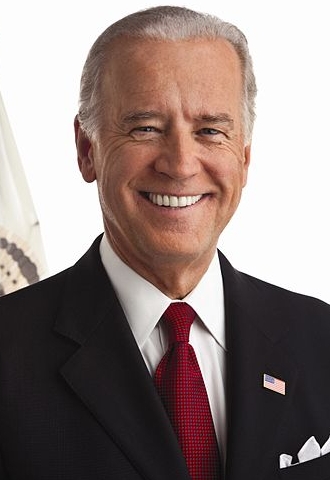
The gaffe-prone vice president, Joe Biden, claimed in a speech aboard a few months ago that the Washington Post “brought down” Richard Nixon’s corrupt presidency in the Watergate scandal.

Gaffe-prone

That’s a media myth — a misreading of history that not even the Post embraces.

While Biden’s blunder didn’t receive much media attention at the time, the flub merited inclusion in Time magazine’s lineup of memorable mischaracterizations of American history offered by leading U.S. politicians.

In a posting yesterday, the magazine’s “Swampland” politics blog offered what it termed were nine “epically wrong politician accounts of yesteryear.”

The “Swampland” lineup included two flubs by Michele Bachmann, the Republican congresswoman running for president — that the battles of Lexington and Concord were fought in New Hampshire and that John Quincy Adams was among America’s founding fathers.

Biden made the “Swampland” lineup for his laughable statement that President Franklin D. Roosevelt went on television and spoke to Americans after the stock market crash of 1929. Roosevelt didn’t become president until 1933 and television wasn’t pervasive in American households until the 1950s.

While perhaps not as delicious as the FDR-market crash gaffe, Biden’s ahistoric flub about the Post and Watergate would have rounded out the “Swampland” list at 10.

Its inclusion would’ve underscored how unraveling a scandal as complex as Watergate required far more investigative clout than any news organization could muster.

Although it won a Pulitzer Prize in 1973, the Post’s Watergate-related reporting was scarcely enough to turn a sitting president from office. Nixon resigned in August 1974.

Biden’s mischaracterization of Watergate was astonishing and the “Swampland” list is incomplete without mentioning the blunder. The vice president told an audience in Moscow in March:

“In my country it was a newspaper, not the FBI, or the Justice Department, it was a newspaper, the Washington Post that brought down a President for illegal actions.”

It didn’t.

As I write in my latest book, Getting It Wrong,to argue that the Post and the dogged reporting of its reporters Bob Woodward and Carl Bernstein took down Nixon “is to abridge and misunderstand the scandal and to indulge in a particularly beguiling media-driven myth.”

I note that rolling up a scandal of the sweep and dimension of Watergate “required the collective if not always the coordinated forces of special prosecutors, federal judges, both houses of Congress, the Supreme Court, as well as the Justice Department and the FBI.”

And even then, I write, “Nixon likely would have served out his term if not for the audiotape recordings he secretly made of most conversations in the Oval Office of the White House.

“Only when compelled by the Supreme Court did Nixon surrender those recordings, which captured him plotting the cover-up” of Watergate’s signal crime — the break-in at the headquarters of the Democratic National Committee in June 1972.

So against the tableau of subpoena-wielding authorities, the contributions of the Post in Watergate fade in significance.

Those contributions were not decisive, as top officials at the Post have noted over the years.

Katharine Graham, the newspaper’s publisher during and after the Watergate years, said in 1997, at a program marking the scandal’s 25th anniversary:

“Sometimes people accuse us of bringing down a president, which of course we didn’t do. The processes that caused [Nixon’s] resignation were constitutional.”

Ben Bradlee,who was the Post’s executive editor during Watergate, said on the “Meet the Press” interview show in 1997:

“[I]t must be remembered that Nixon got Nixon. The Post didn’t get Nixon.”

And Woodward himself has disputed the mediacentric interpretation of Watergate, declaring in 2004 in an interview with American Journalism Review:

To say the press brought down Nixon, that’s horseshit.”

WJC

Recent and related:

Those delicious but phony quotes ‘that refuse to die’

In Cinematic treatments, Cronkite Moment, Debunking, Furnish the war, Media myths, Murrow-McCarthy myth, Spanish-American War, Washington Post, Watergate myth on June 25, 2011 at 10:31 am

Craig Silverman, author of Regret the Error, posted an intriguing column yesterday about appealing but dubious quotations that journalists seem especially prone to cite, noting that such famous lines “often turn out to be manufactured or inexact representations.”

It’s an important reminder, given the endless popularity of quotations that are neat, tidy, and irresistibly delicious. As I note in my latest book, Getting It Wrong, “Turns of phrase that sound too neat and tidy often are too perfect to be true.”

Plouffe: Not so 'queasy'?

Silverman’s column, titled “Misquotes that refuse to die,” was centered around a comment attributed in 2009 to David Plouffe, Barrack Obama’s campaign manager in 2008.

Plouffe supposedly said he felt a bit “queasy” about the prospect of Obama’s facing Jon Huntsman, the Republican former Utah governor, in the presidential election in 2012.

“Plouffe never said it,” Silverman wrote, describing how the queasy line took on life of its own.

Journalists can be particularly susceptible to such succinct “little gems,” as Silverman put it, because the gems are so effective in making a point or in distilling complexity.

Silverman’s column noted two famous, dubious quotes that I dismantle in Getting It Wrong.

One of them is the comment misattributed to President Lyndon Johnson who,  in reaction to Walter Cronkite’s on-air assessment that the war in Vietnam was “mired in stalemate,” supposedly said:

“If I’ve lost Cronkite, I’ve lost Middle America.”

Or something to that effect.

Versions as to what Johnson supposedly said vary quite a lot — which can be a marker of a media myth. I also point out in Getting It Wrong that Johnson did not see the Cronkite report when it aired on CBS on February 27, 1968.

The other dubious quote discussed in Getting It Wrong and mentioned by Silverman is William Randolph Hearst’s purported vow to “furnish the war” with Spain.

Reasons for doubting the Hearstian vow are many, I write, and include the fact that the telegram in which Hearst supposedly made the statement has never turned up. Plus, Hearst denied making such a vow.

A number of other famous and delicious quotes favored by journalists likewise have proven to be false, made-up, or of mythical dimension; among them:

  • Too early to say.” It’s often said that Chinese premier Zhou Enlai offered the observation in 1972, as sage, far-sighted analysis about the effects of the French Revolution of 1789. But according to a retired American diplomat, Charles W.  (Chas) Freeman Jr., Zhou’s comment, which came during President Richard Nixon’s visit to China in February 1972, was about political turmoil in France in 1968. “I cannot explain the confusion about Zhou’s comment, except in terms of the extent to which it conveniently bolstered a stereotype” about Chinese leaders taking an exceptionally long and patient view of history, Freeman said recently. Freeman was Nixon’s interpreter on the trip.

So what to do about these delicious but dubious and phony quotations?

Keep pounding away at them, calling them out for what they are, whenever they appear. That’s the only effective way of debunking.

But even then, thorough and utter debunking can be rare.

WJC

Recent and related:

‘Getting It Wrong’ at ‘Reader’s Corner’ tonight

In Cronkite Moment, Debunking, Hurricane Katrina, Media myths, Washington Post, Watergate myth on June 24, 2011 at 6:02 am

I’ll be discussing my latest book, Getting It Wrong, in a half-hour interview that airs tonight at 7:30 (Eastern) on “Reader’s Corner,” a program of Boise State University public radio, KBSX 91.5 FM.

The host is the university’s president, Bob Kustra, an engaging interviewer who taped the show with me last week.

We discussed a number of the media-driven myths debunked in Getting It Wrong, including, in some detail, the mythical “Cronkite Moment” of 1968.

That was when CBS News anchor Walter Cronkite supposedly swung U.S. policy in Vietnam with his on-air assessment that the American military was “mired in stalemate” and that negotiations were a prospective way out of Southeast Asia.

The assessment, I write in Getting It Wrong, “supposedly was so singularly potent that it is has come to be remembered as the ‘Cronkite moment.'”

At the White House, President Lyndon Johnson supposedly watched Cronkite’s program about Vietnam — a special, hour-long report that aired February 27, 1968. Upon hearing Cronkite’s “mired in stalemate” statement, Johnson is said to have leaned over, snapped off the television set, and told an aide or aides:

“If I’ve lost Cronkite, I’ve lost Middle America.”

Or words to that effect. Versions vary. Markedly.

As I point out in Getting It Wrong, however, Johnson didn’t see the Cronkite report when it aired. The president wasn’t at the White House, either.

He was on the campus of the University of Texas at Austin, offering light-hearted banter at the 51st birthday party of Governor John Connally, one of the president’s long-time political allies.

About the time Cronkite intoned his “mired in stalemate” assessment, Johnson was saying this, about Connally’s age:

“Today you are 51, John. That is the magic number that every man of politics prays for—a simple majority.”

It’s difficult to imagine how Johnson was much moved by a show he didn’t see.

Even if the president did watch the Cronkite report at some later date on videotape — and there’s no evidence he did — it’s clear that Johnson did not take the anchorman’s assessment to heart. “Mired in stalemate” was no epiphany for the president.

Indeed, just three days after the Cronkite program aired, Johnson vowed in remarks at a testimonial dinner in Texas that the United States would “not cut and run” from Vietnam.

“We’re not going to be Quislings,” the president said, invoking the surname of a Norwegian politician who helped the Nazis take over his country. “And we’re not going to be appeasers….”

I noted in the interview with Kustra, that Cronkite until late in his life pooh-poohed the notion his assessment about Vietnam represented a pivotal moment.

In his memoir published in 1997, Cronkite wrote that his “mired in stalemate” assessment posed for Johnson “just one more straw in the increasing burden of Vietnam.”

But by 2006, three years before his death, Cronkite had come to embrace the conventional interpretation of the presumptive “Cronkite Moment,” saying in an interview with Esquire:

“To be honest, I was rather amazed that my reporting from Vietnam had such an effect on history.”

Among other topics, Kustra and I discussed the hero-journalist myth of Watergate (the notion that the dogged reporting of Bob Woodward and Carl Bernstein for the Washington Post brought down Richard Nixon’s presidency) and the woefully exaggerated reporting that characterized coverage of Hurricane Katrina’s aftermath in New Orleans.

I also noted during the interview that Getting It Wrong is best regarded as aligned with the fundamental imperative of newsgathering — that of getting it right, of seeking to obtain the most accurate version of events as possible.

WJC

Why history is badly taught, poorly learned

In Cinematic treatments, Debunking, Media myths on June 19, 2011 at 12:41 pm

I’m not much a fan of the work of David McCullough, the award-winning popular historian whose latest book is the well-received The Greater Journey: Americans in Paris.

I couldn’t get through McCullough’s acclaimed 1776, a military history of a decisive year in American life that oddly had little to say about the Declaration of Independence.

But McCullough, in an interview published in yesterday’s Wall Street Journal, offered several provocative and telling points about why American history is so badly taught and so poorly grasped.

The splintered state of historical studies is one of the factors, McCullough said, adding:

“History is often taught in categories — women’s history, African American history, environmental history — so that many of the students have no sense of chronology. They have no idea what followed what.”

That’s a fair point. History by interest group can be an invitation to incoherence.

McCullough also pointed out that textbooks on history tend to “so politically correct as to be comic. Very minor characters that are currently fashionable are given considerable space, whereas people of major consequence … are given very little space or none at all.”

What’s more, as McCullough noted, textbooks often are tedious, boring, and poorly written. Historians by and large “haven’t learned to write very well,” McCullough wrote.

Although McCullough didn’t mention this in the interview, learning history can be frustrating because history is prone to error, distortion, and myth.

History quite simply can be myth-encrusted — and unlearning the myths of history can be challenging, time-consuming, and often unrewarding.

As I discuss in Getting It Wrong, my media-mythbusting book that came out last year, myths in history spring from many sources, including the timeless appeal of the tale that’s simple and delicious.

A telling example is the undying tale about William Randolph Hearst’s purported vow in an exchange of telegrams with Frederic Remington to “furnish the war” with Spain at the end of the 19th century.

As I discuss in Getting It Wrong, among the many reasons for doubting that anecdote are Hearst’s denial and the absence of any supporting documentation. The Remington-Hearst telegrams have never surfaced.

But the tale lives on, as an appealing yet exceedingly simplified explanation about the causes of the Spanish-American War and as presumptive evidence of Hearst’s madcap and ethically compromised ways.

The urge to simplify history also explains the tenacity of the so-called “Cronkite Moment” of 1968, when the CBS News anchorman’s assessment of the Vietnam War as a “stalemate” supposedly prompted President Lyndon Johnson to realize the folly of his war policy and not to seek reelection.

However, as I discuss in Getting It Wrong, Johnson did not see the program when it aired, and Cronkite until late in his life claimed his “stalemate” assessment had at best modest influence, that it was “another straw on the back of a crippled camel.”

And even that effect was probably exaggerated.

But the notion that the “Cronkite Moment” was powerful and decisive has been promoted by many historians, notably David Halberstam in his error-riddled The Powers That Be.

The cinema, too, often injects error and misunderstanding into historical topics.

Hollywood’s treatment of Bob Woodward and Carl Bernstein’s investigative reporting for the Washington Post is an important reason why many people erroneously believe that Woodward and Bernstein brought down Richard Nixon’s corrupt presidency.

Good history and successful cinema are quite often at odds, as Richard Bernstein noted in a memorable essay published several years ago in the New York Times.

“Artists who present as fact things that never happened, who refuse to allow the truth to interfere with a good story, are betraying their art and history,” Bernstein wrote.

So there are plenty of reasons beyond McCullough’s useful observations as to why American history is so poorly understood.

It may always be that way. After all, as the Scottish historian Gerard De Groot has noted, history is “what we decide to remember.

“We mine the past,” he has written, “for myths to buttress our present.”

WJC

Recent and related:

Commodity markets and Watergate’s most famous made-up line

In Cinematic treatments, Debunking, Media myths, Washington Post, Watergate myth on June 15, 2011 at 7:56 am

Follow the money,” that famous and dramatic line about the Watergate scandal, was made up for the cinema.

Not in this book

But because it’s so pithy and compelling, the passage is routinely treated as if it had been advice vital to unseating President Richard Nixon and unraveling the greatest scandal in American politics.

The Reuters wire service yesterday offered “follow the money” as if it were genuine, stating in a dispatch posted at the Commodities Now online site:

“‘Follow the money,’ FBI Deputy Director Mark Felt (‘Deep Throat’) told Washington Post reporters Bob Woodward and Carl Bernstein during their investigation into the Watergate break ins. It remains good advice for participants in commodity markets.”

Follow the money” may well be sound guidance for commodities brokers. But in the Watergate scandal, the line had relevance and as dramatic effect only in the movies.

Felt — whose family disclosed in 2005 that he had been the fabled “Deep Throat” source of the Washington Postdidn’t offer such guidance to Woodward during their periodic meetings in 1972 and 1973 as the scandal unfolded. Felt, moreover, never spoke with Bernstein during Watergate.

Nor does the advice to “follow the money” appear in All the President’s Men, Woodward and Bernstein’s book about their Watergate reporting. And the line can’t be found in any Watergate-related article or editorial in the Washington Post before 1981.

The derivation of the line lies in the screenplay of All the President’s Men, the cinematic version of Woodward and Bernstein’s book. The movie came out 35 years ago and has been seen by millions of people, easily qualifying it as the most-viewed film about Watergate.

All the President’s Men included a boffo performance by Hal Holbrook who played the stealthy, conflicted “Deep Throat” character.

Holbrook advised the Woodward character, played by Robert Redford, to “follow the money” — and did so with such quiet assurance and insistence that it sure seemed as if the guidance were vital to rolling up Watergate.

But had the advice indeed been given to Woodward, “follow the money” would’ve have taken the reporter only so far. Watergate, after all, was a scandal far more complex than the misuse of campaign monies.

As I write in Getting It Wrong, my media-mythbusting book that came out last year, some 20 men associated with Richard Nixon’s presidency or his 1972 reelection campaign went to jail for crimes linked to Watergate.

To unravel a scandal of such dimension, I write in Getting It Wrong, “required the collective if not always the coordinated forces of special prosecutors, federal judges, both houses of Congress, the Supreme Court, as well as the Justice Department and the FBI.

“Even then,” I add, “Nixon likely would have served out his [second] term if not for the audiotape recordings he secretly made of most conversations in the Oval Office of the White House. Only when compelled by the Supreme Court did Nixon surrender those recordings, which captured him plotting the cover-up and authorizing payments of thousands of dollars in hush money.”

As I’ve noted previously at Media Myth Alert, what cost Nixon the presidency wasn’t of the improper use of campaign funds but his obstruction of justice in attempting to thwart the FBI’s investigation of the scandal.

The misunderstanding about “follow the money” is an element in the broader mythology of Watergate, which centers around the historically inaccurate notion that Woodward and Bernstein, through their dogged investigative reporting, brought down Nixon’s presidency.

To embrace that interpretation of Watergate is, I write in Getting It Wrong, “to abridge and misunderstand the scandal and to indulge in a particularly beguiling media-driven myth.”

WJC

Recent and related:

Why they get it wrong

In Bay of Pigs, Cronkite Moment, Debunking, Furnish the war, Jessica Lynch, Media myths, New York Times, Newspapers, Washington Post, Watergate myth on June 3, 2011 at 6:49 am

It’s striking how several well-known journalists and news outlets have indulged over last six months in media-driven myths, those dubious tales about the news media that masquerade as factual.

The lineup of myth-indulgers is impressive and, among others, includes:

  • Bill Keller, executive editor of the New York Times, who rubbed shoulders with the Bay of Pigs suppression myth in a column in the Times in January. The suppression myth holds that at the behest of President John F. Kennedy, the Times killed or emasculated its report about the pending Bay of Pigs invasion in 1961. That tale is unfounded, as I discuss in my latest book, Getting It Wrong.
  • Mother Jones magazine which, in its May/June cover story by Rick Perlstein, offered up a rare two-fer — two media myths discussed in a single article. One of the myths was the hoary and surely apocryphal tale about William Randolph Hearst and his reputed vow to “furnish the war” with Spain. The other was about the so-called the “Cronkite Moment” of 1968, in which Walter Cronkite’s on-air assessment that the U.S. military was “mired in stalemate” in Vietnam was so powerful as to alter U.S. policy.
  • Keith Olbermann, the acerbic cable television commentator who, as he quit his prime-time Countdown show in January, referred to the  “exaggerated rescue” of Army private Jessica Lynch in the early days of the Iraq War. Such claims, raised as long ago as 2003, were unsubstantiated by an inquiry of the Defense Department’s inspector general who found the rescue operation was found to have been “a valid mission” to recover Lynch, a prisoner of war, “under combat conditions.”

What accounts for such lapses by prominent journalists and their outlets? Why do these and other media-driven myths often find their way into news reports and commentaries?

Some media myths are just too good not to be true; they almost are too good to take time to check out. The tale about Hearst’s vowing to “furnish the war” certainly falls into this category. It shouldn’t be at all difficult to locate references to the dubious character of the anecdote, which has been the subject of repeated debunking over the years.

Likewise, it can be far easier to invoke a media myths that to commit to the tedium of research and legwork. Media myths are convenient, readily at hand. Poking into their details takes time, and a willingness to challenge what are accepted as consensus narratives.

As I noted in discussing Keller’s column that invoked the Bay of Pigs suppression myth:

“Had Keller consulted the newspaper’s database of reporting about the run-up to the Bay of Pigs invasion in April 1961, he would have found that the Times reported in detail, if not always accurately, about the preparations to infiltrate a U.S.-trained brigade of Cuban exiles in an attempt to topple Fidel Castro.”

Similarly, some media myths (such as the illusory “Cronkite Moment“) may be too ingrained, too dearly held by journalists, ever to be uprooted or thoroughly repudiated.

Unlearning such tales is no small challenge, after all. The conundrum of unlearning was addressed a few months ago in a Wall Street Journal column, which noted:

“For adults, one of the most important lessons to learn in life is the necessity of unlearning. We all think that we know certain things to be true beyond doubt, but these things often turn out to be false and, until we unlearn them, they get in the way of new understanding.”

Media myths also can be convenient means of scoring political points. The two-fer in Mother Jones magazine, for example, were presented as part of a sneering attack about “fact-free” Republicans.

Moreover, media myths — the most prominent of them, anyway — resonate in contemporary contexts.

History, it has been said, is “what we decide to remember,” and journalism history is not an exception. Recalling and celebrating the memory of Cronkite’s supposedly telling truth to power about Vietnam — or of Bob Woodward and Carl Bernstein’s bringing down a corrupt presidency — is to offer reassurance to contemporary journalists at a time of confusion and upheaval in their field.

Deciding to remember such mythical tales is understandable if not justifiable, given that those tales bring solace and reassurance amid sweeping uncertainty.

WJC

Recent and related:

Six years on: Identity of Watergate’s ‘Deep Throat’ revealed

In Anniversaries, Cinematic treatments, Debunking, Media myths, Washington Post, Watergate myth on May 29, 2011 at 6:22 am

It’s been six years since W. Mark Felt,  once a senior FBI official, was revealed to have been “Deep Throat” of the Watergate era, the most famous source in modern American journalism.

Alias 'Deep Throat'

Felt’s “Deep Throat” identity had remained a secret — and was a topic of often-intense speculation — for more than 30 years.

On May 31, 2005, Vanity Fair disclosed that Felt had been the Washington Post’s elusive and enigmatic source as the Watergate scandal unfolded in 1972-73.

The disclosure was made with the consent of Felt — who then was 91 and in declining physical and mental health — and his daughter, Joan.

The Vanity Fair report meant that the Post effectively had been scooped on its own story.

“The identity of Deep Throat is modern journalism’s greatest unsolved mystery,” Vanity Fair crowed in its article lifting Felt’s secret. “It has been said that he may be the most famous anonymous person in U.S. history.”

As I note in Getting It Wrong, my media-mythbusting book that came out last year, the prolonged guessing game about the identity of “Deep Throat” help solidify the notion that the Post and its lead Watergate reporters, Bob Woodward and Carl Bernstein, were central to uncovering the scandal and forcing President Richard Nixon’s resignation.

I point out that speculation “about the identity of the ‘Deep Throat’ source provided periodic and powerful reminders about the Post and its Watergate coverage, serving to keep Woodward and Bernstein in the public eye far longer than they otherwise would have been.”

I further note:

“They and the mysterious ‘Deep Throat’ source became central figures” in what the Philadelphia Inquirer once called “the parlor game that would not die. … With each passing year, as ‘Deep Throat’s’ cloak of anonymity remained securely in place, his perceived role in Watergate gained gravitas.”

“And so,” I write, “… did the roles of Woodward and Bernstein.”

Although Alexander Haig, John Dean, and Henry Kissinger were among the suspects mentioned in the “Deep Throat” guessing game, Felt’s name always placed high on the roster of likely candidates.

As I discuss in Getting It Wrong, speculation about the identity of “Deep Throat” began in earnest in June 1974, with a front-page article in the Wall Street Journal, and continued periodically over the next 31 years.

The Journal article appeared soon after publication of All the President’s Men, Woodward and Bernstein’s best-selling book about Watergate in which they introduced the furtive source they called “Deep Throat.”

The Journal article described Felt as the top suspect.

Felt, though, repeatedly and adamantly denied having been “Deep Throat.” He was quoted as saying in the Journal article in 1974:

“I’m just not that kind of person.”

He told the Hartford Courant newspaper in 1999 that he “would have been more effective” had he indeed been Woodward’s secretive source, adding:

“Deep Throat didn’t exactly bring the White House crashing down, did he?”

That’s a revealing point that goes to the heart of what I call the heroic-journalist myth of Watergate: Disclosures by “Deep Throat” didn’t bring down Nixon’s corrupt presidency; nor did the reporting of Woodward and Bernstein.

(Bernstein, by the way, never spoke with Felt during the Watergate scandal; Felt was Woodward’s exclusive source. Bernstein finally met Felt in November 2008, shortly before the former G-man’s death.)

On the day six years ago when Felt was confirmed to have been “Deep Throat,” his family issued a statement calling him “a great American hero who went well above and beyond the call of duty at much risk to himself to save his country from a horrible injustice. We all sincerely hope the country will see him this way as well.”

Felt, though, hardly was such a noble character.

In his senior position at the FBI, he had authorized illegal burglaries as part of FBI investigations into leftists associated with the radical Weather Underground in the early 1970s.

Felt was convicted in 1980 on felony charges related to the break-ins, but pardoned by President Ronald Reagan.

Interestingly, his “Deep Throat” alter ego may best be known for a line Felt never spoke: “Follow the money.”

As I’ve discussed at Media Myth Alert, Felt never offered such guidance to Woodward. He never advised the reporter to “follow the money.”

The line doesn’t appear in the book All the President’s Men. But it was written into the script of the cinematic adaptation of Woodward and Bernstein’s book.

Follow the money” was spoken by Hal Holbrook, who delivered a bravado performance as “Deep Throat” in the movie.

Holbrook delivered his “follow the money” lines with such quiet insistence and knowing authority that it sounded for all the world as if it really had been guidance crucial to rolling up Watergate.

WJC

Recent and related:

Every good historian a mythbuster

In Anniversaries, Cinematic treatments, Debunking, Media myths, Newspapers, Washington Post, Watergate myth on May 27, 2011 at 6:10 am

While researching studies of memorable or decisive years recently, I happened across a Washington Post review of The Year That Changed the World, a book about 1989.

I was impressed by this passage in the review:

The good historian is a mythbuster.”

Indeed.

Couldn’t agree more.

The reviewer, Gerard DeGroot, also wrote:

“The past is what happened, history what we decide to remember. We mine the past for myths to buttress our present.”

That’s well said, too. It’s a characterization that offers insight about the rise and diffusion of media-driven myths, 10 of which I debunk in my latest book, Getting It Wrong.

History often is what we decide to remember. And we tend to remember what’s most accessible, what’s most easy to remember.

Take, for example, the mediacentric interpretation of Watergate, the greatest political scandal in American history, a scandal that destroyed a presidency and sent nearly twenty men to jail.

The shorthand, easy-to-grasp version of Watergate is that Bob Woodward and Carl Bernstein of the Washington Post, aided immeasurably by a stealthy, high-level source code-named “Deep Throat,” brought down Richard Nixon’s corrupt presidency.

That’s also the mediacentric version of Watergate, the version journalists love to recall. It serves to remind them of the potential power of the news media.

But as I note in Getting It Wrong, the mediacentric interpretation is misleading and historically inaccurate; it “minimizes the far more decisive forces that unraveled the scandal and forced Nixon from office,” I write.

To roll up a scandal of Watergate’s dimensions, I add, “required the collective if not always the coordinated forces of special prosecutors, federal judges, both houses of Congress, the Supreme Court, as well as the Justice Department and the FBI.

“Even then,” I argue, “Nixon likely would have served out his term if not for the audiotape recordings he secretly made of most conversations in the Oval Office of the White House. Only when compelled by the Supreme Court did Nixon surrender those recordings, which captured him plotting the cover-up and authorizing payments of thousands of dollars in hush money.”

So why do we choose to remember the Woodward-Bernstein-mediacentric interpretation of Watergate? Why has it become the dominant narrative of the scandal? That it is shorn of complexity and easy to grasp is one reason.

A more powerful reason is to be found in the cinematic adaptation of All the President’s Men, Woodward and Bernstein’s book about their Watergate reporting.

The book came out in June 1974 as Watergate was approaching its climax, and was a best-seller.

All the President’s Men was an even greater success in its screen adaptation. It was released 35 years ago this spring and surely ranks as the most-viewed movie about Watergate.

To an extent “far greater than the book,” I write in Getting It Wrong, “the cinematic version of All the President’s Men placed Woodward and Bernstein at the center of Watergate’s unraveling while denigrating the efforts of investigative agencies such as the FBI.

“The effect,” I add, “was to solidify and elevate” the heroic-journalist myth of Woodward and Bernstein, “giving it dramatic power, and sustaining it in the collective memory.”

For contemporary journalists who confront sustained and sweeping upheaval in their field, the mediacentric myth of Watergate is comforting,  reassuring.

Recalling the myth and treating it as authentic serves to buttress the present against the riptide of change.

WJC

Recent and related: