W. Joseph Campbell

Posts Tagged ‘Watergate’

Cinematic treatments can solidify media myths

In Cinematic treatments, Cronkite Moment, Debunking, Media myths, Murrow-McCarthy myth, Newspapers, Washington Post, Watergate myth on November 14, 2010 at 7:12 am

In this, the last of three installments drawn from an interview with Newsbusters about Getting It Wrong, the discussion turns to whether new media are effective in thwarting the spread of media-driven myths.

I express doubts about that prospect.

The Newsbusters interview was conducted by Lachlan Markay, who described Getting It Wrong as “exhaustively researched and painstakingly even-handed.” The interview transcript is accessible here.

NEWSBUSTERS: Looking forward, do new media present an opportunity to debunk these myths, before they get started?

CAMPBELL: You would think that it would, and I think there has been some evidence that that’s the case, but then there are other myths that just seem to defy debunking newer myths.

Jack Shafer at Slate.com has done some interesting work in looking at the so-called … “pharm parties” in which young people would raid their medicine cabinets of their parents and just take whatever medication they could find, bring them to a party, and then dump them in a communal bowl, and sort of play Russian roulette with these drugs–by the handful take them, and see what kind of effect that they have.

And it seems to be an urban legend that’s just taken hold, and it’s appeared in newspapers, periodically, around the country–San Francisco to DC–and there seems to be no evidence to support this other than the notion that police have heard that this kind of stuff goes on. And Shafer’s written a number of columns at Slate that insist that no one has ever seen this happen, no one has ever attended a pharm party, there’s never been any kind of first person documentation.

And yet, the story is too good not to be true, and it lives on.

So you would think that the Internet would have been more effective by now in knocking down that kind of story. It hasn’t.

NB: So these myths, then, get started because newspapers have disregarded their own–or not just newspapers, but any media has disregarded its own standards of journalism.

CAMPBELL: You could see that in some cases, yeah, I suppose that’s true. [But] I don’t think they’re going at this whole hog and saying, we’re just going to forget about our standards and go at this story just because it sounds so good.

NB: Or, put differently, if those standards were followed to a T, some of these myths might never have taken shape.

CAMPBELL: Yeah, that’s probably true.

NB: A lot of these myths are ingrained in our culture. They’re part of American history, included in textbooks. The Woodward and Bernstein example comes to mind. You have movies, for instance, All the President’sMen , or Good Night, and Good Luck with Edward R. Murrow–does pop culture, or culture in general, play a larger part in perpetuating these myths? Is this something that journalists create on their own, or is it out of their hands and American culture sees these magnificent stories, and sort of adopts them as their own?

CAMPBELL: I think the dynamic that leads to the solidification of media myths is a very interesting one. It’s kind of complex, but I think that some of the points that you’ve mentioned are very central to that process of solidifying a myth–sort of the national consciousness. Cinema does a very good job of doing that.

Cinematic treatments help solidify in the minds of people the supposed reality of some of these exchanges, of some of these encounters, of some of these moments.

…. the cinematic treatment of Woodward and Bernstein in All the President’s Men I think really helped solidify the notion that those two guys were central to bringing down Richard Nixon. In fact, the movie, as clever and well-done as it is, leads to no other interpretation but that. It had to be those guys. …

As a nation we do tend to remember things cinematically. I’m not the first one to say that. Others have looked at it more closely than I have and have made that determination. It’s a fair statement. Good Night, and Good Luck introduced a whole new generation of Americans to the notion that Edward R. Murrow was the one who did in Joe McCarthy, with his 30-minute television program.

NB: Do you have students who come in and say, “I saw Good Night and Good Luck and it inspired me to pursue a career in journalism”?

CAMPBELL: You know, I haven’t heard it said quite that way. But they do think that that movie is well done.

NB: The romanticism of journalism appeals to the students.

CAMPBELL: Exactly. And more students have seen All the President’s Men than have read the book, by far. … But cinema really is a factor that propels and solidifies these myths.

End of part three
Media myths send ‘misleading’ message of media power

In Cronkite Moment, Debunking, Hurricane Katrina, Media myths, Murrow-McCarthy myth, Newspapers, Spanish-American War, Washington Post, Watergate myth on November 13, 2010 at 9:42 am

In this, the second of three installments drawn from Newsbusters‘ lengthy interview about Getting It Wrong, I discuss why it’s vital to debunk media-driven myths, those dubious tales about the news media that masquerade as factual.

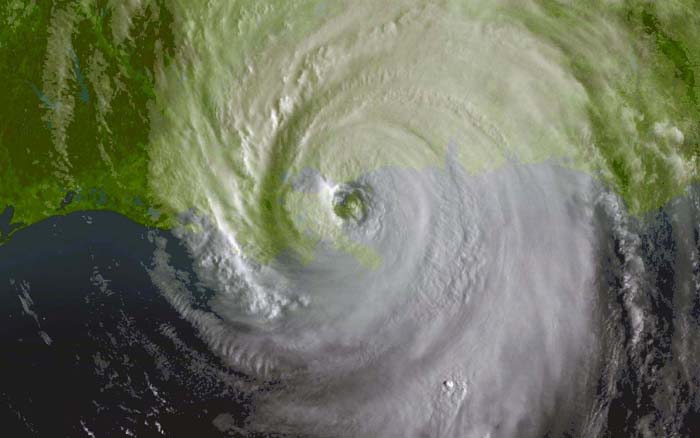
This installment also includes a discussion about the flawed and over-the-top news coverage of Hurricane Katrina‘s aftermath in 2005.

The Newsbusters interview was conducted by Lachlan Markay, who described Getting It Wrong as “exhaustively researched and painstakingly even-handed.”

The third and final excerpt from the interview will be posted tomorrow at Media Myth Alert . The interview transcript is accessible here.

NEWSBUSTERS: So why, personally, do you feel that–you obviously feel it’s very important that these myths be exposed as myths. What’s the damage that these myths do if they carry on unquestioned?

CAMPBELL: I think one of the drawbacks [of media-driven myths] is that they … suggest power that the news media typically do not have. Media power in my view tends to be episodic, tends to be situational, nuanced, and it’s typically trumped by other forces and other factors. Government power, police power tend to overwhelm media power on an average basis in most circumstances.

But these stories–about [Walter] Cronkite, about [Edward] Murrow, about Watergate, about [William Randolph] Hearst, and some of the others in the book–typically send a message that the media have great power, to do good or to do harm.

They can start a war, they can end a war, they can alter the political landscape, they can even bring down a president–they’re that powerful. That’s absolutely a misleading message. It’s not how media power is applied or exerted, and that’s an important reason to debunk these myths.

There’s also some inherent importance too in trying to set the record straight to the extent you can. And in that regard, the book is aligned with the fundamental objective of journalism as practiced in this country, of getting it right, getting the story correct. …

NB: And some of the–the Katrina example comes to mind–some of the myths actually have to do with the media–not just a flawed or misleading understanding of events, but a completely fabricated, and made up and very destructive events sometimes. And I say Katrina because there were all these reports of gunfire in New Orleans, of dead bodies being piled up in the Superdome, none of which was true.

CAMPBELL: That’s right. …  Not only that, but the collective sense that those kinds of media reports gave about New Orleans–the place had just collapsed, the city and its people had collapsed into this sort of apocalyptic, Mad Max-like, nightmarish scene–and it served to besmirch the city and its citizens at the time of their direst need.

And that, I think, is just absolutely reprehensible. And that’s the message that we were getting [from the coverage of Katrina’s aftermath in early September 2005]. …

To the credit of the news media, they did go back –many of them, many of these news organizations–and took a look at how they got it wrong. But that tended to be a one-off kind of thing, and placed … inside the papers.

Broadcast media didn’t do much of this at all. … So even to this day, five years on, I still don’t believe the news media have taken full measure of the mistakes they made in the coverage of Hurricane Katrina.

The tendency is still to blame government–local, state, and certainly federal government–for an inept response. But the story was deeper than that, and it was more complex than that, and that’s the part that the news media got wrong.

NB: And of course one of the consequences of that misreporting was that, as you mention, the federal government especially bore a lot of the blame for what was happening there. And then you also have Murrow taking down perhaps the most notorious cold warrior in our country’s history, you have Cronkite as the standard-bearer for the left’s main cause during the 1960s, you have Woodward and Bernstein taking down a Republican president. Are there political factors at work here, do you think?

CAMPBELL: I think that some of the more enduring myths are those that have appeal across the political spectrum.

The Cronkite moment is one of them–it appeals because this is, for folks on the right, this is a real clear-cut example of how “the news media screwed us in Vietnam, and how they prevented us from winning the war there.” And on the left it’s an example of telling truth to power, and how Walter Cronkite was able to pierce … the nonsense, and make it clear to the Johnson administration that the policy in Vietnam was bankrupt.

Something for everyone.

End of part two

‘Exhaustively researched and painstakingly even-handed’

In Cronkite Moment, Debunking, Media myths, Murrow-McCarthy myth, Newspapers, Spanish-American War, Washington Post, Watergate myth on November 12, 2010 at 10:15 pm

Getting It Wrong is exhaustively researched and painstakingly even-handed,” writes Lachlan Markay in introducing his detailed interview with me about my latest book.

He writes that W. Joseph Campbell “makes sure to stress at the outset that it is not a ‘media-bashing book.’ Rather, the volume stays true to journalism’s real mission: not myth-making, but fact-finding. Campbell seeks to set the record straight where often journalists themselves have obscured it.”

Excerpts of the interview–posted at the lively Newsbusters online site–follow. The transcript of the interview, which runs to 4,200 words, is accessible here. Other excerpts  will be posted at Media Myth Alert tomorrow and Sunday .

NEWSBUSTERS: We as a society, and as a culture, seem to have this iconic image, collective image, of a journalist in the good old days of journalism, of course, as sort of a shadowy figure with a little press label in his hat hammering away at his typewriter all night to make deadline. Is that a media driven myth, and do we have a sort of false nostalgia about the bygone days of journalism, when reporters were hardworking and honest and could really make a difference and affect positive change?

CAMPBELL: I mean, we can look back in those days, and I think very we’re very susceptible in journalism in general, to what I call in the book the Golden Age fallacy. It’s not my construction, others have identified it, but I think its very applicable to journalism to look back and say, “oh, yes, there really was a time when journalism mattered, when [Walter] Cronkite could shift the direction of a war, or [Bob] Woodward and [Carl] Bernstein, two young reporters could bring down a president.”

That’s emblematic of the Golden Age fallacy. …

NB: So how are these media-driven myths created?

CAMPBELL: They come from lots of different sources. Sometimes these are stores that are just too good to be checked out. Like, William Randolph Hearst [and his famous vow], “You furnish the pictures, and I’ll furnish the war.” That sums up not only Hearst and his malignant, toxic personality pretty well, but it also suggests the news media can, at the worst … even bring about a war that the country otherwise wouldn’t have fought.

NB: You open the book with the example of the New York Sun, and mere months before it closes shop, it offers Cronkite and [Edward] Murrow as the paragons of the power of journalism and journalistic integrity and honesty and speaking truth to power. Those are both myths?

CAMPBELL: Yeah, both of ’em. And Murrow–although he’s held up as the white knight of broadcast journalism–was very much a compromised character. Even his own biographers have identified what we would see today as disqualifying ethical lapses in his background. He claimed degrees that he did not earn, he coached Adlai Stevenson on the finer techniques of using television during the 1956 presidential campaign. Privately, he did this, but if that was known, and a well-known broadcast journalist was doing that today–well, I don’t know, but I suspect there would be considerable controversy about that kind of conduct.

Murrow, no white knight

No, Murrow was no white knight. …

NB: Going back to the New York Sun example, these are very self-serving myths sometimes, and today, when traditional journalism, especially print journalism, seems to be on the decline in terms of its influence, are these myths being promoted more than they have traditionally in an attempt by the old guard to convince people of–to make people nostalgic for the time when these honest journalists with integrity spoke truth to power?

CAMPBELL: There is no doubt part of that. That’s one of the factors.

I think that these stories, though, many of them–the Murrow story, the Cronkite story, Watergate, Hearst–are just too good to resist … and they [have] become ingrained as part of the accepted conventional wisdom.

The Watergate story–the dominant narrative of Watergate–really is that Woodward and Bernstein brought down a corrupt president. Now there’s no doubt in my mind that Nixon was corrupt and deserved to be removed from office, but the forces that brought him down were not Woodward and Bernstein. In fact, Woodward and Bernstein and the Washington Post were really marginal to that [outcome]. But it’s become part of the story, part of the dominant narrative, it’s an intriguing story and it lives on that way.

It’s also a very simplistic explanation for a complex historical event, and that’s another reason these myths take hold and live on. Watergate was not–the outcome of Watergate was not due to the Washington Post so much as it was to the combined, collective, if not always coordinated efforts of subpoena-wielding authorities. The FBI, federal prosecutors, special prosecutors, both houses of Congress, ultimately the Supreme Court, which got Nixon to surrender the tapes the prosecutors had wanted, and those tapes quite clearly showed his active role in covering up the seminal crimes of Watergate.

So it took that kind of collective effort over a sustained period of time by people who could compel testimony and could compel the disclosure of evidence in ways that reporters can’t.

End of part one

Inaugurating the Parker-Qualls lecture

In Debunking, Media myths, Spanish-American War, War of the Worlds, Washington Post, Watergate myth, Yellow Journalism on November 11, 2010 at 10:55 pm

I inaugurated last night the Parker-Qualls lecture in communications at the University of North Alabama with an audience of some 300 students, faculty, staff, administrators, and townspeople in attendance.

My talk centered on three of the 10 prominent media-driven myths debunked in  my latest book, Getting It Wrong.

I discussed the heroic-journalist myth that has become the dominant narrative of the Watergate scandal, which ended Richard Nixon’s presidency in 1974; the mythical  “Cronkite Moment” of 1968 that supposedly forced President Lyndon Johnson to realize the futility of the war effort in Vietnam, and The War of the Worlds radio dramatization that reputedly pitched Americans into panic and mass hysteria in 1938.

During the Q-and-A that followed my presentation, I was asked how media audiences can better identify potential media-driven myths, those dubious stories about or by the news media that masquerade as factual. It’s a fine question, with no easy answer.

I advised being wary about media-related stories that just sound too neat and too tidy. The famous vow attributed to William Randolph Hearst–“you furnish the pictures, and I’ll furnish the war”–is a telling example, I said. The quote just seems too good, too perfect to be true.  It deftly captures Hearst as war-monger, but it’s supported by almost no evidence. It’s almost certainly apocryphal.

Media audiences also should apply logic and healthy skepticism to stories about or by the news media and their power, I said, citing The War of the Worlds dramatization as an example. It it really plausible that a radio show–even one as  clever and imaginative as that–really could send tens of thousands, or hundreds of thousands of Americans into the streets in sheer panic and hysteria? It doesn’t seem logical to me.

I also recommended consulting online sources: Some, like Media Myth Alert, are devoted to mythbusting. Even a simple Google search will readily turn skeptical accounts of popular, mediacentric stories.

I also was asked whether there were candidate-media myths that proved to true. Another good question and I couldn’t recall any immediately.

Then I remembered having had suspicions about Joe Namath’s guarantee that the New York Jets would defeat the heavily favored Baltimore Colts in the 1969 Super Bowl. That Namath guaranteed victory sounded to me almost too neat and tidy to be true.  (I privately congratulated myself on remembering being suspicious of that quote,  as it enabled me to mention a football legend who starred at the University of Alabama, a team much followed in Northern Alabama.)

Anyway, it turned out that Namath had indeed made such a guarantee–which I quickly determined in a check of a database of historical newspapers. So that was a candidate myth that proved to be true.

I also was asked what prompted me to write Getting It Wrong. In some ways, I replied, the book built upon previous research. I mentioned my 2001 book, Yellow Journalism: Puncturing the Myths, Defining the Legacies, in which I addressed the myth of Hearst’s famous vow.

I noted that I returned to that topic in the first chapter of Getting It Wrong, offering additional detail about how the often-retold tale about Hearst’s vow took hold and was diffused.

Another inspiration for the book stemmed from my classes at American University. I’ve often included in my courses references to the “Cronkite Moment,” I noted for example, adding that the more I read about and thought about such anecdotes, the more dubious they seemed to be.

And under scrutiny–in researching them–they dissolved as apocryphal or wildly exaggerated.

My hosts at the University of North Alabama have been Greg Pitts, chair of the department of communications, and Jim R. Martin, a journalism historian and editor of the scholarly journal American Journalism.

WJC

Recent and related:

‘Getting It Wrong’ among 90 titles at NPC Book Fair

In 1897, Cronkite Moment, Debunking, Hurricane Katrina, Media myths, Murrow-McCarthy myth, Newspapers, Washington Post, Watergate myth, Year studies on November 8, 2010 at 11:55 am

I will be among more than 90 authors signing and selling their recent books tomorrow evening at the annual National Press Club Book Fair and Authors’ Night.

My latest book, Getting It Wrong, will be among the titles at the Press Club event.

The book fair this year brings together a variety of authors, including one of my favorite journalism historians, Maurine Beasley of the University of Maryland; Jack Fuller, author of What Is Happening To News, and Chesley (“Sully”) Sullenberger, the pilot who safely landed a stricken passenger airliner on the Hudson River in January 2009.

The Book Fair is a fine occasion. I attended the event in 2006 and had a great time. My book at that event was The Year That Defined American Journalism: 1897 and the Clash of Paradigms.

Getting It Wrong, which came out during the summer, addresses and debunks 10 prominent media-driven myths. These are stories about and/or by the news media that widely believed and often retold but which, under scrutiny, dissolve as apocryphal or wildly exaggerated.

I liken them to the “junk food” of journalism–delicious and appealing, perhaps, but not terribly healthy or nutritious.

The myths debunked in Getting It Wrong include some of the most cherished stories American journalism tells about itself, including:

“Because it takes on some of the most treasured stories in American journalism,” I write in the introduction to Getting It Wrong, the book “is a work with a provocative edge. It could not be otherwise.”

I further write that Getting It Wrong “aligns itself with a central objective of newsgathering—that of seeking to get it right, of setting straight the record by offering searching reappraisals of some of the best-known stories journalism tells about itself.

“Given that truth-seeking is such a widely shared and animating value in American journalism,” I add, “it is a bit odd that so little effort has been made over the years to revisit, scrutinize, and verify these stories. But then, journalism seldom is seriously introspective, or very mindful of its history. It usually proceeds with little more than a nod to its past.”

I point out that media myths take hold for a variety of reasons: Because they delicious stories that are almost too good not to be true; because they are reductive in offering simplistic interpretations of complex historical events, and because they are self-flattering in that they place journalists at the decisive center of important developments.

The Book Fair opens at 5:30 p.m. Admission is free for members, and $5 for non-members.

WJC

Recent and related:

‘Follow the money’: A made-up Watergate line

In Cinematic treatments, Debunking, Media myths, Newspapers, Washington Post, Watergate myth on November 6, 2010 at 6:52 am

“Follow the money” is one of the most memorable phrases of Watergate-era American journalism.

And it’s a made-up line.

That hasn’t prevented it from being invoked, as it was yesterday in a blog post at the online financial site, MarketWatch.

The item discussed how the Washington Post continues to be buoyed by its Kaplan education-testing service unit, saying:

“If Kaplan’s business ever went south, the Washington Post Co. would be in big trouble—and the flagship newspaper would likely become a shadow of its former self.”

No doubt.

The MarketWatch item closed by invoking the “follow the money” phrase, stating:

“The Post family had better pray that nothing unsettles Kaplan’s business. Kaplan is their lifeblood and future. As the Post preached during its glory days, the Watergate investigations of the 1970s, follow the money.”

The attempt to offer a cute closing line misfired. “Follow the money” never figured in the newspaper’s Watergate coverage–which is the topic of a chapter in my latest book, Getting It Wrong.

A search of the electronic archive of all issues of the Post from June 1, 1972, to October 1, 1974, the period embracing the Watergate scandal, produced no returns for the phrase “follow the money.”

The line, however, was uttered in the cinematic version of All the President’s Men by the anonymous and mysterious source code-named “Deep Throat.” The movie dramatized the Watergate reporting of Post reporters Bob Woodward and Carl Bernstein and was based on their non-fiction book by the same title.

But the phrase “follow the money” doesn’t appear in the book.

As I noted in a blog post last month, the line was “kind of made up for the movie,” according to an item at the online site of National Public Radio.

That item quoted an NPR research librarian as saying that newsman Daniel Schorr once asked her “to find the phrase ‘follow the money’ in the book All The President’s Men.

The librarian was further quoted as saying that she “went through the book page by page,” finding that the “phrase does not appear there.

“And then in talking to Bob Woodward and the screenwriter, William Goldman, Dan discovered that [the phrase is] actually kind of made up for the movie.”

I also noted that former Nixon speechwriter William Safire offered in 1997 a somewhat more detailed version of the anecdote, writing in the New York Times Sunday Magazine that Woodward and Goldman blamed each other for having invented the line.

“The screenplay was written by William Goldman,” Safire wrote. “When Schorr called him, the famed screenwriter at first insisted that the line came from the book; when proved mistaken about that, he said: ‘I can’t believe I made it up. I was in constant contact with Woodward while writing the screenplay. I guess he made it up.”’

Safire wrote that Schorr “then called Woodward, who could not find the phrase in his exhaustive notes of Watergate interviews. The reporter told Schorr he could no longer rely on his memory as to whether Deep Throat had said the line and was inclined to believe that Goldman had invented it.”

(New York Times columnist Frank Rich wrote in 2005 that Goldman took credit for coming up with “follow the money.”)

The Post in an article last summer praised All the President’s Men, which was released in 1976, saying the movie had “held up not only as a taut, well-made thriller but as the record itself of the Watergate scandal that transpired four years earlier.”

The Post article also stated:

“It barely matters that the film’s most iconic piece of dialogue–‘Follow the money’– was never spoken in real life.”

How so, it barely matters?

It certainly does matter. The memorable, often-quoted but phony line is emblematic of the exaggerations that characterize the movie.

Far from being “the record itself of the Watergate scandal,” the cinematic version of All the President’s Men presented “a neat, tidy, and vastly simplified account” of the scandal, I write in Getting It Wrong. It’s a version “that allowed viewers to sidestep the scandal’s complexity while engaging in an entertaining storyline.”

The movie version helped cement the heroic-journalist myth of Watergate by leaving the inescapable but erroneous impression that Woodward and Bernstein were central to unraveling the scandal and to forcing the resignation of a president.

WJC

Recent and related:

Many thanks to fivefeetoffury and
to Ed Driscoll for linking to this post.

SRO for ‘Getting It Wrong’ talk at UMd

In Anniversaries, Cronkite Moment, Debunking, Furnish the war, Jessica Lynch, Media myths, Media myths and radio, War of the Worlds, Washington Post, Watergate myth on November 5, 2010 at 11:50 am

A terrific audience of journalism students and faculty turned out last night for my talk at the University of Maryland’s Merrill College of Journalism.

It was standing-room-only at the Knight Hall conference room, where I discussed several chapters in my latest book, Getting It Wrong, which debunks 10 prominent media-driven myths.

I walked through the heroic-journalist myth of the Watergate scandal that toppled Richard Nixon’s presidency; the mythical  “Cronkite Moment” of 1968 that reputedly shifted U.S. public opinion about the war in Vietnam, and The War of the Worlds radio dramatization of 1938 that supposedly panicked listeners across the United States.

During the Q-and-A period that followed, I touched on the famous vow to “furnish the war” attributed to William Randolph Hearst and on the erroneously reported battlefield heroics of Private Jessica Lynch early in the Iraq War.

An intriguing question from the audience was what message should students take away from a book that identifies as media-driven myths some of the best-known stories in American journalism. The implication was that mythbusting may undercut the regard would-be journalists have for the profession.

I replied by saying that I  don’t consider Getting It Wrong a media-bashing book: Such books are many on the market as it is.

Rather, I said, the mythbusting in Getting It Wrong is aligned with the fundamental objective of American journalism. And that is to get it right, to offer an account that is as accurate as possible.

And it does journalism little good to indulge in tales such as the heroic-journalist myth of Watergate or the mythical “Cronkite Moment” that offer misleading interpretations about the news media and their power.

Debunking media myths, as I write in Getting It Wrong, “can help to place media influence in more coherent context.”

Nor should we worry about students being disappointed that well-known and even cherished stories about American journalism have been exposed as mythical. It shouldn’t be disheartening to learn the news media aren’t necessarily the powerful forces they are often believed to be.

Students can handle it.

Not only that, but mythbusting can offer them useful lessons in the importance of applying skepticism and a critical eye to dominant narratives and received wisdom of American journalism.

Indeed, Professor John Kirch, host and organizer of my talk at Maryland, does just that in presenting these and other tales in his journalism classes. Doing so can become a revealing exercise in critical thinking.

I also was asked about candidate-myths for a prospective sequel to Getting It Wrong.

A strong candidate for such a book, I said, is the myth of viewer-listener disagreement in the first Kennedy-Nixon debate in 1960.

The myth has it that people who watched the debate on television thought that Senator John F. Kennedy won; those who listened on radio thought Vice President Richard Nixon had the better of the exchanges.

The notion of listener-viewer-disagreement was long ago debunked by David L. Vancil and Sue D. Pendell, in an article in Central States Speech Journal. They noted that reports of viewer-listener disagreement typically were anecdotal and the few surveys that hinted at a viewer-listener disconnect were too small and unrepresentative from which to make confident judgments.

But the myth is a hardy one, I noted, and it resurfaced in late September, at the 50th anniversary of the Kennedy-Nixon encounter.

Among the 80 or so people in attendance last night was Jamie McIntyre, former Pentagon correspondent for CNN. Afterward, we compared notes about the misreported Lynch case, which the Washington Post propelled into the public domain with a botched, front-page story in early April 2003.

Recent and related:

Discussing ‘Getting It Wrong’ at a special place

In Anniversaries, Debunking, Media myths, Media myths and radio, Newspapers, War of the Worlds on October 28, 2010 at 5:30 pm

There was a fine turnout today for my book talk at the Library of Congress, the splendid institution where I have done a great deal of research over the past 12 years or so.

The Library is a special place, and more than 120 people were there as I reviewed three of the 10 media-driven myths that are addressed and debunked in my latest book, Getting It Wrong.

Two of the myths discussed possess a strong Washington, D.C., connections; the third was timely in a seasonal, late-October sort of way. Specifically, I discussed:

  • The heroic-journalist myth of Watergate: That is, the notion that the investigative reporting of Washington Post reporters Bob Woodward and Carl Bernstein brought down the corrupt presidency of Richard Nixon.
  • The so-called “Cronkite Moment” of February 1968: The belief President Lyndon Johnson realized the Vietnam Was was unwinnable following a dire, on-air assessment by CBS anchorman Walter Cronkite, who declared the U.S. military was “mired in stalemate” in Southeast Asia.
  • The War of the Worlds radio dramatization: The widely held view that Orson Welles’ clever adaptation of The War of the Worlds, a science fiction thriller about a deadly Martian invasion of Earth, touched widespread panic and mass hysteria on Halloween Even 1938.

Welles and 'War of Worlds'

The anniversary of Welles’ War of Worlds broadcast is Saturday.

In my talk at the Library of Congress, I pointed out how improbable it was that a radio show–even one as inspired as Welles’ adaptation–could have had the effect of sending tens of thousands, if not hundreds of thousands, of listeners into the streets in panic and hysteria.

There were many internal clues for listeners signaling that the show was just that–a radio show.

It aired Sundays, from 8-9 p.m., Eastern time, on CBS–in the usual time slot for Welles’ program, which he called the Mercury Theatre on the Air. Welles was the show’s star and director, and his distinctive voice would have been familiar to many listeners that long ago October night.

What’s more, events described in the show moved far too rapidly to be plausible or believable. In less than 30 minutes, for example, the Martians blasted off from their planet, traveled millions of miles to Earth, landed in rural New Jersey, set up lethal heat rays, wiped out units of American soldiers, and began a destructive march on New York City.

As I point out in Getting It Wrong, “Claims that the broadcast fomented mass panic and hysteria were dramatically overstated” by daily newspapers the following day.

Close reading of the contemporaneous newspaper accounts made it clear that they based their characterizations of widespread turmoil on relatively small numbers of anecdotal cases of people who were frightened or upset. These anecdotes, I write, “typically were not of broad scale but were small-bore. They described agitation and odd behavior among individuals, their families, or neighbors.”

But by no means did these accounts suggest fright that night reached the level of nationwide panic and mass hysteria.

For newspapers, however, the notion that The War of the Worlds show had caused great panic and alarm represented an irresistible opportunity to bash radio as an unreliable, untrustworthy upstart medium. And newspapers did so in overwhelmingly negative editorial commentary.

“Radio is new but it has adult responsibilities,” the New York Times declared about the show. “It has not mastered itself or the material it uses. It does many things which the newspapers learned long ago not to do, such as mixing its news and advertising.”

Such criticism was more than mildly self-serving. After all, radio by 1938 had become an increasingly important rival source for news, information, and advertising.

And that negative commentary helped to lock into place the mistaken notion that the radio show about Martian invaders had sown panic and hysteria across the country.

My talk was sponsored by the Library’s Center for the Book, which is directed by John Y. Cole. Library stalwarts in attendance today included Terri Sierra, Mark  Sweeney, Georgia Higley, and G. Travis Westly.

WJC

Recent and related:

Didn’t: A Watergate primer

In Debunking, Media myths, Newspapers, Washington Post, Watergate myth on October 23, 2010 at 5:10 pm

“Didn’t” can be a fairly effective way of understanding contributions of the Washington Post in the Watergate scandal, to which I devote a chapter in my new mythbusting book, Getting It Wrong.

Nixon resigns, 1974

The Post and its reporters Bob Woodward and Carl Bernstein didn’t bring down Richard Nixon’s corrupt presidency. Even principals of the Post have dismissed that notion, as note in Getting It Wrong.

They didn’t break open the cover-up that Nixon and his close aides plotted in June 1972, soon after the break-in of Democratic headquarters at the Watergate complex.

And they certainly didn’t expose the Watergate burglary, the scandal’s signal crime.

“Didn’t” as a way to consider Watergate occurred to me in reading an article posted online yesterday by the Worcester (Massachusetts) Telegram and Gazette; the article mistakenly asserted that Woodward “exposed the 1972 Watergate break-in with colleague Carl Bernstein.”

The Watergate break-in was thwarted by Washington, D.C., police and the story began circulating within hours.

In fact, the names of Woodward and Bernstein didn’t appear in the byline of the story the Post published June 18, 1972, about the foiled break-in. Woodward and Bernstein were listed among the eight reporters who contributed the report, which carried the byline of Alfred E. Lewis, a veteran police reporter for the Post.

“Didn’t” also characterizes another element of Watergate and the Post.

The secret, high-level source called “Deep Throat,” to whom Woodward periodically turned as the scandal unfolded, didn’t advise him to “follow the money”– or, in other words, to scrutinize the contributions to Nixon’s reelection campaign as a roadmap for understanding the scandal.

“Follow the money” is one of the most memorable phrases of Watergate-era American journalism, and it was uttered by the “Deep Throat” character in the cinema version of Woodward and Bernstein’s book, All the President’s Men.

But the “follow the money” didn’t appear in All the President’s Men, the book.

According to an item posted today at the online site of National Public Radio, the phrase was “kind of made up for the movie.”

The item discussed the variety of research conducted over the years by NPR’s research librarian, Kee Malesky. It noted that NPR reporters “have asked Malesky to look up some fairly obscure, though fascinating pieces of information.”

Malesky, who discusses her research in a new book titled All Facts Considered, recalled that Daniel Schorr once asked her “to find the phrase ‘follow the money’ in the book All The President’s Men.

She was quoted as saying that “because my policy was to go to any length to get Dan Schorr what he needed, I went through the book page by page, and that phrase does not appear there.

“And then in talking to Bob Woodward and the screenwriter, William Goldman, Dan discovered that [the phrase is] actually kind of made up for the movie.”

It’s a great anecdote, nicely retold.

Former Nixon speechwriter William Safire offered a somewhat more detailed version of the anecdote in 1997, writing in the New York Times Sunday Magazine that Woodward and Goldman blamed each other for having made up the line.

“The screenplay was written by William Goldman,” Safire wrote. “When Schorr called him, the famed screenwriter at first insisted that the line came from the book; when proved mistaken about that, he said: ‘I can’t believe I made it up. I was in constant contact with Woodward while writing the screenplay. I guess he made it up.”’

Safire wrote that Schorr “then called Woodward, who could not find the phrase in his exhaustive notes of Watergate interviews. The reporter told Schorr he could no longer rely on his memory as to whether Deep Throat had said the line and was inclined to believe that Goldman had invented it.”

This thin slice of Watergate arcana certainly is intriguing. And it testifies to how movies can propel media-driven myths.

The cinematic version of All the President’s Men is, I write in Getting It Wrong, an important reason why the heroic-journalist interpretation has become the dominant narrative of the Watergate scandal.

The movie version placed Woodward and Bernstein at the center of the unraveling of Watergate while downplaying or dismissing the efforts of investigative agencies such as the FBI.

“The effect,” I write in Getting It Wrong, “was to solidify and elevate the heroic-journalist myth, giving it dramatic power, and sustaining it in the collective memory.”

WJC

Recent and related:

Books and Banter club discusses ‘Getting It Wrong’

In Debunking, Furnish the war, Hurricane Katrina, Media myths, Washington Post, Watergate myth on October 19, 2010 at 6:46 pm

I was honored that the Books and Banter club in Washington, D.C., selected Getting It Wrong for discussion at its October meeting.

Getting It Wrong is my latest book; it debunks 10 prominent media-driven myths–dubious or improbable stories about the news media that masquerade as factual.

Sixteen members of the club met last night at a restaurant in the Rosslyn section of Arlington, Virginia–within a block or two of the underground parking garage where during the Watergate investigation Washington Post reporter Bob Woodward sometimes met his high-level federal source known as “Deep Throat.”

At the request of club member Paige Gold, who led the discussion, I dropped in for the closing half of the discussion about Getting It Wrong.

I told the club members that I didn’t consider Getting It Wrong as an exercise in media-bashing.

Rather, I said, I like to think of the book as aligned with a fundamental imperative in journalism–that of getting it right.

I had a great time fielding the club members’ very thoughtful, engaging, and intriguing questions.

Among those questions was whether media audiences bear any responsibility for the tenacity of media myths.

Not directly or significantly, I replied.

The myths addressed in Getting It Wrong are, in one way or another, all media-driven. Journalists and news organizations have been the primary culprits in pushing them. Their doing so is more than a little self-serving: After all, media myths serve to reinforce the notion that, for good or bad, the news media are central and decisive forces in American life.

So at one end of the scale, I said, “we have William Randolph Hearst, journalist-as-war-monger, who famously vowed to ‘furnish the war‘ with Spain” in the late 19th century.

At the other, I added, we have the heroic journalists of Watergate, Woodward and his colleague Carl Bernstein, whose investigative reporting brought down a corrupt presidency.

Myths such as those can be used to identify the media as malevolent forces or as indispensable guardians of truth and democratic values. And variety of that kind helps explain why media myths can be so tenacious.

I also was asked what should readers be sure to take away from the book.

In jest, I replied that I thought they should take away the recognition that Getting It Wrong is such a good book they should offer it as gifts to friends and family, especially at the year-end holidays.

Seriously, I added, the takeaway for readers may well be to treat media content with a healthy measure of skepticism, to realize that news reports often are tentative, incomplete, prone to error and revision.

This is especially the case in coverage of disasters, such as the aftermath of Hurricane Katrina a little more than five years ago.

Almost certainly, the early reports about a disaster will prove to be exaggerated in some fashion. The coverage of Katrina’s aftermath in New Orleans offers a telling reminder, I said.

As I write in Getting It Wrong, Katrina’s aftermath represented “no high, heroic moment in American journalism.

“The coverage was in important respects flawed and exaggerated. On crucial details, journalists erred badly, and got it wrong. In the days following Katrina’s landfall, news reports described apocalyptic horror that the hurricane supposedly had unleashed.”

The flawed coverage–the erroneous reports of snipers firing at medical personnel and relief helicopters, of bodies being stacked like cordwood in the New Orleans convention center, of roving gangs raping and killing, of children with their throats slashed, of sharks plying the city’s flood waters–was not without consequences.

As I write in Getting It Wrong, the over-the-top reporting “had the very real and serious effects of delaying the arrival of aid to New Orleans, of diverting and distorting the deployment of resources and capabilities, of heightening the anxiety of [storm] evacuees at the Superdome and Convention Center, and of broadly stigmatizing a city and its people.”

WJC

Recent and related: