W. Joseph Campbell

Archive for the ‘Anniversaries’ Category

‘All the President’s Men Revisited’: A mediacentric rehash, with some insight

In Anniversaries, Cinematic treatments, Debunking, Media myths, Scandal, Washington Post, Watergate myth on April 22, 2013 at 2:49 pm

The much-ballyhooed documentary, All the President’s Men Revisited, was mostly a mediacentric rehash of the Watergate scandal 40 years ago. Even so, the show, which aired last night on the Discovery channel, managed to present insight into the forces that really uncovered the criminality of what was America’s gravest political scandal.

The two-hour program took a look back at Watergate often through the context of All the President’s Men, the 1976 cinematic adaptation of Bob Woodward and Carl Bernstein’s eponymous book about their Watergate reporting for the Washington Post.

The movie, which starred Robert Redford and Dustin Hoffman, idealized Woodward and Bernstein, identifying their reporting as central to uncovering the scandal that toppled Richard Nixon’s corrupt presidency. The first hour of the Discovery program similarly emphasized that misleading interpretation, mostly through frequent snippets of interviews with the aging Woodward and Bernstein.

The inescapable impression was that their reporting was essential to spurring the federal and congressional investigations that ultimately produced tape-recorded evidence that showed Nixon conspired to cover up the signal crime of Watergate — the break-in in June 1972 at the headquarters of the Democratic National Committee.

That interpretation — that Woodward and Bernstein’s reporting set the table for the crucial official inquiries — is favored by the Post (its Web site explains Watergate that way).

But  it is utterly misleading.

As serious historians of Watergate have demonstrated, federal investigators were far ahead of Woodward and Bernstein in their piecemeal reporting about the unfolding scandal in the summer and fall of 1972.

For example, Max Holland, author of Leak, a book about Watergate published last year, has aptly noted:

“Federal prosecutors and agents never truly learned anything germane from The Washington Posts [Watergate] stories — although they were certainly mortified to see the fruits of their investigation appear in print. … The government was always ahead of the press in its investigation of Watergate; it just wasn’t publishing its findings.”

What’s more, the Post’s investigation into Watergate “ran out of gas” by late October 1972, Barry Sussman, then the newspaper’s city editor, acknowledged in an interview in 1974.

The most interesting segments of All the President’s Men Revisited were during the program’s second hour, when the federal and congressional investigations of Watergate figured prominently. At the same time, Woodward and Bernstein receded noticeably from the limelight, replaced by the likes of Alexander Butterfield, the former White House aide who disclosed that Nixon recorded his conversations in the Oval Office.

Butterfield’s revelation about the tapes came during a U.S. Senate select committee’s investigation into Watergate — and represented a decisive pivot in the unfolding the scandal. Nixon ultimately was compelled to surrender audiotapes that demonstrated his role in attempting to coverup the Watergate breakin. He resigned soon afterward.

Interestingly, All the President’s Men Revisited  made clear that Woodward and Bernstein did not break the story about the existence of the tapes — and pinned the blame on the Post’s executive editor, Ben Bradlee.

Woodward recounted in the program (as he did in the book All the President’s Men) that he had heard about the tapes and asked Bradlee about pursuing a story along those lines. Bradlee, according to Woodward’s recollections, rated a prospective story about the tapes a B-plus: Not good enough for Woodward to pursue immediately.

(In the book, Bradlee is quoted as saying: “See what more you can find out, but I wouldn’t bust one on it.” And the reporters didn’t, thus failing to report a pivotal story about the scandal.)

The program’s second-half focus on the federal and congressional inquiries in a way addresses a major flaw of All the President’s Men, the movie, which was criticized for ignoring the contributions of federal investigators, special prosecutors, and congressional panels in ripping away the coverup of the Watergate break-in.

The movie’s narrow focus, I wrote in my media-mythbusting book Getting It Wrong, served “to solidify and elevate the heroic-journalist myth” of Watergate — the notion that the dogged work of Woodward and Bernstein brought down Nixon.

While the program did not challenge the deeply entrenched heroic-journalist myth, All the President’s Men Revisited did offer an historically accurate interpretation about how the scandal unspooled: As such, it rather succeeded where the movie had clearly failed.

WJC

More from Media Myth Alert:

10 years on: WaPo, Jessica Lynch, and the battle at Nasiriyah

In Anniversaries, Debunking, Error, Jessica Lynch, Media myths, Washington Post on March 23, 2013 at 5:45 am

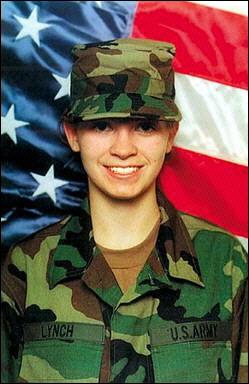
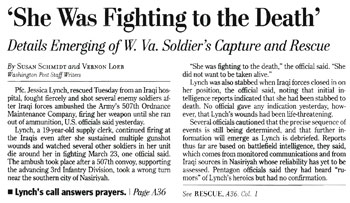
Lynch_headline_PostThe first major battle of the Iraq War, the ambush 10 years ago today of an U.S. support unit, gave rise to one the most woeful moments in recent war correspondence — the Washington Post’s thoroughly inaccurate front-page report about a 19-year-old U.S. Army private named Jessica Lynch.

The Post claimed that Lynch, a waif-like supply clerk who never expected to see combat, had fought fiercely in the ambush at Nasiriyah, firing at attacking Iraqis until her ammunition ran out.

It was an electrifying report, conjuring as it did cinematic images of an improbable female Rambo.

Private Lynch

Private Lynch

As it turned out, it was one of those remarkably rare news stories that’s spectacularly wrong but reverberates long after its initial publication.

The Post’s article had the effect of:

  • turning Lynch, through no exceptional effort of her own, into the best-known U.S. enlisted soldier of the Iraq War
  • obscuring the heroics of an Army cook-sergeant who was captured, then killed, by Iraqis
  • prompting the rise of media myths that continue to distort understanding about what happened at Nasiriyah.

Ten years on and the Post has never fully accounted for its botched reporting. It has never disclosed the identities of the anonymous sources who provided the salient details for a story so stunning that was picked up by news organizations around the world.

That story was published April 3, 2003, beneath the headline:

“‘She was fighting to the death.’”

The Post said Lynch was shot and stabbed “when Iraqi forces closed in on her position,” and based its account on otherwise anonymous “U.S. officials.”

The story was reported from Washington, D.C.: No journalists were with Lynch’s unit, the 507th Maintenance Company, when its convoy of trucks and support vehicles made a wrong turn and mistakenly entered Nasiriyah on March 23, 2003.

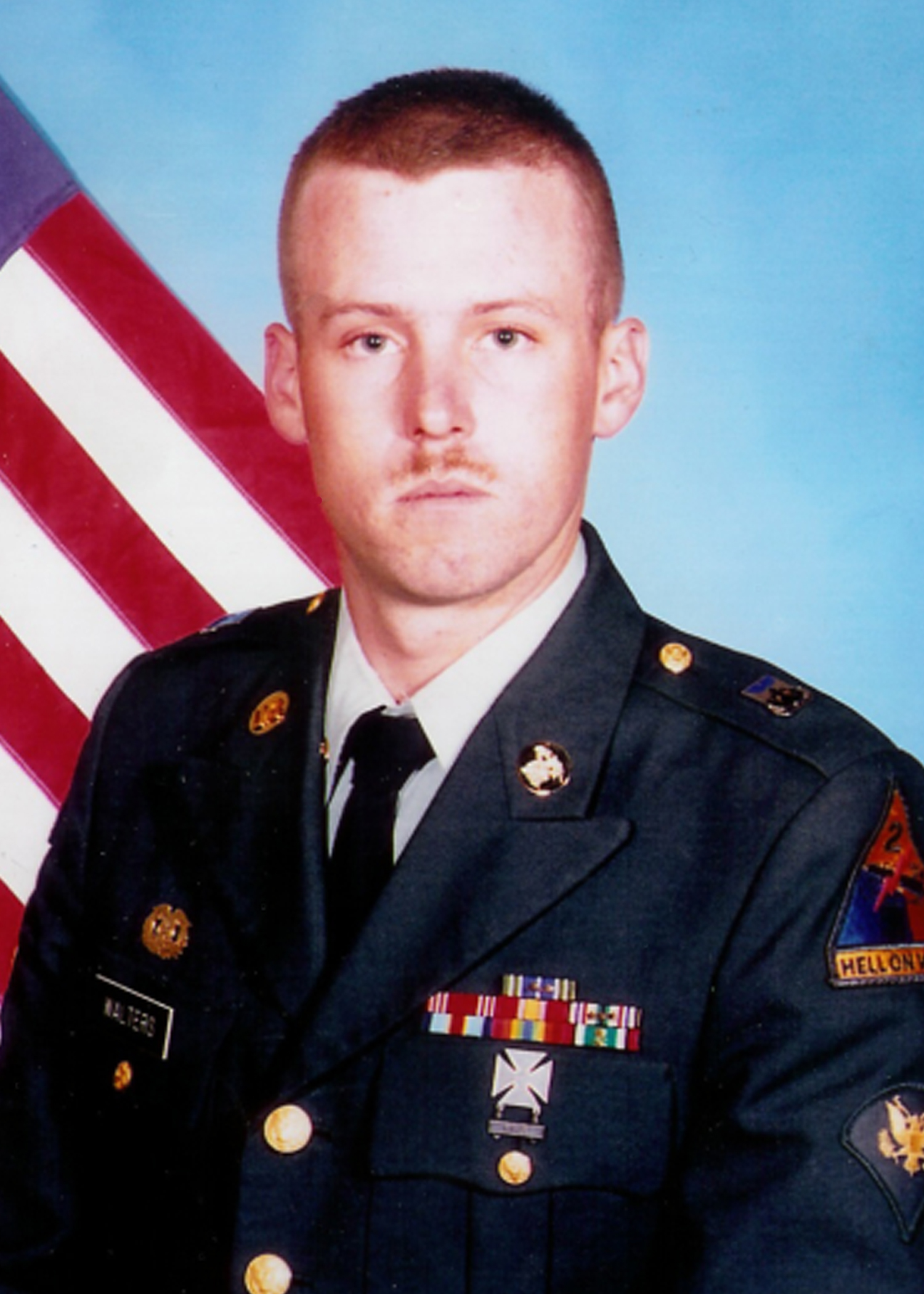
The convoy fell under attack and 11 U.S. soldiers were killed in the fighting. Among them was Sgt. Donald Walters, who had put down covering fire as his comrades tried to flee the ambush.

Walters was taken prisoner and soon after was executed by his Iraqi captors. So far as is known, his killers have never been captured.

It emerged months later that Walters most likely performed the battlefield heroics misattributed to Lynch, who never embraced the Post’s account.

The mistaken identity stemmed apparently from mistranslation of Iraqi battlefield transmissions.

The Post, though, never showed any interest in that aspect of the story — or in Walters’ bravery.

Sgt. Donald Walters

Sgt. Donald Walters

His name has appeared in only four news reports published by the Post, the most recent of which was an Associated Press dispatch in May 2004 which said “details of [Walters’] actions remarkably resemble a story circulated in The Washington Post and other news media, based on anonymous sources, describing how Lynch had fought until her ammunition ran out.”

The reference to “other news media” was misleading, though. It was the Post, alone, that thrust the hero-warrior about Lynch’s battlefield heroics into worldwide circulation.

It was the Post that said Lynch “continued firing at the Iraqis even after she sustained multiple gunshot wounds and watched several other soldiers in her unit die around her” at Nasiriyah.

And none of it was true: Lynch was neither shot nor stabbed.

She never fired a shot in Iraq. Her weapon jammed during the fighting.

She tried to escape the attack in the back of a Humvee, her head lowered to her knees in prayer. The fleeing Humvee was struck by a rocket-propelled grenade, sending the vehicle hurtling into a disabled tractor-trailer.

Lynch suffered shattering injuries to her arms, legs, and back in the crash. Four fellow soldiers were killed.

The Post’s hero-warrior story about Lynch began unraveling in the spring of 2003. As it did, a toxic narrative arose that the Pentagon (or, more broadly, the “military“) had concocted the story and somehow fed it to the Post in a crude and cynical attempt to boost public support for the war.

The narrative is perversely appealing — and utterly false.

Mythical, even.

As I discuss in my latest book, Getting It Wrong, one of the authors of the Post’s botched hero-warrior story, Vernon Loeb, has stated unequivocally that the anonymous sources were not Pentagon officials.

In an interview on NPR in December 2003, Loeb said:

“Our sources for that story were not Pentagon sources.”

Loeb said they were “some really good intelligence sources” in Washington, D.C. , and added:

“We wrote a story that turned out to be wrong because intelligence information we were given was wrong. That happens quite often.”

Loeb made clear he that “could never get anybody from the Pentagon to talk about” the Lynch case.

“They wouldn’t say anything about Jessica Lynch,” Loeb declared, adding:

“I just didn’t see the Pentagon trying to create a hero where there was none. I mean … they never showed any interest in doing that, to me.”

Loeb’s remarks have long been in the public domain. But they’ve been mostly ignored.

We know from Loeb who the Post’s sources weren’t.

On the 10th anniversary of the battle of Nasiriyah, it’s high time for the Post to say who they were, to set the record straight and clarify at long last how one of the most memorable yet twisted narratives of the Iraq War came to be.

WJC

More from Media Myth Alert:

William Randolph Hearst mostly elusive in new ‘Citizen Hearst’ documentary

In 1897, Anniversaries, Cinematic treatments, Error, Furnish the war, Reviews on March 15, 2013 at 10:26 am

Citizen Hearst was a mostly unsatisfactory biography published in 1961 about media baron William Randolph Hearst. It was more caricature than revealing portrait.

Citizen HearstThe title, Citizen Hearst, has been reprised for documentary that opened in several theaters this week. The documentary — commissioned by the media company that Hearst founded 126 years ago — is no revealing portrait, either.

Hearst was an innovative yet often-contradictory figure, and this complexity is largely elusive in Citizen Hearst, an 84-minute film that had its Washington, D.C., debut screening last night at the Newseum. The director, Leslie Iwerks, introduced the film by saying it told “the wonderful Hearst story.”

The opening third of Citizen Hearst delivers a fast-paced if mostly shallow look at Hearst’s long career in journalism. After that, the film turns mostly gushy about the diversified media company that is Hearst Corp.

To its credit, Citizen Hearst steers largely clear of the myths that distort understanding of Hearst and his early, most innovative years in journalism.

His affable grandson, Will Hearst, is shown in the film scoffing at what may be the best-known anecdote in American journalism — that William Randolph Hearst vowed in a telegram to the artist Frederic Remington to “furnish the war” with Spain.

The anecdote is undocumented and utterly dubious, but it was presented at face value in the biography Citizen Hearst. It is an irresistible tale often invoked in support of a broader and nastier media myth, that Hearst and his newspapers fomented the Spanish-American War in 1898.

Citizen Hearst the documentary doesn’t embrace the warmongering myth (although former CBS News anchor Dan Rather is shown saying he was taught in school that Hearst practically brought on the Spanish-American War).

The documentary, however, fails to consider the innovative character of Hearst’s newspapers of the late 19th century.

It notably avoids discussing Hearst’s eye-opening brand of participatory journalism — the “journalism of action” — which maintained that newspapers were obliged take a prominent and participatory roles in civic life, to swing into action when no other agency or entity was willing or able.

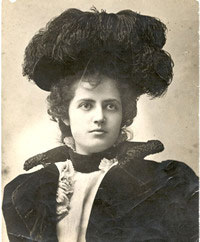
This ethos was a motivating force for one of the most exceptional and dramatic episodes in American journalism — the jailbreak and escape of Evangelina Cisneros, a 19-year-old political prisoner held without charge in Spanish-ruled Cuba.

Cisneros

Evangelina Cisneros

A reporter for Hearst’s New York Journal, supported by clandestine operatives in Havana and U.S. diplomatic personnel in Cuba, broke Cisneros from jail in early October 1897.

She was hidden for nearly three days at the home of an American-educated Cuban banker (whom she married several months later). Then, dressed as a boy, Cisneros was smuggled aboard a passenger steamer bound for New York City, where Hearst organized a thunderous welcome for her.

The Cisneros jailbreak was stunning manifestation of Hearst’s “journalism of action” and it offers rich material for a documentary. It was, as I wrote in my 2006 book, The Year That Defined American Journalism: 1897 and the Clash of Paradigms, the “greatest escape narrative” in U.S. media history.

It receives not a mention in Citizen Hearst.

The documentary presents only superficial consideration of Hearst’s mostly unfulfilled political ambitions — and avoids mentioning how he turned his newspapers into platforms to support those ambitions.

Hearst wanted to be president, and was a serious contender for the Democratic party’s nomination in 1904. He lost out to Alton Parker, a New York judge, who in turn was badly defeated by Republican Theodore Roosevelt.

Citizen Hearst presents the observations of no serious Hearst biographer: No David Nasaw, author of The Chief, an admirably even-handed biography published in 2000; no Kenneth Whyte, author of The Uncrowned King, an outstanding work published in 2009 about Hearst’s s early career.

Instead, Dan Rather is shown speaking vaguely about Hearst’s journalism (“he played big”). Movie critic Leonard Maltin makes several appearances, discussing such topics as headline size in Hearst’s fin de siècle newspapers.

The documentary treats Helen Gurley Brown, she of Cosmopolitan fame, much like a rock star. And Hearst company officials are quoted often and sometimes at length.

HuffingtonPost was quite right in noting in a review posted Wednesday that the film turns into “something you’d expect to see playing on a loop on the lobby TV screen at Hearst’s headquarters”  in New York.

It leaves you wondering how many people would pay to see it. Or why.

WJC

More from Media Myth Alert:

If Obama loses AP: Rush Limbaugh embraces media myths two days running

In Anniversaries, Cronkite Moment, Debunking, Error, Media myths, Media myths and radio, Washington Post, Watergate myth on February 26, 2013 at 6:53 pm

Rush Limbaugh attracts the largest talk-show audiences on radio. Which is why it’s troubling when he indulges in media myths, as he’s done the past two days.

THUMB_RushLimbaugh

Limbaugh

Program transcripts show that Limbaugh made clear if passing references to the “Cronkite Moment,” the 45th anniversary of which falls tomorrow, and to the hero-journalist myth that the Washington Post’s reporting of the Watergate scandal brought down Richard Nixon’s presidency.

Limbaugh on today’s program called attention to an Associated Press report that skeptically considered President Barack Obama’s claims of great disruption should federal government spending cuts, collectively known as the sequester, take effect beginning Friday.

Limbaugh, according to the program transcript, declared that “if Obama is losing AP on this, it’d be like Lyndon Johnson losing Cronkite on the war in Vietnam.”

The reference was to President Lyndon Johnson’s purported reaction to Walter Cronkite’s on-air assessment, delivered February 27, 1968, that the U.S. military was “mired in stalemate” in Vietnam.

Cronkite

Cronkite

Upon hearing Cronkite’s comment, Johnson supposedly understood that his war policy was in tatters and declared: “If I’ve lost Cronkite, I’ve lost Middle America.”

Or something to that effect. Versions of what the president supposedly said vary markedly.

But as I discuss in my media-mythbusting book, Getting It Wrong, Johnson didn’t see Cronkite’s program when it aired.

Johnson at the time was in Austin, Texas, attending the 51st birthday party of a long-time political ally, Governor John Connally. And at the time Cronkite intoned his “mired in stalemate” assessment, the president was making light-hearted remarks about Connally’s age.

“Today you are 51, John,” he said. “That is the magic number that every man of politics prays for—a simple majority.”

So it’s hard to believe that the president could have been much moved by a program he did not see.

The importance of the debunking the “Cronkite Moment” goes beyond whether Johnson saw the program; far more significant is the anecdote’s deceptive message that a prominent journalist can profoundly alter policy.

Altering war policy certainly wasn’t the effect of Cronkite’s program 45 years ago. Even Cronkite likened the program’s influence to that of a straw placed on the back of a crippled camel.

Johnson did announce at the end of March 1968 that he was not seeking reelection to the presidency. But that decision had far more to do with his health and the prospect that Democrats would not renominate him than with Cronkite’s fairly tame and unoriginal commentary about Vietnam.

Limbaugh invoked Watergate’s hero-journalist trope in discussing the sequester during his program yesterday, stating flatly:

“Woodward brought down Nixon.”

He was referring to the supposed effects of the Watergate reporting of Bob Woodward of the Washington Post.

But that’s a myth not even Woodward embraces.

Woodward: 'Horseshit'

Woodward

In 2004, for example, Woodward told American Journalism Review, “To say the press brought down Nixon, that’s horse shit.”

And on another occasion, in an interview with the PBS “Frontline” program, Woodward said “the mythologizing of our role in Watergate has gone to the point of absurdity, where journalists write … that I, single-handedly, brought down Richard Nixon. Totally absurd.”

Other principals at the Post have over the years similarly dismissed such outsize claims.

If not Woodward and his reporting sidekick Carl Bernstein, then who, or what, brought down Richard Nixon?

The best answer is that unraveling a scandal of the reach and complexity of Watergate “required the collective if not always the coordinated forces of special prosecutors, federal judges, both houses of Congress, the Supreme Court, as well as the Justice Department and the FBI,” as I write in Getting It Wrong.

“Even then,” I add, “Nixon likely would have served out his term if not for the audiotape recordings he secretly made of most conversations in the Oval Office of the White House. Only when compelled by the Supreme Court did Nixon surrender those recordings” in 1974, making inevitable an early end to his presidency.

In the end, the reporting of Woodward and Bernstein was of faint consequence to Watergate’s dramatic outcome.

It merits mentioning that there’s no small irony in Limbaugh’s giving voice to these media myths.

He is, after all, a prominent conservative commentator and the “Cronkite Moment” and the Watergate myth center around journalists and news organizations commonly associated with liberal views.

WJC

More from Media Myth Alert:

Taking stock: Top mythbusting posts of 2012

In Anniversaries, Cronkite Moment, Debunking, Error, Jessica Lynch, Media myths, New York Times, New Yorker, Photographs, Television, Washington Post on December 30, 2012 at 6:25 am

Media Myth Alert reported in 2012 on the appearance of many prominent media-driven myths and errors. Here are the year’s five top writeups, followed by a roster of other mythbusting posts of note.

Calling out the New York Times on ‘napalm girl’ photo error (posted June 3): The 40th anniversary of the famous “napalm girl” photograph — one of the most memorable images of the Vietnam War — fell in early June.

NapalmGirl photo_AP

Nick Ut/Associated Press

In an obituary a few weeks before, the New York Times had referred to the photograph of terror-stricken Vietnamese children and claimed, erroneously, that it showed “the aftermath of one of the thousands of bombings in the countryside by American planes.”

That passage suggested U.S. forces were responsible for the aerial napalm attack that gave rise to the photograph, taken by Nick Ut of the Associated Press. I pointed this out in an email to the Times, noting that the bombing was a misdirected attack by the South Vietnamese Air Force, as news reports at the time had made clear.

The newspaper’s assistant obituary editor, Peter Keepnews, replied, and offered some baffling logic in doing so:

“You are correct that the bombing in question was conducted by the South Vietnamese Air Force. However, the obituary referred only to ‘American planes,’ and there does not seem to be any doubt that this plane was American –- a Douglas A-1 Skyraider, to be precise.”

As if the aircraft’s manufacturer was at all relevant in the attack.

Independent of my efforts, two former Associated Press journalists also called on the Times to correct its error about “American planes.”

The Times resisted doing so until late August, when it issued a sort-of correction that embraced Keepnews’ tortured reasoning and stated:

“While the planes that carried out that attack were ‘American planes’ in the sense that they were made in the United States, they were flown by the South Vietnamese Air Force, not by American forces.”

It was, I noted, a begrudging and less-than-forthright acknowledgement of error. It hardly was in keeping with the declaration by the newspaper’s then-executive editor, Bill Keller. He asserted in a column in 2011 that “when we get it wrong, we correct ourselves as quickly and forthrightly as possible.”

hagiographic treatment of the “Cronkite Moment” (posted May 31): Few media-driven myths are as tenacious and desperately held as the so-called “Cronkite Moment” of 1968, when CBS News anchorman Walter Cronkite declared on air that the U.S. military was “mired in stalemate” in Vietnam.

Cronkite in Vietnam, 1968

Cronkite in Vietnam, 1968

For years, journalists have sought to attach great significance to Cronkite’s assessment, even though it was thoroughly unoriginal and was, as I discuss in my latest book, Getting It Wrong, of little demonstrable impact. Even Cronkite, until late in his life, pooh-poohed its importance.

But all that scarcely deterred Douglas Brinkley from presenting in a hefty biography about Cronkite a decidedly hagiographic — and misleading — interpretation of the “Cronkite Moment.”

Brinkley offered little persuasive evidence in asserting that the “aftershock” of Cronkite’s report about Vietnam, which aired February 27, 1968, “was seismic” and “signaled a major shift in the public’s view of the war.”

In discussing the supposed “seismic” effects of Cronkite’s assessment, Brinkley wrote:

“Even the conservative Wall Street Journal editorial page said, ‘The whole Vietnam effort may be doomed.’”

But the Journal editorial that  said so was published four days before Cronkite’s broadcast. To cite the editorial as evidence of a “seismic” effect of the “Cronkite Moment” was certainly misleading.

What’s more, Cronkite’s characterization of stalemate in Vietnam hardly “signaled a major shift in the public’s view of the war.”  Public opinion polls indicated that the shift had begun several months earlier.

If anything, Cronkite followed rather than led public opinion on Vietnam.

Uneven availability of WaPo’s online content about Jessica Lynch (posted April 27): On April 4, 2003, the Washington Post published a front-page report about an Iraqi lawyer who helped set in motion the rescue from captivity of Jessica Lynch, a wounded, 19-year-old Army private.

That report ran to 1,500 words and is freely available at the Post’s online site.

The day before that article appeared, the Post published an electrifying but far more problematic story about Jessica Lynch — an account that claimed she had fought fiercely against Iraqi attackers and had suffered gunshot and stab wounds before running out of ammunition and being taken prisoner.

Lynch_headline_Post

That article was published on the Post’s front page beneath the headline:

“‘She was fighting to the death.'”

It was a stunning report that proved wrong in all important details: Lynch was neither shot nor stabbed; she did not fire a shot in the attack in Iraq. She was badly injured in the crash of her Humvee in attempting to flee.

But try finding the “fighting to the death” story at the Post’s online site.

Unlike the far less embarrassing report of April 4, 2003, the “fighting to the death” story is not freely available online. Clicking on the story’s URL opens what essentially is an empty link.

Also unavailable online are the scathing reviews of the hero-warrior tale published by the newspaper’s then-ombudsman in April and June 2003.

Such inconsistencies suggest a digital scrubbing of embarrassing content. I asked the newspaper’s incumbent ombudsman, Patrick Pexton, about this matter.

He took several weeks to reply, finally stating in an email in August that he had found “nothing nefarious about this.” He added that the Post since 2003 “has gone through several changes of content management systems,” by which articles are posted online.

He further noted that the “fighting to the death” story about Lynch and related content are available in the Post’s fee-based archive.

So why not make the “fighting to the death” story freely available? Why not remove the fee to access a singularly memorable article about the Iraq War, a mistaken report that made Jessica Lynch something of a celebrity and gave rise to misguided suspicions that the U.S. military concocted the hero-warrior tale and somehow fed it to the Post?

“Restoring the digital version of the article of April 3, 2003, would represent a contribution to the record about the case of Jessica Lynch, which the Post is solely responsible for having placed in the public domain,” I wrote in an email to Pexton in mid-August.

He has not replied.

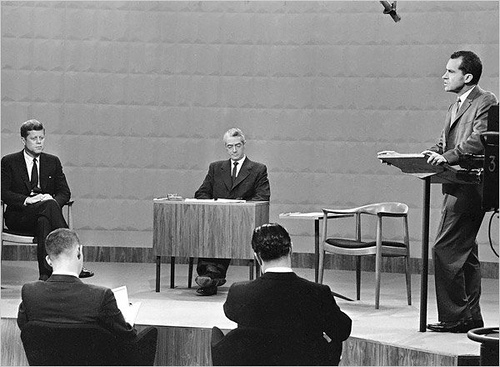
Kennedy-Nixon debate myth lives on (posted September 30): The run-up to the televised presidential campaign debates in October prompted numerous references to the purported lesson of the first such encounter, between John F. Kennedy and Richard M. Nixon in late September 1960.

That lesson is about the presumptive power of the televised image: Supposedly, television viewers thought Kennedy won the first debate in 1960 while radio listeners felt Nixon got the better of it.

This notion of viewer-listener disagreement has become an enduring media myth, even though it was thoroughly dismantled 25 years ago by scholars David L. Vancil and Sue D. Pendell.

Dismantling, though, hasn’t destroyed the myth. The notion of viewer-listener disagreement remains hardy and irresistible.

For example, in the runup to the debates in October between President Barack Obama and his Republican challenger, Mitt Romney, the founder of USA Today, Al Neuharth, wrote a column that recalled the first Kennedy-Nixon debate.

“Listeners,” Neuharth said, “generally gave Nixon the nod. But TV viewers strongly favored Kennedy.”

And the Chicago Tribune declared that “not everyone thought Kennedy had won the debate. Pollsters found that those who heard the radio broadcast thought Nixon won. … Television viewers experienced a different debate from radio listeners.”

Only one polling organization, Sindlinger & Company, had conducted a survey of any size that included a sub-sample of radio listeners. The Sindlinger survey, taken the day after the first Kennedy-Nixon debate, indicated that radio listeners felt Nixon prevailed, by a margin of 2-to-1.

But Vancil and Pendell, in their article in Central States Speech Journal in 1987, noted that the Sindlinger survey included more than 2,100 respondents, of whom just 282 had listened to the debate on radio.

They noted that “a subordinate group of 282 interviews is below the threshold normally required for a national sample.” Not only that, but only 178 of the 282 respondents “expressed an opinion on the debate winner,” Vancil and Pendell wrote.

Given the shortcomings of the unrepresentative Sindlinger sample, Nixon’s supposedly decisive margin among radio listeners dissolves as meaningless — and renders viewer-listener disagreement a media myth.

George Romney’s “brainwashing” — and Gene McCarthy’s retort (posted September 4): Mitt Romney’s ill-fated run for the presidency prompted reminders of his father’s failed presidential campaign in 1968 — a campaign done in by a memorably clumsy gaffe.

The gaffe, in turn, is said to have inspired one of the most devastating putdowns in American political history. But as my research has found, the context of the supposed putdown is unclear at best.

The gaffe was committed in late August 1967 by George Romney, then governor of Michigan and a presumptive leading candidate for the Republican presidential nomination in 1968.

In an interview with a Detroit television reporter, Romney referred to his visit to South Vietnam in 1965 and said:

“You know, when I came back from Vietnam, I’d just had the greatest brainwashing that anybody could get. … Well, not only by the generals but by the diplomatic corps over there. They do a very thorough job.”

Romney’s claim that he had been duped into supporting America’s war effort in Vietnam suggested muddled thinking, gullibility, and an uncertain command of foreign policy. His abbreviated presidential campaign never recovered from the self-inflicted wound; he ended his  run for the presidency at the end of February 1968.

Sealing the gaffe’s unforgettable quality was the supposed witty putdown by Democratic Senator Eugene McCarthy. Rather than a “brainwashing,” McCarthy supposedly said, a “light rinse” would have sufficed for Romney.

So telling was McCarthy’s “light rinse” quip that it “essentially finished Romney.”

But when, or even whether, McCarthy made the “light rinse” comment is unclear.

A database search of leading U.S. newspapers — including the New York Times, the Washington PostChicago Tribune, Los Angeles Times, and Baltimore Sun — turned up no published reference to the “light rinse” quip in 1967 or 1968. Or for years afterward.

The first reference was in 1983, a column in the Baltimore Sun that did not say when, where, or to whom McCarthy uttered the remark.

It seems improbable that journalists in 1967 or 1968 would have failed to report a retort as delicious as McCarthy’s.

But that’s what An American Melodrama: The Presidential Campaign of 1968, a hefty book published in 1969 would have us believe.

American Melodrama described McCarthy’s remark as off-handed and said the senator’s aides persuaded reporters to hush it up.

While intriguing, American Melodrama doesn’t say when McCarthy made the comment, where, or specifically to whom.

WJC

Many thanks to Instapundit
Glenn Reynolds for linking to this post

Other memorable posts of 2012:
Social-media triumphalism and its myth-busting limits

In Anniversaries, Debunking, Error, Media myths, Media myths and radio, War of the Worlds on October 31, 2012 at 3:50 pm

Social media’s capacity to demolish media myths soon after they emerge was impressively on display this week as megastorm Sandy swept ashore in New Jersey and disrupted life throughout the Northeast and Mid-Atlantic.

Got it notably wrong

Erroneous reports were many as the storm reached the East Coast on Monday. As the Guardian of London noted today, “the spread of such misinformation was abetted by journalists, who were once taught the importance of verifying every source.”

Notably wrong was the report on CNN’s “Piers Morgan Tonight” news program Monday that Sandy had breached the heart of American capitalism and covered the floor of the New York Stock Exchange in Manhattan with three feet of water.

But that account and a similar report on the hype-prone Weather Channel were promptly disputed, and soon repudiated, in a barrage of posts on Twitter.

In demolishing the bogus reports, Twitter demonstrated a capacity for “savage self-correction,” as John Herrman declared in a post yesterday at the BuzzFeed online site.

Herrman wrote:

“In response to thousands of retweets of erroneous Weather Channel and CNN reports that the New York Stock Exchange had been flooded with ‘three feet’ of water, Twitter users, some reporters and many not, were relentless: photos of the outside of the building, flood-free, were posted. Knowledgeable parties weighed in.”

And the misreporting soon was corrected.

Herrman hailed Twitter as “a fact-processing machine on a grand scale, propagating then destroying rumors at a neck-snapping pace. To dwell on the obnoxiousness of the noise is to miss the result: that we end up with more facts, sooner, with less ambiguity.”

His point is well-taken. On more than a few occasions, Twitter has demonstrated a striking capacity to debunk embryonic media myths — including those myths it helped set loose.

The bogus quotation attributed to the Rev. Dr. Martin Luther King after the slaying last year of terrorist leader Osama bin Laden comes to mind. The made-up passage — “I will mourn the loss of thousands of precious lives, but I will not rejoice in the death of one, not even an enemy” — circulated widely on Facebook and Twitter before their corrective forces effectively demolished it.

But limits to social-media triumphalism must be noted.  The corrective power of platforms such as Twitter reaches only so far.

Once established, media myths are exceedingly difficult to uproot. These myths have amply demonstrated that they can withstand the power of social media.

Welles and ‘War of the Worlds’

Take, for example, Halloween’s most famous media myth — the notion that Orson Welles’ War of the Worlds radio dramatization in 1938 touched off nationwide panic and mass hysteria. It’s a hoary media myth that’s just too embedded — and too delicious — to be destroyed.

No amount of Tweeting is likely to dismantle this myth, one of 10 that I debunk in my latest book, Getting It Wrong. It’s too engrained in popular culture — and in the news media — to go the way of CNN’s botched report about the flooded stock exchange floor.

The 74th anniversary of the original broadcast of The War of the Worlds was yesterday and Twitter percolated with reminders about the program and references to the panic it supposedly created. Tweets challenging the narrative of panic and hysteria were in a distinct minority.

Linked to more than a few Tweets yesterday was a tip sheet describing seven lessons that The War of the Worlds dramatization holds for social media.

The tip sheet seems more than a little convoluted, though. Among its observations was this:

“If you are lucky, the publicity often exceeds the actual event  …. The panic [of The War of the Worlds program] has become legendary, even though there is quite a bit of evidence to suggest it wasn’t nearly as widespread as reported at the time. But, it put the program on the map, and launched a relatively unknown 23-year old name[d] Orson Welles into the public eye.”

Even that’s not quite true. Although he was 23 at the time of the broadcast, Welles’ had already made the cover of Time magazine.

WJC

Recent and related:

In run-up to Obama-Romney encounter, myth of first presidential debate circulates anew

In Anniversaries, Debunking, Error, Media myths, Television on September 30, 2012 at 5:20 am

The runup to this week’s televised debate between President Barack Obama and Republican challenger Mitt Romney has, inevitably, spurred the renewed circulation of a hoary media myth centered around the first such presidential debate, in September 1960.

That encounter, between John F. Kennedy and Vice President Richard M. Nixon, gave rise to the media myth of viewer-listener disagreement: Those who watched the debate on television supposedly thought Kennedy got the best of it; those who listened on radio thought Nixon was the winner.

The myth of viewer-listener disagreement was demolished long ago, in a journal article by scholars David L. Vancil and Sue D. Pendell.

But demolition hasn’t killed the myth.

Indeed, the notion that viewers and listeners came away with markedly different impressions of the debate’s outcome is just too delicious, and too appealing, for journalists to sidestep. After all, viewer-listener disagreement suggests the primacy of television and the triumph of image over substance.

And that’s just what the Chicago Tribune suggests, in an article today recalling the first Kennedy-Nixon debate, which took place September 26, 1960.

The Tribune account says Kennedy won an “unexpected and devastating victory” in that encounter — the first of four debates during that campaign.

“Yet,” the Tribune declares, “not everyone thought Kennedy had won the debate. Pollsters found that those who heard the radio broadcast thought Nixon won. The very first televised debate wasted no time in demonstrating that the ‘medium is the message,’ a maxim coined by communications guru Marshall McLuhan a few years later and leveraged by campaign managers ever since. Television viewers experienced a different debate from radio listeners.”

Who the “pollsters” were, the Tribune doesn’t say.

Only one polling organization, Sindlinger & Company, conducted a survey of any size that included a sub-sample of radio listeners.

The Sindlinger survey, taken the day after the Kennedy-Nixon debate, indicated that radio listeners thought Nixon had prevailed, by a margin of 2-to-1.

But in their article published in Central States Speech Journal in 1987, Vancil and Pendell pointed out that the Sindlinger survey included more than 2,100 respondents — of whom only 282 had listened to the debate on radio.

They noted that “a subordinate group of 282 interviews is below the threshold normally required for a national sample.” Not only that, but just 178 of the 282 respondents “expressed an opinion on the debate winner,” Vancil and Pendell wrote.

Moreover, they said, the Sindlinger sample did not specify where the radio listeners lived, adding:

“A location bias in the radio sample … could have [had] dramatic effects on the selection of a debate winner.  A rural bias, quite possible because of the relatively limited access of rural areas to television in 1960, would have favored Nixon.”

Given the defects of the unrepresentative Sindlinger sample, Nixon’s reported 2-to-1 margin over Kennedy among radio listeners dissolves as meaningless.

And was the first debate really such a “devastating victory” for Kennedy?

You wouldn’t know it from reading the Tribune’s day-after coverage.

“It was a battle, not of minds, but of personalities,” the newspaper reported in its main story about the Kennedy-Nixon encounter. The candidates, the newspaper said, “were almost subdued in demeanor.”

The Tribune further noted that the debate produced “no flashes of wit, no memorable phrases, no give-and-take with a personal flavor.”

It was, the Tribune, said, “a political television show familiar to many viewers ….”

WJC

Recent or related:

USA Today invokes Kennedy-Nixon debate myth

In Anniversaries, Debunking, Error, Media myths on September 21, 2012 at 9:17 am

I noted yesterday how the myth of viewer-listener disagreement — that television viewers and radio listeners had clashing interpretations of the outcome of the Kennedy-Nixon debate in September 1960 — tends to surface at the approach of anniversaries of the historic encounter.

And so it does.

In his latest column, Al Neuharth, the founder of USA Today, unreservedly embraces the myth.

He writes that John F. Kennedy “looked relaxed and at ease” during the debate while Richard M. Nixon did not. “The hot TV lights appeared to give him a heavy beard,” Neuharth adds, “even though he had closely shaved before the TV appearance.”

Neuharth further asserts:

“The debate was also broadcast by radio. Listeners generally gave Nixon the nod. But TV viewers strongly favored Kennedy.”

That’s an enticing interpretation, suggesting the decisiveness of televised images in political communication.

But there’s little support for the notion of listener-viewer disagreement.

That notion, in fact, was exploded 25 years ago in an impressive dismantling published by scholars David L. Vancil and Sue D. Pendell.

Writing in Central States Speech Journal, Vancil and Pendell reviewed and dissected the few surveys that hinted at a viewer-listener disconnect in the Kennedy-Nixon debate, the first of four during that campaign.

Vancil and Pendel described how survey samples were too small to be representative — too small to allow confident or sweeping judgments about sharp disagreements among television and radio audiences.

Central to the claim that radio audiences believed Nixon won the debate was a survey conducted by Sindlinger & Company. The survey indicated that radio listeners, by a margin of 2-to-1, thought Nixon had prevailed in the debate, which took place September 26, 1960.

Vancil and Pendell pointed out that the Sindlinger survey, conducted the day after the debate, included more than 2,100 respondents — of whom only 282 had listened on radio.

Of that number, 178 (or fewer than four people per state) “expressed an opinion on the debate winner,” they wrote.

Vancil and Pendell also challenged the claim that Nixon’s appearance was decisive to the debate’s outcome.

They wrote in their article in Central States Speech Journal:

“Media experts, campaign professionals, and the viewing public almost unanimously agree that Nixon had a number of appearance problems in the first debate. His grey suit, perspiring brow, loose fitting shirt, and general sense of discomfort seemed to provoke sympathetic responses from even the most enthusiastic Kennedy supporters.

“However,” they added, “the inference that appearance problems caused Nixon’s loss, or Kennedy’s victory [in the debate], is classic post hoc fallacy.”

They noted that appearance problems such as Nixon’s sweaty brow, “could have had a negative impact on viewer perceptions, but it is also possible for viewers to be sympathetic to such problems ….

“Even if viewers disliked Nixon’s appearance,” they further wrote, “the relative importance of this factor in viewers’ selection of a debate winner is a matter of conjecture.”

Vancil and Pendell identified six factors or criteria which, they said, audiences were apt to rely on in determining the winner of a presidential debate. Those factors were:

Pre-debate preferences; views on issues; candidate advocacy skills; candidate personality (“including image”); blunders, and media labeling.

“Some viewers” in the Kennedy-Nixon debate, they wrote, “may have ignored appearance in favor of an evaluation of advocacy skills.”

That appears to have been the case, at least with the Washington Post, which declared in a post-debate editorial:

“Of the two performances Mr. Nixon’s probably was the smoother.

“He is an accomplished debater with a professional polish, and he managed to convey a slightly patronizing air of a master instructing a pupil.”

Nixon’s advocacy skills, at least for the Post, trumped the ashen, uncomfortable appearance he cut during the debate.

The Vancil-Pendell debunking is thorough and impressive. And it’s a bit surprising that their article is so infrequently recalled these days.

But, then, perhaps it’s not so surprising at all. Not given the appeal of media-driven myths, those prominent tales about and/or by the news media that are widely believed and often retold but which, under scrutiny, dissolve as apocryphal or wildly exaggerated.

Media myths, I wrote in my 2010 book, Getting It Wrong, often seem “almost too good to be false.”

Typically, I noted, media myths “tend to minimize or negate complexity in historical events and offer simplistic and misleading interpretations instead.” Such as the notion that viewer-listener disagreement was prominent in the first-ever televised presidential debate.

WJC

Recent or related:

Some dubious election history from Al Jazeera English

In Anniversaries, Debunking, Error, Media myths, Television on September 20, 2012 at 12:12 pm

First televised presidential debate

The first televised presidential debate in 1960 gave rise to an enduring media myth — the notion that television viewers and radio listeners interpreted the encounter quite differently.

The myth of viewer-listener disagreement lives on despite its thorough dismantling 25 years ago, in an article in Central States Speech Journal by scholars David L. Vancil and Sue D. Pendell.

Vancil and Pendell noted that reports of viewer-listener disagreement in the first of four debates between John F. Kennedy and Richard M. Nixon in 1960 typically were impressionistic and anecdotal.

Moreover, they wrote, the few surveys that hinted at a viewer-listener disconnect were too small and unrepresentative to allow confident or sweeping judgments.

Vancil and Pendell also challenged the notion that Nixon’s haggard appearance and sweaty brow contributed powerfully to television viewers’ perceptions about the debate, which took place September 26, 1960.

“Appearance problems, such as Nixon’s perspiring brow, could have had a negative impact on viewer perceptions,” Vancil and Pendell wrote, “but it is also possible for viewers to be sympathetic to such problems, or to interpret them as evidence of attractive or desirable qualities.”

They also wrote that “the inference that appearance problems caused Nixon’s loss, or Kennedy’s victory [in the debate] is classic post hoc fallacy.”

Their debunking notwithstanding, the myth of viewer-listener disagreement tends to resurface at or near the anniversaries of the first Kennedy-Nixon debate.

Take, for example, a commentary posted today at the English-language online site of Al Jazeera, the Qatar-based Arabic television network.

The commentary describes the first Kennedy-Nixon debate as “a bellwether” and asserts that “listeners tuning in via radio considered the debate a draw or even a slight win for Nixon. But the 65 million who tuned in by TV saw something very different. Kennedy appeared vigorous yet relaxed, while Nixon looked pale and nervous. … Those viewing the debate on television judged Kennedy as the clear winner.”

But as Vancil and Pendell reported years ago, there is no persuasive, compelling evidence to support such claims.

Not only that, but contemporaneous evidence, including public opinion polls, offer scant support for the notion that television audiences “judged Kennedy as the clear winner.”

To be sure, not all observers saw it that way in late September 1960. In its post-debate editorial, the Washington Post declared, for example:

“Of the two performances Mr. Nixon’s probably was the smoother.

“He is an accomplished debater with a professional polish, and he managed to convey a slightly patronizing air of a master instructing a pupil.”

And the Los Angeles Times said in an editorial (beneath the headline “A slow fight to a draw”) that most television viewers of the debate probably “felt as we did: they were disappointed because (a) they could not pick a winner and (b) they could not find that any single issue had been sharpened up by the abrasives of debate.”

The nationally prominent columnist, James Reston, wrote in the New York Times after the debate:

“This TV program did not do any of the dramatic things predicted for it. It did not make or break either candidate. … Who took the first round is a matter of individual opinion. My own view is that Kennedy gained more than Nixon, but it was a fielder’s choice, settling nothing.”

A Gallup poll released in October 1960 reported that 43 percent of the debate’s viewers and listeners thought Kennedy “did the better job.” Twenty-three percent thought Nixon’s performance was better, and 29 percent said the candidates were about the same. Five percent offered no opinion.

But opinions about the debate did not translate into a decisive advantage for Kennedy. The same survey reported Kennedy was narrowly ahead in the race, by 49 percent to 46 percent, with 5 percent undecided.

That result represented a modest change from Gallup’s poll taken just before the debate, which reported Nixon leading narrowly, by 47 percent to 46 percent.

But Gallup described the post-debate shift as too slight to be meaningful.

“The prudent reader can see,” George Gallup, head of the polling organization, wrote in describing the results, “that polling accuracy has not reached the degree of accuracy required to say with certainty which candidate is ahead in a close race such as the present one.”

WJC

Recent or related:

Recalling George Romney’s ‘brainwashing’ — and Gene McCarthy’s ‘light rinse’ retort

In Anniversaries, Cronkite Moment, Debunking, Media myths, Newspapers, Quotes on September 4, 2012 at 3:38 pm

It’s been 45 years since George Romney committed one of the greatest gaffes in American political history — a misstep that supposedly inspired one of the most devastating putdowns in American political history.

Interestingly, though, crucial details about the devastating putdown remain rather murky.

Romney’s gaffe, which effectively destroyed his run for the presidency before it officially began, came in an interview taped on August 31, 1967, and aired September 4, 1967, on a Detroit television station.

In the interview, Romney, then governor of Michigan and a presumptive Republican candidate for president, referred to his visit to South Vietnam in 1965 and declared:

“You know, when I came back from Vietnam, I’d just had the greatest brainwashing that anybody could get. … Well, not only by the generals but by the diplomatic corps over there. They do a very thorough job.”

The assertion that he had been duped into supporting America’s war effort in Vietnam revealed Romney’s muddled thinking and an uncertain command of foreign policy. (“Could the country afford a President who was so easily deceived?” the New York Times wondered.)

Forty-five years on, Romney’s comment remains striking both for clumsiness and self-destructiveness. And it’s been recalled not infrequently in recent months as Romney’s son, Mitt, has campaigned for the presidency.

When it is recalled, the “brainwashing” gaffe often is coupled with the stiletto-like rejoinder attributed to Eugene McCarthy, then a second-term U.S. senator from Minnesota.

McCarthy supposedly said that rather than brainwashing, “a light rinse” would have sufficed in Romney’s case.

There is no question about Romney’s having made the “brainwashing” claim; this YouTube video cuts to the money quote:

The anecdote’s memorable quality lies not only in Romney’s befuddled claim but also in McCarthy’s “light rinse” quip. Indeed, McCarthy’s retort is said to have been so powerful that it “essentially finished Romney.”

But the precise context of McCarthy’s “light rinse” zinger is at best unclear. My research has turned up no unambiguous documentation about when McCarthy made the comment, where, and specifically to whom.

(And why does this matter? Getting it right matters a lot, especially about an insult so piercing and effective that it lives on like few others in American political lore.)

A database search of leading U.S. newspapers — including the New York Times, the Washington PostChicago Tribune, Los Angeles Times, and Baltimore Sun — turned up no published reference to McCarthy’s “light rinse” remark in 1967 or 1968, or for many years afterward.

The nearest contemporaneous hint to a “light rinse” came in a commentary published in mid-September 1967 in the Los Angeles Times, in which conservative columnist James J. Kilpatrick said of Romney:

“Brainwashed, was he? It couldn’t have been much of a laundry bill.”

Kilpatrick’s column did not mention McCarthy, who wasn’t prominently in the news in September 1967. McCarthy did not announce his candidacy for president until November that year.

The first reference found in the database search to the “light rinse” comment  was in a commentary written by Fred Barnes and published in Baltimore Sun in April 1983. Barnes’ commentary, however, did not say when, where, or to whom McCarthy uttered the “light rinse” line.

The “light rinse” anecdote notably has been afflicted with version variability — my term for the shifting of important details as a story is retold over the years. As I point out in my 2010 book,  Getting It Wrong, version variability can be a marker of a media-driven myth.

Here are a few examples of the shifting versions of the “light rinse” remark:

  • Maureen Dowd of the New York Times, writing in her column in January 2012, quoted McCarthy as having said: “All that was needed in the case of George Romney was a light rinse.”
  • Syndicated columnist Jules Witcover wrote in 2007 that McCarthy “quipped that he ‘would have thought a light rinse would have done it.'”
  • Mark Shields, writing in the Washington Post in 1988, quoted McCarthy’s one-liner this way: “I don’t know why Romney was brainwashed; in his case, a light rinse would have been sufficient.”

And as further evidence of version variability, the “light rinse” quip has even been attributed to Daniel Patrick Moynihan.

Such imprecision invites suspicion about the “light rinse” quip. (It also sounds almost too perfect to be true — not unlike, say, William Randolph Hearst’s purported vow to “furnish the war” with Spain or Lyndon B. Johnson’s supposed epiphany on the Vietnam War: “If I’ve lost Cronkite, I’ve lost Middle America.”)

Among the first accounts  — if not the first account — of McCarthy’s quip appeared in An American Melodrama: The Presidential Campaign of 1968, a hefty book published in 1969.

American Melodrama, which was written by Lewis Chester, Godfrey Hodgson, and Bruce Page, described McCarthy’s remark as off-handed and said his aides persuaded journalists to hush it up.

According to American Melodrama, McCarthy was asked “by reporters whether he thought Romney’s ‘brainwashed’ gaffe had dealt the death blow to his chances.”

McCarthy was quoted as saying in reply:

“Well . . . er no, not really. Anyway, I think in that case a light rinse would have been sufficient.”

The book further stated:

“McCarthy’s press aides, appalled at the possible effects of this remark on Republicans, who, bereft of a dove candidate in their own party, might write-in McCarthy’s name, pleaded with reporters not to use it. They dutifully complied; though few would have done the same for Romney.”

While intriguing, American Melodrama doesn’t say when McCarthy made the comment, where, or specifically to whom.

Although self-censorship could account for the absence of contemporaneous references to McCarthy’s quip in leading U.S. newspapers, it seems implausible that an insult so delicious and devastating would have remained hushed up, even by compliant reporters, for very long.

Another version was offered by British journalist David Frost in an interview the aired on C-SPAN in 2007. Frost recalled having heard McCarthy’s comment, and said it was made in New Hampshire not long after Romney’s “brainwashing” statement.

But Frost’s recollection is faulty in a crucial respect: He said in the interview that “within a week or so” after making the “brainwashing” comment, Romney “was out of the race.”

Not so. Romney’s ended his campaign for the presidency on February 28, 1968 — six months after uttering the “brainwashing” remark and 3½ months after officially entering the race.

During the week Romney dropped out, Frost said in the C-SPAN interview, “I was interviewing Eugene McCarthy in New Hampshire, and, as we came out, there were three or four people who … wanted a sound bite. And one of them said, ‘What do you think about George Romney being brainwashed?’

“And McCarthy said, ‘I would have thought a light rinse would have been sufficient.’ Killer line. Fantastic line, I thought.”

But left unclear in Frost’s version is why journalists would have been asking McCarthy in late February or early March 1968 about a claim that Romney had made months before. Why would it have been newsworthy then?

Puzzling.

Not only that, but Frost did not say whether, or when, he reported McCarthy’s “killer line.” Or whether McCarthy’s “press aides” pleaded with him not to use it.

WJC

Recent or related: