W. Joseph Campbell

Archive for the ‘Debunking’ Category

Invoking Murrow-McCarthy myth to assert the worthiness of TV

In Debunking, Media myths, Murrow-McCarthy myth on June 11, 2011 at 6:58 am

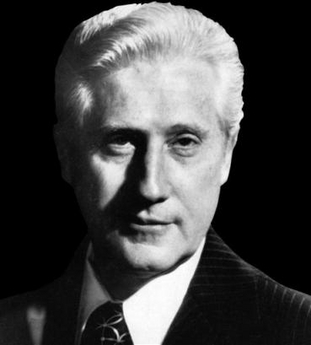
Murrow

Media-driven myths have a variety of perverse applications — including value in scoring points in arguments.

Today’s Sydney Morning Herald does just that in turning to a particularly hardy media myth — that of Edward R. Murrow’s supposedly decisive televised report in 1954 about Senator Joseph R. McCarthy.

In a commentary titled “In defense of the idiot box,” the Morning Herald argues for the worthiness of television, asserting that the medium “has the power to shock, appeal, nauseate and, if everything comes together, inspire.”

The commentary further states:

“TV has made a difference before. In the early days, Edward R. Murrow took on Joe McCarthy, starting a tradition of fearless TV journalism exposing the corruption of government, the horrors of war and the dark side of society. The medium may have numbed the odd brain but it’s also done a lot of good ….”

Mind-numbing television generally is.

More doubtful is the commentary’s extravagant claim about the fearlessness of Murrow. His report about McCarthy, which aired on the See It Now show of March 9, 1954, scarcely can be termed “fearless” and shouldn’t be seen as inaugurating any sort of “tradition” of searching, intrepid broadcast journalism.

That’s because Murrow was very late in taking on McCarthy and the senator’s heavy-handed campaign against communists in government.
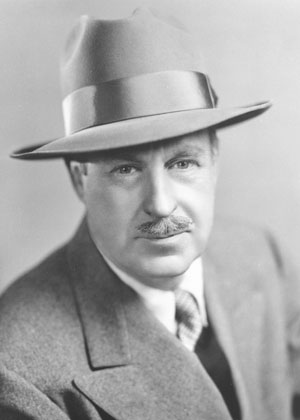
Pearson, muckraking columnist

As I discuss in Getting It Wrong, my media mythbusting book that came out last year, the evidence “is overwhelming that Murrow’s famous program on McCarthy had no … decisive effect, that Murrow in fact was very late in confronting McCarthy, that he did so only after other journalists had challenged the senator and his tactics for months, even years.”

Notable among those journalists was Drew Pearson, who wrote the syndicated and widely read muckraking column, “Washington Merry-Go-Round.” Pearson was quick to call attention to the recklessness of McCarthy’s claims.

He took on McCarthy in February 1950, soon after the senator first raised his claims about communists in high places in the U.S. government.

Pearson wrote that month that “the alleged communists which [McCarthy] claims are sheltered in the State Department just aren’t.”

Far from being fearless, Murrow, it can be argued, waited till the risks had subsided before taking on McCarthy. By March 1954, McCarthy’s capacity to stir dread was in decided retreat.

I note in Getting It Wrong that Eric Sevareid, Murrow’s friend and colleague at CBS News, was among those who chafed at the interpretation of fearlessness attached to the Murrow program which, he noted, “came very late in the day.”

Sevareid said in the 1970s:

“The youngsters read back and they think only one person in broadcasting and the press stood up to McCarthy and this has made a lot of people feel very upset, including me, because that program came awfully late.”

I further note in Getting It Wrong how the media myth about Murrow took hold despite the protestations of its central figures.

“In the days and weeks after the See It Now program,” I write, “Murrow said he recognized his accomplishments were modest, that at best he had reinforced what others had long said about McCarthy.

“Jay Nelson Tuck, the television critic for the New York Post, wrote that Murrow felt ‘almost a little shame faced at being saluted for his courage in the McCarthy matter. He said he had said nothing that … anyone might not have said without a raised eyebrow only a few years ago.'”

Murrow, moreover, told Newsweek magazine: “It’s a sad state of affairs when people think I was courageous” in confronting McCarthy.

Fred W. Friendly, Murrow’s collaborator and co-producer, likewise rejected claims that the See It Now program on McCarthy was pivotal or decisive. As Friendly wrote in his memoir:

“To say that the Murrow broadcast of March 9, 1954, was the decisive blow against Senator McCarthy’s power is as inaccurate as it is to say that Joseph R. McCarthy … single-handedly gave birth to McCarthyism.”

WJC

Recent and related:

No bra-burning at Atlantic City?

In Bra-burning, Debunking, Media myths on June 10, 2011 at 8:19 am

Bra-burning” was a late 20th century phenomenon that’s given rise to considerable and enduring misunderstanding.

Atlantic City, 1968

The notion that feminists in the late 1960s and 1970s frequently and demonstratively set fire to bras is erroneous — as is the view that bra-burning never happened, that it was all a nasty media myth.

In a brief item posted online today, the Irish Independent veers toward the latter interpretation. It cites the women’s liberation protest in September 1968 at Atlantic City, a demonstration against the Miss America Pageant that gave dimension to the epithet “bra-burning.”

The Independent says that “hundreds of women protested the Miss America Pageant by tossing tweezers, high heels and bras — symbols of objectification — into a bin.” It adds, parenthetically:

“Bra burning at this event, however, is a myth.”

Not exactly.

In Getting It Wrong, my media mythbusting book that came out last year, I offer evidence that bras were set afire, if briefly, during the demonstration at the Atlantic City — where about 100 women (certainly not “hundreds of women”) protested the pageant as a demeaning spectacle.

The evidence is in separate witness accounts by journalists, including an article report published in the Press of Atlantic City on September 8, 1968, the day after the protest.

The article appeared on page 4 of the Press, beneath the byline of John L. Boucher, a gruff, locally prominent journalist known to take pains not to embroider or exaggerate his reporting.

Boucher’s article carried the headline:

“Bra-burners blitz boardwalk.”

The article mentioned a burn barrel that demonstrators had dubbed the “Freedom Trash Can,” stating:

“As the bras, girdles, falsies, curlers, and copies of popular women’s magazines burned in the ‘Freedom Trash Can,’ the demonstration reached the pinnacle of ridicule when the participants paraded a small lamb wearing a gold banner worded ‘Miss America.’”

Boucher’s report was buttressed by the separate recollections of Jon Katz, a writer who in 1968 was a young reporter for the Atlantic City Press. Katz was assigned to women’s liberation protest to gather material for a sidebar article about the reactions of passersby.

In correspondence with me as I researched Getting It Wrong, Katz wrote:

“I quite clearly remember the ‘Freedom Trash Can,’ and also remember some protestors putting their bras into it along with other articles of clothing, and some Pageant brochures, and setting the can on fire.

“I am quite certain of this.”

As I point out in Getting It Wrong, these accounts at very least “offer fresh dimension to the bra-burning legend.

“They represent two witness accounts that bras and other items were burned, or at least smoldered, in the Freedom Trash Can.”

This evidence, I write, cannot be taken lightly, dismissed or ignored.

At the same time, I add, the accounts of Boucher and Katz “lend no support to the far more vivid and popular imagery that many bras went up in flames in flamboyant protest that September day.”

Even so, I note that “bra-burning” is an epithet not at all misapplied to the protest at Atlantic City. The evidence is that bras and other items were set afire, briefly, at that long ago demonstration.

WJC

Recent and related:

Bra-burning, a media myth ‘that will never die’?

In Bra-burning, Debunking, Media myths, Washington Post on June 8, 2011 at 1:23 pm

Bra-burning a myth? (Corbis)

A commentary in the Washington Post the other day referred to the famous protest at Atlantic City in 1968 at which women’s liberation demonstrators “tossed their bras and high heels into a trash can … kicking off the bra-burning myth that will never die.”

Well, it was more nuanced than that. Bra-burning, at least in a modest, smoldering kind of way, wasn’t such a myth at all.

I offer evidence in my latest book, Getting It Wrong, which debunks 10 prominent media-driven myths, that bras were  set afire, briefly, during the protest on the Atlantic City boardwalk on September 7, 1968. The 100 or so demonstrators there that day were protesting the Miss America pageant as a sexist and degrading spectacle.

I also note in Getting It Wrong that “the notion of flamboyant bra-burnings is fanciful and highly exaggerated.” The demonstrators at Atlantic City, I write, did not set fire to bras and twirl them above their heads in a way that coincides with the far more vivid and popular imagery of bra-burning.

But evidence that bra-burning — or bra-smoldering — did take place at Atlantic City comes from separate witness accounts, including a report published in the Press of Atlantic City on September 8, 1968.

That account appeared beneath the byline of a veteran reporter, John L. Boucher, and carried the headline:

“Bra-burners blitz boardwalk.”

The article referred to a burn barrel that the demonstrators dubbed the “Freedom Trash Can” and stated:

“As the bras, girdles, falsies, curlers, and copies of popular women’s magazines burned in the ‘Freedom Trash Can,’ the demonstration reached the pinnacle of ridicule when the participants paraded a small lamb wearing a gold banner worded ‘Miss America.’”

Boucher’s account was buttressed by recollections of the writer Jon Katz, who in 1968 was a young reporter for the Atlantic City Press. Katz was at protest that September day, gathering material for a sidebar article about reactions to the demonstration.

Katz’s sidebar focused on the befuddled reactions of passersby who saw the women’s liberation protest but did not mention fire in the “Freedom Trash Can.”

However, in correspondence with me, Katz stated:

“I quite clearly remember the ‘Freedom Trash Can,’ and also remember some protestors putting their bras into it along with other articles of clothing, and some Pageant brochures, and setting the can on fire.

“I am quite certain of this.”

Katz added:

“I recall and remember noting at the time that the fire was small, and quickly was extinguished, and didn’t pose a credible threat to the Boardwalk. I noted this as a reporter in case a fire did erupt …. It is my recollection that this burning was planned, and that a number of demonstrators brought bras and other articles of clothing to burn, including, I believe some underwear.”

Nearly 11 years after the protest at Atlantic City, a feminist group in Canada called Women Against Violence Against Women burned a bra during a protest near Toronto’s City Hall.

One of the demonstrators in Toronto recalled that the group was media-savvy and “knew that if they burned a bra, someone would take their picture.” (See photo, above.)

So bra-burning is no myth. It’s the mischaracterization that feminists never burned bras that more likely “will never die.”

WJC

Many thanks to Little Miss Attila for linking to this post.

Recent and related:

Why they get it wrong

In Bay of Pigs, Cronkite Moment, Debunking, Furnish the war, Jessica Lynch, Media myths, New York Times, Newspapers, Washington Post, Watergate myth on June 3, 2011 at 6:49 am

It’s striking how several well-known journalists and news outlets have indulged over last six months in media-driven myths, those dubious tales about the news media that masquerade as factual.

The lineup of myth-indulgers is impressive and, among others, includes:

  • Bill Keller, executive editor of the New York Times, who rubbed shoulders with the Bay of Pigs suppression myth in a column in the Times in January. The suppression myth holds that at the behest of President John F. Kennedy, the Times killed or emasculated its report about the pending Bay of Pigs invasion in 1961. That tale is unfounded, as I discuss in my latest book, Getting It Wrong.
  • Mother Jones magazine which, in its May/June cover story by Rick Perlstein, offered up a rare two-fer — two media myths discussed in a single article. One of the myths was the hoary and surely apocryphal tale about William Randolph Hearst and his reputed vow to “furnish the war” with Spain. The other was about the so-called the “Cronkite Moment” of 1968, in which Walter Cronkite’s on-air assessment that the U.S. military was “mired in stalemate” in Vietnam was so powerful as to alter U.S. policy.
  • Keith Olbermann, the acerbic cable television commentator who, as he quit his prime-time Countdown show in January, referred to the  “exaggerated rescue” of Army private Jessica Lynch in the early days of the Iraq War. Such claims, raised as long ago as 2003, were unsubstantiated by an inquiry of the Defense Department’s inspector general who found the rescue operation was found to have been “a valid mission” to recover Lynch, a prisoner of war, “under combat conditions.”

What accounts for such lapses by prominent journalists and their outlets? Why do these and other media-driven myths often find their way into news reports and commentaries?

Some media myths are just too good not to be true; they almost are too good to take time to check out. The tale about Hearst’s vowing to “furnish the war” certainly falls into this category. It shouldn’t be at all difficult to locate references to the dubious character of the anecdote, which has been the subject of repeated debunking over the years.

Likewise, it can be far easier to invoke a media myths that to commit to the tedium of research and legwork. Media myths are convenient, readily at hand. Poking into their details takes time, and a willingness to challenge what are accepted as consensus narratives.

As I noted in discussing Keller’s column that invoked the Bay of Pigs suppression myth:

“Had Keller consulted the newspaper’s database of reporting about the run-up to the Bay of Pigs invasion in April 1961, he would have found that the Times reported in detail, if not always accurately, about the preparations to infiltrate a U.S.-trained brigade of Cuban exiles in an attempt to topple Fidel Castro.”

Similarly, some media myths (such as the illusory “Cronkite Moment“) may be too ingrained, too dearly held by journalists, ever to be uprooted or thoroughly repudiated.

Unlearning such tales is no small challenge, after all. The conundrum of unlearning was addressed a few months ago in a Wall Street Journal column, which noted:

“For adults, one of the most important lessons to learn in life is the necessity of unlearning. We all think that we know certain things to be true beyond doubt, but these things often turn out to be false and, until we unlearn them, they get in the way of new understanding.”

Media myths also can be convenient means of scoring political points. The two-fer in Mother Jones magazine, for example, were presented as part of a sneering attack about “fact-free” Republicans.

Moreover, media myths — the most prominent of them, anyway — resonate in contemporary contexts.

History, it has been said, is “what we decide to remember,” and journalism history is not an exception. Recalling and celebrating the memory of Cronkite’s supposedly telling truth to power about Vietnam — or of Bob Woodward and Carl Bernstein’s bringing down a corrupt presidency — is to offer reassurance to contemporary journalists at a time of confusion and upheaval in their field.

Deciding to remember such mythical tales is understandable if not justifiable, given that those tales bring solace and reassurance amid sweeping uncertainty.

WJC

Recent and related:

Noting the anniversary of Twain’s ‘report of my death’ comment

In 1897, Anniversaries, Debunking, Media myths, Newspapers, Yellow Journalism on June 1, 2011 at 7:02 am

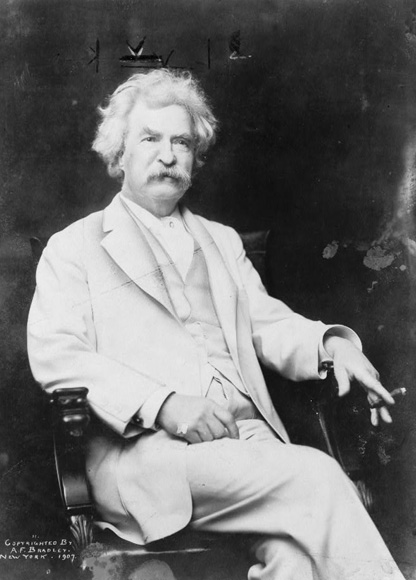
Tomorrow marks the 114th anniversary of Mark Twain‘s well-known, much-quoted, often-distorted observation: “The report of my death was an exaggeration.”

As is discussed in my 2006 book, The Year That Defined American Journalism, Twain’s remark was prompted by an article published June 1, 1897, in the New York Herald.

Mark Twain, 1907

The Herald, which then was regarded as one of the top daily newspapers in America, reported Twain, then 61, to be “grievously ill and possibly dying. Worse still, we are told that his brilliant intellect is shattered and that he is sorely in need of money.”

Twain was in London then, preparing to cover Queen Victoria’s Diamond Jubilee for William Randolph Hearst’s flamboyant New York Journal. That association allowed the Journal to puncture the Herald’s account as false.

In an article published June 2, 1897, beneath the headline, “Mark Twain Amused,” the Journal skewered the Herald’s story and offered Twain’s timeless denial: “The report of my death was an exaggeration.”

Twain’s line is often quoted as “the news of my death has been greatly exaggerated” and, sometimes, the Journal is said to have been the source for the erroneous report rather than the agent of its swift debunking.

According to the Journal, Twain said the likely source of the Herald’s error was the serious illness of his cousin, J.R. Clemens, who had been in London a few weeks before.

Ever eager to indulge in self-promotion, Hearst’s Journal enthusiastically embraced its brief association with Twain. Even so, it couldn’t have been much pleased with what the humorist filed about Victoria’s Jubilee.

As I wrote in The Year That Defined American Journalism, “Twain’s reporting about Victoria’s jubilee seemed half-hearted and hardly inspired. The spectacle was easily the most regal international story of 1897, and came at a time when the British empire was at or near its height. But Twain found the celebration overwhelming,” calling it “a spectacle for the kodak [camera], not the pen.”

Twain’s dispatch to the Journal also included this strange observation:

“I was not dreaming of so stunning a show. All the nations seemed to be filing by. They all seemed to be represented. It was a sort of allegorical suggestion of the Last Day, and some who live to see that day will probably recall this one if they are not too much disturbed in the mind at the time.”

Lining up Twain to cover the Jubilee was emblematic of Hearst’s inclination to spend lavishly to recruit big-name talent, if only for spot assignments.

Hearst was the leading practitioner of yellow journalism, or what he called the “journalism of action,” which embraced an activist vision for American newspapering.

His Journal argued that “a newspaper may fitly render any public service within its power. Acting on this principle, it has fed the hungry, brought criminals to justice and enforced by legal methods the responsibility of public officials.”

Not everyone was comfortable with or admired such an activist vision, especially as it came with such heavy and frequent doses of acute self-promotion.

Twain didn’t much like it, either. In his autobiography, he likened Hearstian yellow journalism to “that calamity of calamities.”

WJC

Related:

<!–[if !mso]> –> Twain’s reporting about Victoria’s jubilee seemed half-hearted and hardly inspired. The spectacle was easily the most regal international story of 1897, and came at a time when the British empire at or near its height. But Twain found the celebration overwhelming—“a spectacle for the kodak [camera], not the pen.”[i] His dispatch included this strange observation: “I was not dreaming of so stunning a show. All the nations seemed to be filing by. They all seemed to be represented. It was a sort of allegorical suggestion of the Last Day, and some who live to see that day will probably recall this one if they are not too much disturbed in mind at the time.”


[i]. Mark Twain, “The Great Jubilee As Described by the Journal’s Special Writers: Mark Twain’s Pen Picture of the Great Pageant in Honor of Victoria’s Sixtieth Anniversary,” New York Journal (23 June 1897): 1.

Six years on: Identity of Watergate’s ‘Deep Throat’ revealed

In Anniversaries, Cinematic treatments, Debunking, Media myths, Washington Post, Watergate myth on May 29, 2011 at 6:22 am

It’s been six years since W. Mark Felt,  once a senior FBI official, was revealed to have been “Deep Throat” of the Watergate era, the most famous source in modern American journalism.

Alias 'Deep Throat'

Felt’s “Deep Throat” identity had remained a secret — and was a topic of often-intense speculation — for more than 30 years.

On May 31, 2005, Vanity Fair disclosed that Felt had been the Washington Post’s elusive and enigmatic source as the Watergate scandal unfolded in 1972-73.

The disclosure was made with the consent of Felt — who then was 91 and in declining physical and mental health — and his daughter, Joan.

The Vanity Fair report meant that the Post effectively had been scooped on its own story.

“The identity of Deep Throat is modern journalism’s greatest unsolved mystery,” Vanity Fair crowed in its article lifting Felt’s secret. “It has been said that he may be the most famous anonymous person in U.S. history.”

As I note in Getting It Wrong, my media-mythbusting book that came out last year, the prolonged guessing game about the identity of “Deep Throat” help solidify the notion that the Post and its lead Watergate reporters, Bob Woodward and Carl Bernstein, were central to uncovering the scandal and forcing President Richard Nixon’s resignation.

I point out that speculation “about the identity of the ‘Deep Throat’ source provided periodic and powerful reminders about the Post and its Watergate coverage, serving to keep Woodward and Bernstein in the public eye far longer than they otherwise would have been.”

I further note:

“They and the mysterious ‘Deep Throat’ source became central figures” in what the Philadelphia Inquirer once called “the parlor game that would not die. … With each passing year, as ‘Deep Throat’s’ cloak of anonymity remained securely in place, his perceived role in Watergate gained gravitas.”

“And so,” I write, “… did the roles of Woodward and Bernstein.”

Although Alexander Haig, John Dean, and Henry Kissinger were among the suspects mentioned in the “Deep Throat” guessing game, Felt’s name always placed high on the roster of likely candidates.

As I discuss in Getting It Wrong, speculation about the identity of “Deep Throat” began in earnest in June 1974, with a front-page article in the Wall Street Journal, and continued periodically over the next 31 years.

The Journal article appeared soon after publication of All the President’s Men, Woodward and Bernstein’s best-selling book about Watergate in which they introduced the furtive source they called “Deep Throat.”

The Journal article described Felt as the top suspect.

Felt, though, repeatedly and adamantly denied having been “Deep Throat.” He was quoted as saying in the Journal article in 1974:

“I’m just not that kind of person.”

He told the Hartford Courant newspaper in 1999 that he “would have been more effective” had he indeed been Woodward’s secretive source, adding:

“Deep Throat didn’t exactly bring the White House crashing down, did he?”

That’s a revealing point that goes to the heart of what I call the heroic-journalist myth of Watergate: Disclosures by “Deep Throat” didn’t bring down Nixon’s corrupt presidency; nor did the reporting of Woodward and Bernstein.

(Bernstein, by the way, never spoke with Felt during the Watergate scandal; Felt was Woodward’s exclusive source. Bernstein finally met Felt in November 2008, shortly before the former G-man’s death.)

On the day six years ago when Felt was confirmed to have been “Deep Throat,” his family issued a statement calling him “a great American hero who went well above and beyond the call of duty at much risk to himself to save his country from a horrible injustice. We all sincerely hope the country will see him this way as well.”

Felt, though, hardly was such a noble character.

In his senior position at the FBI, he had authorized illegal burglaries as part of FBI investigations into leftists associated with the radical Weather Underground in the early 1970s.

Felt was convicted in 1980 on felony charges related to the break-ins, but pardoned by President Ronald Reagan.

Interestingly, his “Deep Throat” alter ego may best be known for a line Felt never spoke: “Follow the money.”

As I’ve discussed at Media Myth Alert, Felt never offered such guidance to Woodward. He never advised the reporter to “follow the money.”

The line doesn’t appear in the book All the President’s Men. But it was written into the script of the cinematic adaptation of Woodward and Bernstein’s book.

Follow the money” was spoken by Hal Holbrook, who delivered a bravado performance as “Deep Throat” in the movie.

Holbrook delivered his “follow the money” lines with such quiet insistence and knowing authority that it sounded for all the world as if it really had been guidance crucial to rolling up Watergate.

WJC

Recent and related:

Every good historian a mythbuster

In Anniversaries, Cinematic treatments, Debunking, Media myths, Newspapers, Washington Post, Watergate myth on May 27, 2011 at 6:10 am

While researching studies of memorable or decisive years recently, I happened across a Washington Post review of The Year That Changed the World, a book about 1989.

I was impressed by this passage in the review:

The good historian is a mythbuster.”

Indeed.

Couldn’t agree more.

The reviewer, Gerard DeGroot, also wrote:

“The past is what happened, history what we decide to remember. We mine the past for myths to buttress our present.”

That’s well said, too. It’s a characterization that offers insight about the rise and diffusion of media-driven myths, 10 of which I debunk in my latest book, Getting It Wrong.

History often is what we decide to remember. And we tend to remember what’s most accessible, what’s most easy to remember.

Take, for example, the mediacentric interpretation of Watergate, the greatest political scandal in American history, a scandal that destroyed a presidency and sent nearly twenty men to jail.

The shorthand, easy-to-grasp version of Watergate is that Bob Woodward and Carl Bernstein of the Washington Post, aided immeasurably by a stealthy, high-level source code-named “Deep Throat,” brought down Richard Nixon’s corrupt presidency.

That’s also the mediacentric version of Watergate, the version journalists love to recall. It serves to remind them of the potential power of the news media.

But as I note in Getting It Wrong, the mediacentric interpretation is misleading and historically inaccurate; it “minimizes the far more decisive forces that unraveled the scandal and forced Nixon from office,” I write.

To roll up a scandal of Watergate’s dimensions, I add, “required the collective if not always the coordinated forces of special prosecutors, federal judges, both houses of Congress, the Supreme Court, as well as the Justice Department and the FBI.

“Even then,” I argue, “Nixon likely would have served out his term if not for the audiotape recordings he secretly made of most conversations in the Oval Office of the White House. Only when compelled by the Supreme Court did Nixon surrender those recordings, which captured him plotting the cover-up and authorizing payments of thousands of dollars in hush money.”

So why do we choose to remember the Woodward-Bernstein-mediacentric interpretation of Watergate? Why has it become the dominant narrative of the scandal? That it is shorn of complexity and easy to grasp is one reason.

A more powerful reason is to be found in the cinematic adaptation of All the President’s Men, Woodward and Bernstein’s book about their Watergate reporting.

The book came out in June 1974 as Watergate was approaching its climax, and was a best-seller.

All the President’s Men was an even greater success in its screen adaptation. It was released 35 years ago this spring and surely ranks as the most-viewed movie about Watergate.

To an extent “far greater than the book,” I write in Getting It Wrong, “the cinematic version of All the President’s Men placed Woodward and Bernstein at the center of Watergate’s unraveling while denigrating the efforts of investigative agencies such as the FBI.

“The effect,” I add, “was to solidify and elevate” the heroic-journalist myth of Woodward and Bernstein, “giving it dramatic power, and sustaining it in the collective memory.”

For contemporary journalists who confront sustained and sweeping upheaval in their field, the mediacentric myth of Watergate is comforting,  reassuring.

Recalling the myth and treating it as authentic serves to buttress the present against the riptide of change.

WJC

Recent and related:

Media myths, the ‘comfort food’ of journalism

In Debunking, Hurricane Katrina, Media myths on May 25, 2011 at 4:48 am

One of my favored characterizations of media-driven myths, those dubious tales about media power that masquerade as factual, is that they’re the “junk food of journalism.”

Not comforting at all

By that I mean they’re tasty and alluring, but not very nutritious, not very healthy.

The “junk food of journalism” is a turn of phrase suggested by an American University graduate student a few years ago. And, crediting him, I included that description in my media-mythbusting book, Getting It Wrong, which came out almost a year ago.

At a recent Roads Scholar (formerly ElderHostel) program at which I spoke about media myths, a participant offered a variation on “junk food of journalism.”

Media myths, she suggested, also are akin to “comfort food of journalism.”

The comfort food of journalism.

I liked the phrase. Liked it immediately.

Media myths, after all, do tend to offer comfort to journalists, the practitioners of a profession that’s largely unloved.

Tales such as those about the mythical “Cronkite Moment” or the heroic journalists who exposed Watergate make newsgathering seem vital, central, and essential. Those and other tales speak to the potential of journalism to do good, to make a difference.

The tales are indeed much like comfort food.

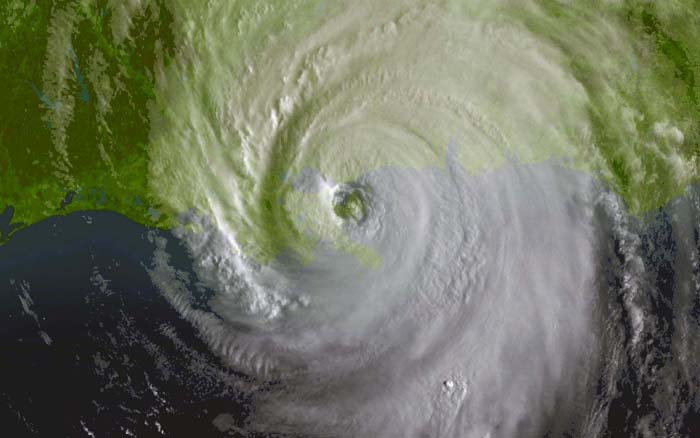
Seeking reassurance about the relevance of journalism helps explain the myth of superlative reporting that marred the coverage of the immediate aftermath of Hurricane Katrina’s landfall in late summer 2005.

The hurricane brought vast flooding to New Orleans, where levees failed.

“In the face of the deepening disaster, federal, state, and city emergency relief efforts proved sluggish, erratic, and stymied, especially in New Orleans,” I write in Getting It Wrong, adding:

“Evidence of government incompetence at all levels was abundant, and became a powerful story. People were suffering in New Orleans, and journalists went after the story vigorously, posing lacerating questions of federal, state, and city authorities: Where was the aid? Why had it not arrived? What was to be done to help the evacuees?”

In the turmoil, traditional news media seemed vital and authoritative. They were “essential again,” as American Journalism Review declared in a cover story both flattering and comforting.

“Those first days were a time for intrepid TV cameramen to take us into the stench and the sweat, the anger and the not knowing, the fear of those who seemed abandoned by their own country,” American Journalism Review asserted. “Those first days were a time for newspapers to put aside jitters about their declining importance and worries about layoffs and cutbacks. The old papers instead reasserted the comfort and utility of news you could hold in your hand.”

It added:

“In this era of blogs, pundits and shouted arguments, the coming of Katrina reunited the people and the reporters. In a time of travail, parts of the media landscape that had seemed faded, yea, even discarded, now felt true.”

Woah: “reunited the people and the reporters”? Talk about comfort food for the press.

As I write in Getting It Wrong, such self-reverential praise was “more than a little misleading.” The post-Katrina comfort-food story was largely wrong.

The reporting about Katrina’s aftermath was “no high, heroic moment in American journalism,” I note, adding:

“The coverage was in important respects flawed and exaggerated. On crucial details, journalists erred badly, and got it wrong.”

In the days immediately after Katrina’s landfall, news reports described apocalyptic horror supposedly unleashed by the hurricane. Journalists reported snipers firing at medical personnel. They reported shots were fired at helicopters, halting evacuations from the Convention Center. They told of bodies being stacked there like cordwood.

News reports spoke of roving gangs that preyed on tourists and terrorized the occupants of the Superdome. They said children were victims of sexual assault, that one seven-year-old was raped and her throat was slit. They reported that sharks were plying the flooded streets of New Orleans.

None of those reports, as it turned out, was verified or substantiated.

The exaggerated coverage not only delayed the arrival of aid to New Orleans; it impugned a battered city and defamed its residents, depicting them, inaccurately, as having shed all restraint in the face of a disaster.

WJC

Recent and related:

WaPo commentary off target on ‘sexual misbehavior of prominent men’

In Debunking, Media myths, Washington Post, Watergate myth on May 23, 2011 at 7:20 am

Packwood: Scuzzy guy

“Until recently,” declared a commentary in yesterday’s Washington Post, “we didn’t have to worry so much about how to talk about the sexual misbehavior of prominent men.”

The Post commentary asserted that “until recently, we didn’t talk much about it at all. But that certainly changed in the late 1990s, when Kenneth Starr broke the sexual sound barrier” with his allegations of sexual indiscretions by President Bill Clinton.

That’s nonsense, a misreading of recent history.

By the time Starr, a special federal prosecutor investigating Clinton’s suspected misdeeds, presented his case against the then-president, the “sexual sound barrier” had long been broken.

If anything, the sexual harassment scandal that ended the political career of Republican Senator Bob Packwood in 1995 was more likely a moment when “sexual misbehavior of prominent men” became a topic of considerable discussion.

Packwood was a scuzzy guy who resigned his Senate seat in 1995 in the face of probable expulsion, following release of the Senate Ethics Committee’s 10,000 page document that described a long history of his sexual misconduct.

The allegations against Packwood, a 26-year member of the Senate,  included no fewer than 18 “unwanted and unwelcome sexual advances,” many of which he described in his electronic diary.

One of Packwood’s victims was 17-years-old when, she said, the senator kissed her against her will.

The bipartisan ethics committee accused Packwood of having “engaged in a pattern of abuse of his position of power and authority as a United States Senator by repeatedly committing sexual misconduct, making at least 18 separate unwanted and unwelcome sexual advances between 1969 and 1990.”

He entered the Senate in 1969.

Most of Packwood’s victims were members of his staff, “or individuals whose livelihoods were dependent upon or connected to the power and authority” wielded by the senator, the ethics committee report said.

The ethics committee, moreover, charged Packwood with having “endeavored to obstruct and impede” the ethics committee investigation by “withholding, altering and destroying relevant evidence, including his diary transcripts and audio taped diary material.”

Packwood’s misconduct, the ethics committee said, brought “discredit and dishonor” upon the Senate.

About two months after Packwood resigned his Senate seat, Clinton began his furtive liaison with Monica Lewinsky, who was 27 years his junior.

In a way, Packwood’s execrable conduct probably helped Clinton sidestep political disaster in the Lewinsky affair.

The Lewinsky affair, while unseemly, was neither abusive nor unbidden, as were many of Packwood’s sordid overtures. Simply put, Clinton’s liaison with Lewinsky, and the lies he told about the affair, did not reach the seedy precedent that Packwood had set.

Lewinsky was a White House intern in late 1995 who, Starr later reported, seemed eager to initiate the liaison.

She performed oral sex with Clinton on November 15, 1995, while he spoke by telephone with a congressman. Clinton and Lewinsky had a second similar encounter two days later, and another on New Year’s Eve 1995.

Their liaison continued periodically until 1997.

When asked during a deposition about his sexual relations with Lewinsky, Clinton lied. The deposition was taken in January 1998, as part of Paula Corbin Jones’ civil lawsuit against the president.

Clinton’s lies under oath led to his impeachment in late 1998 by the House of Representatives and his trial and acquittal in 1999 by the Senate .

Clinton, though, was found in contempt of court by federal judge Susan Webber Wright for  “false, misleading and evasive answers” during the deposition in the Jones suit, answers the judge said “were designed to obstruct the judicial process.”

Clinton was ordered to pay nearly $90,000 to Jones’ lawyers and later agreed to a five-year suspension of his license to practice law.

While undeniably egregious, Clinton’s misconduct did not rise to the level of Packwood’s serial misconduct and repeated sexual harassment. Clinton’s misconduct also fell short of Richard Nixon’s criminality in the Watergate scandal — felonious wrongdoing that set a standard for turning a sitting president from office.

WJC

Recent and related:

Area 51 book offers implausible, myth-based tale

In Debunking, Media myths, War of the Worlds on May 21, 2011 at 6:45 am

I had a chance yesterday to thumb through Area 51, Annie Jacobsen’s provocative new book, which says Soviet dictator Josef Stalin was behind the crash-landing of an alien-like spacecraft in New Mexico in 1947, in a one-off bid to sow panic in America — much like the fright supposedly caused by the War of the Worlds broadcast in 1938.

Welles and 'War of Worlds'

I found Jacobsen’s speculative claim as absurd and far-fetched as it is implausible.

It’s based on a single, unnamed source, and it draws sustenance from a media-driven myth.

According to Jacobsen, the strange craft contained children who had been “biologically and/or surgically reengineered” to look like space aliens, with large eyes and large heads.  “Stalin sent … the craft over New Mexico hoping it would land there,” she writes, adding:

“Stalin’s plan was for the children to climb out and be mistaken for visitors from Mars. Panic would ensue, just like it did after the radio broadcast of The War of the Worlds.”

Oh, right. Sure.

As I discuss in my media-mythbusting book, Getting It Wrong, “the panic and mass hysteria so readily associated with The War of The Worlds program did not occur on anything approaching nationwide dimension” when it aired October 30, 1938.

While some Americans may have been briefly frightened or disturbed by the program, “most listeners, overwhelmingly, were not: They recognized it for what it was — an imaginative and entertaining show on the night before Halloween,” I note in Getting It Wrong.

Had the radio program — which starred and was directed by Orson Welles — provoked widespread panic and hysteria, newspapers for days and even weeks afterward would have published details about the upheaval and its repercussions. As it was, though, newspapers dropped the overblown story after only a day or two.

Significantly, no deaths, serious injuries, or suicides were associated with Welles’ program. Had panic and hysteria indeed swept the country that night in 1938, many people surely would have been killed and badly injured in the tumult.

The War of the Worlds radio dramatization aired on a Sunday from 8-9 p.m. (Eastern), when most newspaper newsrooms were thinly staffed.

Reporting on the reactions to The War of The Worlds broadcast posed no small challenge for morning newspapers with tight deadlines.

“Given the constraints of time and staffing,” I write in Getting It Wrong, “relying on wire services such as the Associated Press became essential. This dependency, in turn, had the effect of promoting and deepening the notion that panic was widespread that night: On a late-breaking story of uncertain dimension and severity, many newspapers took their lead from wire service dispatches.

“They had little choice.”

The AP’s reports about the program essentially were roundups of reactions culled from the agency’s bureaus across the country, I write. Typically, AP roundups emphasized sweep — pithy, anecdotal reports quickly gathered from many places — over depth and searching detail.

The anecdotes about people frightened by the show tended to be sketchy, shallow, small-bore. But their scope contributed to a mistaken sense that radio-inspired fear was widespread that night.

The reliance on superficial wire service roundups helps explain the consensus among U.S. newspapers that the broadcast had created a lot of fright, even mass panic.

Stalin  may well have had intelligence resources to have known that, to have understood that U.S. news reports of mass panic and widespread hysteria following The War of the Worlds broadcast had been exaggerated.

Jacobsen’s far-fetched claim falters on another point: Why would sending bizarre-looking aviators to thinly populated, postwar New Mexico have created panic across the United States?

Rural New Mexico would have been among the least likely places in the country for Stalin to have deployed a mission to stir panic in the United States. Especially since the aviators were not armed with the kind of lethal heat rays that the invading Martians wielded in The War of the Worlds story.

WJC

Recent and related: