W. Joseph Campbell

Archive for the ‘Media myths and radio’ Category

If Obama loses AP: Rush Limbaugh embraces media myths two days running

In Anniversaries, Cronkite Moment, Debunking, Error, Media myths, Media myths and radio, Washington Post, Watergate myth on February 26, 2013 at 6:53 pm

Rush Limbaugh attracts the largest talk-show audiences on radio. Which is why it’s troubling when he indulges in media myths, as he’s done the past two days.

THUMB_RushLimbaugh

Limbaugh

Program transcripts show that Limbaugh made clear if passing references to the “Cronkite Moment,” the 45th anniversary of which falls tomorrow, and to the hero-journalist myth that the Washington Post’s reporting of the Watergate scandal brought down Richard Nixon’s presidency.

Limbaugh on today’s program called attention to an Associated Press report that skeptically considered President Barack Obama’s claims of great disruption should federal government spending cuts, collectively known as the sequester, take effect beginning Friday.

Limbaugh, according to the program transcript, declared that “if Obama is losing AP on this, it’d be like Lyndon Johnson losing Cronkite on the war in Vietnam.”

The reference was to President Lyndon Johnson’s purported reaction to Walter Cronkite’s on-air assessment, delivered February 27, 1968, that the U.S. military was “mired in stalemate” in Vietnam.

Cronkite

Cronkite

Upon hearing Cronkite’s comment, Johnson supposedly understood that his war policy was in tatters and declared: “If I’ve lost Cronkite, I’ve lost Middle America.”

Or something to that effect. Versions of what the president supposedly said vary markedly.

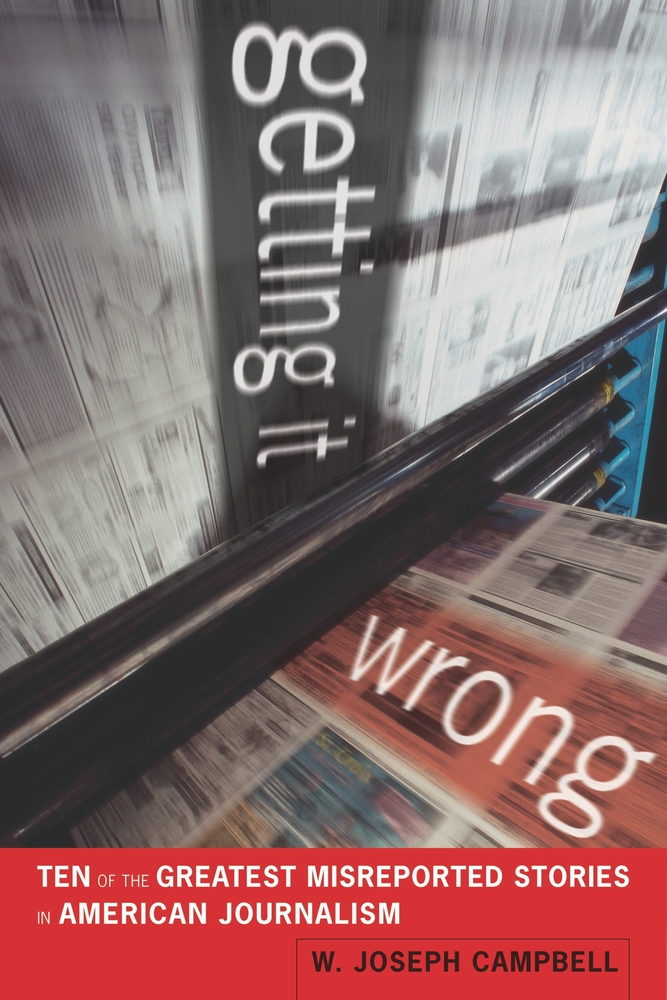
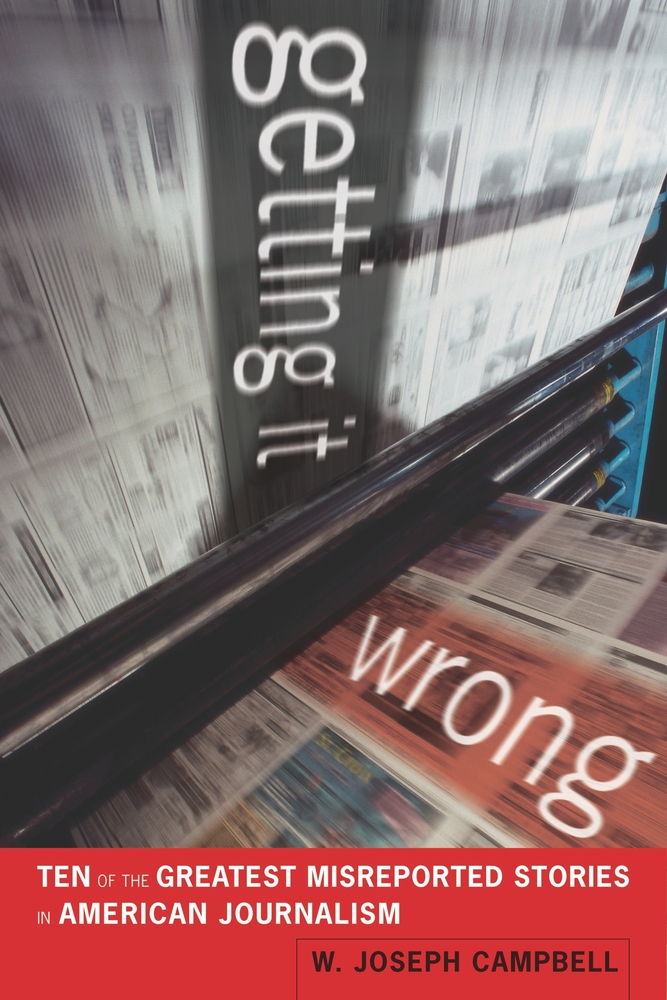
But as I discuss in my media-mythbusting book, Getting It Wrong, Johnson didn’t see Cronkite’s program when it aired.

Johnson at the time was in Austin, Texas, attending the 51st birthday party of a long-time political ally, Governor John Connally. And at the time Cronkite intoned his “mired in stalemate” assessment, the president was making light-hearted remarks about Connally’s age.

“Today you are 51, John,” he said. “That is the magic number that every man of politics prays for—a simple majority.”

So it’s hard to believe that the president could have been much moved by a program he did not see.

The importance of the debunking the “Cronkite Moment” goes beyond whether Johnson saw the program; far more significant is the anecdote’s deceptive message that a prominent journalist can profoundly alter policy.

Altering war policy certainly wasn’t the effect of Cronkite’s program 45 years ago. Even Cronkite likened the program’s influence to that of a straw placed on the back of a crippled camel.

Johnson did announce at the end of March 1968 that he was not seeking reelection to the presidency. But that decision had far more to do with his health and the prospect that Democrats would not renominate him than with Cronkite’s fairly tame and unoriginal commentary about Vietnam.

Limbaugh invoked Watergate’s hero-journalist trope in discussing the sequester during his program yesterday, stating flatly:

“Woodward brought down Nixon.”

He was referring to the supposed effects of the Watergate reporting of Bob Woodward of the Washington Post.

But that’s a myth not even Woodward embraces.

Woodward: 'Horseshit'

Woodward

In 2004, for example, Woodward told American Journalism Review, “To say the press brought down Nixon, that’s horse shit.”

And on another occasion, in an interview with the PBS “Frontline” program, Woodward said “the mythologizing of our role in Watergate has gone to the point of absurdity, where journalists write … that I, single-handedly, brought down Richard Nixon. Totally absurd.”

Other principals at the Post have over the years similarly dismissed such outsize claims.

If not Woodward and his reporting sidekick Carl Bernstein, then who, or what, brought down Richard Nixon?

The best answer is that unraveling a scandal of the reach and complexity of Watergate “required the collective if not always the coordinated forces of special prosecutors, federal judges, both houses of Congress, the Supreme Court, as well as the Justice Department and the FBI,” as I write in Getting It Wrong.

“Even then,” I add, “Nixon likely would have served out his term if not for the audiotape recordings he secretly made of most conversations in the Oval Office of the White House. Only when compelled by the Supreme Court did Nixon surrender those recordings” in 1974, making inevitable an early end to his presidency.

In the end, the reporting of Woodward and Bernstein was of faint consequence to Watergate’s dramatic outcome.

It merits mentioning that there’s no small irony in Limbaugh’s giving voice to these media myths.

He is, after all, a prominent conservative commentator and the “Cronkite Moment” and the Watergate myth center around journalists and news organizations commonly associated with liberal views.

WJC

More from Media Myth Alert:

‘Digital wildfires’ and the ‘War of the Worlds’ media myth

In Debunking, Error, Media myths, Media myths and radio, New York Times, War of the Worlds on January 9, 2013 at 12:00 pm

The New York Times considers in a commentary posted yesterday the prospect of “digital wildfires” — how rumor and error spread by social media could give rise to panic and widespread turmoil.

It’s a catchy phrase, “digital wildfires.” But the commentary is largely speculative and, worse, it conjures the panic myth of the famous War of the Worlds radio dramatization of October 30, 1938.

“In 1938,” the commentary declares, “thousands of Americans famously mistook a radio adaptation of the H.G. Wells novel ‘War of the Worlds’ for a genuine news broadcast. Police stations were flooded with calls from citizens who believed the United States had been invaded by Martians. …

“Is it conceivable that a misleading post on social media could spark a comparable panic?”

What “panic”?

The notion that The War of the Worlds radio program of October 30, 1938, set off a wildfire of panic is a hoary media myth — a myth so tenaciously held that not even a sustained social media campaign could undo it.

Like many media myths, the tale of the panic broadcast of 1938 is just too engrained, and too delicious, ever to be uprooted and delivered to the ash heap of history. As the Times commentary suggests, it’s an irresistible story, full of  illustrative potential.

But as I discuss in my latest book, Getting It Wrong, “the notion that The War of the Worlds program sent untold thousands of people into the streets in panic, is a media-driven myth that offers a deceptive message about the influence radio wielded over listeners in its early days and, more broadly, about the media’s potential to sow fright, panic, and alarm.”

Some people who listened to the show in 1938 were frightened or disturbed by what they heard. But most listeners — in overwhelming numbers — recognized the dramatization for what it was, an imaginative and entertaining show that aired on CBS radio in its usual Sunday evening time slot.

This conclusion is based on research by Hadley Cantril, a Princeton University psychologist, who studied the program’s aftermath. His research, while crude by contemporary standards, drew on interviews and a public opinion survey to estimate that at least 6 million people listened to The War of the Worlds program.

Of that number, Cantril estimated as many as 1.2 million were “frightened,” “disturbed,” or “excited” by what they heard.

But Cantril did not specify what he meant by “frightened,” “disturbed,” and “excited” — terms not synonymous with “panic-stricken.”

As  Robert E. Bartholomew, an authority on mass hysteria and social delusions, has noted, there is scant evidence that many frightened listeners acted on their fears.

In short, what radio-induced fright there was that night did not rise to the level of broad panic or hysteria.

Had it — had panic swept the country — trauma and turmoil surely would have resulted in deaths, including suicides. But none were linked to the program, as Michael J. Socolow noted in his fine essay in 2008.

The Times commentary notes that authorities “were flooded with calls” that night. Indeed, telephone volume surged during and immediately after the program, especially in metropolitan New York and New Jersey — ground zero for the fictive Martian invasion in The War of the Worlds show.

Police station, fire departments, and many newspaper offices reported receiving an unusually large number of telephone calls.

But call volume is a crude, and even misleading, marker of fear and alarm.

As I discuss in Getting It Wrong, increased call volume that night is better understood as “signaling an altogether rational response of people who neither panicked nor became hysterical, but who sought confirmation or clarification from external sources known to be usually reliable.”

Interestingly, the notion that a radio show did create panic gave newspapers an irresistible opportunity to assail their upstart rival medium.

By the late 1930s, radio was an increasingly important source for news and advertising, and American newspapers thus had, as I write, “competitive incentives to denounce radio, and characterize it as irresponsible and unreliable.

“Many newspapers seized the chance to do with enthusiasm. It was as an opportunity they could not fail to let pass.”

The New York Times, for example, declared in an editorial titled “Terror by Radio”:

“Radio is new but it has adult responsibilities. It has not mastered itself or the material it uses.”

The Times and other American newspapers in 1938 seemed to delight in chastising radio. And their overwhelmingly negative commentary helped seal the erroneous view that The War of the Worlds dramatization had set off panic and mass hysteria.

WJC

More from Media Myth Alert:

Social-media triumphalism and its myth-busting limits

In Anniversaries, Debunking, Error, Media myths, Media myths and radio, War of the Worlds on October 31, 2012 at 3:50 pm

Social media’s capacity to demolish media myths soon after they emerge was impressively on display this week as megastorm Sandy swept ashore in New Jersey and disrupted life throughout the Northeast and Mid-Atlantic.

Got it notably wrong

Erroneous reports were many as the storm reached the East Coast on Monday. As the Guardian of London noted today, “the spread of such misinformation was abetted by journalists, who were once taught the importance of verifying every source.”

Notably wrong was the report on CNN’s “Piers Morgan Tonight” news program Monday that Sandy had breached the heart of American capitalism and covered the floor of the New York Stock Exchange in Manhattan with three feet of water.

But that account and a similar report on the hype-prone Weather Channel were promptly disputed, and soon repudiated, in a barrage of posts on Twitter.

In demolishing the bogus reports, Twitter demonstrated a capacity for “savage self-correction,” as John Herrman declared in a post yesterday at the BuzzFeed online site.

Herrman wrote:

“In response to thousands of retweets of erroneous Weather Channel and CNN reports that the New York Stock Exchange had been flooded with ‘three feet’ of water, Twitter users, some reporters and many not, were relentless: photos of the outside of the building, flood-free, were posted. Knowledgeable parties weighed in.”

And the misreporting soon was corrected.

Herrman hailed Twitter as “a fact-processing machine on a grand scale, propagating then destroying rumors at a neck-snapping pace. To dwell on the obnoxiousness of the noise is to miss the result: that we end up with more facts, sooner, with less ambiguity.”

His point is well-taken. On more than a few occasions, Twitter has demonstrated a striking capacity to debunk embryonic media myths — including those myths it helped set loose.

The bogus quotation attributed to the Rev. Dr. Martin Luther King after the slaying last year of terrorist leader Osama bin Laden comes to mind. The made-up passage — “I will mourn the loss of thousands of precious lives, but I will not rejoice in the death of one, not even an enemy” — circulated widely on Facebook and Twitter before their corrective forces effectively demolished it.

But limits to social-media triumphalism must be noted.  The corrective power of platforms such as Twitter reaches only so far.

Once established, media myths are exceedingly difficult to uproot. These myths have amply demonstrated that they can withstand the power of social media.

Welles and ‘War of the Worlds’

Take, for example, Halloween’s most famous media myth — the notion that Orson Welles’ War of the Worlds radio dramatization in 1938 touched off nationwide panic and mass hysteria. It’s a hoary media myth that’s just too embedded — and too delicious — to be destroyed.

No amount of Tweeting is likely to dismantle this myth, one of 10 that I debunk in my latest book, Getting It Wrong. It’s too engrained in popular culture — and in the news media — to go the way of CNN’s botched report about the flooded stock exchange floor.

The 74th anniversary of the original broadcast of The War of the Worlds was yesterday and Twitter percolated with reminders about the program and references to the panic it supposedly created. Tweets challenging the narrative of panic and hysteria were in a distinct minority.

Linked to more than a few Tweets yesterday was a tip sheet describing seven lessons that The War of the Worlds dramatization holds for social media.

The tip sheet seems more than a little convoluted, though. Among its observations was this:

“If you are lucky, the publicity often exceeds the actual event  …. The panic [of The War of the Worlds program] has become legendary, even though there is quite a bit of evidence to suggest it wasn’t nearly as widespread as reported at the time. But, it put the program on the map, and launched a relatively unknown 23-year old name[d] Orson Welles into the public eye.”

Even that’s not quite true. Although he was 23 at the time of the broadcast, Welles’ had already made the cover of Time magazine.

WJC

Recent and related:

1960 myth ricochets around the media in advance of Obama-Romney debate

In Debunking, Error, Media myths, Media myths and radio, Television on October 3, 2012 at 1:58 pm

Kennedy, Nixon at their mythical debate

In the hours before tonight’s encounter between President Barack Obama and Republican challenger Mitt Romney, the beguiling myth of the first-ever presidential debate — the notion that image trumped spoken word — has ricocheted across the U.S. news media.

News organizations of all types have been invoking the myth, which has it that television viewers overwhelmingly felt John F. Kennedy won the first televised debate in 1960 while radio listeners thought Richard M. Nixon had the best of it.

Here are a few examples of media indulgence in that fable:

  • The Boston Globe:  “According to those listening on the radio, Nixon won the debate or it was a draw. But most Americans watched it on TV, and they overwhelmingly were impressed by the … collected performance” of Kennedy.
  • The Hartford (Connecticut) Courant:  “Famously, those who listened to the radio thought that Nixon had defeated Kennedy in their famous first debate in 1960. By contrast, those watching on television thought that the dapper and cool Kennedy had won.”
  • Entertainment Weekly: “Radio audiences thought Nixon won the debate, but those who watched on television were convinced that Kennedy dominated.”
  • Huffington Post: “Richard Nixon’s haggard appearance vs. John F. Kennedy’s vigor is widely cited as contributing to a Kennedy victory in the first 1960 debate. But polls showed that was true mostly for those who watched it on TV, while those listening to the radio generally picked Nixon as victor.”
  • NBC Channel 5 in Chicago: “Pollsters found that people who listened to this debate on the radio thought that Nixon, the vice president, beat Kennedy. But those who followed on television … sided with Kennedy, who won the election.”
  • A blog of the Voice of America, the U.S. government’s voice abroad: ” Nixon’s refusal to wear makeup did not hurt him with those listening on the radio. They gave him the edge.  But Kennedy had the advantage with TV viewers and the rest, as they say, is history.”

Make that bad history.

There is quite simply no persuasive evidence to support the notion that television viewers and radio listeners decisively disagreed about the outcome of the first Kennedy-Nixon debate, which took place in Chicago on September 26, 1960.

That such an effect did occur — or must have occurred — is attractive for a number of reasons: It acknowledges the presumptive power of the televised image. It renders uncomplicated the intricacies of an important political moment of long ago. And it offers an enduring though misguided lesson that content matters less than appearance.

Significantly, the broad media embrace of the debate myth ignores the powerful dismantling published 25 years ago by scholars David L. Vancil and Sue D. Pendell.

In their article in Central States Speech Journal, Vancil and Pendell noted that one “of the most perplexing legacies of the first Kennedy-Nixon debate is the claim that radio listeners and television viewers came to opposite conclusions about the debate winners.”

They proceeded to explode that notion, pointing out that accounts of viewer-listener disagreement about the debate typically were anecdotal and impressionistic — hardly representative of the American electorate in 1960.

They also called attention to “a false impression” that “major polling organizations, such as Gallup, concentrated part of their attention on the reactions of radio listeners.” That hardly was the case.

The one polling organization that did identify radio listeners in a post-debate survey was Sindlinger & Co.

Sindlinger reported that poll respondents who listened to the debate on radio thought Nixon won, by a 2-to-1 margin.

But the Sindlinger sub-sample of radio listeners included 282 respondents — of whom only 178 offered an opinion about the debate winner, far too few to permit meaningful generalizations or conclusions.

Not only was the sub-sample unrepresentative, it did not identify from where the sub-sample of radio listeners was drawn. “A location bias in the radio sample,” Vancil and Pendell pointed out, “could have caused dramatic effects on the selection of a debate winner. A rural bias, quite possible because of the relatively limited access of rural areas to television in 1960, would have favored Nixon.”

Those and several other defects render the Sindlinger result meaningless.

It should be noted that the run-up to tonight’s debate has brought some faint recognition about the mythical character of viewer-listener disagreement in the 1960 debate.

For example, the latest Washington Examiner column of political commentator Michael Barone reads as if he had consulted recent posts at Media Myth Alert.

Barone wrote:

“It is generally held that television viewers felt Kennedy won the first debate, while those listening on radio, unaware of Nixon’s improvised makeup, felt Nixon won. That’s probably overstated. Contemporary [news] accounts suggest most viewers felt both candidates did well, while the single poll of radio listeners had a small sample possibly tilted toward pro-Nixon rural areas lacking TV reception.”

Such observations, however well-reasoned, likely are to be of scant effect in countering the present contagion of the 1960 debate myth.

Like many media-driven myths, it is after all almost too delicious not to be true.

WJC

Recent or related:

The Internet’s uneven capacity to expose media fakes

In Debunking, Media myths, Media myths and radio, Newspapers, War of the Worlds on July 30, 2012 at 10:35 am

Glenn Greenwald, a columnist for the online magazine Salon, hailed yesterday the corrective capacity of the Internet, noting how quickly a purported column by Bill Keller, one-time executive editor of the New York Times, was exposed over the weekend as an imaginative fake.

In pressing the argument, though, Greenwald offered up a hoary media myth that has survived quite well in the age of the Internet.

Greenwald wrote: “For anyone who still believes that traditional journalism is inherently more reliable than the Internet, just … compare the duration and seriousness of the frauds and fakes enabled by the model of traditional journalism.

“Long before the Internet — in 1938 — a dramatized radio broadcast by Orson Wells [sic] (“The War of the Worlds”) of Martians landing on Earth spawned mass panic.”

The notion that The War of the Worlds radio dramatization set off “mass panic” is a delicious tale.

But as I discuss in my latest book, Getting It Wrong, it’s also a tenacious media-driven myth “that offers a deceptive message about the influence radio wielded over listeners in its early days and, more broadly, about the media’s potential to sow fright, panic, and alarm.”

I point out that “the panic and mass hysteria so readily associated with The War of The Worlds program did not occur on anything approaching nationwide dimension.”

Some people who listened to the show in 1938 were frightened or disturbed by what they heard. But there is no evidence their fright rose to anything approaching “mass panic” or nationwide hysteria.

Indeed, most listeners recognized Welles’ program for what it was— an imaginative and entertaining show on the night before Halloween.

But newspaper reports the following day advanced the notion that “mass panic” had swept the country.

“These reports,” I point out, “were almost entirely anecdotal and largely based on sketchy wire service roundups that emphasized breadth over in-depth detail.”

But newspapers in 1938 “simply had no reliable way of testing or ascertaining the validity of the sweeping claims they made about the radio show,” I write.

Nonetheless, the purported “panic-broadcast” offered U.S. newspapers “an exceptional and irresistible opportunity to rebuke radio — then an increasingly important rival source for news and advertising — as unreliable and untrustworthy,” I write.

The overwhelmingly negative commentary in the American press, helped frame and solidify the erroneous impression that The War of the Worlds dramatization had sown mass panic and hysteria.

The debunking of the myth is told not only in Getting It WrongI’ve blogged about the dubious “panic broadcast,” too, as posts here, here, here, and here indicate. I’ve also written about The War of the Worlds myth for the BBC online. Others have discussed the myth in blog posts as well, notably Michael Socolow in a fine dissection in 2008.

So why does the myth live on in the digital age? Why is it resistant to the Internet’s capacity, which Greenwald extols, to detect errors and swiftly banish them?

Obviously, the notion of the “panic broadcast” became entrenched in media lore long before the digital age. Indeed, it began taking dimension the day after Welles’ clever show.

Once a myth becomes thoroughly entrenched, it may be beyond the Internet’s power ever  to dismantle. (See also, William Randolph Hearst’s purported vow to “furnish the war” with Spain; the supposed “Cronkite Moment” of 1968, and the misleading dominant narrative of Watergate.)

What’s more, the notion that tens of thousands of Americans were abruptly pitched into “mass panic” one night long ago remains a perversely appealing and irresistible tale. Its retelling affirms in a way the reassuring view that Americans these days are hardly the gullible rubes their ancestors were, back when broadcast media was emergent.

The mythical “panic broadcast” also offers a timeless anecdote with which to bash the media. The tale, after all, does suggest that when circumstances are just so, the media can spread fear and disruption, profoundly and unexpectedly.

WJC

Many thanks to Instapundit
Glenn Reynolds for linking to this post

Recent or related:

The ‘War of the Worlds’ radio show produced a ‘Paul Revere effect’

In Anniversaries, Debunking, Media myths, Media myths and radio on October 31, 2011 at 5:15 pm

I call it the “Paul Revere” effect, and it helps explain the many reports of fright associated with the radio dramatization 73 years ago of The War of the Worlds, a clever program that told of a lethal Martian invasion of Earth.

The radio show aired October 30, 1938, and supposedly stirred panic and hysteria across the United States — a delicious narrative that I debunk in my latest book, Getting It Wrong, as a media-driven myth.

I also discuss in Getting It Wrong the seldom-examined “Paul Revere effect” associated with The War of the Worlds program, which was the work of Orson Welles and his “Mercury Theatre on the Air” troupe.

This effect occurred when well-intentioned people who had little more than an incomplete understanding of The War of the Worlds broadcast decided individually and on their own to warn others about what they thought was a sudden and terrible threat.

These self-motivated Paul Reveres, I write in Getting It Wrong, “burst into churches, theaters, taverns, and other public places, shouting that the country was being invaded or bombed, or that the end of the world was near.”

I note that it must “have been a cruel and unnerving way of receiving word of a supposedly calamitous event — to be abruptly disturbed in familiar settings by a vague reports offered by people who themselves clearly were terror-stricken.”

The unsuspecting recipients of these invariably garbled, second- and third-hand accounts of calamity had no immediate way of verifying the wrenching news they had heard. Unlike the audiences of Welles’ dramatization, they could not spin the radio dial to find out whether other networks were reporting an invasion from Mars.

Scrutiny of contemporaneous newspaper accounts reveals numerous cases of this false-alarm contagion. This meant that people who had not heard not a word of The War of the Worlds show were themselves fearstricken, if only briefly.

In New York, for example, some apartment houses “were hurriedly emptied by frantic listeners to the program and by those who heard second- and third-hand accounts multiplying the supposed peril,” the Newark Star-Eagle reported.

“Many of the panic-stricken did not hear the original broadcast but got their misinformation from others,” the newspaper said.

A Methodist church service in Indianapolis was disrupted that night “when an hysterical woman member of the congregation entered shortly after worship had begun,” the Indianapolis Star reported.

The woman rushed to the pulpit, telling the pastor, “Something so terrible has happened that I must interfere.”

She told worshippers that “New York has been destroyed” and added: “I believe the end of the world has come. I heard it over the radio.”

The pastor offered a short prayer and excused anyone who wanted to return home. Several members of the choir “doffed robes and went from the church, followed by a portion of the congregation,” the Star reported. But the service continued.

Soon, several members of the congregation returned, explaining sheepishly that the alarm had been caused by nothing more than a misunderstood radio show.

As I note in Getting It Wrong, it is impossible to estimate the cumulative effect of the false-alarm contagion that night. But the second- and third-hand accounts, spread Paul Revere-like, stirred some measure of evanescent apprehension among untold thousands of people who had not listened to the program.

It is tempting to suggest, I write, “that what radio-induced fear there was that night was mostly spread by credulous people who heard muddled and fragmentary accounts about the program and set about to alert others,” on their own.

WJC

Recent and related:

Why the ‘panic broadcast’ myth lives on

In Debunking, Media myths, Media myths and radio, War of the Worlds on October 29, 2011 at 9:55 am

It’s a delicious media myth that The War of the Worlds radio dramatization 73 years ago set off nationwide panic and mass hysteria — a media myth that lives on for an impressive variety of reasons.

Welles and 'War of the Worlds'

What has been called the “panic broadcast” aired on CBS radio on Sunday evening, October 30, 1938. The War of the Worlds dramatization starred and was directed by Orson Welles, a 23-year-old prodigy. He was supported by actors of his “Mercury Theatre on the Air” troupe.

As I discuss in my media mythbusting book, Getting It Wrong, the dramatization supposedly was so alarming and realistic in its accounts of invading Martians wielding deadly heat rays, that listeners by the tens of thousands — or perhaps the hundreds of thousands — were convulsed in panic.

That, at least, is how American newspapers reported the reaction to the broadcast.

“A wave of mass hysteria seized thousands of radio listeners throughout the nation,” the New York Times said on its front page of October 31, 1938.

“For an hour,” the Washington Post declared, “hysterical pandemonium gripped the Nation’s Capital and the Nation itself.”

But the panic and hysteria so commonly associated with The War of the Worlds show was hyped. Exaggerated. It did not on anything approaching nationwide scale, as I discuss in Getting It Wrong.

Sure, some listeners may have been frightened or disturbed by what they heard. But that’s hardly synonymous with being panicked or pitched into mass hysteria.

Most listeners of the show, overwhelmingly, were not frightened. They recognized it for what it was, a clever and imaginative radio play on the eve of Halloween.

Nonetheless, the “panic broadcast” occupies an extraordinary place in American media history; it lives on as the radio show that caused fright and terror beyond measure.

A prominent reason is that the tale of panic and hysteria is almost too good, too delicious not to be true.

In that way, the “panic broadcast” is like many media myths — a savory, intriguing tale that never loses appeal. The War of the Worlds radio myth, of course, is especially popular this time of year.

Moreover, the “panic broadcast” myth endures because it evokes the latent power of media content:  Media messages have the potential to produce effects that are unpredictable, wide-ranging, and even dangerous.

The myth also lives on because it offers implicit reassurance for contemporary media audiences: It reminds and reassures them of their comparative sophistication. Back then, back in the 1930s, media audiences were pretty gullible, as the panicked reactions to The War of the Worlds suggest. But that’s not so much the case today, this line of thinking goes (which overlooks such recent stunts as the Colorado balloon boy and the TV report of the breakup of Belgium).

Another powerful explanation for the tenacity of The War of the Worlds myth is found in its link to the legend and bad-boy image of Orson Welles, who gained lasting fame and acclaim with his 1941 cinematic masterpiece, Citizen Kane.

The “panic broadcast” helped confirm the talent and reputation of Welles, who did his most memorable work before he was 30.

Interestingly, Welles appeared at what he called “a terrifying mass press interview” the day after the “panic broadcast” to say he regretted “any misapprehension which our broadcast last night created among some listeners.”

Welles, who was unshaven and acted a bit contrite, insisted it was unfathomable anyone really could have mistaken The War of the Worlds radio dramatization for an alien invasion.

Welles told reporters that he was “extremely surprised to learn that a story which has become familiar to children through the medium of comic strips and many succeeding novels and adventure stories should have had such an immediate and profound effect upon radio listeners.”

Years later, however, Welles was only too eager to endorse the notion that the broadcast had stirred wide panic. He gleefully told an interviewer:

“Houses were emptying, churches were filling up; from Nashville to Minneapolis, there was wailing in the street and the rending of garments.”

WJC

Recent and related:

More treat than trick: Recalling the ‘War of the Worlds’ radio ‘panic’

In Debunking, Media myths, Media myths and radio, War of the Worlds on September 23, 2011 at 4:12 am

The autumnal equinox inevitably signals an uptick in media references to the famous radio adaptation in 1938 of The War of the Worlds, the show that gave rise to Halloween’s greatest media myth.

The program’s accounts of invading Martians wielding deadly heat rays supposedly were so realistic and unnerving that they set off nationwide panic and mass hysteria.

That’s the media myth, anyway. Like many media myths, it’s a good yarn but thinly documented. There’s scant evidence that the radio show — the work of Orson Welles and his Mercury Theatre on the Air troupe — left millions of Americans panic-stricken that night.

It is a delicious tale, one inevitably recited this time of year — as suggested by a theatrical review posted yesterday at the Berkshire Eagle.

“It was trick and it was treat,” the newspaper said about Welles’ radio adaptation of the 1898 science fiction work, The War of the Worlds.

“On Oct. 30, 1938, millions of radio listeners were thrown into near hysteria when a radio broadcast by Mercury Theatre was interrupted by eyewitness, live-from-the-field reports of an alien invasion from Mars.

“By the time it was all over about an hour later, it became clear to everyone who had missed the advisory at the top of the show that this was make-believe; the clever invention of a brash, wildly creative 22-year-old force of artistic nature named Orson Welles who had taken H.G. Wells’ novel, ‘War of the Worlds,’ and, capitalizing on the power of the radio to catch our imagination in ways that only radio could, gave it chilling immediacy.”

Except that panic and “near hysteria” were not at all widespread. Fright that night certainly did not reach nationwide dimension, as I discuss in my latest book Getting It Wrong.

While some Americans may have been briefly disturbed or upset by Welles’ program, I write, “most listeners, overwhelmingly, were not: They recognized it for what it was — an imaginative and entertaining show on the night before Halloween.”

I also point out in Getting It Wrong that Hadley Cantril, a psychologist at Princeton University who promoted the notion that the radio show caused widespread panic, drew on surveys to estimate that at least 6 million people listened to the hour-long program, which aired live over the CBS radio network.

Of those listeners, Cantril estimated, 1.2 million were “frightened,” “disturbed,” or “excited” by what they heard.

But as I point out in Getting It Wrong, “Cantril left unclear the distinctions among ‘frightened,’ ‘disturbed,’ or ‘excited.’ Nor did Cantril not estimate how many listeners acted on their fears and excitement”  — a crucial element had there indeed been widespread panic that night.

Being “frightened,” “disturbed,” or “excited” is hardly akin to being panic-stricken. Or pitched into hysteria.

Cantril’s estimates, moreover, signal that an overwhelming majority of listeners recognized Welles’ program for what it was — imaginative radio entertainment.

It was for them more treat than trick.

Had the War of the Worlds show created nationwide panic and mass hysteria, the related turmoil surely would have resulted in deaths and serious injuries.

But newspaper reports in the program’s aftermath were notably silent on extensive casualties.

Not only that, but American newspapers quickly dropped the story from their pages after a day or two.

“Had there truly been mass panic and hysteria across the country that night, newspapers for days and even weeks afterward could have been expected to have published detailed reports about the dimensions and repercussions of such an extraordinary event,” I note in Getting It Wrong.

But newspapers gave little sustained attention to The War of the Worlds broadcast and the reactions it supposedly stirred.

WJC

Talking media myths on ‘Community Voices’

In Debunking, Media myths, Media myths and radio, Newspapers, Washington Post, Watergate myth on September 3, 2011 at 3:14 pm

The exaggerated tales of Watergate, Hurricane Katrina, and crack babies were the principal media myths I discussed the other day in an interview on KPCW Radio in Utah.

The interview focused on those chapters of my latest book, Getting It Wrong, and was conducted by Larry Warren and Linda Gorton on their  “Community Voices” show.

I noted early in the interview that the “animating force” in American journalism is to get the story right and that Getting It Wrong “is associated with that ethos of truth-telling, of seeking to get the story right.”

The interviewers quickly turned to Watergate, asking whether the reporting of Bob Woodward and Carl Bernstein for the Washington Post was what indeed drove President Richard Nixon to resign in 1974.

“That is the dominant narrative of Watergate,” I pointed out, adding that’s also a very simplistic explanation for rolling up what was a complex scandal.

“To unravel the complexity and the intricacy of Watergate,” I said, “took all kinds of forces, most of them subpoena-wielding — federal prosecutors, the FBI, bipartisan panels of both houses of Congress, ultimately Supreme Court, which forced Richard Nixon to surrender the evidence which clearly showed that he had conspired with top aides to try to cover up the investigation into the Watergate break-in, the signal crime of the scandal.

“Against that backdrop, the contributions of Woodward and Bernstein fade into relative insignificance,” I said.

Another reason that Watergate’s dominant narrative focuses so squarely on Woodward, Bernstein, and the Washington Post is, I said, the cinematic version of the reporters’ book, All the President’s Men.

It surely is the most-watched movie ever made about Watergate, and “it really does focus,” I noted, “on the work of Woodward and Bernstein to the exclusion” of the forces and factors that were truly decisive in bringing down Nixon’s corrupt presidency.

“I think we know,” Warren interjected, “that you’re not going to be invited to Mr. Woodward’s for dinner anytime soon.”

“You know,” I replied, Woodward “has said something to the effect of, ‘to say the press brought down Richard Nixon is total nonsense.’ He used earthier terms to make that point.”

The reference to Woodward’s comment in an interview in 2004 with American Journalism Review in which he asserted:

To say the press brought down Nixon, that’s horse shit.”

I also discussed the notion that news coverage of Hurricane Katrina was superlative, that it supposedly “demonstrated the value and importance of traditional news media, both print and broadcast, at a time of disaster. And Hurricane Katrina was no small storm. It was no [Hurricane] Irene, that’s for sure.”

But I added:

“The coverage of Hurricane Katrina was no high heroic moment in American journalism because, on many important elements of that story, the news media got it badly wrong.”

The hurricane’s death toll was “wildly exaggerated,” I noted, adding that the “apocalyptic reports that the news media put out in the days after Hurricane Katrina’s landfall proved to be largely untrue.

“There were no snipers firing at medical personnel, no snipers firing at [rescue] helicopters. No bodies stacked up like cordwood, no children with their throats slashed. No roving gangs preying on tourists. No sharks plying the flood waters of New Orleans.

“All these reports were out there,” I said, but in the end “none of them was verified or substantiated.”

The erroneous and exaggerated reports of violence in post-Katrina New Orleans in some cases had the effect of delaying the arrival and delivery of aid to the storm-stricken city, I noted.

The social disaster that the news media anticipated in the purported — and widely misreported — “crack baby” epidemic never took place, I pointed out.

More than one news commentator, I said, described as a “bio-underclass” the generation that would come of age after having been exposed to crack cocaine in the womb. These children supposedly would be so mentally and physically deformed as to be forever dependent on the state.

“The news media were spectacularly wrong about the crack baby epidemic,” I said, noting that news reports in the late 1980s and early 1990s “pushed very hard on preliminary evidence suggesting there was a powerful linkage between taking crack during pregnancy and subsequent deformities in children.”

To their discredit, I added, the news media never went back in a sustained and systematic way to undertake to dismantle the crack-baby myth — “even after consensus had taken hold among scientists and biomedical researchers that [prenatal] exposure to crack was not this destructive force that preliminary research had suggested.”

WJC

Recent and related:

‘Getting It Wrong’ wins SPJ award for Research about Journalism

In Bay of Pigs, Bra-burning, Cronkite Moment, Debunking, Furnish the war, Hurricane Katrina, Jessica Lynch, Media myths, Media myths and radio, Murrow-McCarthy myth, New York Times, Spanish-American War, War of the Worlds, Washington Post, Watergate myth, Yellow Journalism on May 10, 2011 at 9:02 am

The Society of Professional Journalists announced today that my media-mythbusting book, Getting It Wrong, is the winner of the 2010 Sigma Delta Chi award for Research about Journalism.

The award will be presented in September at the Excellence in Journalism convention in New Orleans.

Getting It Wrong, which was published last year by the University of California Press, debunks 10 prominent media-driven myths, which are dubious tales about the news media that masquerade as factual.

Here’s a summary of the 10 myths dismantled in Getting It Wrong:

  1. Remington-Hearst: William Randolph Hearst’s famous vow “to furnish the war” with Spain is almost certainly apocryphal.
  2. War of Worlds: The notion that the War of Worlds radio dramatization in 1938 caused nationwide panic and mass hysteria is exaggerated.
  3. Murrow-McCarthy: Edward R. Murrow’s famous See It Now program in March 1954 did not end Senator Joseph McCarthy’s communists-in-government witch-hunt; Murrow in fact was very late to take on McCarthy.
  4. Bay of Pigs: The New York Times did not suppress its reporting in the run-up to the ill-fated Bay of Pigs invasion in April 1961.
  5. Cronkite-Johnson: Walter Cronkite’s special report on Vietnam in February 1968 did not prompt an immediate reassessment or revision of U.S. war policy.
  6. Bra-burning: Humor columnist Art Buchwald helped spread the notion that feminist demonstrators dramatically burned their bras at a Miss America protest in September 1968.
  7. Watergate: The Washington Post’s intrepid reporters, Carl Bernstein and Bob Woodward, did not bring down Richard Nixon’s corrupt presidency. That they did is a trope that knows few bounds.
  8. Crack babies: The much-feared “bio-underclass” of children born to women who smoked crack cocaine during their pregnancies never materialized.
  9. Jessica Lynch: The Washington Post’s erroneous reporting about Jessica Lynch early in the Iraq War gave rise to several myths about her capture and rescue.
  10. Hurricane Katrina: News coverage of Katrina’s aftermath in New Orleans in early September 2005 was marred by wild exaggerations about extreme, Mad Max-like violence.

The “Research about Journalism” award recognizes “an investigative study about some aspect of journalism,” SPJ says, and “must be based on original research; either published or unpublished, and must have been completed during the 2010 calendar year. … Judges will consider value to the profession, significance of the subject matter, thoroughness of the research, and soundness of the conclusion.”

WJC

Recent and related: