W. Joseph Campbell

Archive for the ‘Media myths’ Category

BBC calls Hearst vow apocryphal, quotes it anyway

In 1897, Debunking, Furnish the war, Media myths, Spanish-American War, Yellow Journalism on July 15, 2011 at 10:28 am

Apocryphal but still quotable.

That’s how Britain’s venerable broadcaster, the BBC, treated the mythical anecdote about media titan William Randolph Hearst and his purported vow to “furnish the war” with Spain in the late 19th century.

In an article posted online yesterday, the BBC described Hearst as the “definitive [news] baron” and declared:

“He’s credited with the invention of tabloid journalism in the 1890s when his New York Journal began a bitter circulation war with Joseph Pulitzer’s New York World. He also had a reputation as a warmonger.

“‘You furnish the pictures and I’ll furnish the war,’ goes an apocryphal instruction he was supposed to have sent in a telegram to an illustrator in Havana.”

That’s right, the line is apocryphal. What, then, is the point in using it? As a none-too-clever, back-handed way of buttressing the dubious notion that Hearst and his newspapers were capable of fomenting a war?

That’s sloppy journalism from a leading international news organization.

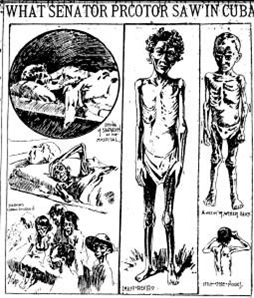
As I discuss in my latest book, Getting It Wrong, Hearst’s purported vow to “furnish the war” with Spain is a particularly tenacious media-driven myth — a prominent but dubious tale about journalism that masquerades as factual.

I note that the tale about Hearst’s vow “has achieved unique status as an adaptable, hardy, all-purpose anecdote, useful in illustrating any number of media sins and shortcomings.

“It has been invoked to illustrate the media’s willingness to compromise impartiality, promote political agendas, and indulge in sensationalism. It has been used, more broadly, to suggest the media’s capacity to inject malign influence into international affairs.”

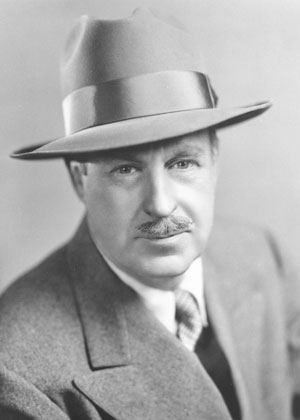
Hearst: Didn't say it

Reasons for doubting the presumptive Hearstian vow are many, I point out in Getting It Wrong, and include the fact that the telegram in which Hearst supposedly made the statement — in an exchange with the artist Frederic Remington, on assignment to Cuba — has never turned up.

Plus, Hearst denied making such a vow.

Not only that, but the anecdote lives on lives on despite what I call “an irreconcilable internal inconsistency.” That is, it would have been absurd for Hearst to vow to “furnish the war” because war— specifically, the Cuban rebellion against Spanish colonial rule— was the reason he sent Remington to Cuba in the first place.

The artist was in Cuba for just six days in January 1897. By that time, the Cuban rebellion — a war for political independence — had reached islandwide proportions. “Anyone reading U.S. newspapers in early 1897 would have been well aware that Cuba was a theater of a nasty war,” I write in Getting It Wrong.

Given the context, Hearst’s purported vow is utterly illogical.

And to invoke the anecdote knowing that it’s apocryphal is little short of disingenuous.

The BBC’s reference to Hearst’s being “credited with the invention of tabloid journalism in the 1890s” also is questionable.

Hearst’s style of flamboyant journalism certainly helped inspire the epithetyellow journalism,” but he was no father of tabloid journalism.

If anything, Hearst was a latecomer to that genre.

As David Nasaw wrote in The Chief, his admirably even-handed biography of Hearst, the press baron didn’t embrace the tabloid until the 1920s “because he was not comfortable with the format.

“He  had no interest in publishing a picture newspaper that had little room for political coverage, columns, cartoons, and the editorials he cared so much about.”

WJC

Many thanks to Instapundit
Glenn Reynolds for linking to this post.

Recent and related:

Scandalously wrong: AP roundup on media scandals errs on yellow press

In Debunking, Media myths, Spanish-American War, Yellow Journalism on July 14, 2011 at 7:37 am

The Associated Press wire service cobbled together a superficial roundup about scandals in American journalism — and in doing so exaggerated the role of the yellow press in bringing on war with Spain in 1898.

The roundup, posted yesterday, was pegged to Rupert Murdoch’s troubles in Britain and the recent demise of the media mogul’s scandal-ridden Sunday tabloid, News of the World.

“Before the technology existed for Rupert Murdoch’s journalists to hack into phone records,” the roundup began, “past generations of dubious reporters have given readers 4-foot-tall furry creatures living on the moon, a bogus 8-year-old heroin addict and a nonexistent interview with a sick president that won a Pulitzer Prize.”

All sounds interesting.

But the roundup soon turned listy, bouncing from case to case with scant detail or analysis — a failing common to hurriedly prepared wire service compilations.

And the roundup was scandalously wrong in stating unsubstantiated claims about the yellow press and the Spanish-American War.

“During the ‘yellow journalism’ era of the 1890s,” AP’s roundup declared, “powerful publishers Joseph Pulitzer of the New York World and William Randolph Hearst of the New York Journal whipped up a frenzy with false or exaggerated stories about Spanish rulers in Cuba, leading to the Spanish-American War.”

Let’s unpack that paragraph.

First, there’s little to no evidence that the content of the Hearst and Pulitzer’s newspapers “whipped up” any kind of frenzy related to Spain’s rule of Cuba. Second, the yellow press wasn’t much exaggerating in reporting about the effects of Spain’s harsh policies on the Cuban people.

Hearst and Pulitzer’s newspapers certainly were advocates of Cuban self-rule. But even at their most egregious — in the days following the destruction in February 1898 of the U.S. battleship Maine in Havana harbor — the content of those newspapers stirred little frenzy among Americans.

As I wrote in my 2001 work, Yellow Journalism: Puncturing the Myths, Defining the Legacies, Hearst’s Journal and Pulitzer’s World “were undeniably extreme in their reporting, especially in the aftermath of the Maine’s destruction.

“But their excesses,” I noted, “were not widely shared in the U.S. press; the excesses in fact were roundly deplored and even ridiculed. That they influenced many people, or whipped Americans ‘to a white heat’ is doubtful: Several contemporaneous sources describe the sober calm with which the American public and many newspapers awaited the official U.S. report about the cause of the Maine’s destruction.”

The Nation, for example, observed in March 1898: “Nothing could be more curious than the contrast between the wild aspect of the first pages of our [yellow journals] and the calm of the persons who are seen reading them.”

Nor was the yellow press exaggerating the deplorable conditions in Spanish-ruled Cuba, where a rebellion begun in 1895 had soon reached islandwide proportions.

Humanitarian disaster

Spain not only sent 200,000 troops in an attempt to put down the rising; senior Spanish leaders in Cuba imposed what they called a policy of reconcentración, or reconcentration, in which old men, women, and children — non-combattants — were herded into garrison towns.

The policy was intended to deprive Cuban rebels of food, supplies, and logistical support.

But the consequences were disastrous.

The Cuban non-combattants suffered enormously under reconcentración; tens of thousands of them died from hunger, disease, and malnutrition.

The effects of reconcentración drew the frequent attention of U.S. newspapers of all kinds — yellow and otherwise.

It was the humanitarian crisis on Cuba — and Spain’s inability to resolve the crisis — that weighed significantly in the U.S. decision to go to war in April 1898. The often-flamboyant yellow press was a non-factor.

WJC

Recent and related:

Yellow journalism ‘brought about Spanish-American War’? But how?

In Debunking, Media myths, Spanish-American War, Yellow Journalism on July 13, 2011 at 8:03 am

Not to blame: Hearst’s ‘Evening Journal’

The hoary claim that the yellow journalism of William Randolph Hearst and Joseph Pulitzer brought on the Spanish-American War is often asserted but never persuasively substantiated.

It’s a notion that suggests the worst tendencies of the news media — that in extreme cases, they media can plunge the country into war, as Hearst and Pulitzer supposedly did with the sometimes-inflammatory content of their New York City newspapers.

Although the claim was long ago demolished as a media-driven myth, it remains too good not to be true, too delicious to resist.

It was asserted without substantiation the other day in a commentary posted online by the Scripps Howard news service.

“In fact,” wrote the commentary’s author, Dan K. Thomasson, “yellow journalism was founded in New York by Joseph Pulitzer and William Randolph Hearst and even brought about the Spanish-American War. But as the competition began to thin and more truth-smitten journalists took over, respectability began making inroads and ultimately won the day — with an exception or two.”

Left unaddressed was just how the yellow journalism of Hearst and Pulitzer managed to accomplish that trick: By what mechanism was the content of their newspapers transformed into policy and military action?

In fact, there was no such mechanism.

As I noted in my 2001 book, Yellow Journalism: Puncturing the Myths, Defining the Legacies, top officials in the administration of President William McKinley largely disregarded the content of the yellow press. They certainly didn’t turn to it for guidance in policymaking.

“There is,” I wrote, “almost no evidence that the content of the yellow press, especially during the decisive weeks following the Maine’s destruction [in Havana harbor in February 1898], shaped the thinking, influenced the policy formulation, or informed the conduct of key White House officials.

“If the yellow press did foment the war,” I added, “researchers should be able to find some hint of, some reference to, that influence in the personal papers and the reminiscences of policymakers of the time.

“But neither the diary entries of Cabinet officers nor the contemporaneous private exchanges among American diplomats indicate that the yellow newspapers exerted any influence at all. When it was discussed within the McKinley administration, the yellow press was dismissed as a nuisance or scoffed at as a complicating factor.”

The content of the yellow press, I wrote, was “regarded neither as a source of insight into popular thinking in the United States nor as a useful guide in pursuing the delicate and ultimately futile negotiations with Spain” that preceded the declaration of war in April 1898.

So why is the myth so enduring that the yellow press fomented the war?

In part because it’s simplistic tale that’s often taught in high schools and colleges.

It’s also a ready way to excoriate 19th century yellow journalism, to summarize its flamboyant excesses and to point to its supposedly malign potential.

But to indict the yellow press for bringing on the Spanish-American War is, I wrote in Yellow Journalism, “to misread the evidence and thus do disservice to the broader understanding of a much-misunderstood conflict.

“It does disservice as well to keener appreciation of the much-maligned genre of yellow journalism.”

WJC

Recent and related:


The ‘Cronkite Moment’ was fictive

In Cronkite Moment, Debunking, Media myths on July 8, 2011 at 8:01 am

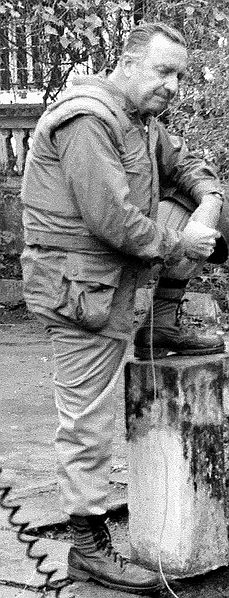
Cronkite in Vietnam

The mythical “Cronkite Moment” of 1968 offers supposedly timeless and irresistible lessons for journalists about the importance of telling truth to power and about the media’s potential to wield decisive influence.

Trouble is, the “Cronkite Moment” is fictive: It had little of the impact so often ascribed to it — impact of the kind described yesterday by Paul Fanlund, editor of the Capital Times in Madison, Wisconsin.

He wrote at a Capital Times blog:

“One has to be of a certain age, or a student of history, to know Walter Cronkite’s impact on Vietnam. In 1968, the famed broadcaster, who had been privately pro-war, pronounced on air that the war was no longer winnable, prompting President Lyndon Johnson to remark, ‘If I’ve lost Cronkite, I’ve lost the country.'”

Unpacking that paragraph reveals that it’s exaggerated in three ways.

One is that Cronkite (as he himself claimed for many years) had little if any “impact” on the war in Vietnam.

Two, Cronkite did not say on air that “the war was no longer winnable.” He said, in a special report broadcast on February 27, 1968, that the U.S. military was “mired in stalemate” in Vietnam and that negotiations might offer America a way out.

Three, Cronkite’s on-air assessment about Vietnam did not prompt President Lyndon Johnson to declare, “If I’ve lost Cronkite, I’ve lost the country.” Or anything akin to such a remark.

As I discuss in my media myth-busting book, Getting It Wrong, Johnson did not see the Cronkite program when it aired. And there is no evidence the president watched the show later, on videotape.

Moreover, Johnson was not in front of a television set when the Cronkite report about Vietnam was broadcast.

He was on the campus of the University of Texas at Austin, offering light-hearted remarks at the 51st birthday party of Governor John Connally, a long-time political ally.

About the time Cronkite was intoning his “mired in stalemate” assessment, Johnson wasn’t bemoaning his failed Vietnam policy; he wasn’t bemoaning the loss of Cronkite’s support.

He was jesting about Connally’s age.

“Today,” Johnson said, “you are 51, John. That is the magic number that every man of politics prays for—a simple majority.”

Even if he had watched the Cronkite report, it’s unlikely Johnson would have been much moved by the “mired in stalemate” assessment. It was hardly an original observation.

Leading U.S. news outlets such as the New York Times had invoked “stalemate” periodically in the months before the Cronkite program.

For example, in a news analysis published July 4, 1967, the Times said of the war effort:

“Many officers believe that despite the commitment of 466,000 United States troops now in South Vietnam … the military situation there has developed into a virtual stalemate.”

In a report from Saigon that was published August 7, 1967, the Times noted:

“‘Stalemate’ is a fighting word in Washington. President Johnson rejects it as a description of the situation in Vietnam. But it is the word used by almost all Americans here, except the top officials, to characterize what is happening. They use the word for many reasons ….”

By the end of February 1968, “stalemate” had been often used, and had become a rather tame assessment.

Far more assertive was the Wall Street Journal, which, in an editorial published four days before Cronkite’s report, said the U.S. war effort in Vietnam “may be doomed” and that “everyone had better be prepared for the bitter taste of defeat beyond America’s power to prevent.”

Interestingly, Cronkite disputed the notion his report about Vietnam had much impact.

He said in his 1997 memoir that his “mired in stalemate” assessment represented for Johnson “just one more straw in the increasing burden of Vietnam.” It was an analogy Cronkite repeatedly made.

“I think our broadcast simply was another straw on the back of a crippled camel,” he said in an interview on CNN in 1999.

But late in his life, Cronkite began to embrace the purported power of the “Cronkite Moment.” He said in 2006, in an interview with Esquire:

“To be honest, I was rather amazed that my reporting from Vietnam had such an effect on history.”

A case of believing one’s own clippings.

As I note in Getting It Wrong:

“Under scrutiny, the ‘Cronkite moment’ dissolves as illusory — a chimera, a media-driven myth.

“That it does is not so surprising. Seldom, if ever, do the news media exert truly decisive influences in decisions to go to war or to seek negotiated peace. Such decisions typically are driven by forces and factors well beyond the news media’s ability to shape, alter, or significantly influence.

“So it was in Vietnam, where the war ground on for years after the ‘Cronkite moment.'”

WJC

Recent and related:

The digital age ‘equivalent of the OJ Simpson trial’? Not quite

In Debunking, Media myths on July 7, 2011 at 9:02 am

Anthony mug shot

The stunning acquittal of Casey Anthony on the most serious charges in the slaying of her 2-year-old daughter has invited comparisons to the outcome of O.J. Simpson’s double-murder trial in 1995.

Those comparisons are mostly misleading.

The “Media File” blog of the Reuters news agency, for example, likened the Anthony verdict to the digital age “equivalent of the OJ Simpson trial.”

Simpson was found not guilty in October 1995 of the stabbing deaths of his former wife, Nicole, and her friend, Ron Goldman.

“Media File,” which was one of several outlets to detect parallels in the two cases, noted:

“Word of the verdict spread like wildfire … making a return to a normal life for newly-famous Anthony as unlikely as it was for already-famous Simpson 16 years ago.”

The blog also declared:

“Just as some greeted the Simpson verdict with tears and disbelief, there was much the same reaction about the Anthony verdict, including other mothers and daughters who railed against the verdict on the courthouse steps.

“Unlike OJ, who was accused of stabbing his [former] wife and one of her friends to death in a fit of jealous rage, there didn’t seem to be even the smallest cheering section for Anthony. Then again she was accused of murdering her two-year-old daughter, whose skeletal remains were found near the family home with duct tape dangling from her skull.

“Anthony’s defense was considerably less adamant than Simpson’s ‘100% not guilty’ plea, but, like Simpson, she did not take the stand in her own defense.”

While interesting, the parallels are mostly superficial and unrevealing.

The Anthony proceedings in Florida hardly were in the league of the O.J. trial in Los Angeles.

Casey Anthony, unlike Simpson, was no national celebrity before she was tried on charges of killing her daughter, Caylee.

As Marcia Clark, the prosecutor who lost the Simpson trial, said of Anthony:

“She never wowed the nation with her athletic prowess, shilled in countless car commercials, or entertained in film comedies.” Simpson had been a star football player, a pitchman for the Hertz car rental company, and a supporting actor in movies such as The Naked Gun.

Race — a central, defining factor in Simpson’s trial — was absent in the Anthony trial.

As such, the verdict in her case, surprising though it was, prompted nothing akin to the divisive, clashing reactions that greeted Simpson’s acquittal: Many whites reacted with shock and disbelief while many blacks cheered the outcome.

Significantly, the Anthony case produced nothing akin to the moment at the end of the Simpson trial, when the country held its collective breath and awaited the verdicts.

The Simpson jury deliberated less than four hours before deciding the case on October 2, 1995.  The hapless judge who presided over the 134-day trial, Lance Ito, announced that the verdicts would be read the following day, at 10 a.m. Pacific time, 1 p.m. Eastern.

As that hour approached on October 3, 1995, the country seemed almost to shut down. The New York Times reported that for 10 minutes, from 1 p.m. to 1:10 p.m. Eastern, “people didn’t work. They didn’t go to math class. They didn’t make phone calls. They didn’t use the bathroom. They didn’t walk the dog.

“They listened to the O.J. Simpson verdicts,” in what the newspaper accurately called “an eerie moment of national communion, in which the routines and rituals of the country were subsumed by an unquenchable curiosity.

“Millions of people in millions of places seemed to spend 10 spellbinding minutes doing exactly the same thing.”

Those minutes represented an exceptional occasion of collective anticipation, an almost incomparable moment.

For the collective anticipation they generated, the final moments in the Simpson case were rivaled perhaps only by the first manned lunar landing in July 1969.

WJC

Recent and related:

WaPo eludes responsibility in bogus hero-warrior tale about Lynch

In Debunking, Jessica Lynch, Media myths, Washington Post on July 6, 2011 at 9:17 am

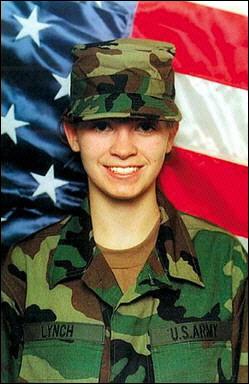
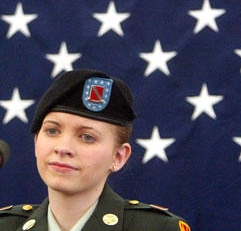
The Washington Post has the exclusive though obviously unwanted distinction of having brought the world the bogus story about Jessica Lynch and her battlefield heroics during the early days of the Iraq War.

Private Lynch, 2003

But in what has been a remarkable case of deflected attention, the Post’s singular role in the botched hero-warrior tale about Lynch has been obscured in favor of a darker, more sinister narrative that the Pentagon concocted the story and fed it to the American public.

That version — the military made it up — has become the dominant narrative of the Lynch case and is predictably invoked whenever Lynch attracts the news media’s attention, as she did on the Fourth of July.

She was in Idaho then to give a talk at a Presbyterian camp. Her appearance drew local news coverage, including a report published yesterday in the Spokesman-Review newspaper of Spokane.

The Spokesman-Review account blithely repeated the dominant narrative about Lynch’s supposedly heroic deeds, stating without attribution:

“The military initially portrayed Lynch as a hero, saying she fought back until she ran out of ammunition.”

Which just isn’t so.

As Vernon Loeb, one of the Post reporters on the botched Lynch story has made clear, the Pentagon wasn’t the source of the hero-warrior tale.

“Far from promoting stories about Lynch,” Loeb has said, “the military didn’t like the story.”

The dominant narrative is a false narrative.

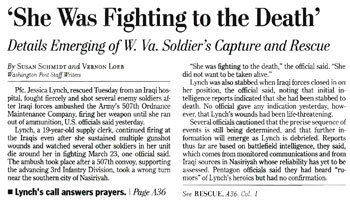
Loeb then was the Post’s defense correspondent. He shared a byline with Susan Schmidt on the sensational story about Lynch, which was published April 3, 2003, on the Post’s front page.

The Schmidt-Loeb report carried the headline:

“‘She was fighting to the death.'”

The story described how Lynch, then 19, supposedly had fought with Rambo-like ferocity in an ambush at Nasiriyah in southern Iraq, “even after she sustained multiple gunshot wounds and watched several other soldiers in her unit die around her.”

Lynch, a supply clerk in the Army’s 507th Maintenance Division, also was stabbed before being overwhelmed, according to the Post.

The newspaper cited otherwise unidentified “U.S. officials” for its sensational story, which was picked up and reported prominently by news organizations around the world.

The hero-warrior tale turned Lynch into the war’s best-known American soldier. But it wasn’t true.

Lynch hadn’t fired a shot in the ambush.

She was badly injured not from gunshots and stabbings, but in a Humvee that crashed fleeing the Iraqi attack.

In the years since, the Post  has not objected as the dominant narrative about the origins of the Lynch story has shifted to the Pentagon. The newspaper has said little, if anything, about the now-routine inclination to blame the military for the bogus tale.

Indeed, the newspaper has “never fully acknowledged or explained its extraordinary error about Jessica Lynch,” as I write in my latest book, Getting It Wrong.

It is certainly time for the Post to identify the “U.S. officials” who led it so badly astray on the Lynch story; doing so would clarify what role, if any, the Pentagon had in the derivation of the bogus tale.

Loeb has effectively absolved the Pentagon in the hero-warrior tale about Lynch, saying in an interview on NPR in December 2003:

“Our sources for that story were not Pentagon sources.

“And, in fact, I could never get anybody from the Pentagon to talk about those reports [about Lynch’s battlefield heroics] at all. I got indications that they had, in fact, received those intelligence reports, but the Pentagon was completely unwilling to comment on those reports at all.

“They wouldn’t say anything about Jessica Lynch.”

WJC

Recent and related:

The journos who saved us

In Cinematic treatments, Debunking, Media myths, Murrow-McCarthy myth, Washington Post, Watergate myth on July 5, 2011 at 12:49 pm

Murrow: Savior?

At their extreme, media-driven myths are hero-worshipping devices, invoked to venerate journalists as saviors.

Thankfully, such treatment is rare, and typically reserved for such journalists the legendary CBS newsman Edward R. Murrow and the Watergate reporting duo, Bob Woodward and Carl Bernstein.

Brian Unger, host of a history program on cable television, indulged in a bit of journalists-idolatry in compiling for an Entertainment Weekly blog a list of a dozen heroic figures from TV shows and the movies.

On the list was Ed Murrow, whom Unger praised for “saving us from someone who pretended to be a great American patriot, Sen. Joseph McCarthy.”

Also selected were Robert Redford and Dustin Hoffman, the movie stars who played Washington Post reporters Woodward and Bernstein in the film All the President’s Men. “Armed only with a pen,” Unger wrote, “they saved the country from itself.”

Journalists as saviors: Like most media-driven myths, the notion is simply too good to be true, too simplistic to be credible.

Murrow hardly took down Joe McCarthy in Murrow’s famous See It Now program on CBS in March 1954.

The show was aired four years after McCarthy began his communists-in-government witch-hunt, and four years after muckraking columnist Drew Pearson piercingly challenged and punctured many of McCarthy’s claims.

Pearson

The television critic for the New York Post, Jay Nelson Tuck, wrote that Murrow in the days after the show felt “almost a little shame faced at being saluted for his courage in the McCarthy matter. He said he had said nothing that … anyone might not have said without a raised eyebrow only a few years ago.”

Years later, Murrow’s CBS colleague, Eric Severaid, chafed at the misleading interpretation attached to the See It Now program on McCarthy which, he noted, “came very late in the day.”

Sevareid said: “The youngsters read back and they think only one person in broadcasting and the press stood up to McCarthy and this has made a lot of people feel very upset, including me, because that program came awfully late.”

As I write in my media myth-busting book, Getting It Wrong, Americans in early 1954 weren’t “hoping for someone to step up and expose McCarthy, or waiting for a white knight like Murrow to tell them about the toxic threat the senator posed.”

By then they knew, thanks to the work of journalists such as Pearson.

Murrow no more ended McCarthy’s witch-hunt than Woodward and Bernstein brought down Richard Nixon’s corrupt presidency in Watergate — and, as Unger wrote, “saved the country from itself.”

Whatever that means.

It is clear that Woodward and Bernstein’s contributions to unraveling the Watergate scandal of 1972-74 were modest, and pale in significance when compared to the work of such subpoena-wielding entities as special prosecutors, both houses of Congress, the Justice Department, the FBI.

“Even then,” I write in Getting It Wrong, Nixon “likely would have served out his term if not for the audiotape recordings he secretly made of most conversations in the Oval Office of the White House. Only when compelled by the Supreme Court did Nixon surrender those recordings, which captured him plotting” to obstruct justice in the Watergate scandal.

Interestingly, principals at the Washington Post over the years have scoffed at the mythical and mediacentric interpretation that the newspaper brought down Nixon.

In 2005, for example, Michael Getler, then the newspaper’s ombudsman, wrote in a column:

“Ultimately, it was not The Post, but the FBI, a Congress acting in bipartisan fashion and the courts that brought down the Nixon administration. They saw Watergate and the attempt to cover it up as a vast abuse of power and attempted corruption of U.S. institutions.”

Woodward, himself, declared in 2004, in an interview with American Journalism Review:

To say the press brought down Nixon, that’s horseshit.”

But undoubtedly it’s the film All the President’s Men that’s largely responsible for the heroic-journalist trope that Woodward and Bernstein took down Nixon and saved the country.

All the President’s Men easily is the most-viewed movie made about Watergate. And as I note in Getting It Wrong, it places “Woodward and Bernstein at the center of Watergate’s unraveling while denigrating the efforts of investigative agencies such as the FBI.

“The effect was to solidify and elevate the heroic-journalist myth, giving it dramatic power, and sustaining it in the collective memory.”

WJC

Recent and related:

False narrative accompanies Jessica Lynch to Idaho

In Debunking, Jessica Lynch, Media myths, Washington Post on July 4, 2011 at 7:12 am

Lynch in 2003

The false narrative that the Pentagon cynically concocted the tale of her battlefield derring-do in Iraq has accompanied Jessica Lynch to Idaho, where she is to deliver a speech today on the Fourth of July.

News reports in advance of Lynch’s appearance have said the Pentagon was the source of the erroneous report that she fought fiercely in an ambush in Nasiriyah in March 2003 — an engagement in which 11 American soldiers were killed.

But as I discuss in my media-mythbusting book, Getting It Wrong, the tale of Lynch’s purported heroics was thrust into the public domain not by the Pentagon but solely by the Washington Post.

The Post in a sensational, front-page story published April 3, 2003, said that Lynch, a 19-year-old supply clerk in the Army’s 507th Maintenance Company, had fought fiercely in the attack at Nasiriyah, suffering gunshot and stab wounds while firing round after round into the attacking Iraqis.

The Post’s article, which appeared beneath the bylines of Susan Schmidt and Vernon Loeb, was built almost entirely around anonymous sources identified only as “U.S. officials.”

One of the Schmidt-Loeb sources was quoted as saying of Lynch:

“‘She was fighting to the death. She did not want to be taken alive.'”

The article was thoroughly wrong. Bogus.

Schmidt and Loeb were misled by their sources, who to this day remain unidentified.

Lynch never fired a shot in the fighting in Nasiriyah.

She was neither shot nor stabbed.

According to her own account in a co-authored book, I Am a Soldier, Too, Lynch cowered in the back seat of a Humvee as it sped from the attack, praying, “Oh God help us. Oh God, get us out of here.”

The fleeing Humvee was struck by a rocket-propelled grenade, which sent the vehicle crashing into a disabled tractor-trailer just ahead. Lynch suffered shattering injuries; the four other soldiers in the Humvee were fatally injured.

Lynch was taken to an Iraqi hospital where she lingered near death before a U.S. special forces team rescued her on April 1, 2003.

The Post’s botched story by Schmidt and Loeb appeared two days later, beneath the headline:

“‘She was fighting to the death.'”

Over time, the singular role of the Post in the bogus hero-warrior story about Lynch has faded.

In its place has emerged the false narrative that the Pentagon made up the story to bolster popular support for the war.

But as I note in Getting It Wrong, the Pentagon wasn’t the Post’s source for the bogus hero-warrior tale.

We know that from an interview in December 2003 on NPR’s  Fresh Air show program. On that show, Loeb said he “could never get anybody from the Pentagon to talk about” Lynch’s purported heroics.

“They wouldn’t say anything about Jessica Lynch,” Loeb declared.

“I just didn’t see the Pentagon trying to create a hero where there was none,” he added. “I mean …they never showed any interest in doing that, to me.”

Loeb was unequivocal in saying:

“Our sources for that story were not Pentagon sources.”

Loeb said they were “some really good intelligence sources” in Washington, D.C., and added:

“We wrote a story that turned out to be wrong because intelligence information we were given was wrong. That happens quite often.”

Loeb on another occasion was quoted in the New York Times as saying:

“Far from promoting stories about Lynch, the military didn’t like the story.”

Despite Loeb’s exculpatory comments, the erroneous interpretation that the Pentagon concocted the story about Lynch’s heroics has taken hold and lives on — in part because it corresponds well to a view that the war in Iraq was a thoroughly botched affair.

The erroneous references to the Pentagon in advance stories about Lynch’s Fourth of July talk near Craigmont, Idaho, underscore anew why the Post ought to identify the sources who led it astray on Lynch’s supposed heroics.

By doing so, the Post will help to debunk a malicious false narrative and help set the record straight.

And after all, that’s what journalism is supposed to do.

WJC

Recent and related:

‘What’s a couple of centuries’ when it comes to China and Zhou Enlai?

In Bra-burning, Debunking, Media myths on July 3, 2011 at 5:58 am

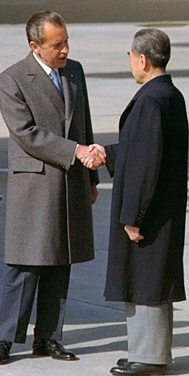
When Zhou Enlai observed that it was “too early” to assess the significance of political upheaval in France, he was speaking about the turmoil of 1968, and not, as is often believed, about the French Revolution that began in 1789.

Zhou greets Nixon, 1972

The Independent newspaper in London referred to the Zhou misunderstanding in an editorial posted yesterday, and essentially shrugged it off, stating :

“Revisionists now claim that he was commenting not on the storming of the Bastille in 1789, but on the student riots of 1968. But what’s a couple of centuries to a China still engaged in its own long march to modernity?”

The editorial’s snark and breezy dismissiveness may be because the “revisionists” include the Financial Times, a rival London newspaper.

The Financial Times was first to call attention to the mistaken interpretation of Zhou’s remark.

Zhou, the Chinese premier, said during President Richard Nixon’s trip to China in February 1972 that it was “too early to say” what were the implications of political upheaval in France.

Charles (Chas) Freeman, an American diplomat who was Nixon’s interpreter on the China visit, told a panel discussion in Washington, D.C., last month that Zhou clearly was speaking about the turmoil and student protests in France in 1968 — not the French revolution of nearly 200 years before.

A reporter for the Financial Times moderated the panel discussion and in his article wrote that Freeman said:

“There was a mis­understanding [about Zhou’s remark] that was too delicious to invite correction.”

In a subsequent interview with me, Freeman said:

“I cannot explain the confusion about Zhou’s comment, except in terms of the extent to which it conveniently bolstered a stereotype” about Chinese leaders’ taking an exceptionally long and patient view of history.

Stereotyping helps explain why Zhou’s comment has been so widely quoted — and why debunking its erroneous and more extravagant interpretation really does matter.

Stereotyping, as I discuss in my latest book, Getting It Wrong, can be buoyed by media-driven myths, those dubious media-centric stories that masquerade as factual.

In Getting It Wrong, I note a number of examples of stereotypes that have been bolstered by media myths.

I write: “The misleading if euphonic epithet of ‘bra-burning‘ emerged from a demonstration on the Atlantic City boardwalk in 1968 to become shorthand for denigrating the emergent feminist movement and dismissing it as trivial and even a bit odd. The widely misreported pandemic of ‘crack babies‘ in the late 1980s and early 1990s seemed to confirm the worst pathologies associated with inner-city poor people.”

Rather than reflecting China’s supposedly long and patient view of history, Zhou’s “too early” observation was cautious analysis about events that were fairly recent and still under interpretation.

Zhou’s was a pragmatic observation, hardly sage or long-sighted.

WJC

Recent and related:

‘Sneakily patriotic’ movies that promote media myths

In Cinematic treatments, Debunking, Media myths, Murrow-McCarthy myth, Washington Post, Watergate myth on July 1, 2011 at 7:28 am

The film critic for Gannett News Service has identified in time for the Fourth of July weekend 10 movies he says are “sneakily patriotic.”

Meaning they promote patriotism indirectly, without a lot of flag-waving flamboyance.

The list, compiled by critic Bill Goodykoontz, includes Apollo 13, the dramatic 1995 movie about an ill-fated lunar mission that ended safely, and Miracle, the 2004 film about the gold medal-winning 1980 U.S. Olympics hockey team, a movie that does feature a fair amount of flag-waving.

Notably, two of the “sneakily patriotic” films have promoted and propelled media-driven myths — those dubious and improbable tales about news media that masquerade as factual.

Both myth-promoting movies push the extravagant notion that the news media are, or were, powerful and decisive forces in American political life. And both movies are discussed in my media myth-busting book, Getting It Wrong, which came out last year.

The myth-promoters are:

Goodykoontz, in describing the two movies, invokes their mythical aspects.

About All the President’s Men, Goodykoontz writes that Woodward and Bernstein’s “coverage of the Watergate break-in … led, ultimately, to the resignation of Richard Nixon.”

And Good Night, and Good Luck, he writes, “evokes an earlier era of media and how it could be used to stem the abuse of power.”

I point out in Getting It Wrong how movies can solidify media-driven myths in the public’s consciousness. “High-quality cinematic treatments,” I write, “are powerful agents of media myth-making, and can enhance a myth’s durability.”

The cinematic version of All the President’s Men solidified what I call the heroic-journalist myth of Watergate — the simplistic notion that Woodward and Bernstein’s investigative reporting brought down Richard Nixon’s corrupt presidency.

All the President’s Men, I write, allows no interpretation other than it was the work of Woodward and Bernstein that “set in motion far-reaching effects that brought about the first-ever resignation of a U.S. president.”

But to embrace that interpretation, I further write in Getting It Wrong, “is to abridge and misunderstand the scandal and to indulge in a particularly beguiling media-driven myth.”

The heroic-journalist interpretation serves to diminish and ignore the far more powerful forces that unraveled the scandal and forced Nixon from office.

Those forces, I write, “included special prosecutors, federal judges, both houses of Congress, the Supreme Court, as well as the Justice Department and the FBI.

“Even then, Nixon likely would have served out his term if not for the audiotape recordings he secretly made of most conversations in the Oval Office of the White House. Only when compelled by the Supreme Court did Nixon surrender those recordings, which captured him” plotting to obstruct justice in the Watergate scandal.

When considered against the tableau of subpoena-wielding authorities, the contributions of Woodward and Bernstein pale in significance and consequence.

A somewhat similar dynamic is at work in Good Night, and Good Luck.

The movie, which was released in black and white to lend a 1950s feel, permits no other conclusion than Murrow’s See It Now program about McCarthy single-handedly ended the senator’s communists-in-government witch-hunt.

Murrow’s show detailing McCarthy’s loathsome and bullying tactics was aired in March 1954 — long after other journalists had confronted the senator and, in some cases, paid a heavy price for doing so.

Among those journalists was the muckraking columnist Drew Pearson, who took aim at McCarthy in February 1950, not long after the senator began his red-baiting campaign.

By the end of that year, McCarthy had physically assaulted Pearson and denounced him from the Senate floor as the “diabolically” clever “voice of international communism,” a “prostitute of journalism,” and the “sugar-coated voice of Russia.”

In the Senate speech excoriating Pearson, McCarthy aimed a threat at Adam Hat Stores Inc., the principal sponsor of the columnist’s Sunday night radio program.

McCarthy said that “anyone who buys from a store that stocks an Adams hat is unknowingly contributing at least something to the cause of international communism by keeping this communist spokesman on the air.”

Within a week, Adam Hat announced the end of its sponsorship of Pearson’s program.

Pearson may not have had the finest reputation in 1950s American journalism. Jack Shafer, the media critic for Slate.com, wrote last year that Pearson was “one of the skuzziest journalists to ever write a story.”

But Pearson took on McCarthy years before Murrow — and long before it was safe. He certainly was “sneakily patriotic” in doing so.

WJC

Recent and related: