The ombudsman of the Washington Post, Patrick Pexton, weighs in today with platitudes and hang-wringing about the newspaper. He mostly misses the mark.
 Pexton writes in his column that the Post’s “future lies not with the rich; it lies with the citizenry.
“This newspaper must be the one source of high-quality, probing Washington news that readers in this region and across the country can look to for holding their government accountable. This publication must be for all Americans.”
Oh, brother.
But wait: Here’s more vague abstraction:
“The Post,” Pexton writes, “can’t be a liberal publication or a conservative one. It must be hard-hitting, scrappy and questioning — skeptical of all political figures and parties and beholden to no one. It has to be the rock-’em-sock-’em organization that is passionate about the news. It needs to be less bloodless and take more risks when chasing the story and the truth.”
A “rock-’em-sock-’em organization,” eh? Well, that’s useful guidance.
In his five or so months as ombudsman, Pexton hasn’t dared touch the electrified third rail about the Post, which one of his predecessors, Deborah Howell, gamely if belatedly addressed.
That’s a decided lack of intellectual diversity in the Post’s newsroom. In mid-November 2008, shortly after Barack Obama was elected president, Howell wrote in her ombudsman column:
“I’ll bet that most Post journalists voted for Obama. I did. There are centrists at The Post as well. But the conservatives I know here feel so outnumbered that they don’t even want to be quoted by name in a memo.”
Howell’s column quoted Tom Rosenstiel of the Project for Excellence in Journalism as saying that “conservatives are right that journalism has too many liberals and not enough conservatives. It’s inconceivable that that is irrelevant.”

In Obama's thrall
The lack of intellectual diversity often shows in the Post’s report. Even casual reading signals that the newspaper remains in the thrall of Obama, despite his clearly failing presidency.
Obama scarcely gets “rock-’em-sock-’em” treatment from the Post.
Last Wednesday, for example, the Post’s once-edgy “Style” section devoted most of its front page to a cheery feature about the meaning of Obama’s turning 50-years-old.
“On Thursday,” the article gushed, “President Obama — one of American history’s most precocious achievers — joins the ranks of Washington 50-somethings ….”
But what ails the Post goes well beyond its routinely tender treatment of Obama.
The Post’s local report is superficial, a diet of eye-rolling, feel-good features. The newspaper carries little staff-produced national coverage. Its international report is undistinguished, especially compared to that of the New York Times.
Moreover, the Post offers few notable cases of investigative journalism any more.
It has won two Pulitzer Prizes for investigative reporting in 25 years, which has to be considered meager for a newspaper that reputedly brought down Richard Nixon’s corrupt presidency with its relentless digging into the Watergate scandal.
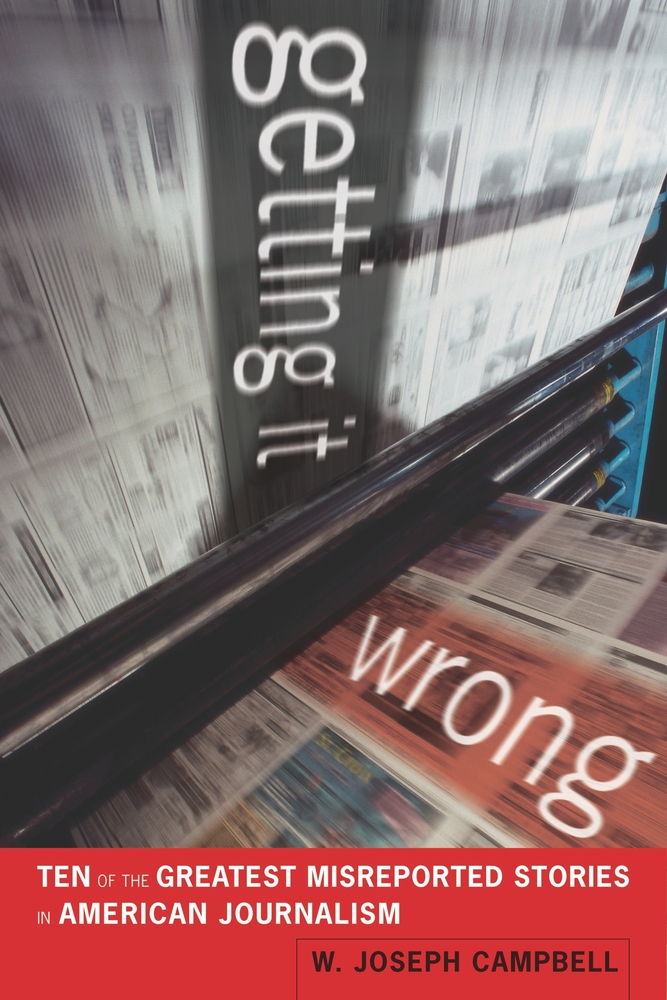
But as I discuss in my latest book, Getting It Wrong, the Post-Watergate trope, of course, is a powerful media-driven myth.
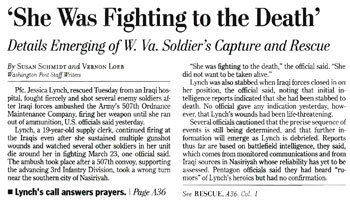
I’d be remiss were I to fail to note that the Post never has come clean about how it erred so utterly in offering the world the bogus hero-warrior tale about Jessica Lynch in the early days of the Iraq War.
Lynch, the Post reported on its front page on April 3, 2003, “fought fiercely and shot several enemy soldiers after Iraqi forces ambushed the Army’s 507th Ordnance Maintenance Company, firing her weapon until she ran out of ammunition, U.S. officials said yesterday.”
But none of the derring-do attributed to Lynch was true, and the Post has never explained who led it so badly astray.
Moreover, the staff cuts and buyouts of recent years left few notable characters on the newspaper’s staff.
Gone are such colorful figures as the erudite and pugnacious Henry Allen, a Pulitzer winner who left the Post after throwing punches at a staff writer who called him a c—sucker.
Now there was “rock-’em-sock-’em,” old school variety.
Many thanks to Instapundit
Glenn Reynolds for linking to this post.
Recent and related:
- A media myth eruption: WaPo, Watergate, and Nixon’s fall
- Inflating the exploits of WaPo’s Watergate reporters
- Carl Bernstein, disingenuous
- The journos who saved us
- WaPo eludes responsibility in bogus hero-warrior tale about Lynch
- WaPo’s latest ‘missed opportunity’ evokes Jessica Lynch case
- Watergate and its hardy myths
- Watergate a Washington Post ‘scoop’? Not quite
- Some snarky history from WaPo
- ‘You might bring down a government’: Sure, that happens
- Why they get it wrong
- ‘Getting It Wrong’ wins SPJ award for Research about Journalism










 Media Myth Alert