W. Joseph Campbell

Posts Tagged ‘Murrow’

Those delicious but phony quotes ‘that refuse to die’

In Cinematic treatments, Cronkite Moment, Debunking, Furnish the war, Media myths, Murrow-McCarthy myth, Spanish-American War, Washington Post, Watergate myth on June 25, 2011 at 10:31 am

Craig Silverman, author of Regret the Error, posted an intriguing column yesterday about appealing but dubious quotations that journalists seem especially prone to cite, noting that such famous lines “often turn out to be manufactured or inexact representations.”

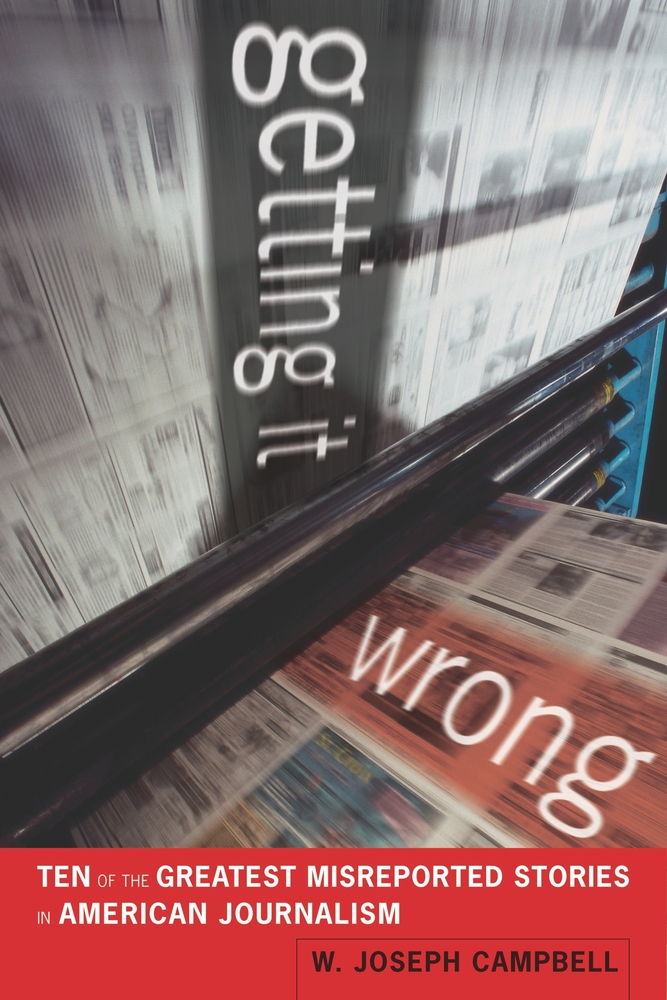
It’s an important reminder, given the endless popularity of quotations that are neat, tidy, and irresistibly delicious. As I note in my latest book, Getting It Wrong, “Turns of phrase that sound too neat and tidy often are too perfect to be true.”
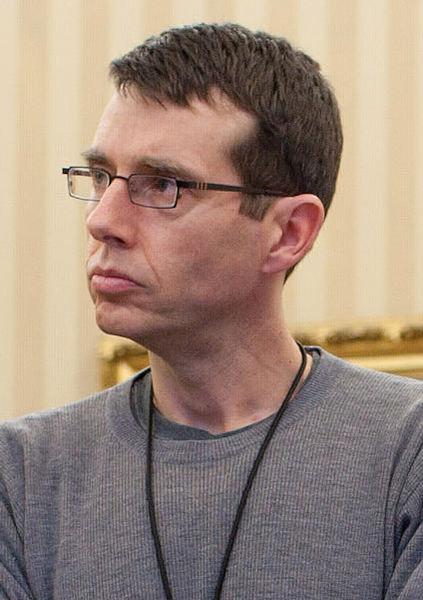
Plouffe: Not so 'queasy'?

Silverman’s column, titled “Misquotes that refuse to die,” was centered around a comment attributed in 2009 to David Plouffe, Barrack Obama’s campaign manager in 2008.

Plouffe supposedly said he felt a bit “queasy” about the prospect of Obama’s facing Jon Huntsman, the Republican former Utah governor, in the presidential election in 2012.

“Plouffe never said it,” Silverman wrote, describing how the queasy line took on life of its own.

Journalists can be particularly susceptible to such succinct “little gems,” as Silverman put it, because the gems are so effective in making a point or in distilling complexity.

Silverman’s column noted two famous, dubious quotes that I dismantle in Getting It Wrong.

One of them is the comment misattributed to President Lyndon Johnson who,  in reaction to Walter Cronkite’s on-air assessment that the war in Vietnam was “mired in stalemate,” supposedly said:

“If I’ve lost Cronkite, I’ve lost Middle America.”

Or something to that effect.

Versions as to what Johnson supposedly said vary quite a lot — which can be a marker of a media myth. I also point out in Getting It Wrong that Johnson did not see the Cronkite report when it aired on CBS on February 27, 1968.

The other dubious quote discussed in Getting It Wrong and mentioned by Silverman is William Randolph Hearst’s purported vow to “furnish the war” with Spain.

Reasons for doubting the Hearstian vow are many, I write, and include the fact that the telegram in which Hearst supposedly made the statement has never turned up. Plus, Hearst denied making such a vow.

A number of other famous and delicious quotes favored by journalists likewise have proven to be false, made-up, or of mythical dimension; among them:

  • Too early to say.” It’s often said that Chinese premier Zhou Enlai offered the observation in 1972, as sage, far-sighted analysis about the effects of the French Revolution of 1789. But according to a retired American diplomat, Charles W.  (Chas) Freeman Jr., Zhou’s comment, which came during President Richard Nixon’s visit to China in February 1972, was about political turmoil in France in 1968. “I cannot explain the confusion about Zhou’s comment, except in terms of the extent to which it conveniently bolstered a stereotype” about Chinese leaders taking an exceptionally long and patient view of history, Freeman said recently. Freeman was Nixon’s interpreter on the trip.

So what to do about these delicious but dubious and phony quotations?

Keep pounding away at them, calling them out for what they are, whenever they appear. That’s the only effective way of debunking.

But even then, thorough and utter debunking can be rare.

WJC

Recent and related:

Invoking Murrow-McCarthy myth to assert the worthiness of TV

In Debunking, Media myths, Murrow-McCarthy myth on June 11, 2011 at 6:58 am

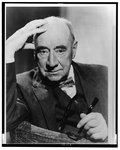
Murrow

Media-driven myths have a variety of perverse applications — including value in scoring points in arguments.

Today’s Sydney Morning Herald does just that in turning to a particularly hardy media myth — that of Edward R. Murrow’s supposedly decisive televised report in 1954 about Senator Joseph R. McCarthy.

In a commentary titled “In defense of the idiot box,” the Morning Herald argues for the worthiness of television, asserting that the medium “has the power to shock, appeal, nauseate and, if everything comes together, inspire.”

The commentary further states:

“TV has made a difference before. In the early days, Edward R. Murrow took on Joe McCarthy, starting a tradition of fearless TV journalism exposing the corruption of government, the horrors of war and the dark side of society. The medium may have numbed the odd brain but it’s also done a lot of good ….”

Mind-numbing television generally is.

More doubtful is the commentary’s extravagant claim about the fearlessness of Murrow. His report about McCarthy, which aired on the See It Now show of March 9, 1954, scarcely can be termed “fearless” and shouldn’t be seen as inaugurating any sort of “tradition” of searching, intrepid broadcast journalism.

That’s because Murrow was very late in taking on McCarthy and the senator’s heavy-handed campaign against communists in government.

Pearson, muckraking columnist

As I discuss in Getting It Wrong, my media mythbusting book that came out last year, the evidence “is overwhelming that Murrow’s famous program on McCarthy had no … decisive effect, that Murrow in fact was very late in confronting McCarthy, that he did so only after other journalists had challenged the senator and his tactics for months, even years.”

Notable among those journalists was Drew Pearson, who wrote the syndicated and widely read muckraking column, “Washington Merry-Go-Round.” Pearson was quick to call attention to the recklessness of McCarthy’s claims.

He took on McCarthy in February 1950, soon after the senator first raised his claims about communists in high places in the U.S. government.

Pearson wrote that month that “the alleged communists which [McCarthy] claims are sheltered in the State Department just aren’t.”

Far from being fearless, Murrow, it can be argued, waited till the risks had subsided before taking on McCarthy. By March 1954, McCarthy’s capacity to stir dread was in decided retreat.

I note in Getting It Wrong that Eric Sevareid, Murrow’s friend and colleague at CBS News, was among those who chafed at the interpretation of fearlessness attached to the Murrow program which, he noted, “came very late in the day.”

Sevareid said in the 1970s:

“The youngsters read back and they think only one person in broadcasting and the press stood up to McCarthy and this has made a lot of people feel very upset, including me, because that program came awfully late.”

I further note in Getting It Wrong how the media myth about Murrow took hold despite the protestations of its central figures.

“In the days and weeks after the See It Now program,” I write, “Murrow said he recognized his accomplishments were modest, that at best he had reinforced what others had long said about McCarthy.

“Jay Nelson Tuck, the television critic for the New York Post, wrote that Murrow felt ‘almost a little shame faced at being saluted for his courage in the McCarthy matter. He said he had said nothing that … anyone might not have said without a raised eyebrow only a few years ago.'”

Murrow, moreover, told Newsweek magazine: “It’s a sad state of affairs when people think I was courageous” in confronting McCarthy.

Fred W. Friendly, Murrow’s collaborator and co-producer, likewise rejected claims that the See It Now program on McCarthy was pivotal or decisive. As Friendly wrote in his memoir:

“To say that the Murrow broadcast of March 9, 1954, was the decisive blow against Senator McCarthy’s power is as inaccurate as it is to say that Joseph R. McCarthy … single-handedly gave birth to McCarthyism.”

WJC

Recent and related:

‘Getting It Wrong’ wins SPJ award for Research about Journalism

In Bay of Pigs, Bra-burning, Cronkite Moment, Debunking, Furnish the war, Hurricane Katrina, Jessica Lynch, Media myths, Media myths and radio, Murrow-McCarthy myth, New York Times, Spanish-American War, War of the Worlds, Washington Post, Watergate myth, Yellow Journalism on May 10, 2011 at 9:02 am

The Society of Professional Journalists announced today that my media-mythbusting book, Getting It Wrong, is the winner of the 2010 Sigma Delta Chi award for Research about Journalism.

The award will be presented in September at the Excellence in Journalism convention in New Orleans.

Getting It Wrong, which was published last year by the University of California Press, debunks 10 prominent media-driven myths, which are dubious tales about the news media that masquerade as factual.

Here’s a summary of the 10 myths dismantled in Getting It Wrong:

  1. Remington-Hearst: William Randolph Hearst’s famous vow “to furnish the war” with Spain is almost certainly apocryphal.
  2. War of Worlds: The notion that the War of Worlds radio dramatization in 1938 caused nationwide panic and mass hysteria is exaggerated.
  3. Murrow-McCarthy: Edward R. Murrow’s famous See It Now program in March 1954 did not end Senator Joseph McCarthy’s communists-in-government witch-hunt; Murrow in fact was very late to take on McCarthy.
  4. Bay of Pigs: The New York Times did not suppress its reporting in the run-up to the ill-fated Bay of Pigs invasion in April 1961.
  5. Cronkite-Johnson: Walter Cronkite’s special report on Vietnam in February 1968 did not prompt an immediate reassessment or revision of U.S. war policy.
  6. Bra-burning: Humor columnist Art Buchwald helped spread the notion that feminist demonstrators dramatically burned their bras at a Miss America protest in September 1968.
  7. Watergate: The Washington Post’s intrepid reporters, Carl Bernstein and Bob Woodward, did not bring down Richard Nixon’s corrupt presidency. That they did is a trope that knows few bounds.
  8. Crack babies: The much-feared “bio-underclass” of children born to women who smoked crack cocaine during their pregnancies never materialized.
  9. Jessica Lynch: The Washington Post’s erroneous reporting about Jessica Lynch early in the Iraq War gave rise to several myths about her capture and rescue.
  10. Hurricane Katrina: News coverage of Katrina’s aftermath in New Orleans in early September 2005 was marred by wild exaggerations about extreme, Mad Max-like violence.

The “Research about Journalism” award recognizes “an investigative study about some aspect of journalism,” SPJ says, and “must be based on original research; either published or unpublished, and must have been completed during the 2010 calendar year. … Judges will consider value to the profession, significance of the subject matter, thoroughness of the research, and soundness of the conclusion.”

WJC

Recent and related:

57 years on: Was it really TV’s ‘finest half hour’?

In Anniversaries, Debunking, Media myths, Murrow-McCarthy myth on March 9, 2011 at 12:07 am

Murrow

Today’s the 57th anniversary of what has been called the “finest half hour” in television history — when Edward R. Murrow took to the small screen to confront Joseph R. McCarthy and the senator’s red-baiting ways.

Murrow’s on-air analysis of McCarthy and his tactics was so powerful, so revealing, that it marked an abrupt end to the senator’s witch-hunt for communists in government.

Or so the media myth has it.

The occasion was Murrow’s 30-minute See It Now program that aired on CBS on March 9, 1954.

As I write in my mythbusting book, Getting It Wrong, the program supposedly affirmed the potential power of television and confirmed the courage of Murrow.

I also write:

“The never-ending accolades notwithstanding, the evidence is overwhelming that Murrow’s famous program on McCarthy had no such decisive effect, that Murrow in fact was very late in confronting McCarthy, that he did so only after other journalists had challenged the senator and his tactics for months, even years.”

Indeed, the legendary status accorded the Murrow program has effectively “obscured and diminished the contributions of journalists who took on McCarthy years earlier, at a time when doing so was quite risky,” I point out in Getting It Wrong.

These journalists deserve more credit than Murrow for courage in confronting the McCarthy menace when it was most virulent.

One of them was James A. Wechsler, editor of the New York Post, which in 1951 published a bare-knuckle, 17-part series about McCarthy.

The closing installment characterized McCarthy as “a drunk at a party who was funny half an hour ago but now won’t go home. McCarthy is camped in America’s front room trying to impress everybody by singing all the dirty songs and using all the four-letter words he knows. The jokes are pointless, the songs unfunny, the profanity a bore.”

The series appeared in the Post 2½ years before Murrow’s program on McCarthy.

Wechsler was called before McCarthy’s investigative subcommittee and grilled about having been a member before in the Communist Youth League.

Wechsler said his being summoned to the closed-door hearing was “a reprisal against a newspaper and its editor for their opposition to the methods of this committee’s chairman.”

He sparred effectively with McCarthy, telling the senator at one point that the New York Post “is as bitterly opposed to Joe Stalin as it is to Joe McCarthy, and we believe that a free society can combat both.”

But in the end, Wechsler complied, reluctantly, with the subcommittee’s demand for names of people he had known to be communists during his time in the Youth League.

During McCarthy’s communists-in-government campaign, which lasted from 1950 to 1954, the senator had no more relentless or scathing foe in the news media than muckraking columnist Drew Pearson.

He wrote the widely published “Washington Merry-Go-Round” column — and was quick off the dime, taking on McCarthy soon after the senator first raised his reckless claims about communists in high places in the U.S. government and military.

Pearson wrote in February 1950, in one of his first columns about McCarthy’s charges, that “the alleged communists which he claims are sheltered in the State Department just aren’t.”

Pearson noted that he had covered the State Department for years and had been “the career boys’ severest critic.

“However,” he added, “knowing something about State Department personnel, it is my opinion that Senator McCarthy is way off base.”

And he was.

Pearson’s frequent challenges angered McCarthy who in December 1950, physically assaulted the columnist after a dinner at the hush-hush Sulgrave Club on DuPont Circle in Washington, D.C.

McCarthy confronted Pearson in the Sulgrave’s coat check room and either slapped, kneed, or punched the columnist. Accounts vary.

Richard Nixon, who recently had been sworn in as a U.S. Senator, intervened to break up the encounter. In his memoir RN, Nixon wrote that Pearson “grabbed his coat and ran from the room” and “McCarthy said, ‘You shouldn’t have stopped me, Dick.’”

So by the time Murrow took on McCarthy 57 years ago tonight, Americans really weren’t “waiting for a white knight like Murrow to tell them about the toxic threat the senator posed,” I write in Getting It Wrong, adding:

“By then, McCarthy and his tactics were well-known and he had become a target of withering ridicule — a sign of diminished capacity to inspire dread. On the day the See It Now program aired, former president Harry Truman reacted to reports of an anonymous threat against McCarthy’s life by saying:

“‘We’d have no entertainment at all if they killed him.'”

The notion that Murrow and his television program brought down McCarthy is a delicious story of presumptive media power:  More accurately, it is a tenacious media-driven myth.

WJC

Recent and related:

Suspect Murrow quote pulled at Murrow school

In Debunking, Furnish the war, Media myths, Murrow-McCarthy myth on February 17, 2011 at 7:37 am

Did he say it?

I’ve written occasionally at Media Myth Alert about a suspect quotation attributed to broadcasting legend Edward R. Murrow.

Here’s the quotation:

“We must not confuse dissent with disloyalty. When the loyal opposition dies, I think the soul of America dies with it.”

The quotation is half true. That is, the first part was indeed spoken by Murrow; the other part is just too good to be true.

I happened to find the full quotation posted at the welcome page of the dean of the Edward R. Murrow College of Communication at Washington State University.

By email, I asked the dean, Lawrence Pintak, what he could tell me about the quote’s provenance.

I noted in my email that the first portion  of the passage – “We must not confuse dissent with disloyalty” – was spoken by Murrow near the end of his 1954 See It Now program about the witch-hunting ways of Senator Joseph R. McCarthy.

“But the rest of quotation – ‘When the loyal opposition dies, I think the soul of America dies with it’ – was not spoken during that program,” I noted in my email. I added that “I’ve not been able to determine where and when it was spoken or written.”

I further noted that I had consulted a database of historical newspapers — a full-text repository that includes the New York Times, Washington Post, Chicago Tribune, and Los Angeles Times — but no articles quoting the “loyal opposition” passage were returned.

I also mentioned in my email that a search of the LexisNexis database “produced a few returns, but none dated before 2001.” None of them state where and when Murrow made the purported comment.

Pintak, who became the first dean of the Murrow College in 2009, stated in reply that the online site had been constructed before his arrival at Washington State. He added:

“My suspicion is that the site was built by the university marketing comm. people and they may well have just pulled it from the web, rather than original source. If it’s not correct, we certainly need to get it pulled.”

He referred my inquiry to an instructor on his faculty, Paul Mark Wadleigh, whom he asked to investigate.

A few hours later, Wadleigh sent an email to the dean and me, stating:

“While it seems to reflect the Murrow spirit, the lack of evidence that he phrased it that way is indeed suspicious.”

Wadleigh also wrote that the transcript of Murrow’s closing comments in the 1954 show about McCarthy “reveals a different language and tone than the ‘loyal opposition’ quote.”

Good point.

His bottom line?

“I feel the evidence says no, Murrow did not say this,” Wadleigh wrote.

By the end of the day, the suspect quote had been pulled from the dean’s welcome page. Just the authentic portion — “We must not confuse dissent with disloyalty” — remains posted there.

The College’s move to pull the quote not only was commendable; it stands as further evidence that the “loyal opposition” line attributed to Murrow is dubious. It may have been made up well after Murrow’s death in 1965, perhaps to score points politically.

I’ve noted that if it were genuine, if Murrow had uttered the line, then its derivation shouldn’t be too difficult to determine.

Moreover, the quotation seems too neat and tidy to be authentic — which can be a marker of a media-driven myth.

As I write in my mythbusting book, Getting It Wrong:

“To thwart media myths, journalists can start by applying a measure of skepticism to pithy, telling quotes such as [William Randolph] Hearst’s vow to ‘furnish the war‘ and even to euphonic phrases such as ‘bra burning.’

“Turns of phrase that sound too neat and tidy,” I write, “often are too perfect to be true.”

WJC

Recent and related:

America ‘was saved by Murrow’? No way

In Debunking, Media myths, Murrow-McCarthy myth on February 5, 2011 at 10:14 am

He 'saved' America?

Edward R. Murrow’s legendary television report in 1954 about Senator Joseph R. McCarthy has stirred no small praise over the years.

The accolades for Murrow’s unflattering portrait of the senator and his communists-in-goverment witch-hunt have been many and often excessive.

Murrow’s show often is praised for putting an end to McCarthy’s blustering and erratic campaign that he had begun in 1950. But few bows to Murrow have been as deep as this characterization, which appeared yesterday in the Jerusalem Post:

“America under Joseph McCarthy’s influence was in danger of losing its right of dissent until it was saved by courageous men like Edward R. Murrow and Joseph Welch with his famous accusation, ‘Have you no shame?'” (Welch was a lawyer who famously confronted McCarthy at Senate hearing in June 1954.)

But what a minute: America “was in danger of losing its right of dissent” in 1954? How so?

And America was “saved by courageous men” like Murrow and Welch? “Saved“? Again, how so?

The article doesn’t say. So let’s examine, and debunk, both over-the-top assertions.

Simply put, America was in no danger in 1954 “of losing its right of dissent.” Notably, Americans had registered opposition to McCarthy and his hardball tactics well before Murrow’s program, which aired March 9, 1954.

McCarthy: Americans disapproved

A Gallup Poll published in mid-January 1954 reported that 47 percent of Americans disapproved of the methods McCarthy used in pressing his anti-communist campaign. Thirty-eight percent said they approved of the senator’s methods, and 15 percent said they had no opinion.

Disapproval rates were highest among what Gallup called the “professional and business” and “white-collar” occupations. A small plurality of “manual workers,” Gallup said, approved of McCarthy’s methods.

So Americans in early 1954 were well aware of McCarthy’s aggressive, often-bullying ways, and largely found them disagreeable. They didn’t need Murrow or Welch to demonstrate McCarthy’s offensiveness.

They knew.

Gallup also reported that objections to McCarthy’s tactics were many. Most frequently mentioned by Americans, Gallup said, was that “the senator is overly harsh in his methods, that ‘he goes too far,’ that ‘he is too rough,’ and ‘uses methods like the Gestapo.'”

Additionally, Gallup said, many Americans complained that “McCarthy ‘never has proof of what he claims’ in his investigations. ‘He should find out if they are Communists before exposing them to the public’ was the type of sentiment offered by many persons.”

So in their reactions to McCarthy, Americans were hardly cowed, hardly inclined to silence about the senator and his witch-hunting ways.

And as for the claim America was “saved” by the courage of Murrow and Welch?

As I write in my mythbusting book, Getting It Wrong, which came out last summer, “the evidence is overwhelming that Murrow’s famous program on McCarthy had no such decisive effect, that Murrow in fact was very late in confronting McCarthy, that he did so only after other journalists had challenged the senator and his tactics for months, even years.”

Among those journalists was the Washington-based syndicated columnist Drew Pearson, who took to challenging — and even ridiculing — McCarthy soon after the senator launched his communists-in-government witch-hunt in 1950, years before the Murrow program.

Indeed, I write, “McCarthy had no more relentless, implacable, or scathing foe in the news media than Drew Pearson, the lead writer of the syndicated muckraking column, ‘Washington Merry-Go-Round.'”

I also write in Getting It Wrong that Murrow was loath to claim much significance for his televised report about McCarthy, saying he “recognized his accomplishments were modest, that at best he had reinforced what others had long said about McCarthy.”

I note, for example, that Jay Nelson Tuck, then the television critic for the New York Post, wrote that Murrow felt “almost a little shame faced at being saluted for his courage in the McCarthy matter. He said he had said nothing that … anyone might not have said without a raised eyebrow only a few years ago.”

Indeed.

Murrow’s collaborator and co-producer, Fred W. Friendly, also rejected claims the 1954 program on McCarthy was pivotal or decisive. Friendly wrote in his memoir:

“To say that the Murrow broadcast of March 9, 1954, was the decisive blow against Senator McCarthy’s power is as inaccurate as it is to say that Joseph R. McCarthy … single-handedly gave birth to McCarthyism.”

Welch: 'No decency?'

As for Joseph Welch: He memorably upbraided McCarthy during a televised Senate hearing June  9, 1954, declaring:

“Have you no sense of decency, sir? At long last, have you left no sense of decency?”

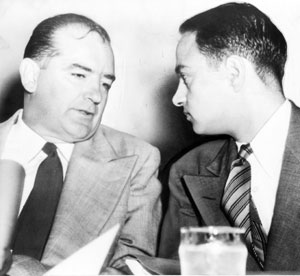
Welch was counsel for the U.S. Army in the Senate’s Army-McCarthy hearings, which considered allegations that McCarthy and his top aide, Roy Cohn, sought favored treatment for a staff member who had been drafted into military service.

The New York Times reported that Welch’s rebuke of McCarthy was greeted by a burst of applause in the Senate gallery and that Welch the next day had reported having received 1,400 telegrams, most of them supportive.

However, a database review of coverage by the Times and four other leading U.S. newspapers indicates that the Welch-McCarthy encounter was, at the time, essentially a one-day story, to which lasting importance only later became attached.

WJC

Recent and related:

‘Follow the money’: As if it were genuine

In Cinematic treatments, Debunking, Media myths, Washington Post, Watergate myth on February 4, 2011 at 8:00 am

I followed a hyperlink the other day to the Winter 2010 number of Rethinking Schools magazine to find that Watergate’s most famous made-up line prominently presented as if it were advice vital to unraveling the scandal.

Nixon resigns, 1974

The opening paragraphs of an article in Rethinking Schools, titled “The Ultimate $uperpower,” read this way:

“In 1972, two young Washington Post reporters were investigating a low-level burglary at the Watergate Hotel and stumbled upon a host of unexplained coincidences and connections that reached to the White House.

“One of the reporters, Bob Woodward, went to a high-level government source and complained: ‘The story is dry. All we’ve got are pieces. We can’t seem to figure out what the puzzle is supposed to look like.’

“To which the infamous Deep Throat replied: ‘Follow the money. Always follow the money.’

“For nearly 40 years, ‘follow the money’ has been an axiom in both journalism and politics—although, as Shakespeare might complain, one ‘more honour’d in the breach than the observance.'”

It may be an axiomatic line — it’s certainly invoked frequently enough — but it wasn’t used in the Washington Post investigation of the Watergate scandal.

Nor, it should be noted, did the Post bring down Richard Nixon’s corrupt presidency.

As I note in my latest book, Getting It Wrong, the contributions of Woodward and Bernstein’s investigative reporting, I write, “were modest, and certainly not decisive” to the outcome of Watergate.

The line “follow the money” was created, for dramatic effect, for the movie version of Woodward and Bernstein’s book about their Watergate reporting, All the President’s Men.

It wasn’t the “Deep Throat” source who uttered the line. It was his cinematic character, played in All the President’s Men by the actor Hal Holbrook.

In a scene showing a late-night meeting in a parking garage, Holbrook tells the Woodward character, played by Robert Redford:

“I have to do this my way. You tell me what you know, and I’ll confirm. I’ll keep you in the right direction, if I can, but that’s all. Just follow the money.”

As an article in the Post last summer pointed out that “the film’s most iconic piece of dialogue — ‘Follow the money’ — was never spoken in real life.”

Indeed, as I’ve noted previously at Media Myth Alert, no Post article or editorial related to Watergate used “follow the money” until June 1981 – nearly seven years after Richard Nixon resigned the presidency and well after the successor who pardoned him, Gerald Ford, had lost reelection. (The article in June 1981 merely noted that the line was used in a fifth grade play.)

“Follow the money” was the creation of screenwriter William Goldman. He has taken credit for working it into the script of All the President’s Men, which came out in 1976.

Since then, millions of people — among them, the author of the Rethinking Schools article — have unwittingly repeated the line, oblivious to its falsity, believing it had been guidance vital in rolling up Watergate.

But what harm is there in that? It’s just a movie, after all. A movie made a long time ago.

The phony but often-quoted line is suggestive of the exaggerations that infuse the cinematic version of All the President’s Men — a version that offers up “a neat, tidy, and vastly simplified account” of the scandal, as I write in Getting It Wrong.

The simplified version of Watergate enables viewers “to sidestep the scandal’s complexity while engaging in an entertaining storyline,” I further note.

Follow the money” also lends the inaccurate suggestion that unraveling Watergate was a matter of identifying, pursuing, and reporting about an illicit money trail. It was more than that.

What ultimately brought down Nixon was indisputable evidence of his order to cover up the signal crime of Watergate, the 1972 break-in at the headquarters of the Democratic National Committee. Nixon’s guilty role in the coverup was captured by audiotape recordings he secretly made of his conversation in the Oval Office of the White House.

Moreover, the movie version of All the President’s Men celebrated and helped firm up what I call the heroic-journalist myth of Watergate. The film’s inescapable but erroneous conclusion is that Woodward and Bernstein were central to unraveling the scandal and to forcing the resignation of a dishonest president.

WJC

Recent and related:

On the thin contributions of media rabble-rousers

In Debunking, Jessica Lynch, Media myths, Yellow Journalism on January 26, 2011 at 6:39 am

The departure of the bombastic Keith Olbermann from MSNBC’s primetime lineup is no an occasion for mourning.

But it’s to be regretted.

A little.

So suggested Bret Stephens yesterday in hisWall Street Journal column about Olbermann, who abruptly left his “Countdown” show at the end of last week.

Stephens pointed out:

“The ‘Countdown’ host did away with the old-fashioned liberal snigger and replaced it with a full-frontal snarl. Put simply, Mr. Olbermann had a genuine faith in populism, something liberals more often preach than practice.”

Stephens also offered this intriguing observation:

“America does better when its political debates descend, as they so often do on (or between) MSNBC and Fox News, into honest brawls.”

He may be right, although I wish he had elaborated on that point.

The observation about “honest brawls” reminded me of the insults and brickbats that American newspaper editors of the 1890s routinely exchanged in print. These were vigorous, lusty,  often vicious exchanges — and there really was little memorable or lasting about them. Save, perhaps, for an epithet or two.

Like that of “yellow journalism.”

Wardman, father to a sneer

As I discussed in my 2001 book, Yellow Journalism: Puncturing the Myths Defining the Legacies, the epithet emerged in late January 1897, during the failed campaign of Ervin Wardman, a New York newspaper editor, to drive a stake into the heart of the upstart journalism of William Randolph Hearst and, to a lesser extent, of Joseph Pulitzer.

Yellow journalism” took hold and spread quickly in 1897; it lives on today, as a vague but handy smear especially favored by letter-writers to newspapers.

Trouble is, the sneer “yellow journalism” is so ill-defined and flabby that it has become synonymous with journalistic sins of all kinds — exaggeration, sensationalism, hype, plagiarism, what have you.

And the trouble with media rabble-rousers like Olbermann is that their commentary often lacks wit and nuance, and tends to be superficial. It’s not deft, typically, and it’s unheard of for them to invoke media-driven myths–those dubious stories about the news media that masquerade as factual.

I address and debunk 10 prominent media-driven myths in my latest book, Getting It Wrong.

On his way out, in announcing his abrupt departure, Olbermann indulged in media myth. He described as “exaggerated” the rescue of Army private Jessica Lynch in Iraq in 2003. Hyped, maybe a bit. But the Lynch rescue, conducted by a U.S. special operations force under combat conditions, was not exaggerated.

As I note in Getting It Wrong, the Defense Department’s inspector general reported in 2007 that the rescue of Lynch from an Iraqi hospital was “a valid mission” to recover a prisoner of war.

There was no evidence to suggest that the rescue “was a staged media event” even though it was videotaped, as such missions often are.

Olbermann had on other occasions invoked the media myth surrounding Edward R. Murrow, whom he sought to emulate by borrowing the legendary broadcaster’s sign-off, “Good night, and good luck.”

In November, Olbermann referred to Murrow as “a paragon of straight reporting” while claiming the American press “stood idly by” as Senator Joseph R. McCarthy pursued his communists-in-government witch-hunt.

On March 9, 1954, during a 30-minute CBS television show called See It Now, “Murrow slayed the dragon,” Olbermann declared.

As I point out in Getting It Wrong, neither Murrow nor his producer, Fred Friendly, embraced the dragon-slaying interpretation. (Friendly wrote in his memoir, Due to Circumstances Beyond Our Control: “To say that the Murrow broadcast of March 9, 1954, was the decisive blow against Senator McCarthy’s power is as inaccurate as it is to say that Joseph R. McCarthy … single-handedly gave birth to McCarthyism.”)

And it’s quite clear that the American press did not stand “idly by” as the scourge of McCarthyism emerged.

As I point out in Getting It Wrong:

“Long before the See It Now program, several prominent journalists—including the Washington-based syndicated columnist Drew Pearson—had become persistent and searching critics of McCarthy, his record, and his tactics.”

By the time Murrow took on McCarthy in March 1954, Americans weren’t waiting for a white knight to tell them about the toxic threat the senator posed.

Thanks to the work of Pearson and other journalists, they already knew.

WJC

Recent and related:

NYTimes flubs the correction

In Debunking, Media myths, Murrow-McCarthy myth, New York Times, Newspapers on January 23, 2011 at 11:58 am

The New York Times today publishes a correction to last week’s “Week in Review” article about sudden “transformational moments” — and flubs the correction.

McCarthy: He testified

The article discussed among other topics the dramatic exchange at a Senate hearing on June 9, 1954, in which lawyer Joseph N. Welch supposedly deflated Senator Joseph McCarthy and his communists-in-government witch-hunt by declaring:

“Have you no sense of decency, sir? At long last, have you left no sense of decency?”

I raised doubts in a recent post at Media Myth Alert about whether the Welch-McCarthy encounter was as “transformational” as the Times suggested.

The correction in the Times today addresses the context of the encounter and states:

“Senator McCarthy was serving on the committee investigating suspected Communist infiltration of the Army; he was not at the hearings to testify.”

But McCarthy wasn’t serving on that Senate panel (which in fact was a subcommittee–a temporary subcommittee of the Senate permanent subcommittee on investigations) and he was there to testify.

(McCarthy and a top aide, Roy Cohn, were focal points of what were called the Army-McCarthy hearings of 1954. At the time, McCarthy was chairman of the Senate’s permanent subcommittee on investigations. He removed himself from the temporary subcommittee which conducted the Army-McCarthy hearings and which was chaired by Senator Karl Mundt of South Dakota. McCarthy, however, was permitted to cross-examine witnesses during the hearings.)

Had the Times consulted its back issues, it would have found that not long after Welch’s pointed questions about McCarthy’s “sense of decency,” the senator was sworn in as a witness.

McCarthy, Cohn at 1954 hearings

According to hearing excerpts published in the Times, McCarthy said upon being sworn in:

“Well, I’ve got a good hog-calling voice, Mr. Chairman. I think I can speak loudly enough so that the mikes will pick it up.”

And he proceeded to discuss at length his views about the Communist Party U.S.A. and its leadership. “The orders flow, of course, from Moscow,” McCarthy declared.

In a front-page article published June 10, 1954, the Times focused on the Welch-McCarthy encounter of the day before, stating in its lead paragraph:

“The Army-McCarthy hearings reached a dramatic high point … in an angry, emotion-packed exchange between Senator Joseph R. McCarthy and Joseph N. Welch, special counsel for the Army.”

The four-column headline over the Times article read:

WELCH ASSAILS M’CARTHY’S ‘CRUELTY’ AND ‘RECKLESSNESS’ IN ATTACK ON AIDE; SENATOR, ON STAND, TELLS OF RED HUNT

Interestingly, coverage in the Chicago Tribune on June 10, 1954, focused on McCarthy’s having taken the witness stand the day before, announcing in bold headlines stripped across the top of a cluttered front page:

QUIZ OF M’CARTHY STARTS!

The opening paragraphs in the Tribune read:

“Sen. McCarthy [R., Wis.] warned that a Red world would follow communist penetration of the United States government as he took the witness stand … in his battle with the Pentagon.

“The appearance under oath of McCarthy came on the 30th day of the senate inquiry ….

“McCarthy outlined the nature and size of the communist conspiracy in this nation, describing it as a militant organization of 25,000 trained spies and saboteurs.”

Not until the fifth paragraph did the Tribune mention the Welch-McCarthy encounter.

Quite clearly, then, McCarthy was “at the hearings to testify.” And testify he did, in rather typical fashion.

So why does all this matter? So what if the Times flubbed a correction about its reference to a long-ago moment that probably wasn’t  so “transformational”?

After all, as media critic Jack Shafer of slate.com has pointed out:

“Readers should recognize that in journalism as in life, some number of mistakes are unavoidable. And some of those mistakes, while deplorable, don’t matter all that much.”

But injecting fresh error into a correction goes beyond trivial, and may signal trouble in the newspaper’s internal fact-checking procedures.

There is, of course, inherent value in setting the record straight, as the Times recognized in publishing the correction in the first place.

Setting the record straight supposedly helps promote a newspaper’s credibility, too. As I note in Getting It Wrong, my book debunking prominent media-driven myths, “a central objective of newsgathering” is “that of seeking to get it right.”

I further note in Getting It Wrong that “journalism seldom is seriously introspective, or very mindful of its history. It usually proceeds with little more than a nod to its past.”

Flubbing the correction suggests a broader unfamiliarity at the Times with an important period in American history–and hints, too, at a reluctance to consult its electronic database of back issues.

WJC

Recent and related:

On ‘transformational moments’ that journalists see

In Debunking, Media myths, Murrow-McCarthy myth, New York Times, Newspapers, Spanish-American War, Washington Post on January 20, 2011 at 9:04 am

The “turning points” that journalists seem eager to find in dramatic events usually turn out to be mythical–chimeras built on a convenient if faulty and clichéd storyline.

'Turning points' sculpture in Ohio (Marty Gooden)

That’s a central point blogger and political scientist Brendan Nyhan offered the other day in a perceptive commentary dismissing the notion that the shootings this month in Tucson may be seen, sooner or later, as a turning point in American political life.

Nyhan argued that “single events almost never reshape social and political life” and added:

“The turning points of the past seem more clear in large part because the messiness of those events has faded in our memory and we remember the narratives that have been constructed after the fact.”

Well said.

Nyhan’s particular target was the New York Times and two rather superficial commentaries written by Matt Bai in the aftermath of the Tucson shootings. The longer and more recent piece was published Sunday in the Times “Week in Review” section. In it, Bai ruminated:

“If the shooting didn’t feel like the turning point in the civic life of the nation that some of us had imagined it might become, then it may be because such turning points aren’t always immediately evident.”

Welch (Library of Congress)

He went on to consider a few supposedly “transformational moments” of the past, such as the televised Senate hearing in 1954, when lawyer Joseph N. Welch upbraided Senator Joseph McCarthy, declaring:

“Have you no sense of decency, sir? At long last, have you left no sense of decency?”

It was a moment, Bai wrote, that “resonated throughout a country that was just then discovering the nascent power of television. Years of ruinous disagreement over the threat of internal Communism seemed to dissipate almost overnight.”

The sweeping claim caught my eye, given that my latest book, Getting It Wrong, addresses and debunks the media myth that broadcast journalist Edward R. Murrow put an end to McCarthy’s communists-in-government witch-hunt in a 30-minute television program in March 1954.

I don’t discuss the Welch-McCarthy encounter in Getting It Wrong, but barnacles of media myth seem to cling to that tale, too.

Take, for example, the claim that Welch’s famous line — uttered on the 30th day of what were called the Army-McCarthy hearings — “resonated throughout” the country.

The hearings centered around the Army’s accusations that McCarthy and his top aide, Roy Cohn, had sought special treatment for a McCarthy staffer who had been drafted into military service. The hearings were televised live, gavel to gavel, by the fledgling ABC and by the declining DuMont networks.

As Thomas Doherty pointed out in Cold War, Cool Medium, a fine study of television during the McCarthy period,the hearings “were not a saturation television event in the modern sense. The refusal of NBC and CBS [for commercial reasons] to telecast the hearings blacked out whole regions of the country from live coverage.”

He also wrote:

“With cable costs keeping ABC from relaying the hearings to Denver and points west, the coverage on the Pacific Coast was particularly sparse.”

Given such gaps in television’s coverage, it’s hard to see how the sudden and dramatic put down by Welch, a Boston lawyer who was the Army’s lead counsel at the hearings, could have “resonated” across the entire country.

Welch’s comment certainly attracted attention. But briefly.

The New York Times said the rebuke of McCarthy was greeted by a burst of applause in the Senate gallery and that Welch the next day reported having received 1,400 telegrams, most of them supportive.

Even so, a database review of the reporting in the Times and four other leading U.S. newspapers indicates the Welch-McCarthy encounter was at the time essentially a one-day story.

The database search for articles, editorials, transcriptions, and letters to the editor that contained “McCarthy,” “Welch,” and “sense of decency” returned 14 items in the period from June 9, 1954, to June 30, 1955.

Ten of the 14 items were published June 10, 1954, a day after Welch rebuked McCarthy.  The remarks were reported that day on the front pages of all five newspapers–the Times, Baltimore Sun, Chicago Tribune, Los Angeles Times, and Washington Post.

But none of the 14 items was published after June 25, 1954. In other words, none of the items was published during the time late in 1954 when the Senate voted to censure (“condemn” was the term) McCarthy’s conduct.

What’s more, lengthy excerpts of the hearing record published in the New York Times show that Welch’s “sense of decency” rebuke didn’t stun McCarthy into silence. The senator blundered on, insinuating that Welch had sought to include on his hearing staff a young lawyer with a dubious background.

The Welch-McCarthy encounter assumed “turning point” status in the years after 1954. But in the moment, in June 1954, it was recognized as dramatic but not “transformational.”

Bai’s “Week in Review” piece offered up this dubious point as well:

“A century ago, news traveled slowly enough for Americans to absorb and evaluate it; today’s events are almost instantaneously digested and debated, in a way that makes even the most cataclysmic event feel temporal.”

A century ago, news traveled rapidly by telegraph. It was scarcely  unusual then for large-circulation urban newspapers to publish multiple extra editions to report fresh elements of a major breaking story.

During the Spanish-American War in 1898, for example, William Randolph Hearst’s New York Evening Journal published as many as 40 extra editions a day. On such occasions, news surely wasn’t traveling slowly.

Indeed, at the end of the 19th century, it was not uncommon for Americans to claim they were living at “a time of rush and hurry.”

WJC

Recent and related: