W. Joseph Campbell

Posts Tagged ‘Watergate’

WaPo commentary off target on ‘sexual misbehavior of prominent men’

In Debunking, Media myths, Washington Post, Watergate myth on May 23, 2011 at 7:20 am

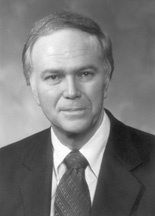
Packwood: Scuzzy guy

“Until recently,” declared a commentary in yesterday’s Washington Post, “we didn’t have to worry so much about how to talk about the sexual misbehavior of prominent men.”

The Post commentary asserted that “until recently, we didn’t talk much about it at all. But that certainly changed in the late 1990s, when Kenneth Starr broke the sexual sound barrier” with his allegations of sexual indiscretions by President Bill Clinton.

That’s nonsense, a misreading of recent history.

By the time Starr, a special federal prosecutor investigating Clinton’s suspected misdeeds, presented his case against the then-president, the “sexual sound barrier” had long been broken.

If anything, the sexual harassment scandal that ended the political career of Republican Senator Bob Packwood in 1995 was more likely a moment when “sexual misbehavior of prominent men” became a topic of considerable discussion.

Packwood was a scuzzy guy who resigned his Senate seat in 1995 in the face of probable expulsion, following release of the Senate Ethics Committee’s 10,000 page document that described a long history of his sexual misconduct.

The allegations against Packwood, a 26-year member of the Senate,  included no fewer than 18 “unwanted and unwelcome sexual advances,” many of which he described in his electronic diary.

One of Packwood’s victims was 17-years-old when, she said, the senator kissed her against her will.

The bipartisan ethics committee accused Packwood of having “engaged in a pattern of abuse of his position of power and authority as a United States Senator by repeatedly committing sexual misconduct, making at least 18 separate unwanted and unwelcome sexual advances between 1969 and 1990.”

He entered the Senate in 1969.

Most of Packwood’s victims were members of his staff, “or individuals whose livelihoods were dependent upon or connected to the power and authority” wielded by the senator, the ethics committee report said.

The ethics committee, moreover, charged Packwood with having “endeavored to obstruct and impede” the ethics committee investigation by “withholding, altering and destroying relevant evidence, including his diary transcripts and audio taped diary material.”

Packwood’s misconduct, the ethics committee said, brought “discredit and dishonor” upon the Senate.

About two months after Packwood resigned his Senate seat, Clinton began his furtive liaison with Monica Lewinsky, who was 27 years his junior.

In a way, Packwood’s execrable conduct probably helped Clinton sidestep political disaster in the Lewinsky affair.

The Lewinsky affair, while unseemly, was neither abusive nor unbidden, as were many of Packwood’s sordid overtures. Simply put, Clinton’s liaison with Lewinsky, and the lies he told about the affair, did not reach the seedy precedent that Packwood had set.

Lewinsky was a White House intern in late 1995 who, Starr later reported, seemed eager to initiate the liaison.

She performed oral sex with Clinton on November 15, 1995, while he spoke by telephone with a congressman. Clinton and Lewinsky had a second similar encounter two days later, and another on New Year’s Eve 1995.

Their liaison continued periodically until 1997.

When asked during a deposition about his sexual relations with Lewinsky, Clinton lied. The deposition was taken in January 1998, as part of Paula Corbin Jones’ civil lawsuit against the president.

Clinton’s lies under oath led to his impeachment in late 1998 by the House of Representatives and his trial and acquittal in 1999 by the Senate .

Clinton, though, was found in contempt of court by federal judge Susan Webber Wright for  “false, misleading and evasive answers” during the deposition in the Jones suit, answers the judge said “were designed to obstruct the judicial process.”

Clinton was ordered to pay nearly $90,000 to Jones’ lawyers and later agreed to a five-year suspension of his license to practice law.

While undeniably egregious, Clinton’s misconduct did not rise to the level of Packwood’s serial misconduct and repeated sexual harassment. Clinton’s misconduct also fell short of Richard Nixon’s criminality in the Watergate scandal — felonious wrongdoing that set a standard for turning a sitting president from office.

WJC

Recent and related:

Recalling how a ‘debunker’s work is never done’

In Bay of Pigs, Bra-burning, Cronkite Moment, Debunking, Furnish the war, Jessica Lynch, Media myths, Murrow-McCarthy myth, New York Times, Reviews, War of the Worlds, Washington Post, Watergate myth, Yellow Journalism on May 20, 2011 at 5:45 am

It’s been a year since Jack Shafer, media critic for slate.com, posted his review of my media-mythbusting book, Getting It Wrong. The review offered the telling observation that a “debunker’s work is never done.”

So true.

In the 52 weeks since the review went online, I’ve posted more than 275 essays at Media Myth Alert, nearly all of them calling attention to media-driven myths that have found their way into traditional or online media.

So, no, a debunker’s work is never done.

The top posts over the past 52 weeks, as measured by page views, were these:

Shafer’s review sent traffic to Media Myth Alert, too, as it linked to my post that critically discussed Evan Thomas’ book, The War Lovers.

The review, which appeared beneath the headline “The Master of Debunk,” noted that “the only way to debunk an enshrined falsehood is with maximum reportorial firepower.”

And repetitive firepower. Debunking media myths will happen no other way.

Even then, some myths are so deeply ingrained — so delicious, beloved, and readily at hand — that they’ll probably never be thoroughly uprooted and forgotten.

The tale about William Randolph Hearst’s vow to “furnish the war” with Spain at the end of the 19th century is an excellent example. It’s been around more than 100 years.

And it surely is apocryphal, for a long list of reasons I discuss in Getting It Wrong.

Even so, “furnish the war” lives on — hardy, robust, and apparently only slightly dented for all the debunking broadsides hurled its way. Evan Thomas turned to it in War Lovers. So, more recently, did the Nieman Watchdog blog.

Another especially hardy media myth is the presumptive “Cronkite Moment” of 1968, when Walter Cronkite’s on-air assessment that the U.S. military was “mired in stalemate” in Vietnam supposedly prompted President Lyndon Johnson to declare:

“If I’ve lost Cronkite, I’ve lost Middle America.”

Or something along those lines. Versions vary markedly.

That they do vary is among the many indicators the “Cronkite Moment” is media myth. Another, more direct indicator is that Johnson did not see the program when it aired.

The “Cronkite Moment” surely will live on, too, as it represents so well the news media conceit of the effects of telling truth to power, of serving as the indispensable watchdog of government.

Shafer noted the durability of media myths in one of his periodic dismantlings of the “pharm party” phenomenon, which in some form has circulated for 40-some years. (The mythical “pharm party” has it that teens swipe pharmaceuticals from medicine cabinets at home, dump the purloined pills into a bowl at a party, and take turns swallowing handfuls to see what sort of high they’ll reach.)

Shafer wrote early last year:

“I regret to inform you that this column has failed to eradicate the ‘pharm party’ meme. Since June 2006, I’ve written five columns … debunking pharm parties, and yet the press keeps on churning out stories that pretend the events are both real and ubiquitous.”

He added:

“Any myth hearty enough to survive and thrive for 40-plus years in the media is probably unkillable.”

The Hearstian vow is easily within the 40-plus-years category. So, too, are the “Cronkite Moment,” the Bay of Pigs suppression myth, and the War of the Worlds panic meme.

Irrepressible myths, all.

WJC

Recent and related:

A ‘follow the money’ hat trick

In Anniversaries, Cinematic treatments, Debunking, Media myths, Washington Post, Watergate myth on May 14, 2011 at 9:32 am

Follow the money,” the line so readily associated with the Washington Post and its Watergate reporting, is freighted with no fewer than three related media myths.

One is that the Post’s stealthy, high-level source known as “Deep Throat” uttered “follow the money” as guidance vital to unraveling the Watergate scandal.

What page is it on?

Two is that “Deep Throat” conferred privately with both Bob Woodward and Carl Bernstein, the Post’s  lead reporters on Watergate.

Three is that “follow the money” appears in Woodward and Bernstein’s book about Watergate, All the President’s Men.

All three are untrue.

And all three were incorporated into a blog report posted yesterday at the online site of the Providence Journal, in what was a rare “follow the money” hat trick.

The Providence Journal item described “follow the money” as “the famous admonition from the source ‘Deep Throat’ to Washington Post reporters Bob Woodward and Carl Bernstein during the Watergate scandal that brought down President Richard M. Nixon. It was immortalized in the reporters’ book, and the subsequent movie, ‘All the President’s Men.'”

No, no, and most definitely no.

The Post’s “Deep Throat” source — who was revealed in 2005 to have been W. Mark Felt, formerly a senior FBI official — never recommended that the Post “follow the money” as a way to get a handle on Watergate.

“Deep Throat,” moreover, conferred only with Woodward, sometimes late at night in a parking garage in the Rosslyn section of Arlington, Va., across the Potomac River from Washington. Felt/”Deep Throat” never met Bernstein until weeks before Felt’s death in 2008.

And, no, “follow the money” certainly does not appear in Woodward and Bernstein’s book, which came out in June 1974, just as the Watergate scandal was nearing its denouement with Nixon’s resignation.

The famous line was written into the cinematic version of All the President’s Men, which came out 35 years ago last month.

Follow the money” was spoken not by Felt but by the actor who played “Deep Throat” in the movie — Hal Holbrook.

As I’ve noted at Media Myth Alert, Holbrook turned in a marvelous performance as a twitchy, tormented, conflicted “Deep Throat.”

And he delivered his “follow the money” lines with such quiet conviction that for all the world they seemed to suggest a way through the labyrinth that was the Watergate scandal.

But even if guidance such as “follow the money” had been offered to Woodward (and/or Bernstein), it would have taken them only so far in investigating Watergate. The scandal was, after all, much broader than the misuse of campaign monies.

In the end, Nixon was toppled by his felonious conduct in attempting to cover up the signal crime of Watergate, the break-in at the headquarters of the Democratic National Committee in June 1972.

The simplified, mediacentric, follow-the-money  interpretation of Watergate tends to minimize the more decisive forces that unraveled the scandal and forced Nixon from office.

As I note in my latest book, Getting It Wrong, rolling up a scandal of Watergate’s dimensions required “the collective if not always the coordinated forces of special prosecutors, federal judges, both houses of Congress, the Supreme Court, as well as the Justice Department and the FBI.

“Even then,” I write, “Nixon likely would have served out his term if not for the audiotape recordings he secretly made of most conversations in the Oval Office of the White House. Only when compelled by the Supreme Court did Nixon surrender those recordings, which captured him plotting the cover-up and authorizing payments of thousands of dollars in hush money.”

Against the tableau of subpoena-wielding investigative authorities, the contributions of Woodward and Bernstein in the Watergate scandal fade into comparative insignificance.

WJC

Recent and related:

‘Getting It Wrong’ wins SPJ award for Research about Journalism

In Bay of Pigs, Bra-burning, Cronkite Moment, Debunking, Furnish the war, Hurricane Katrina, Jessica Lynch, Media myths, Media myths and radio, Murrow-McCarthy myth, New York Times, Spanish-American War, War of the Worlds, Washington Post, Watergate myth, Yellow Journalism on May 10, 2011 at 9:02 am

The Society of Professional Journalists announced today that my media-mythbusting book, Getting It Wrong, is the winner of the 2010 Sigma Delta Chi award for Research about Journalism.

The award will be presented in September at the Excellence in Journalism convention in New Orleans.

Getting It Wrong, which was published last year by the University of California Press, debunks 10 prominent media-driven myths, which are dubious tales about the news media that masquerade as factual.

Here’s a summary of the 10 myths dismantled in Getting It Wrong:

  1. Remington-Hearst: William Randolph Hearst’s famous vow “to furnish the war” with Spain is almost certainly apocryphal.
  2. War of Worlds: The notion that the War of Worlds radio dramatization in 1938 caused nationwide panic and mass hysteria is exaggerated.
  3. Murrow-McCarthy: Edward R. Murrow’s famous See It Now program in March 1954 did not end Senator Joseph McCarthy’s communists-in-government witch-hunt; Murrow in fact was very late to take on McCarthy.
  4. Bay of Pigs: The New York Times did not suppress its reporting in the run-up to the ill-fated Bay of Pigs invasion in April 1961.
  5. Cronkite-Johnson: Walter Cronkite’s special report on Vietnam in February 1968 did not prompt an immediate reassessment or revision of U.S. war policy.
  6. Bra-burning: Humor columnist Art Buchwald helped spread the notion that feminist demonstrators dramatically burned their bras at a Miss America protest in September 1968.
  7. Watergate: The Washington Post’s intrepid reporters, Carl Bernstein and Bob Woodward, did not bring down Richard Nixon’s corrupt presidency. That they did is a trope that knows few bounds.
  8. Crack babies: The much-feared “bio-underclass” of children born to women who smoked crack cocaine during their pregnancies never materialized.
  9. Jessica Lynch: The Washington Post’s erroneous reporting about Jessica Lynch early in the Iraq War gave rise to several myths about her capture and rescue.
  10. Hurricane Katrina: News coverage of Katrina’s aftermath in New Orleans in early September 2005 was marred by wild exaggerations about extreme, Mad Max-like violence.

The “Research about Journalism” award recognizes “an investigative study about some aspect of journalism,” SPJ says, and “must be based on original research; either published or unpublished, and must have been completed during the 2010 calendar year. … Judges will consider value to the profession, significance of the subject matter, thoroughness of the research, and soundness of the conclusion.”

WJC

Recent and related:

Perceptive observations about Woodward, Bernstein, media power

In Cronkite Moment, Debunking, Media myths, Washington Post, Watergate myth on May 9, 2011 at 5:26 am

From time to time at Media Myth Alert, I’ve noted how American media myths have been embraced with gusto by news outlets overseas.

Watergate and the notion that the investigative reporting of Bob Woodward and Carl Bernstein brought down Richard Nixon’s corrupt presidency have particularly powerful myth appeal among news media abroad.

So it’s commendable when an international news organization treats consensus narratives about the U.S. media with decided skepticism, as the Independent newspaper in London did over the weekend.

In a commentary by Patrick Cockburn, the Independent noted that the news media have “always been more dependent on the powers-that-be” than they prefer to acknowledge.”

“American journalists outside Washington often express revulsion and contempt at the slavish ways of the Washington press corps,” Cockburn wrote. “But it is difficult to report any government on a day-to-day basis without a cooperation that can be peremptorily withdrawn to bring critics into line.”

About the Watergate scandal, he added, perceptively:

“Woodward and Bernstein learned about Watergate almost entirely from secondary sources such as judges, prosecutors and government investigative agencies which could force witnesses to come clean by threatening to put them in jail.”

That’s very true.

Woodward and Bernstein’s Watergate reporting often drew upon, and often prominently cited, government investigators such as the FBI.

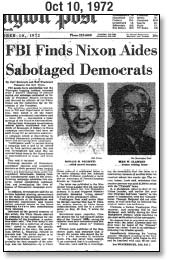
WaPo report, October 10, 1972

The Watergate report they’ve often described as decisive — an article published October 10, 1972, that characterized the scandal as “a massive campaign of political spying and sabotage conducted on behalf of President Nixon’s re-election” — referred prominently to the FBI and the Justice Department.

(That article cited “FBI reports” in asserting that “at least 50 undercover Nixon operatives traveled throughout the country trying to disrupt and spy on Democratic campaigns.” That claim was dismissed as “absolutely false” in internal FBI memoranda, and was scoffed at by Edward Jay Epstein in his brilliant 1976 essay puncturing the purported effects of Woodward and Bernstein’s  Watergate reporting.)

And as I write in my media-mythbusting book, Getting It Wrong, which came out last year, to characterize the reporting of Woodward and Bernstein as decisive in Watergate’s outcome “is to abridge and misunderstand the scandal and to indulge in a particularly beguiling media-driven myth.”

I also note that such a mediacentric interpretation of Watergate “minimizes the far more decisive forces that unraveled the scandal and forced Nixon from office.”

Those forces included special prosecutors, federal judges, both houses of Congress, the Supreme Court, as well as the Justice Department and the FBI, I note, adding:

“Even then, Nixon likely would have served out his term if not for the audiotape recordings he secretly made of most conversations in the Oval Office of the White House. Only when compelled by the Supreme Court did Nixon surrender those recordings, which captured him plotting the cover-up” of the crimes of Watergate.

I argue in Getting It Wrong that debunking media-driven myths “enhances a case for limited news media influence.”

Media power, I write, “tends to be modest, nuanced, diffused, and situational. But too often the ubiquitous presence of the news media is mistaken for power and influence.”

Cockburn’s commentary similarly suggested that media power can be overstated, exaggerated.

“In wars in Vietnam, Iraq and Afghanistan,” he noted, “effective media criticism has tended to follow rather than precede public opinion.”

Quite so.

Walter Cronkite‘s famous on-air assessment in late February 1968 that the U.S. military was “mired in stalemate” in the war in Vietnam is sometimes said to have shifted American public opinion about the conflict.

In reality, though, Americans had begun turning against the war months before Cronkite aired his analysis in a special report on CBS television.

WJC

Recent and related:

News media indispensable to democracy? Some evidence would be nice

In Debunking, Media myths, Newspapers, Washington Post, Yellow Journalism on May 1, 2011 at 9:49 am

The Washington Post ombudsman invokes in his column today the defining conceit of American journalism: That without truth-telling reporters and editors, democracy would be imperiled.

Or, as he puts it, rather simplistically:

“What we do is report, write and edit stories. We take and publish photographs (and now video, too). We publish the stories and images as news through compelling design and graphics. And, in columns and blogs, we analyze the news. Through this painstaking process, we reveal truths. The country cannot long survive as a democracy, or as a capitalist economy, without this kind of independent journalism.”

But how does the ombudsman, Patrick B. Pexton, know that? What evidence does he offer to buttress the notion that the news media are indispensable bulwarks of democracy and capitalism?

None. He presents the self-congratulatory claim about journalism’s value as self-evident.

It is true that robust journalism and media pluralism are hallmarks of democratic governance.

But democratic rule typically enables independent journalism rather than the other way round.

We see this phenomenon across the world: Whenever the heavy hand of authoritarian rule is lifted, non-official news media flourish, usually as partisan platforms. It’s a point I made in my first book, The Emergent Independent Press in Benin and Côte d’Ivoire, which examined the rise of media pluralism in two states in Francophone West Africa.

But emergent independent journalism, or well-established journalism, isn’t a variable essential to a thriving democracy. I’m reminded of a superb essay on this topic that the inestimable media critic Jack Shafer wrote in 2009 for slate.com.

As Shafer correctly pointed out:

“Democracy thrived in the United States in the 1800s, long before the invention of what we call quality journalism. Between 1856 and 1888, when most newspapers were crap and controlled by, or beholden to, a political party, voter turnout hovered around 80 percent for presidential elections. Compare that with the 55.3 percent and 56.8 percent turnouts in the 2004 and 2008 presidential elections.”

And party-oriented journalism lasted well beyond 1888. It stretched through the period of the yellow press at the end of the 19th century and early 20th century. The leading newspapers of those days were often overtly partisan.

The leading practitioner of yellow journalism, William Randolph Hearst, turned his newspapers into a platform for his mostly unfulfilled political objectives. He unsuccessfully sought the Democratic nomination for president and the governorship of New York, ambitions that were boosted by, but not contingent upon, his activist-oriented newspapers.

Shafer’s column also noted:

“Could it be that deep-dish reporting that uncovers governmental malfeasance and waste … doesn’t promote activism or participation? Could it be that such exposés end up souring the public on democracy and other institutions?”

It’s an interesting point. Aggressive, searching journalism that offers a stream of reporting about the flaws, shortcomings, and corruption in democratic institutions also may be a reason many adult Americans have tired of the news and have turned it off completely.

According to data compiled by the Pew Research Center and released last year, 17 percent of adult Americans go newsless on a typical day. That is, they eschew the news despite ready access to a variety of news-delivery options and platforms, both traditional and digital.

The going-newsless phenomenon in a news-drenched society is highest among 18-to-24-years-old; 31 percent of those young Americans go without the news on a typical day.

“Large numbers of Americans are beyond media influence,” I note in my latest book, Getting It Wrong, which addresses and debunks 10 prominent media-driven myths.

So how are news outlets so vital to American democracy when so many Americans ignore them completely? Pexton’s assertion about the indispensable character of the media ignores such complexity.

Pexton’s claim is the kind of thin platitude that serves to reassure journalists in a time of great upheaval in the field, a time when the direction of the profession is uncertain, when the longevity of once-superior newspapers like the Washington Post is in doubt.

WJC

Many thanks to Instapundit
Glenn Reynolds, and Little Miss Attila,
for linking to this post

Recent and related:

Glib and sanctimonious: Woodward likens Trump to Joe McCarthy

In Debunking, Media myths, Washington Post, Watergate myth on April 29, 2011 at 8:55 am

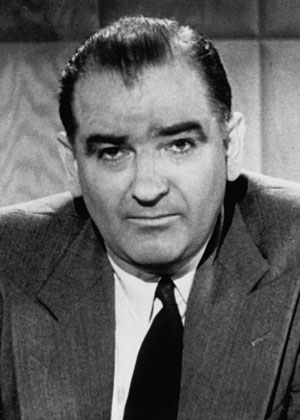
McCarthy in 1954

Bob Woodward, he of Watergate fame, says Donald Trump’s persistent questioning about President Barack Obama’s place of birth is akin to the tactics of the odious Joe McCarthy, the Republican senator infamous for his communists-in-government witch-hunt during the early 1950s.

The probing by Trump, the billionaire developer and prospective presidential candidate, prompted Obama this week to release the long form of his birth certificate, which clearly showed he was born in Hawaii in 1961.

“Trump, I think, was or may be still aspiring to be the new Joe McCarthy,” Woodward said yesterday on the MSNBC talk show, Morning Joe.

But why should anyone care what Woodward thinks about Trump and McCarthy? Woodward’s no expert on 1950s America.

Besides, his claim about McCarthy was little more than glib and sanctimonious hyperbole: Trump’s aggressive badgering of Obama may have been hardball politics. It was nothing akin to McCarthy’s wild accusations about communist infiltration of government, nothing like the senator’s bullying of witnesses under oath in closed session.

Woodward’s a fine one to talk, anyway: It’s not as if his reporting on Watergate for the Washington Postthe reporting that won him lasting acclaim — was free of dubious technique. Far from it.

Woodward and his Post colleague, Carl Bernstein, acknowledged in their book, All the President’s Men, to having committed ethical lapses during their Watergate reporting in the early 1970s.

Notably, they recounted failed attempts to encourage federal grand jurors to violate oaths of secrecy and discuss Watergate testimony. Woodward and Bernstein conceded their efforts were “a seedy venture” that nonetheless had the approval of top editors at the Post, including the then-executive editor, Ben Bradlee.

According to All the President’s Men, Woodward “wondered whether there was ever justification for a reporter to entice someone across the line of legality while standing safely on the right side himself.” Such qualms notwithstanding, they went ahead with what they described in the book as a “clumsy charade with about half a dozen members of the grand jury.”

Their efforts to entice grand jurors to violate their oaths of secrecy were soon reported to federal prosecutors who in turn informed John Sirica, chief judge of U.S. District Court in the District of Columbia.

“John Sirica is some kind of pissed at you,” the Post’s lawyer, Edward Bennett Williams, told the reporters, according to the book. “We had to do a lot of convincing to keep your asses out of jail.”

Bernstein also acknowledged in All the President’s Men that he sought and obtained information from otherwise private telephone records.

McCarthy-esque their lapses certainly weren’t. But weren’t trivial, either. Adrian Havill, author of Deep Truth, an unauthorized biography of Woodward and Bernstein, wrote that “part of the methodology Bob and Carl used … was unethical or bordered on criminality.”

Their missteps represented serious misjudgments, which are rarely recalled these days, when the hero-worship of Woodward and Bernstein seems as intense as ever.

WJC

Many thanks to Little Miss Attila
for linking to this post

Recent and related:

‘Follow the money’: You won’t find that line in the book

In Anniversaries, Cinematic treatments, Debunking, Media myths, Washington Post, Watergate myth on April 27, 2011 at 4:00 am

The most famous line about Watergate reporting — “follow the money” — appears nowhere in the most famous book about Watergate reporting, All the President’s Men.

Not in this book

It’s often thought that it does. The Post and Courier newspaper in Charleston, S.C., said so, for example, in an editorial posted online yesterday.

The editorial referred to the stealthy Watergate source of Washington Post reporter Bob Woodward and declared:

“‘Deep Throat,’ finally identified in 2005 as former FBI associate director Mark Felt, gave Carl Bernstein and Bob Woodward the inside dirt on the Nixon administration’s attempt to cover up its dirty tricks.

“He also gave them, as chronicled in their book ‘All the President’s Men,’ this tip: ‘Follow the money.'”

Felt was Woodward’s source; he never met Bernstein until late in Felt’s life.

And Felt never offered Woodward the advice of “follow the money.”

That line doesn’t appear in All the President’s Men, Woodward and Bernstein’s book about their reporting on Watergate. Nor does it appear in any Watergate-related article or editorial published in the Washington Post before 1981.

The passage was, though, written into the screenplay of All the President’s Men, the 1976 cinematic version of Woodward and Bernstein’s book. The movie came out 35 years ago this month, and has aged quite well.

The acting was notably strong and included a memorable performance by Hal Holbrook, who played a shadowy, tormented “Deep Throat.”

Holbrook delivered his lines about “follow the money” with such certainty and quiet insistence that it sounded as if it really were guidance vital to rolling up Watergate.

But in the real-life investigation of Watergate, “follow the money” wouldn’t have taken investigators to the point of determining Nixon’s guilty role in the crimes of Watergate.

As I write in Getting It Wrong, my media-mythbusting book that came out last year, some 20 men associated with Nixon’s administration or his 1972 reelection campaign went to jail for crimes linked to Watergate.

Rolling up a scandal of such sweep, I write in Getting It Wrong, “required the collective if not always the coordinated forces of special prosecutors, federal judges, both houses of Congress, the Supreme Court, as well as the Justice Department and the FBI.

“Even then,” I add, “Nixon likely would have served out his [second] term if not for the audiotape recordings he secretly made of most conversations in the Oval Office of the White House. Only when compelled by the Supreme Court did Nixon surrender those recordings, which captured him plotting the cover-up and authorizing payments of thousands of dollars in hush money.”

What cost Nixon the presidency wasn’t of the improper use of campaign monies but his efforts to obstruct justice and deter the FBI’s investigation of the scandal.

Still, it’s curious why “follow the money” crossed so seamlessly from the silver screen to the vernacular.

One reason no doubt are proximate release dates of the book and movie of All the President’s Men, allowing the two versions to become confounded.

The book came out in June 1974, just as Watergate was nearing its endgame with Nixon’s resignation in August 1974. The movie was released in April 1976, as the wounds of Watergate were only beginning to heal.

Another reason for the persistent appeal of “follow the money” lies in its pithiness. Like many media-driven myths — those dubious or apocryphal tales about the news media and their power — “follow the money” is neat, tidy, succinct. It’s easy to remember, and it seems almost too good not to be true.

But probably the most compelling explanation for its tenacity lies in the power of the cinema to propel media myths and to offer plausible if greatly simplified versions of history.

Richard Bernstein addressed this tendency quite well in a memorable essay published in 1989 in the New York Times.

He wrote that “movies-as-history” tend “to construct Technicolored and sound-tracked edifices of entertainment on the slender foundations of what appear to be actual events, or, at the very least, to mingle fact with fancy, history with imagination, in such a way that the average viewer has no way of sorting out one from the other.”

Quite so.

I note in Getting It Wrong that the cinematic version of All the President’s Men helped ensure that Woodward, Bernstein, and the Post would be regarded as vital and central to the unraveling of Watergate.

The mediacentric version of Watergate — or what I call the heroic-journalist interpretation — allows audiences to sidestep the scandal’s off-putting complexity and engage in a narrative that is entertaining and reassuring.

WJC

Recent and related:

Woodward, ‘tombeur de Nixon’

In Anniversaries, Cinematic treatments, Debunking, Media myths, Washington Post, Watergate myth on April 25, 2011 at 7:18 am

That headline — which appeared with an item posted yesterday at Les In Rocks, a slick, Paris-based arts and music blog — translates to:

“Woodward, the guy who brought down Nixon.”

Which is hyperbole.

Bob Woodward and the Washington Post did not bring down Richard Nixon in the Watergate scandal of 1972-74.

But as the headline and accompanying interview with Woodward suggest, Wooward-hero worship can be surprisingly intense and deep-seated abroad.

The article’s opening paragraph declared:

“Not many people can boast of having been played in the movies by Robert Redford. In fact, there’s only one. His name is Bob Woodward. He’s a journalist, and with his colleague Carl Bernstein, in life as in the film All the President’s Men, brought down Richard Nixon in 1974 in the Watergate affair.”

(Here’s the original French version: “Peu d’hommes peuvent se vanter d’avoir été incarnés au cinéma par Robert Redford. En fait, il n’y en a qu’un. Il s’appelle Bob Woodward. Il est journaliste et, avec son collègue Carl Bernstein, dans la vie comme dans le film Les Hommes du Président, il fit tomber Richard Nixon en 1974 avec l’affaire du Watergate.”)

Redford, of course, played Woodward in the motion picture, All the President’s Men, which was released 35 years ago this month.

It is easily the most-viewed film about the scandal and, as I point out in Getting It Wrong, my media-mythbusting book that came out last year, All the President’s Men effectively sealed the heroic-journalist myth of Watergate.

The heroic-journalist interpretation has it that the scandal’s disclosure pivoted on Woodward and Bernstein’s dogged reporting for the Post, that they exposed the crimes of Watergate and forced Nixon’s resignation.

That’s an interpretation not even the Post — and not even Woodward — buy into.

As Woodward declared in an interview in 2004 with American Journalism Review:

To say the press brought down Nixon, that’s horseshit.”

Less indelicately, the Post’s then-ombudsman, Michael Getler, wrote in 2005:

“Ultimately, it was not The Post, but the FBI, a Congress acting in bipartisan fashion and the courts that brought down the Nixon administration. They saw Watergate and the attempt to cover it up as a vast abuse of power and attempted corruption of U.S. institutions.”

But the movie — which has aged impressively well — offers another, simpler, less-accurate interpretation.

As I write in Getting It Wrong:

All the President’s Men placed Woodward and Bernstein at the center of Watergate’s unraveling while denigrating the efforts of investigative agencies such as the FBI. The effect was to solidify and elevate the heroic-journalist myth, giving it dramatic power, and sustaining it in the collective memory.”

The film closes with the Woodward and Bernstein characters (played by Redford and Dustin Hoffman, respectively) at their respective desks in the Post’s brilliantly lighted newsroom, pounding away at their typewriters.

The newsroom is otherwise empty. Woodward and Bernstein remain oblivious to their colleagues as they slowly drift in. It’s Inauguration Day 1973 and the Post editors and reporters are shown gathering at television sets in the newsroom to watch as Nixon is sworn in to a second term. Woodward and Bernstein, however, remain at their desks, focused on their work.

The television sets show Nixon smiling as he completes the oath of office. The first volleys of a twenty-one gun salute begin to boom. Woodward and Bernstein continue their frantic typing and the cannonade resounds ever louder. The newsroom scene dissolves to a close-up of an overactive teletype machine, noisily battering out summaries about indictments, trials, and convictions of Nixon’s men.

The clattering machine spells out “Nixon resigns, Ford sworn in,” and stops abruptly. The movie’s over.

It’s an imaginative and effective ending which, as I write in Getting It Wrong, “pulls together the many strands of Watergate. But more than that, it offers an unmistakable assertion of the power and centrality of the press in Nixon’s fall.”

Indeed, it is perhaps the most powerful and vivid assertion of Watergate’s heroic-journalist myth. Who else but Woodward and Bernstein?

WJC

Recent and related:

That’s rich: Woodward bemoans celebrity journalism

In Anniversaries, Cinematic treatments, Debunking, Media myths, Washington Post, Watergate myth on April 24, 2011 at 11:33 am

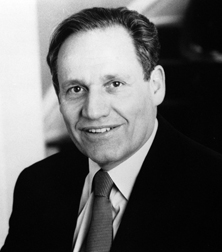
The country’s foremost celebrity journalist, Bob Woodward of the Washington Post and Watergate fame, has deplored what he called the “curse” of celebrity journalism, which he reportedly said has infected the news media.

Woodward, celebrity journalist

Woodward was speaking the other night at a panel in Austin, Texas, that was convened to mark the 35th anniversary of All the President’s Men, the motion picture about the Watergate reporting of Woodward and his Post colleague, Carl Bernstein.

According to a report posted online by ABC News, Bernstein, who also was on the panel, complained that the culture of journalism has shifted dramatically since the Watergate era of the early 1970s. Woodward, according to the ABC post, characterized this shift the “curse” of celebrity journalism — the “Paris Hilton factor and Kardashian equation.”

Even if he was referring to excessive media attention to the likes of Paris Hilton and Kim Kardashian, it’s still pretty rich for Woodward to bemoan celebrity journalism — given that All the President’s Men established the cult of the contemporary celebrity journalist.

By “celebrity journalist,” I mean the journalist who has attained outsize prominence or who is regarded as more important than the people and the events he or she covers.

Sydney Schanberg, writing in the Village Voice in 2005, pointed out that the Watergate era of the early 1970s “can be fairly marked as the starting point of the age of journalists as celebrities. Bob Woodward and Carl Bernstein weren’t celebrities when they cracked the story for The Washington Post, but they soon would be, and a wave of emulators quickly began applying to journalism schools.”

Schanberg was incorrect about the Watergate effect on journalism schools: The surge in enrollments was well underway before Watergate, before Woodward and Bernstein became household names.

But he was quite correct about Watergate’s having represented a demarcation of modern celebrity journalism. (Alicia Shepard referred to this phenomenon in 1997, writing in American Journalism Review in 1997: “The Watergate affair changed journalism in many ways, not the least of which was by launching the era of the journalist as celebrity.” She also claimed in the article that Woodward and Bernstein “brought down a president.” Not so.)

More than any other single factor, the movie All the President’s Men propelled the media myth of the heroic journalist — the beguiling notion that Woodward and Bernstein’s investigative reporting of the Watergate scandal exposed the corruption of Richard Nixon and forced his resignation in disgrace in 1974.

As I discuss in Getting It Wrong, my media-mythbusting book that came out last year, All the President’s Men placed the characters of Woodward and Bernstein squarely if inappropriately “at the center of Watergate’s unraveling while denigrating the efforts of investigative agencies such as the FBI.

“The effect,” I write, “was to solidify and elevate the heroic-journalist myth, giving it dramatic power, and sustaining it in the collective memory.”

The heroic-journalist interpretation of Watergate has become “the most familiar storyline of Watergate: ready short-hand for understanding Watergate and its denouement, a proxy for grasping the scandal’s essence while avoiding its forbidding complexity,” I note in Getting It Wrong, adding:

“How the Post and its reporters uncovered Watergate is deeply ingrained in American journalism as one of the field’s most important and self-reverential stories.”

I further note in Getting It Wrong that the notion Woodward and Bernstein “exposed Nixon’s corruption is a favored theme in textbooks of journalism and mass communication.” And that offers a wholly inaccurate misleading reading of the history of Watergate.

Woodward and Bernstein didn’t bring down Nixon’s corrupt presidency. That was the effect of the collective if not always the coordinated efforts of the Justice Department, the FBI, special Watergate prosecutors, bipartisan panels of both houses of Congress, and the U.S. Supreme Court.

Against that tableau, the contributions of Woodward and Bernstein recede in significance.

WJC

Many thanks to Instapundit
Glenn Reynolds for linking to this post

Recent and related: